There is a popular trope that venture investing is all about being contrarian. Every VC *wants* to be contrarian, but few truly are. There are longstanding structural & rational reasons why it's so hard to be.
VC is an industry with immensely long feedback cycles (7+ years). But practically, practitioners at all levels need to demonstrate short term progress (2-3 years at a time) to develop their careers. Junior VCs want to be promoted every 2-3 years. They might want to switch firms. Senior VCs might also want to switch firms, or start their own firms. Tenured VCs still need to showcase interim progress to LPs to raise new funds every 2-3 years. At all levels, there is immense pressure to show portfolio progress in 2-3 year increments.
Aside from exits, which are virtually impossible to come by that early, markups are the interim markers that supposedly demonstrate positive progress. A company that is re-valued at a higher mark from a new investor can carry a VC's portfolio, driving interim IRR and TVPI. What kinds of companies tend to get higher markups faster? The ones that are perceived to be the "hottest": high profile founders with pedigreed backgrounds, sexy spaces that are in favor (e.g. gen AI today, web3 a few years ago, horizontal SaaS before that), etc. They attract easier follow-on capital early on, and tend to attract it ahead of their traction. The speed & magnitude of early markups is more indicative of sector FOMO than fundamentals.
What kinds of companies don't raise follow-on rounds as easily? The truly contrarian ones: the ones in unsexy spaces, the ones with off the beaten path founders, the ones that take longer to break out. They're the ones that might have to bootstrap, get profitable faster, and take non-traditional capital in the early days. Eventually, their outstanding metrics speak for themselves, but it can take years in the wilderness before that happens.
It's so much easier as a VC at all levels to chase the hot companies in the hot spaces. They're easier to sell internally to partners, brag about to LPs, have pedigreed co-investors who provide peer comfort, and get press validation on "Top of X" lists. On top of that, they will show better performance numbers early on. Generally, I've seen VCs that follow a middle of the road consensus path have higher survival rates in the industry, even if their returns are lower. VC is very much an image game before it is a cash distribution game. If you're in high profile companies alongside well known investors, you're perceived to be a good investor yourself (regardless of the entry price/stage or actual returns from those investments).
Everything is harder on the contrarian path. The companies are funkier. They're hard to sell to follow-on investors. They're chronically under-resourced. Everyone doubts the category. Venture is a lonely job. It's lonelier still when the majority of the industry thinks what you invest in is questionable. It's a lot easier when there's instant validation from teammates, bosses, industry peers, and even the press that you're in a "hot" company. Of course, the contrarian companies are the ones that end up producing the *best* returns (through a combination of lower entry prices, less dilution from greater capital efficiency, & TAM expansion as they tend to create net new markets). We all know that, in theory. But it's a long and windy road to get there, and everyone else is rolling their eyes along the way.
The other challenge with the contrarian path: you have to be right (eventually). As much as we make fun of VC investors, the vast majority are quite intelligent, well educated, well trained, savvy, well networked, and have a decent nose for quality. When there is strong consensus *against* something, there's usually a very good reason. There are numerous examples of courageously contrarian venture bets that turned out badly, such as a prominent firm that went all-in on clean tech in 2006 & was derided for a decade afterwards (though has since made an epic comeback). The only thing worse than being wrong & losing money is to be the *only* one that was wrong & lost money. Mistakes are magnified on the contrarian path. You truly have to know something the market does not, which is much harder in practice than in theory.
The funny thing about VC is while virtually everyone is keenly aware of the returns potential from being contrarian and right, it's extremely difficult to overcome the narrow 2 year view, one in which the individual needs a promotion, a new job, or a new fund (or just avoid being fired altogether) in that timeframe. Investing in funky companies whose sectors are out of favor, hard to describe, & need time to break out, don't make a strong case in most firms (and with many LPs). And deep down, startling few investors have the real confidence to bet that they are right to back those companies, when most other data points indicate they are wrong.
The good news is there are rare firms, LPs, and individuals who pride themselves on embracing contrarianism. Some like Founders Fund hardcode it into their culture & processes. Some forward thinking LPs deliberately look for firms with off the run focus areas. Some individual VCs are relentless iconoclastic. It's not popular - by definition it can't ever be. But it hopefully will keep working, on occasion, in very big ways.
Everything we call civilization was invented in the last 500 generations—way too short a time for our bodies and brains to re-optimize. We're a bunch of primates in a totally unnatural environment, trying our best. Good thing to keep in mind!
A little more productivity, anyone?
Our engineering team have produced their account of how they improved productivity and resolved complaints about their CI 🚀
https://t.co/fX6e2WUQZx
Webinar alert! (November 2nd)
We’re so excited that our very own Karol Topolski is presenting a webinar hosted by our friends at @ buddy works on automating your tests!
Register here: https://t.co/9l66mTu4ZH
🚨 WEBINAR ALERT🚨
Interested in watching the best webinar of the decade?
We'll talk about how you can use manual testing to help you automate more tests via this link: https://t.co/lmc3m6JqaW
Osborne Clarke advises Global App Testing on FPE Capital investment to accelerate growth
Global App Testing have been advised on its investment from FPE Capital, a specialist growth investor focussed on the software and services sectors.
Read More>
https://t.co/nJHMitYpoQ
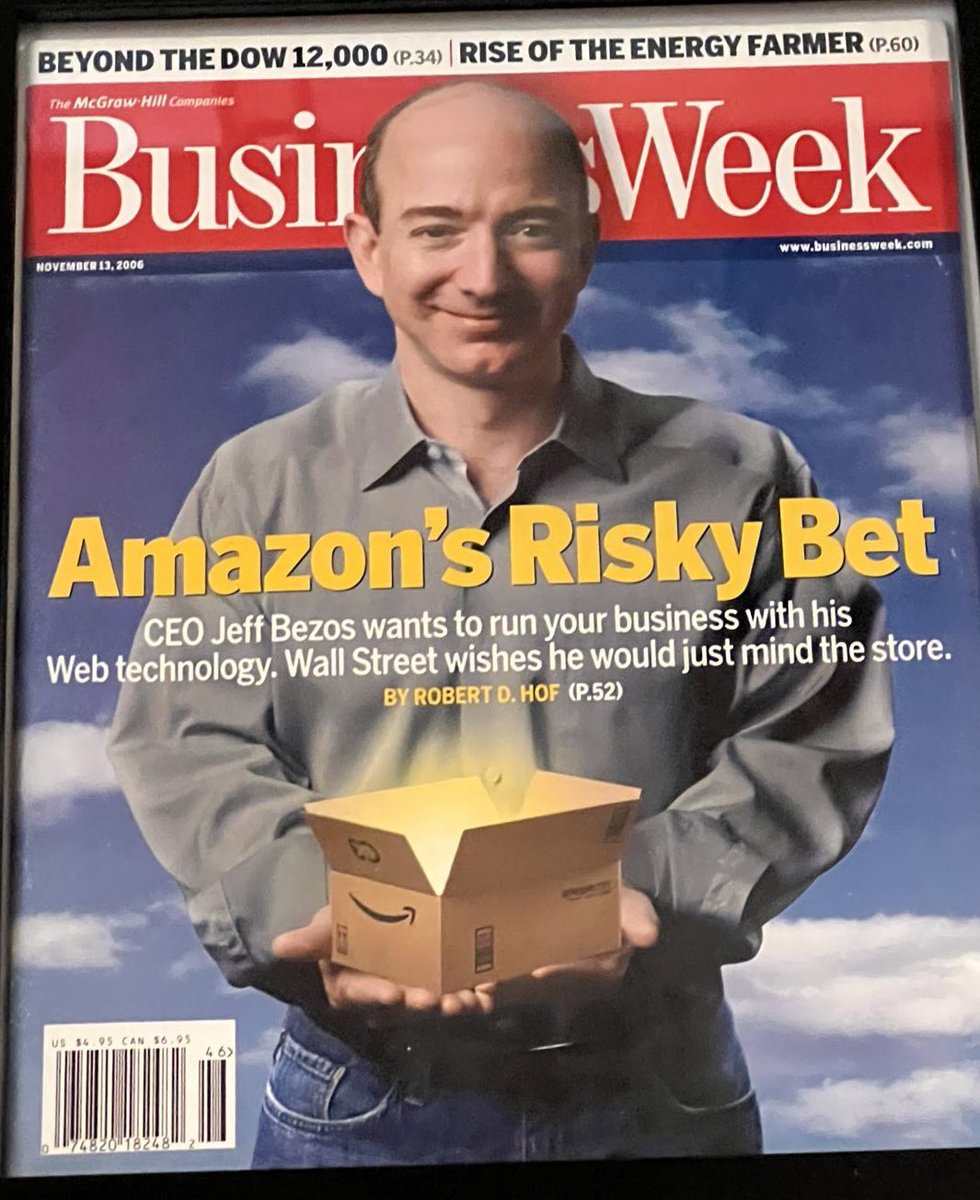
I have this old 2006 BusinessWeek framed as a reminder. The “risky bet” that Wall Street disliked was AWS, which generated revenue of more than $62 billion last year.
I have said this once I will say it again
I was rejected by most European venture firms for jobs.
They told me I was too young, not business school whatever…
No one can tell you you are not good enough. Only you can and even then, I think you underestimate yourself.
Hello to Global App Testing @QAOps, joining us at #EuroSTARConf for the third time. We're thrilled to partner with them again and look forward to an exciting year ahead >>https://t.co/8O1CEXNPMe
I can see why someone in government would think remote work was bad, since it makes slow organizations go slower. What he doesn't realize is that it also makes fast organizations go faster.
I devoured 50 years of Warren Buffett shareholder letters.
The result?
12 timeless principles from the greatest investor in the world.
Here are the golden nuggets🧵
Most of the best memories of my childhood are from random moments, so as a parent I try to make sure there are lots of random moments, and to make them good.