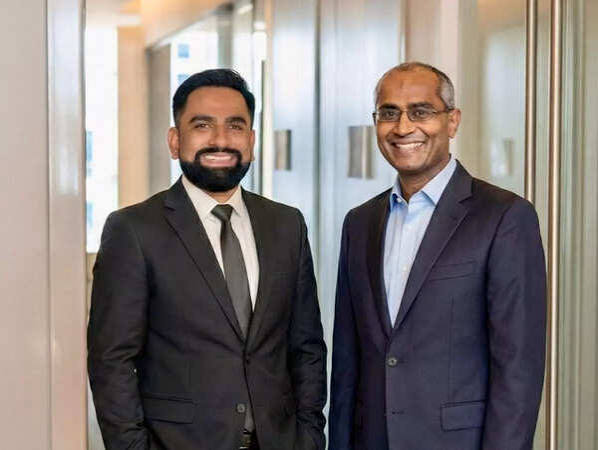
Amidst all the SM noise, we did not celebrate Vimag labs enough. They built India’s 1st software-defined, magnet-free electric motor platform.
Standard EVs rely heavily on Permanent Magnet Synchronous Motors. These require physical, rare-earth magnets embedded directly into the motor's rotor to create a magnetic field. Vimag Labs completely eliminated the physical magnets.
This is a win for cheaper EV manufacturing, but the real, strategic importance of what they did goes far deeper into global geopolitics & structural engineering:
- The global processing capacity & supply chain for rare-earth materials is overwhelmingly controlled by China. By engineering a completely magnet-free motor, Vimag Labs quietly handed automotive OEMs an escape hatch from a massive geopolitical supply chain vulnerability.
- Vimag Labs designed this architecture to scale up into massive high-power systems ranging b/w 200 kW & 600 kW. This means the software-defined, magnet-free platform is directly targeted for critical, heavy backend sectors: defense applications, robotics & advanced cooling infra, allowing India to build high-performance military & industrial hardware entirely free from foreign mineral dependencies.
- The breakthrough is the result of 87600+ (~10 person yrs) engineering hrs spent by co-founders Manish Seth, Rahul Krishnamurthy & their team. They built a massive IP pipeline (including 5 granted patents, 10 active applications & 15 trademarks) & signed a manufacturing MoU with Jendamark to scale the physical production of these motors right out of India.
Vimag labs handed a rising nation the ultimate industrial escape hatch: a future where our engines run on Indian brainpower, while leaving the rest of the world fighting over the dirt. 🙏🙏
If a salaried person wants to build a software application or digital services agency, the entry barrier is virtually zero.
They just need a laptop and an internet connection.
But if the same person wants to start manufacturing...
They need:
• Land
• Factory space
• Expensive machinery
• 6-12 months of approvals
• Huge upfront capital
My suggestion to the Government of India:
Build Manufacturing Parks for first-time entrepreneurs.
Instead of selling 10-acre plots, create buildings with 500-1,000 sq. ft. ready-to-use factory units.
Every unit should come with:
• 3-phase electricity already connected
• Pollution & fire approvals already cleared
• Shared CNC machines, injection moulding, testing labs & warehouses
• Common logistics and loading docks
• Month-to-month rentals instead of land purchases
• Single online portal to book a unit within 7 days
Let engineers keep their jobs while testing manufacturing on a small scale.
We built co-working spaces for software.
It's time we built co-factories for manufacturing.
@PMOIndia@PiyushGoyal@minmsme@NITIAayog
Good point 👏
Loss of smell (hyposmia) is one of the earliest and most reliable biomarkers for Alzheimer's and other dementias often appearing years before memory issues. The olfactory bulb is right next to memory centers and gets hit early.
Worth mentioning to a doctor if it's noticeable. Thanks for raising awareness🫡
Ajay Shah calmly bulldozes the "sovereign AI" rhetoric.
I fear, this won't get the attention it deserves as it doesn't pander to the peanut gallery.
Read this.
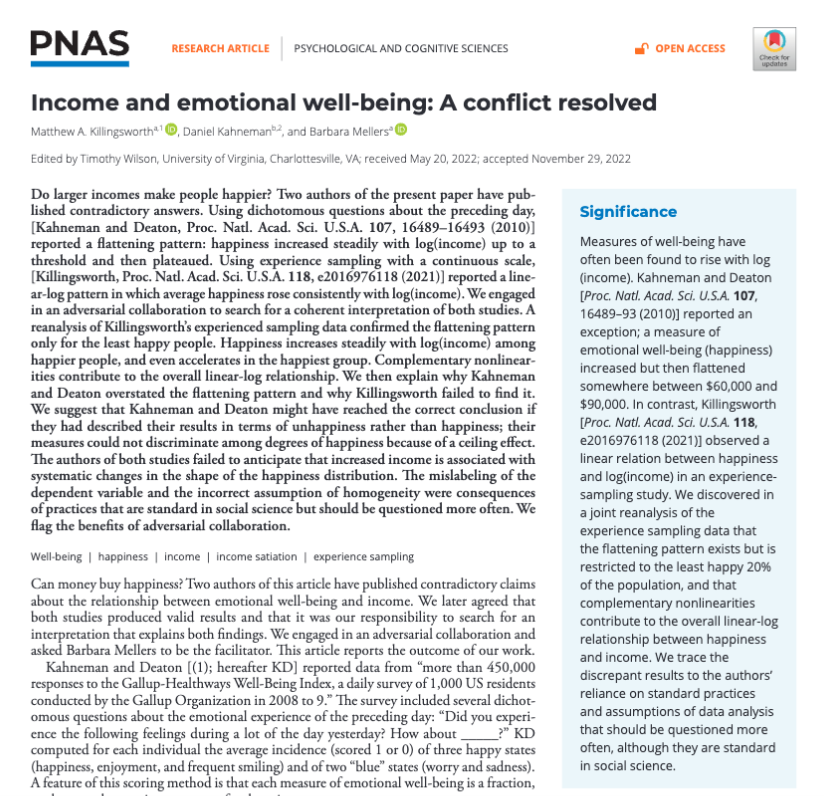
Does money buy happiness? A Princeton Nobel laureate said no above $75,000. A Penn researcher with 1.7 million data points said yes. The day they sat down together to settle the fight, the answer they reached should change how you think about your own life.
The Nobel laureate is Daniel Kahneman. The Penn researcher is Matthew Killingsworth.
The fight between them lasted 13 years, and the way it ended is one of the cleanest examples in modern science of two smart people being wrong in opposite directions about the same question.
In 2010 Kahneman and his Princeton colleague Angus Deaton published a paper that became one of the most quoted findings in the history of social science.
They analyzed 450,000 responses to the Gallup-Healthways Well-Being Index and concluded that emotional well-being rose steadily with income up to about $75,000 a year, and then flattened out completely. Above that line, the extra money was not buying any more daily happiness.
The headline traveled around the world. Every news outlet ran the number.
A CEO in Seattle famously cut his own salary to raise his employees to that exact threshold. The 75,000 dollar figure became cultural shorthand for the idea that the rich are not actually any happier than the rest of us once basic needs are met.
For 11 years almost nobody seriously challenged it. Kahneman had a Nobel Prize in Economics, the sample size was massive, and the conclusion was emotionally satisfying in a way that made everyone feel a little better about not being wealthy.
Then in 2021 a 33 year old researcher at the University of Pennsylvania published a paper that quietly destroyed the entire finding. His name is Matthew Killingsworth.
He had spent the previous decade building a smartphone app called Track Your Happiness that pinged users at random moments during their day and asked them a simple question.
How do you feel right now, on a scale from very bad to very good. The app was designed to catch happiness in the act, not to ask people to recall it later.
By 2021 he had collected over 1.7 million real-time happiness reports from 33,000 adults. When he plotted income against in-the-moment well-being, there was no plateau anywhere.
The line just kept rising. People earning $200,000 were happier on average than people earning $100,000. People earning $400,000 were happier than people earning $200,000. The curve flattened slightly but never stopped climbing.
The famous $75,000 ceiling that the world had been quoting for 11 years simply did not exist in his data.
Now there were two Nobel-quality findings sitting in direct contradiction with each other. One of them had to be wrong, and neither researcher was willing to walk away.
What happened next is the part of the story almost nobody knows.
Kahneman called Killingsworth and proposed something rare in academic science. He called it an adversarial collaboration. The two of them, joined by Penn psychologist Barbara Mellers as a neutral referee, would sit down together and reanalyze the raw data from both studies, line by line, until they figured out which one of them was wrong.
The paper they co-authored was published in March 2023 in the Proceedings of the National Academy of Sciences. And the answer they reached was not what either of them had expected.
Both of them had been right at the same time. They had been measuring two different populations without realizing it.
When the team broke Killingsworth's 1.7 million data points apart by baseline happiness, the picture clarified completely. For the happiest 70 percent of people, more money kept buying more happiness all the way up to $500,000 a year, with no sign of slowing down.
For people in the middle, the same pattern held. But for the bottom 20 percent of the sample, the ones who were already unhappy before the question of money even came up, the curve flattened almost exactly where Kahneman's original paper had said it would. Above roughly $100,000 a year, adjusted for inflation, more money did nothing for them.
This is the finding that changes how the question should be asked.
If you are not already unhappy, money keeps buying happiness for a much longer stretch than Kahneman's original paper suggested. The runway is wider than the world has been telling itself for a decade.
If you are already unhappy, money does almost nothing past a certain point. There is a ceiling, but the ceiling is not about income. It is about the underlying state of the person collecting it.
The deeper insight in Killingsworth's original research, the one almost nobody talks about, is the part that should sit with you longer than the income numbers. The Track Your Happiness app had been telling him for years that the single biggest predictor of in-the-moment well-being is not money at all. It is whether your mind is on the thing you are doing.
His most cited paper, written with Daniel Gilbert at Harvard, is titled A Wandering Mind Is an Unhappy Mind. The data from the app showed that people are mentally absent from what they are doing 47 percent of the time, and that mental absence is one of the strongest predictors of unhappiness in the entire dataset. More predictive than income. More predictive than the activity itself. More predictive than almost any demographic variable you could measure.
Which means the unhappy 20 percent that Kahneman's plateau actually described were probably not unhappy because they did not have enough money. They were unhappy for reasons that more money could not reach.
The reason the curve flattened for them at $100,000 a year is the same reason it would have flattened at $300,000 or $700,000. The thing they were missing was not buyable.
The most uncomfortable line in the entire 2023 paper is the one that nobody on the internet quotes. The authors note that the relationship between income and happiness, while real, is much weaker than the relationship between attention and happiness. A person earning $40,000 who is fully present in their own life will, on average, report higher in-the-moment well-being than a person earning $400,000 whose mind is somewhere else.
The fight about money was the wrong fight the entire time.
The two researchers spent 13 years arguing over whether the dollar ceiling was at $75,000 or $500,000, and the data from Killingsworth's own app was sitting there the whole time saying the ceiling was not about dollars at all. The ceiling is whether you can hold your attention on the life you actually have.
You can run the experiment yourself the next time you catch your mind drifting. Stop. Put your phone down. Look at the room you are in, the person across from you, the food in front of you, the work you are actually doing. That is the part the apps cannot sell you and the salary cannot buy you.
The data has been clear for over a decade. The plateau is not in your bank account. It is in your attention.
धीरे धीरे एहसास ही नहीं हुआ life में कैसे upgrade होता रहा और अब रोते हैं कितनी मंहगाई हो गई। ३० रुपए की bread को ३०० रुपए की sourdough से replace कर दिया। कैसे ५रुपए की चाय को ४०० रुपए के artisanal cold brew से replace कर दिया। कैसे घर के पास के पार्क की जगह अब महीने का gym membership और personal trainer, नानी के यहाँ summer holidays को maldives और europe से replace कर दिया। Life upgrade हुई या downgrade यही समझ नहीं आ रहा।
Very interesting q, Shubham Ji. If we look at ancient Indian data, the foundational unit of absolute mastery & ultimate success is consistently clocked at 12 yrs.
The planet Jupiter (Guru, the planet of wisdom, expansion & success) takes exactly 11.86 yrs (rounded to 12) to complete 1 full orbit around the Sun. Ancient Indian life-sciences noted that the human physiology undergoes a complete cellular & metabolic reset every 12 yrs.
In our Itihasa, why were the Pandavas exiled for exactly 12 yrs + 1 yr incognito? Why did Sri Rama go to the forest for 14 yrs (12 yrs of core transformation + 2 yrs of execution)? Because ancient Indian systemic science recognized that 12 yrs of unswerving dedication permanently alters the neural pathways & genetic expression of a human being.
If we want to achieve cosmic, generation-defining success, the ancient data says we must give a discipline 1 Solar Jupiter Cycle (12 Yrs). This is the exact ancient precursor to the modern Western "10000 hr rule."
Also, Ancient Indian science counters the modern obsession with overnight success through the thermodynamic law of Kāla-Pāka (Time-Ripening).
In the Yoga Sutras, Patanjali introduces a profound eqn for success:
"Sa tu dīrgha-kāla-nairantarya-satkāra-āsevito dṛḍha-bhūmiḥ" (Yoga Sutra 1.14)
He states that success achieves a "firm, unshakeable foundation" (Dṛḍha-bhūmiḥ) only when it satisfies 3 strict variables of Time:
- Dīrgha-Kāla: An extended, long period of time.
- Nairantarya: Absolute continuity, w/o a single day's break.
- Satkāra: Performed with intense devotion, intentionality & high energy.
We can apply maximum heat to a mango tree, but we cannot force it to fruits in a week. The tree requires a fixed quantum of seasonal changes, solar radiation & soil interaction to synthesize sugar. Attempting to rush success w/o respecting the biological & structural time required for Pāka (ripening) results in a toxic/sour/collapsed endeavor.
10 Mindblowing YouTube Documentaries to Watch
1. Our Memory: Phenomenal Storage System —DW Documentary
2. Guinea Pig Generation: Born Into The Algorithm— Endevr
3. Exposing Why Farmers Can’t Legally Replant Their Own Seeds —Veritasium
Yes, seriously — Scientists found an enzyme that "eats" arterial plaque.
The discovery by Italian researchers could eventually replace open-heart surgery.
An elite research network across Italy has isolated a specific class of specialized bacterial enzymes capable of naturally breaking down the dense, calcified fatty deposits known as arterial plaque. Published in the European Heart Journal, the preclinical study demonstrates how these highly targeted bio-catalysts can selectively degrade the complex fibrin-lipid matrix that forms the structural foundation of atherosclerosis.
Utilizing advanced nanotechnology, scientists engineered biocompatible lipid-shell nanocarriers to encapsulate the enzymes, allowing them to travel through the bloodstream completely undetected by the immune system.
Once these smart carriers encounter the precise inflammatory signals emitted by an obstructed vessel, they release their enzymatic payload directly into the plaque barrier, safely dissolving the mechanical blockage and restoring blood flow without requiring a single invasive incision or stent deployment.
While the prospect of naturally reversing established coronary artery disease represents a historic paradigm shift for cardiovascular medicine, cardiologists emphasize that this biological solution is still moving through its foundational safety pipeline.
Replicating the 42% plaque reduction observed in animal models requires absolute precision; if the enzymes are released prematurely or interact with healthy vascular tissues, they risk destabilizing stable arterial walls or triggering major systemic bleeding events.
Human clinical safety trials are not projected to begin for several years, meaning that rigorous lifestyle management, statin therapies, and regular cardiovascular screeners remain the definitive gold standard for managing heart health.
Reference
Rossi, M., Bianchi, L., & Ferrero, G. (2026). Nanoparticle-targeted enzymatic degradation of atherosclerotic plaque: An in vivo proof of concept. European Heart Journal, 47(18), 1422-1435.
Companies mostly optimize for efficiency.
People mostly optimize for their hormones.
Prosperity happens in societies that helps people rewires people hormones to seek efficiency.
TERAFAB IS GOING TO BE INSANE.
We’re targeting 100–200 billion custom AI + memory chips per year at full ramp that’s 1 terawatt (1,000 GW) of annual AI compute capacity. Roughly 50x current global AI chip output.
This isn’t incremental. This is the kind of scale that actually moves the needle on civilization.
Breakdown:
- 80% (~160 billion chips / 800 GW) → radiation-hardened D3 chips for orbital data centers. Space-based compute at massive scale, powered by solar, low latency for Earth, immune to most terrestrial risks.
- 20% (~40 billion chips / 200 GW) → terrestrial AI5 & AI6 edge inference processors for Tesla vehicle fleets and Optimus robots.
Facility plan: start at 100k wafer-starts/month, scale to 1 million wafers/month. Everything design, EUV lithography, fab, memory, packaging, test under one roof. That recursive self-improvement loop is the real unlock.
Small-batch AI5 chips in 2026. High-volume Terafab output targeted for mid-2028/2029.
This is how we make AI abundant, affordable, and truly useful for making life multi-planetary and maximizing human potential.
The future is going to be ridiculously bright.