BREAKING:
The Dutch Public Prosecutors Office will seek 8 weeks of prison for the Iraqi asylum seeker Jamal T.
He ran over the 14-year-old Dutch girl Tamar in the summer of 2020 and fled the scene. She died in a nearby ditch.
Initially, the Dutch authorities that it was enough to only serve him a fine of €1500, but the fine remained unpaid as Jamal T. had returned to Germany without leaving an address.
The girl’s mother Trijntje Boes fought for 6 years to get a trial, and hopefully prison time, for the asylum seeker.
She was supported by independent experts and forensic investigators who showed that Tamar's body was moved after the collision.
The police and the Public Prosecutor's Office conducted insufficient investigation.
Trijntje’s niece Melissa, a graduated forensic IT specialist, tracked down the gray Mazda in her own investigation in less than 3 hours. It was a golden tip that the police initially did nothing with.
After nearly 6 years of fighting through her lawyers, the mother finally got the suspect to appear in court. It now remains the be seen whether he will have to serve the full 8 weeks in prison.
The prosecutor has demanded 2 weeks for not paying attention while driving by scrolling on his phone and an additional 6 weeks for fleeing the scene without calling for help.
The case became infamous in the Netherlands after it was revealed that the police had initially told Tamar’s mother that the driver “was from Germany” instead of revealing that it was an Iraqi asylum seeker and that they had later explained their decision by saying that they “didn’t want to create a Geert Wilders moment.”
4 Iraqi asylum seekers were in the car when it hit the young Dutch girl.
Technical analysis and chart patterns are essentially useless when it comes to understanding the gold market. What the manipulators don't expect is that sharply driving down the price of paper gold may suddenly trigger massive buying of real, physical gold from all over the world. The operators believe that if they can keep suppressing the paper price long enough, this strong physical demand will eventually die out.
People outside North America have experienced similar monetary crises in the recent past, so they understand that the current paper-based financial system is nearing its end, while Gold is rising in importance.
Because physical demand is so powerful, it will eventually overwhelm the paper market.
We are in a Metals War...a very multi-dimensional one.
Steven Eugen Kuhn
Someone inside Oekraïne🇺🇦 send me this at great personal risk.
They said if it gets traced back to them,they’re gone‼️
So I read it.Because they trusted that if it gets outside,somebody would say something.
I’m saying something!Now you’ve heard it.
Today, on my final day as Director of National Intelligence, I’m releasing never-before-seen communications and documents exposing how Dr. Fauci provided millions in US taxpayer dollars to fund dangerous gain-of-function research at the Wuhan lab, worked with politicized elements within the Intelligence Community to suppress the truth about his actions and hide the virus’ lab-leak origins, and lied to Congress while under oath in 2024. It’s time you know the truth.
https://t.co/3YJSstB7d4
Diese kurze Rede ANHÖREN! Fast eine Million haben hier gerade die Verlogenheit von Luxus-Diesel-Limousinen-REICHineck gesehen. Aber diese Rede hat 84 Millionen Reichweite verdient. MUSS jeder hören. Brandrede von Harald Martenstein gegen ein AfD-Verbot. Lasst sie durch 🇩🇪 fliegen. Bis JEDER sie gehört hat. BITTE TEILEN.
As #inflation pressures grow, hard assets are becoming increasingly attractive. Tony Greer @TgMacro is bullish on #energy, oil services, and especially #GoldMiners. Full video below.
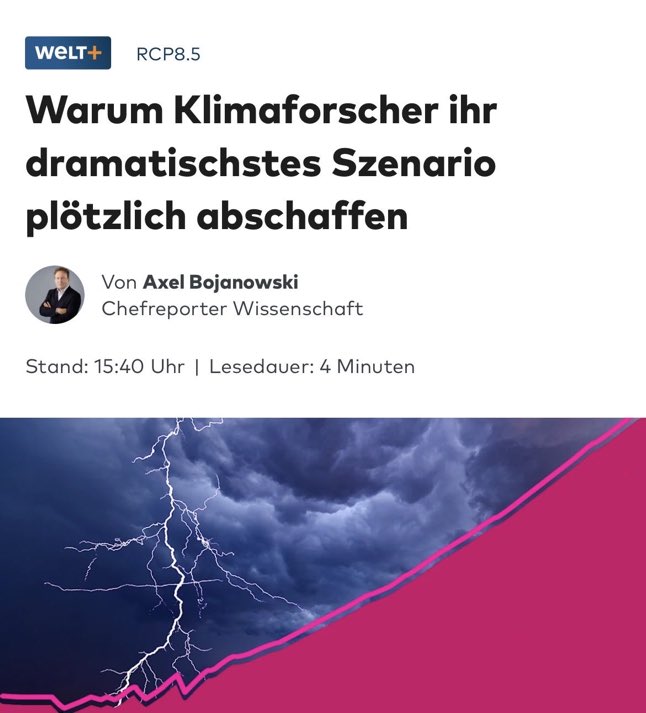
Trump beendet offiziell den Klimakult in den USA. Wenn Europa allein weitermacht, verharrt es in einem Wettbewerbsnachteil - der selbst nach der Klimatheorie keine Rechtfertigung hat.
Der Weltklimarat zieht die Katastrophenszenarien mit einer Erwärmung von 3-5 Grad zurück und kommt in seinem wahrscheinlichsten Szenario auf eine Erwärmung von noch nur zusätzlich 1,1 Grad bis 2100. Deutschland mit einem CO2-Anteil von 1,45 % am Welt-CO2 trägt dann nur noch 0,0145 Grad zur Erwärmung bis 2100 bei. Wann gibt es eine Sondersitzung des Deutschen Bundestages, der die CO2-Abgabe, das Verbrennerverbot und das Heizungsgesetz kassiert?https://t.co/7UwBCU4elB
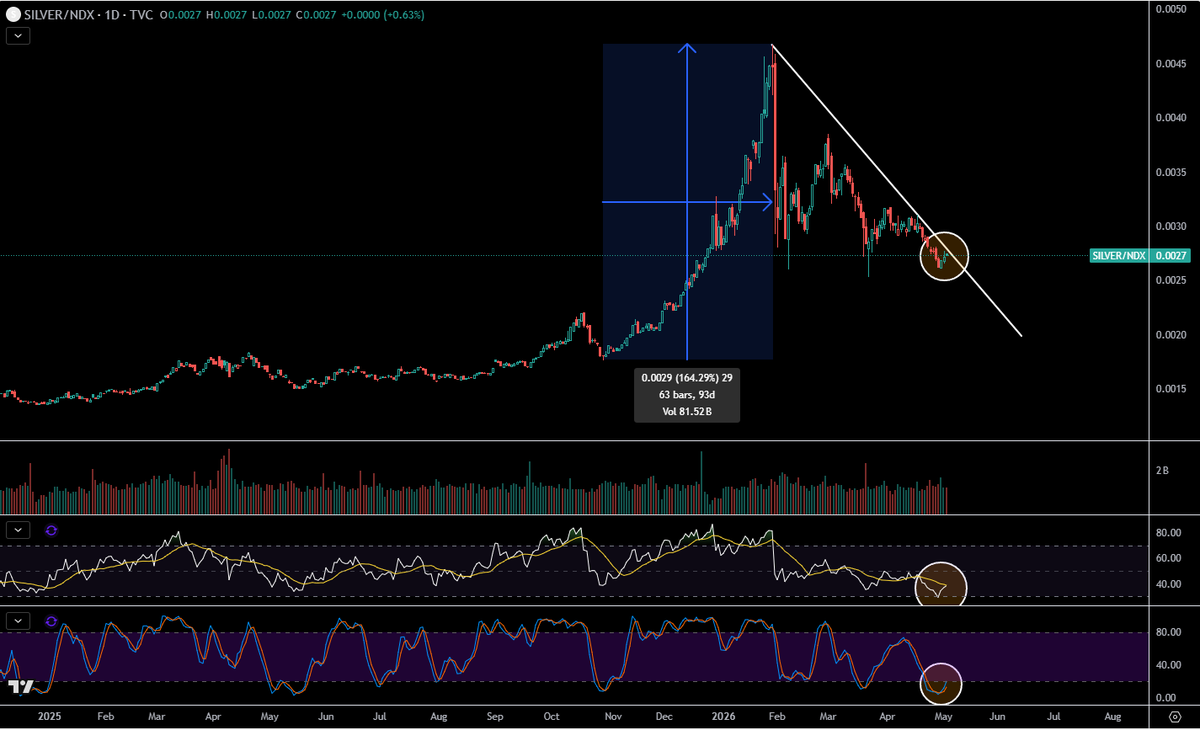
#SILVER / #NASDAQ Ratio
Chart #1 - DAILY
Chart #2 - WEEKLY
Do I even need to say which one is going to outperform over the coming weeks and months here?
The YouTube algo is giving us no love/views on this interview with Martin Armstrong, which likely means there is information they don't want you knowing. So I've uploaded the full version below. @StrongEconomics
Ein Energie-Lockdown kommt nicht überraschend – er wird nur so verkauft. Offiziell ist bis zuletzt alles unter Kontrolle: Die Speicher sind gefüllt, die Lage stabil – so werden sie es sagen. Dann die Eskalation im Konflikt: Lieferketten reißen, Reserven brechen weg. Plötzlich fehlt genau das, was eben noch als sicher galt.
Was folgt, wird als Notfallpolitik präsentiert und in den Pressekonferenzen entsprechend begründet – in Wahrheit ist es ein längst vorhandenes Drehbuch, das jetzt abgearbeitet wird. Die Erklärung steht bereit, ebenso wie das Narrativ.
🚨In 1990s, Stanford researcher Dr. Robert Sapolsky discovered something that should have broken the internet by now.
He was studying dopamine pathways in primates and found that the brain doesn't just adapt to repeated stimulation. It actively fights back.
When you flood dopamine receptors consistently, the brain deploys what neuroscientists call "opponent processes." For every artificial high you create, your nervous system generates an equal and opposite neurochemical low. Not eventually. Immediately. The system is designed to maintain balance, so it starts producing compounds that directly counteract dopamine while you're still experiencing the dopamine hit.
This means every notification, every scroll, every digital reward doesn't just give you a high followed by a return to baseline. It gives you a high followed by a crash below baseline. You end up in neurochemical debt.
Tech companies never publicized this research. They probably never read it. They were too busy discovering that variable ratio reinforcement schedules could keep users engaged for hours. They built addictive systems by accident, then refined them into addiction machines once they realized what they'd stumbled onto.
Your phone delivers an average of 80 dopamine hits per day. Your ancestors got maybe 5. Each hit triggers opponent processes that create a corresponding low. By the end of a typical day of normal phone usage, your baseline dopamine is running in negative territory. You feel flat, restless, vaguely unsatisfied, and hungry for stimulation because your brain chemistry is literally below zero.
You think you're bored. You're chemically depressed by artificial highs.
The opponent process theory explains why nothing feels interesting anymore. Your brain isn't broken. It's precisely calibrated to maintain neurochemical balance, and you keep throwing that balance off with artificial intensity. Every Instagram hit requires an equal Instagram crash. Every TikTok high gets paid for with a TikTok low. Every notification rush gets balanced with notification emptiness.
Your reward system is running a neurochemical deficit that grows larger every day.
Sapolsky's research revealed something even more disturbing: opponent processes don't just create temporary lows. They become permanent changes to your baseline dopamine production. Chronic overstimulation doesn't just make you tolerant to digital rewards. It makes you insensitive to natural rewards.
The sunset that would have captivated your great-grandfather becomes invisible to you not because sunsets got worse, but because your dopamine system needs intensity levels that sunsets can't provide. A good conversation becomes boring not because conversations got less interesting, but because your brain requires the rapid-fire stimulation of social media to register engagement.
You've accidentally trained your reward system to ignore everything that isn't artificially amplified.
This connects to research from Dr. Anna Lembke at Stanford, who found that people who undergo complete digital fasting for just 30 days show measurable increases in dopamine receptor density. Their brains literally regrow sensitivity to natural rewards. Food tastes better. Music sounds more complex. Social interactions become genuinely engaging again.
But there's a catch that nobody talks about: the first two weeks of dopamine detox feel like clinical depression. Your brain has been chemically dependent on artificial stimulation for years. Removing that stimulation creates actual withdrawal symptoms. Restlessness, anxiety, inability to focus, emotional flatness, and desperate cravings for digital input.
Most people interpret these symptoms as evidence that they need their phones. Actually, they're evidence that they've been neurochemically dependent on their phones without realizing it.
The withdrawal period isn't a bug. It's proof the reset is working.
What happens after week three is remarkable. Colors become more vivid. Conversations become genuinely absorbing. Simple pleasures like hot coffee or cool air become satisfying in ways you forgot were possible. Your brain rediscovers that reality contains enough complexity and beauty to hold your attention without artificial amplification.
You don't need more interesting content. You need more sensitive reward systems.
The solution isn't better apps or more engaging entertainment. The solution is restoring your brain's factory settings for what constitutes a worthwhile experience.
Sapolsky's opponent process research suggests this can happen faster than anyone expected. Every day you don't artificially spike your dopamine, your baseline moves a little higher. Every natural reward you pay attention to rebuilds receptor density. Every moment of boredom you endure without reaching for stimulation strengthens your capacity for sustained focus.
Ancient humans lived in a world that provided exactly the right amount of stimulation to keep their reward systems healthy. Enough challenge to stay engaged, enough calm to stay balanced, enough novelty to stay curious, enough routine to stay stable.
We built a world that provides 10 times too much stimulation and wonder why nothing feels rewarding anymore.
Your brain is not the problem. Your environment is the problem.
Change the environment, and the brain heals itself automatically.