I’m looking for my next role.
I created SWC (https://t.co/kv5tfli4Bp), the Rust-based open-source transpiler used by Next.js, Rspack, Node.js’s amaro, Parcel 2, and other projects.
I maintained Next.js and Turbopack at Vercel and previously worked with Deno.
My expertise is in developer tooling and performance optimization. I enjoy digging deep into difficult technical problems, and I’m open to new challenges across fields.
I prefer roles that let me work remotely from Korea. If you’d like to work together or know a team that could be a good fit, please DM me.
An update here: we’re upgrading all Codex for OSS grants to Pro 200!
There will still be the 10,000 grants in this round, now at the higher tier. (If you've already received a grant, the upgrade should be reflected automatically.)
Applications are still open :)
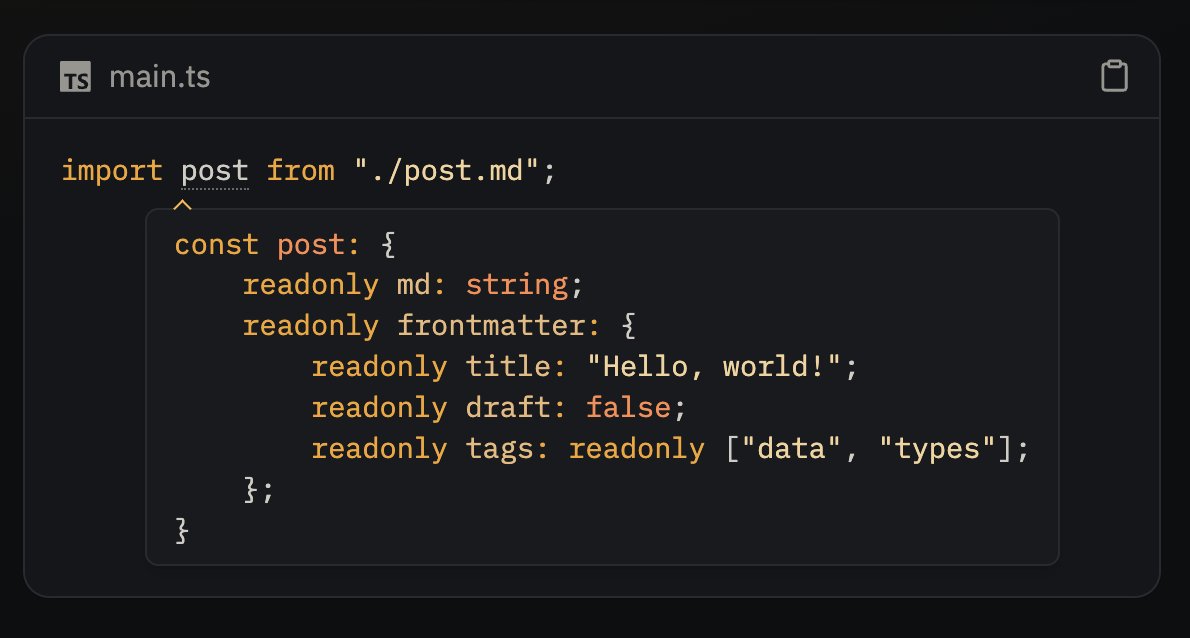
Content mappers in TS 7.1 are an absolute game changer
It’s plugins for TypeScript: a way to dynamically compute a static type signature for external file types (.vue, .md, etc) and integrate them directly into tsc compilation
Who here would come to a comedy tech talks event?
5 min talks about some technical thing with the caveat that they should be funny as well as entertaining.
They just released session management for the Redis SDK for FastAPI 🎉
Wanna learn about it all? Come to FastAPI Conf! Hear it all directly from the source.
https://t.co/ioc3vjSHvX
OSC7501 adoption updates: Kitty implements and displays in the tab title. Grok Build shipped support and Codex merged. In less than a week I think we're nearly at a place where the entire industry can drop their heuristics and get deterministic status updates.
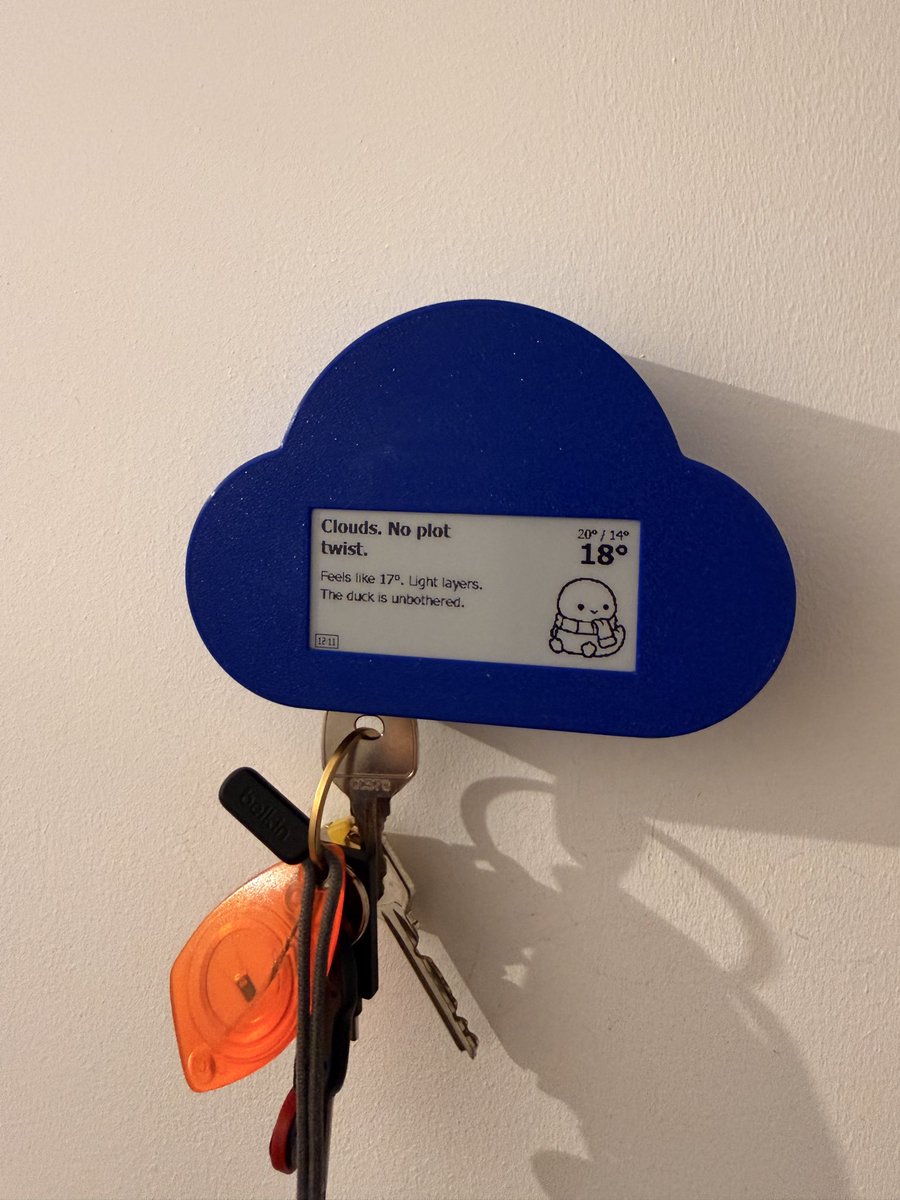
This was one of my favourite side projects to build (and actually finish!)
It’s a key holder cloud that shows the weather outside, so we know when to grab an umbrella ☔️ and it also lets us know if there are any issues with the tube.
I love how easy it is to take off the wall and change the batteries (the mounting was inspired by the Ring Intercom).
Also: this was my first ever PCB, which Codex basically made on its own 😅
I've published a new, general-purpose terminal specification that gives any program a way to tell the terminal what it's doing: idle, working, waiting, finished, or failed, and why. It is easy to implement on both sides. I've written more about why: https://t.co/2FfzNC3F8T
The problem this solves is generic and applies in compelling ways to all sorts of use cases (e.g. package managers, build tools), but it really rears a hideous head when it comes to AI and the "agentic inbox" problem.
I found over 250 different agent orchestrators (with various goals) that all individually implement a heuristic based approach to detecting whether things like Claude Code are working, blocked, done, etc.
If you look at @herdrdev's commit history, you can see around 10 compatibility changes to detect Claude Code within just the past 3 months. (This isn't a dig at Herdr! They're doing great work with what they have, and everyone else is doing the same thing).
Heuristics are not the way. And over-indexing on agentic use cases isn't the way, because this problem is really interesting for other tools too: Homebrew, Terraform, Cargo, etc. etc.
Proprietary protocols and out of band APIs are not the way. They have an O(N) integration problem and require extra work to work over SSH or within local VMs/containers.
The program status specification (OSC 7501) solves this in a reliable, deterministic way that is general-purpose and can be easily adopted by the entire industry.
Read more: https://t.co/2FfzNC3F8T