@vivekraju93 Valid points, but the real alpha might be regulatory. CRED has accumulated a full stack of RBI licenses. Navigating Indian compliance is a nightmare for foreign big tech. Zuck might just be buying a golden passport into India's financial ecosystem.
I’ve been reading the Vedas a lot recently, and what’s stood out is how it doubles as an encyclopedia as well as a religious text. Astronomy, medicine, mathematics, metallurgy, linguistics, are all woven through hymns and rituals as one body of knowledge. Simply calling it “religious” forces it into a Western category that didn’t have the apparatus to recognize what it actually was. It’s closer to a tradition of formalized epistemology in which metaphysics, observation, and language form one continuous inquiry, which as a result led Indian civilization to develop along a fundamentally different path because of it.
You can see the effect most clearly in the sciences. Around 600 BCE, the Vedic record describes a surgical procedure that matches modern rhinoplasty and is still foundational to reconstructive surgery today. Centuries before Western Europe stopped treating eclipses as supernatural, Indian scholars had calculated the circumference of the earth within 0.2% and explained eclipses as shadows. Centuries before Plato and Aristotle rejected atomism, the Vedic tradition already held that matter is composed of indivisible particles combining into binary and triatomic compounds, transformable by heat. The first formal rules for zero and negative arithmetic appear in the Vedas, along with infinite-series derivations of π, sine, and cosine centuries before Newton and Leibniz.
The interesting question is how did they get so much right, so early? My best guess is language.
The Vedic tradition is unique compared to other oral traditions as it demanded letter-perfect oral transmission across generations. Around 500 BCE, scholars composed a generative grammar of Sanskrit called Panini so rigorous it anticipates Backus-Naur form, the notation that defines programming languages today, by 2,500 years. Sanskrit is recursive, rule-based, and built to minimize ambiguity. It reads more like mathematics than English.
When you think in a language built like that, the precision of the language becomes the precision of your reasoning. The West didn’t formalize this until much later. Kant argued our categories of understanding shape what we can know, Wittgenstein wrote that the limits of language are the limits of one’s world, and Kripke showed that naming doesn’t just describe things, it constitutes what they mean and how we can reason about them. All three touch the same insight which is that thought is downstream of language.
The Vedic tradition operated on that insight thousands of years earlier. To the point that they built a whole language first and used it to think clearly about everything else after. I find that all really fascinating.
@aravind@NetramDefence@elonmusk@nikitabier Requesting your teams to investigate and take appropriated action. The X thread raises serious concerns about psyops targeting Indian users by Pakistanis. This undermines trust and safety on X.
@Fintech03 A lesser-known but remarkable story of Swami Vijnanananda, who designed and supervised the construction of the main Ramakrishna Temple at Belur Math.
I just asked myself the most important question I’ve ever asked.
What if, god forbid, I had cancer right now? How would I save my life and would I be able to do it without Precigenetics?
The answer made me cry.
Here’s EXACTLY how I would save my own life TODAY. 🧵
Walking makes you more creative
Daniel Pink says: "The research on walking is unbelievable. There's a famous study where they put people in a chair and they put people on a treadmill, and they do the "alternative uses for an object test."
Basically, you give somebody something mundane like a brick and ask: How many different uses can you have for the brick?
You can use it as a door stop. You can use it as a step ladder to reach something you can't reach. You can use it as a paper weight.
The people who were walking on a treadmill generated like three times as many ideas as the people sitting in a chair. Wow. It's unbelievable. They were just in a treadmill in a laboratory."
@DanielPink
@ramprasad_c Childhood places feel magical because childhood itself was light. No responsibilities, no pressure, no baggage. When we return as adults, it’s not the village that has changed. Our state of mind has changed with adulthood.
“Judging AI based on free-tier ChatGPT is like evaluating the state of smartphones by using a flip phone.”
A honest thread on how fast AI is actually moving and it’s way beyond what most people experience with the free versions.
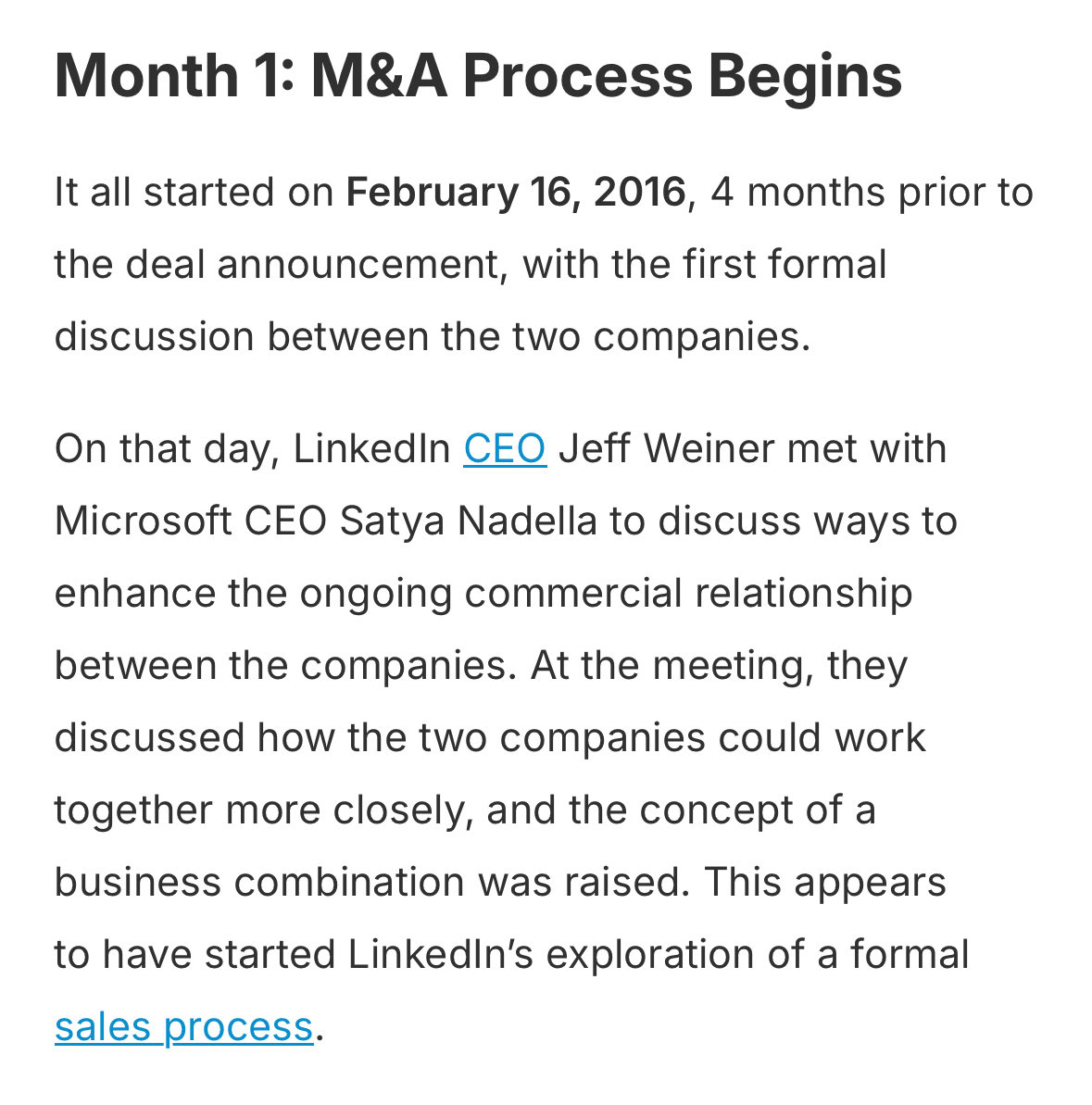
Microsoft buys LinkedIn for $26.2B in 2016.
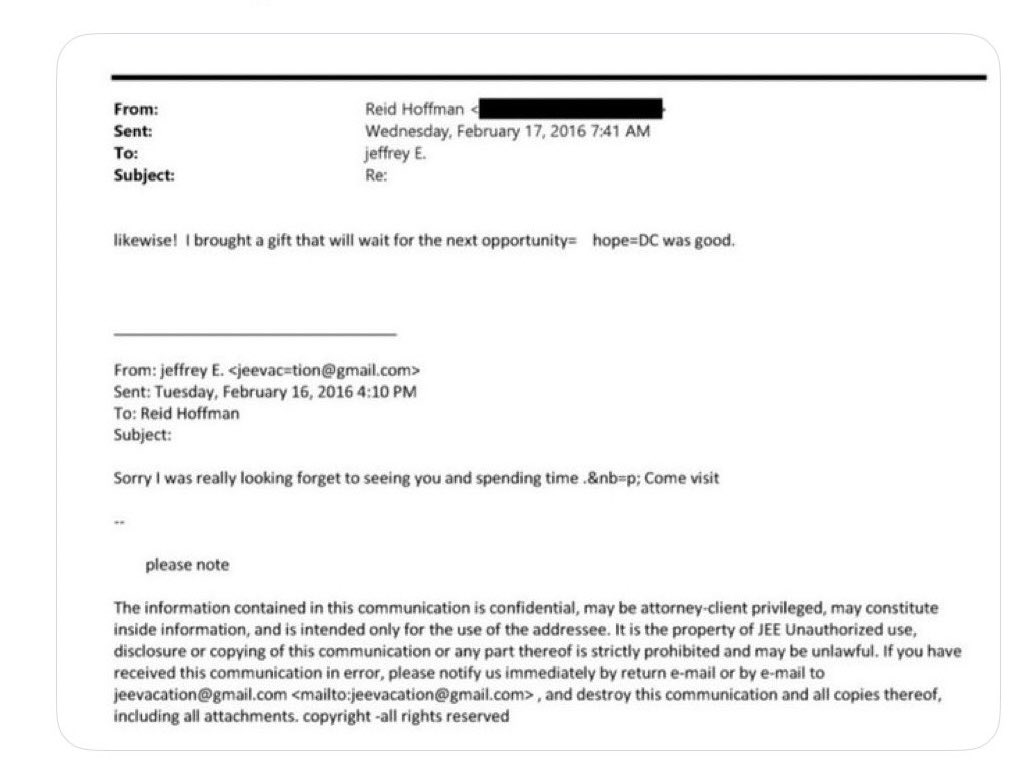
Now look at Feb 16–17, 2016:
Hoffman emails Epstein “I brought a gift,” “miss seeing you.”..
Same day: Microsoft–LinkedIn talks reportedly begin.
Both Hoffman and Gates appear in Epstein files.
Coincidence… or worth investigating?