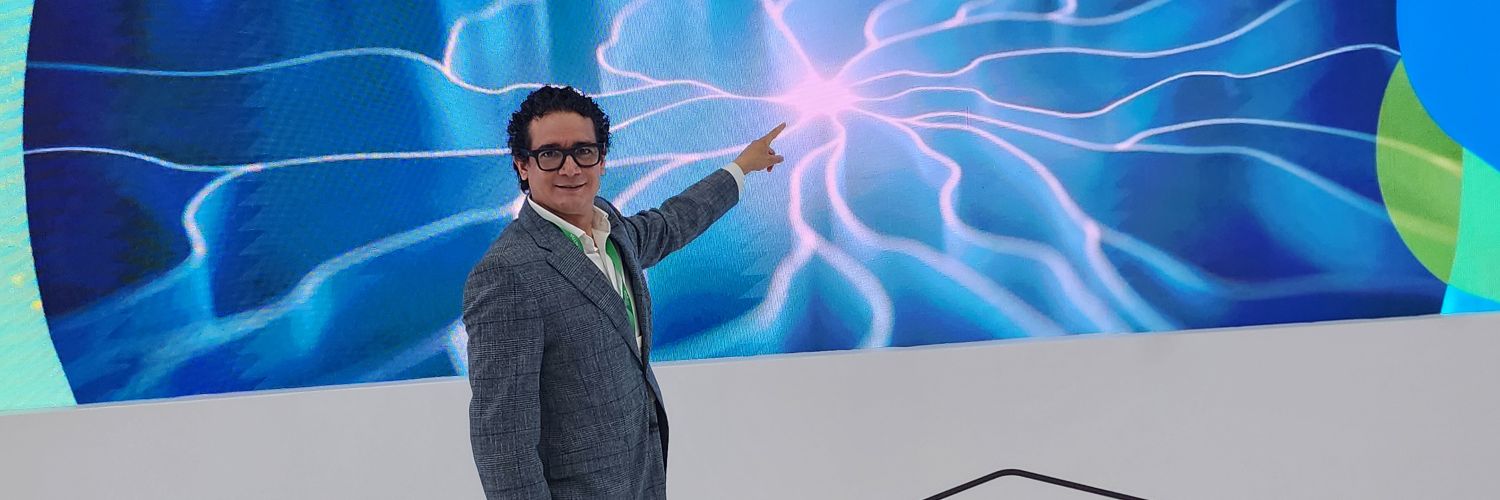
ARTEX and Agentic Offensive Frameworks, an expedited strategy briefing following a discussion on attacks and lessons learned with 800 CISOs, and hundreds of CISOs who worked over the last four days to get this written
A thread
Update on formalizing Masullo’s proof of the Riemann hypothesis.
93 contributors provided proofs for 13k+ statements using 465k lines of lean.
The current gaps:
- 7 false statements, corrected, but the intended statement is uncertain
- 3 classical theorems not yet proved
- 5 proof steps too imprecise to formalize
- 6 scattered statements which don’t connect to the rest yet
-1 principal result, 12.5.1.1, the cancelation of zeros outside the strip
1/3
Remember, kids: When the dot-com bubble burst, the internet didn't disappear. When the subprime mortgage market collapsed, real estate and financial derivatives didn't cease to exist.
Remember, kids: When the dot-com bubble burst, the internet didn't disappear. When the subprime mortgage market collapsed, real estate and financial derivatives didn't cease to exist.
I seriously think US open-weight models wouldn't be this good without Chinese open-weight models and vice versa.
And proprietary models wouldn't be this good (and cheap) without open-weight models.
Competition is a good thing.
@tasquillovalley@Telcel No me falló hasta después de las 14.20 (que salió un mensaje todavía usando los datos de telcel). Entiendo que fue fallando por zonas.
Por ejemplo. Ahora me reportan que algunos tienen señal en algunas zonas, pero yo sigo caído., usando el backup
@Grady_Booch With an extra rule that AI systems shall not autonomously modify, suspend, or supersede the regulatory requirements or technical safeguards governing their own operation.
...and then, turtles all the way down.
@Grady_Booch How about ruling that if a system becomes sufficiently capable of improving itself, it should also be required to help identify weaknesses in the mechanisms intended to govern it.
Recommendations shall be subject to independent evaluation and human authorization.
As a software engineer, I disagree with all of Alex's comments.
1. In the presence of superhuman bug finding machines we have superhuman bug finding machines that'll secure code (and superhuman code writing machines).
2. Every "engineer" builds things that are unsafe -- tolerably unsafe. It's impossible to make things perfectly safe. Measuring unsafety is part of engineering. If something is untolerably unsafe, then we improve it's safety. But we never create too much safety. Software is famously unreliable/insecure because we tolerate bugs in software we'd never tolerate in bridges, dams, oil refineries, etc.
3. Experienced engineers are going to write C/C++ with the help of the aforementioned superhuman AI.
6. Type/memory safe languages, using formal methods, contracts, solvers, etc. -- is all just "advocacy", something promoted by out-of-touch ivory tower academics that lives in denial of the real world of software engineering. There is a simple blueprint to making C/C++ memory safe, especially with AI, people just to need to follow through on this.
@hsvsanchez Que afirmó que es correcto hacerlo en movimiento y circular a la velocidad del tráfico (según él dentro del límite de velocidad de la vialidad) entre los carros, porque su carril son las rayas.
Un tipo de una moto me acaba de asegurar, con toda convicción, que está en su derecho de circular entre los carriles marcados, que su carril son las rayas que dividen los carriles de los autos y que tiene derecho a hacerlo a la velocidad que sea, dentro del límite de esa calle.