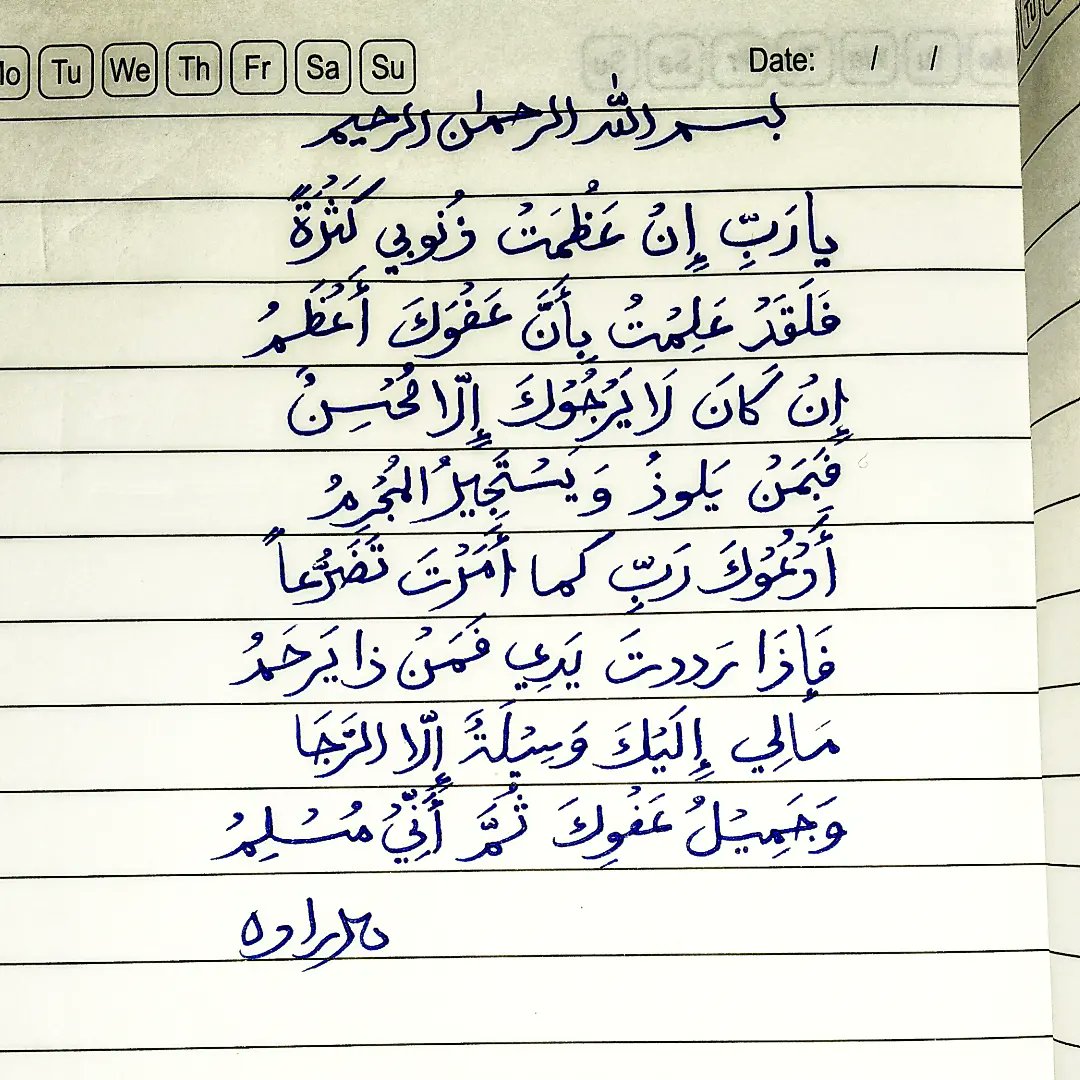
My Master, if the greatness of my sins increase,
then I know for sure that Your forgiveness is greater
If only the righteous turned to You,
then who would the criminal go to?
The Prophet ﷺ said:
❝The Hour will not be established until […] marketplaces draw close together.❞
Shaykh ʿAbdullāh As-Sāʿd comments:
❝And this is from his ﷺ miracles, for he is the one who does not speak from his own desire. The marketplaces have indeed drawn close
al-Naysaburi narrates:
ishaq ibn rahwayah married the widow of a man who had possessed the books of al-Shafi’i after he passed away. He married her for no reason other than the books.
-Hilyatul Awliya, (7/103)
Allāh will not tire of forgiving you until you tire of seeking forgiveness...
A man came to the Messenger of Allāh ﷺ and said:
“O Messenger of Allāh ﷺ, one of us commits a sin.”
He ﷺ said:
“It is recorded against him.”
He said:
“Then he seeks forgiveness from it
@Farid_0v@aqalmn3 If @mohammed_hijab pushes further and corrects him and points out his lies, DH may disown him very soon and idk what category will he be put into
@Farid_0v Yalla time for you @Farid_0v to join the party, do a stream with MH and uncover DH's lies & deceptions, my head is aching atp. He's just takin advantage & spewing venom.
It's funny how he wants unity with the sect he's defending, but can't unite with his fellow sunni duʿāt
@YasirAlHanafi@MusaAdnan Let's grant you that but if you want unity and the ppl see it as pejorative, then you gotta stop using it (for the sake of unity)
@Haqiqatjou At this point, you're such a dumb, retarded, pathological liar daniel bātiljou.
You just repeated the same thing Farid called you out on, and you're such an idiot that you'll still keep ranting and crying about it again!
(Not a wahhabi, save your lies)
@Farid_0v gotta feel for u.
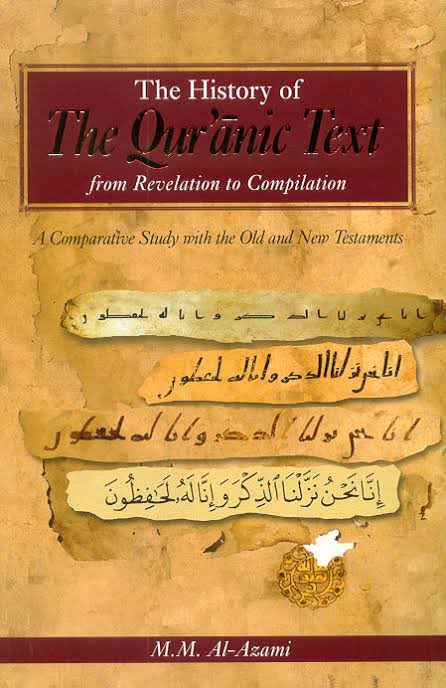
Indian Muslim Luminaries: M. M. Mustafa al-Aʿzami, A Nightmare For Orientalists.
M. M. Mustafa al-Aʿzami was one of India’s greatest muhaddithīn and among the most formidable defenders of the Sunnah in the modern era—a scholar whose meticulous research left many Orientalist assumptions in ruins.
Born in Mau (Azamgarh district) in 1930, he graduated from Darul Uloom Deoband, earned his M.A. from Al-Azhar, and completed his Ph.D. at Cambridge. Yet despite his credentials from the very institutions often used to challenge Islam, he devoted his life to proving the authenticity of the Qur’an and Sunnah through rigorous academic research.
His works, especially Studies in Early Hadith Literature and The History of the Qur’anic Text, systematically dismantled the claims of Orientalists with evidence drawn from the earliest Islamic manuscripts and sources. In less than a page, he could refute arguments that others spent entire books promoting.
He served Islam with distinction as Professor Emeritus at King Saud University and held academic positions at Oxford, Princeton, Michigan, Umm al-Qura, and other renowned institutions. In 1980, he received the King Faisal International Award for Islamic Studies in recognition of his immense contribution to preserving and defending the Islam.
Shaykh al-Aʿzami did not answer falsehood with rhetoric—he answered it with isnād, manuscripts, evidence, and scholarship. His legacy remains a towering proof that sincere knowledge (ʿilm) is among the greatest forms of jihād in defending the dīn. May Allah ﷻ have abundant mercy on him, accept his service to Islam, and raise his ranks among the scholars and the righteous. Āmīn.
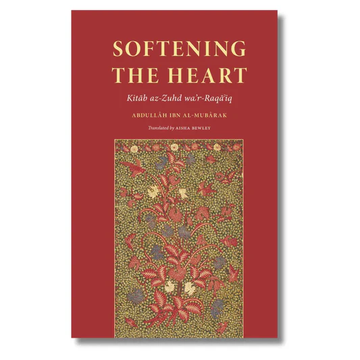
Aisha Abdurrahman Bewley, “Most Influential Muslim Woman of 2023,” born in 1948 in the United States, has profoundly shaped Islamic scholarship through her remarkable life and erudite translations. Her conversion to Islam in 1968 set her on a path of rigorous scholarship.
Raised in a strong Christian family, Bewley’s early spiritual quest led her to explore Zen Buddhism and Western philosophy—thinkers like Nietzsche, Schopenhauer, Kant, and Hegel—seeking answers to existential questions about human existence. This intellectual curiosity culminated in her conversion to Islam in 1968, a pivotal moment that redirected her life toward Islamic scholarship. She pursued a BA in French and an MA in Near Eastern Languages at the University of California, Berkeley, and later studied at the American University in Cairo on a fellowship, immersing herself in Arabic and Islamic philosophy, including Sufism, at Dar al-’Ulum. Her studies extended to Morocco, where she engaged with Ibn ‘Arabi’s works under Sidi Fudul al-Hurawi and became a student of Shaykh Abdalqadir al-Murabit.
Bewley’s scholarly output is vast, with over 73 works translated or authored, spanning Qur’anic exegesis, hadith, fiqh, Sufism, and Islamic history. Her translations of foundational texts—such as the Qur’an (co-translated with her husband, Shaykh Abdalhaqq Bewley), Al-Muwatta of Imam Malik, Tafsir al-Qurtubi, and Qadi ‘Iyad’s Ash-Shifa—are celebrated for their fidelity to the Arabic original and clarity in English, making complex theological and legal concepts accessible.
Her affiliation with the Maliki school and the Shadhili-Darqawi Sufi order, particularly the Habibiyya branch, informs her translations of Sufi texts like the letters of Mawlay al-Arabi al-Darqawi. Named the “Most Influential Muslim Woman of 2023” by the Royal Islamic Strategic Studies Centre, Bewley’s five-decade career exemplifies intellectual devotion to Islam’s textual tradition. Her Glossary of Islamic Terms remains a vital resource for researchers, reflecting her mastery of Islamic terminology gained through lived experience among Arab communities.
Alhamdullilah we won the Oxford Union debate on votes! Securing about 60% against @TRobinsonNewEra and his gang.
The topic was "This House Believes That The West is Right to be Suspicious of Islam"
Motion is officially DEFEATED - despite Tommy's best efforts. Alhamdullilah!
Among the contributions of women scholars to the literature of the Prophetic Sīrah is al-Mawrid al-Ahnā fī al-Mawlid al-Asnā by Sayyidah ʿĀʾishah bint Yūsuf al-Bāʿūniyyah (d. 922).
🚨An inscription dating back approximately 1,420 years.
The inscription reads:
“I am ʿAmr ibn Rabīʿah al-Thaqafī. I wrote this in the Year of Ifriqiya, and I seek forgiveness from God, my Lord.”
Ifriqiya refers to present-day Tunisia.
The “Year of Ifriqiya” denotes the year in which Tunisia was conquered in 27 AH, during the caliphate of ʿUthmān ibn ʿAffān (may Allah be pleased with him).
In that era, people often dated events by major historical milestones rather than using numbered calendar years, making this inscription a fascinating glimpse into how early Muslims marked the passage of time.


![Atharibrother's tweet photo. The Prophet ﷺ said:
❝The Hour will not be established until […] marketplaces draw close together.❞
Shaykh ʿAbdullāh As-Sāʿd comments:
❝And this is from his ﷺ miracles, for he is the one who does not speak from his own desire. The marketplaces have indeed drawn close https://t.co/3XLMEQtv06](https://pbs.twimg.com/media/HL5adzqXwAAzjTE.jpg)









![Atharibrother's tweet photo. The Prophet ﷺ said:
❝The Hour will not be established until […] marketplaces draw close together.❞
Shaykh ʿAbdullāh As-Sāʿd comments:
❝And this is from his ﷺ miracles, for he is the one who does not speak from his own desire. The marketplaces have indeed drawn close https://t.co/3XLMEQtv06](https://pbs.twimg.com/media/HL5ad2YXUAAjTuk.jpg)


