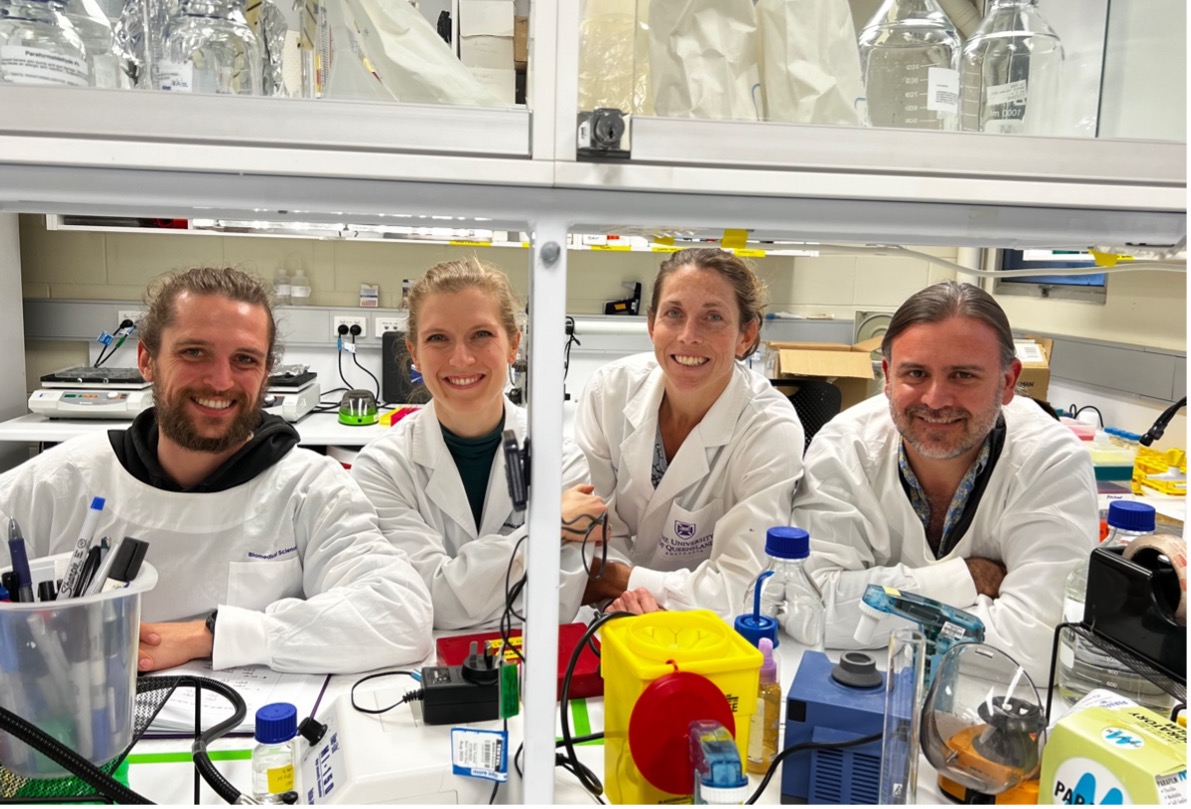
Happily humbled to be listed today, and deeply thankful for our excellent team, collaborators, and the extraordinarily supportive academic environment at the School of Biomedical Sciences @UQMedicine @UQ_News@QldBrainInst@arc_gov_au 🥂🔬
Ever wondered if LINE-1 retrotransposon activity has a role in the developing brain? The new paper by @gabriela_bodea and @Faulkner_Lab shows this occurs specifically in parvalbumin GABAergic interneurons. Congratulations Gabriela!
The impact of LINE-1 retrotransposons on neurobiology is not fully understood. Our new research in @NatureNeuro sheds light on LINE-1 activity in PV interneurons, sparking fresh perspectives on its role in neurobiology. #neuronaldiversity#neurogenetics
https://t.co/YquGGHoFZW
The impact of LINE-1 retrotransposons on neurobiology is not fully understood. Our new research in @NatureNeuro sheds light on LINE-1 activity in PV interneurons, sparking fresh perspectives on its role in neurobiology. #neuronaldiversity#neurogenetics
https://t.co/YquGGHoFZW
Join us for a great day of Science at the upcoming @ANZSCDB QLD Cell & Developmental Biology Meeting for 2024, at the Global Change Institute @UQ_News on June 3rd!!!
Registration and attendance are free, discounted ANZSCDB membership offered to all presenters! 🎉🎉🎉
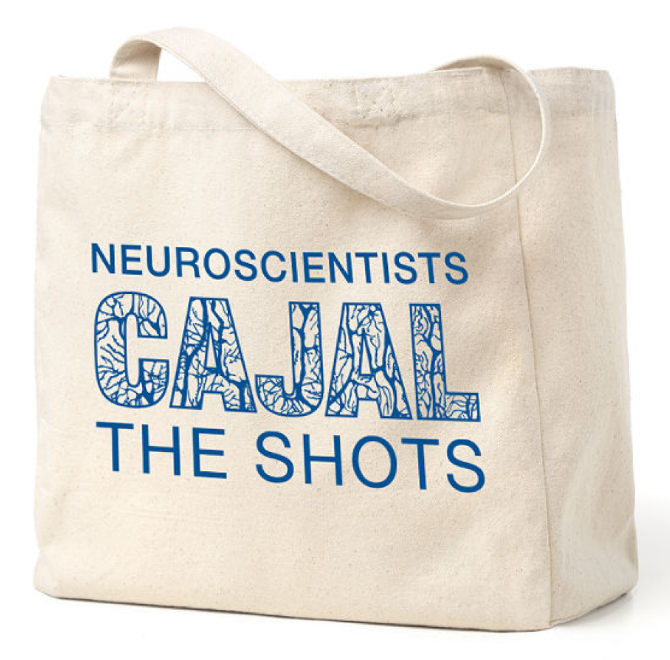
🧠 It's #BrainAwarenessWeek!
Show your support for brain science in style with a new tote from the SfN store.
Add a donation at checkout to support the field!
🔗 https://t.co/4UEWkBLYjn
#BrainWeek#neurotwitter
Our lab’s latest pre-print on how projection neurons regulate differential myelination in the cortex is out on bioRxiv today! Congrats to lead authors @VahbizJ@NuriaIturza@kwanho_k and many thanks to our awesome collaborators! https://t.co/6LzRbz6bah
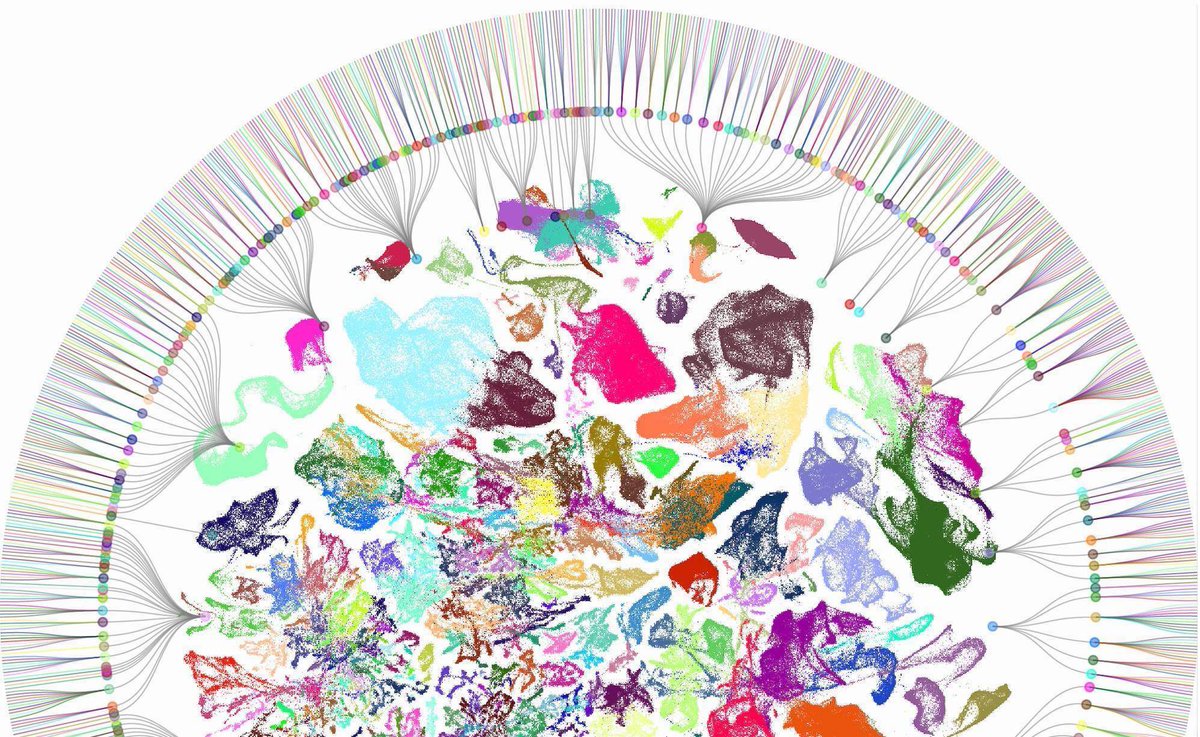
The first cellular map of a mammalian brain is here. 🧠✨
Over 6 years and 32 million cells in the making, the complete adult mouse brain cell-type atlas reveals astonishing diversity and regional specificity.
Dive deeper: https://t.co/CXEIXooOVu
@nature#studyBRAIN#BICCN
It took 4+ years to build this 3D map of the developing human head, the most complex part of our body https://t.co/uTcMxfLeZx
Tissue clearing #Lightsheet#VirtualReality#3D models & More! Congrats to Raphael Blain, E. Shotar G. Couly @Yorick_Gitton et al. video summary 🔊
This might make you think twice next time you reach for the fly swatter. The whole brain wiring diagram of the fly! All 140,000 neurons and their 50M synapses are available to explore in Codex, the Connectome Data Explorer: https://t.co/A4qsET9hBI #sfn23
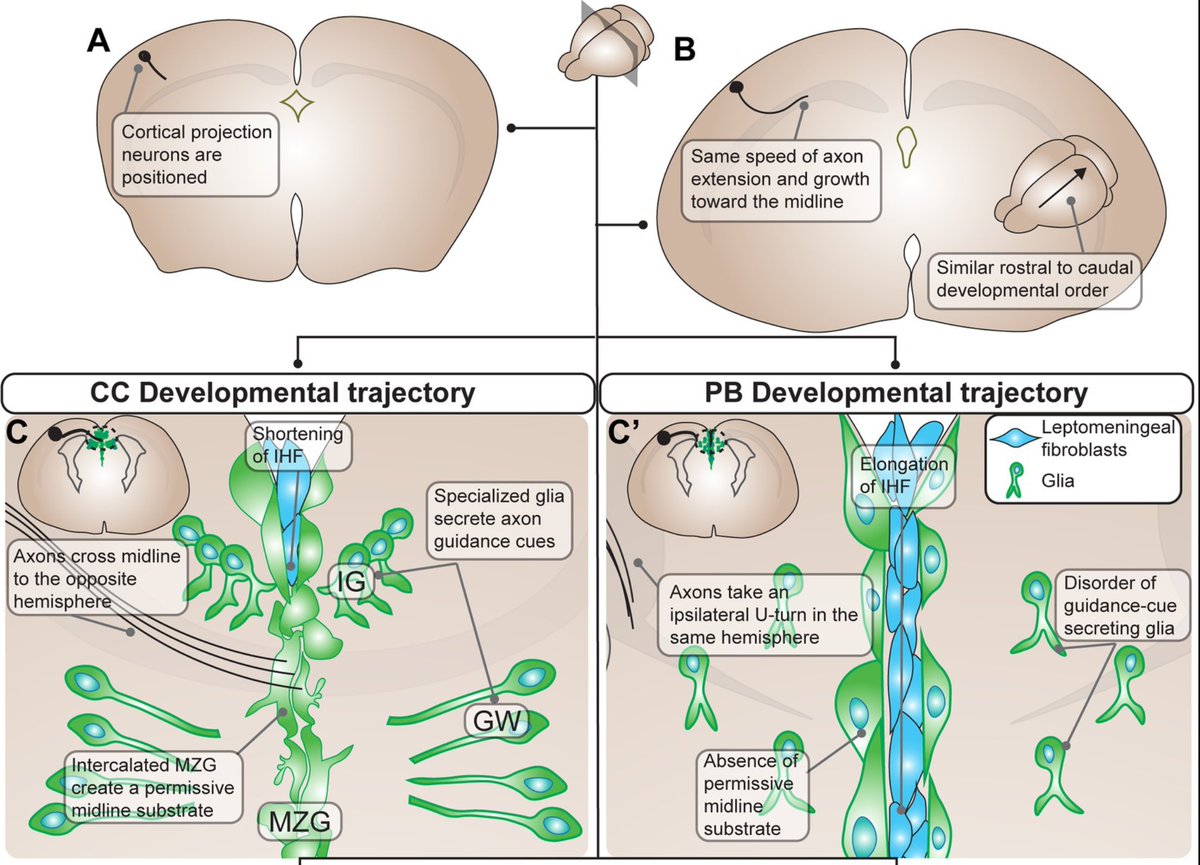
New review out from the lab about perhaps the largest stereotypical aberrant tract in the brain: Probst bundles. Led by the wonderful @ZoranaLynton, what can their natural formation teach us about brain plasticity and compensation? https://t.co/OMa3TpuGOq
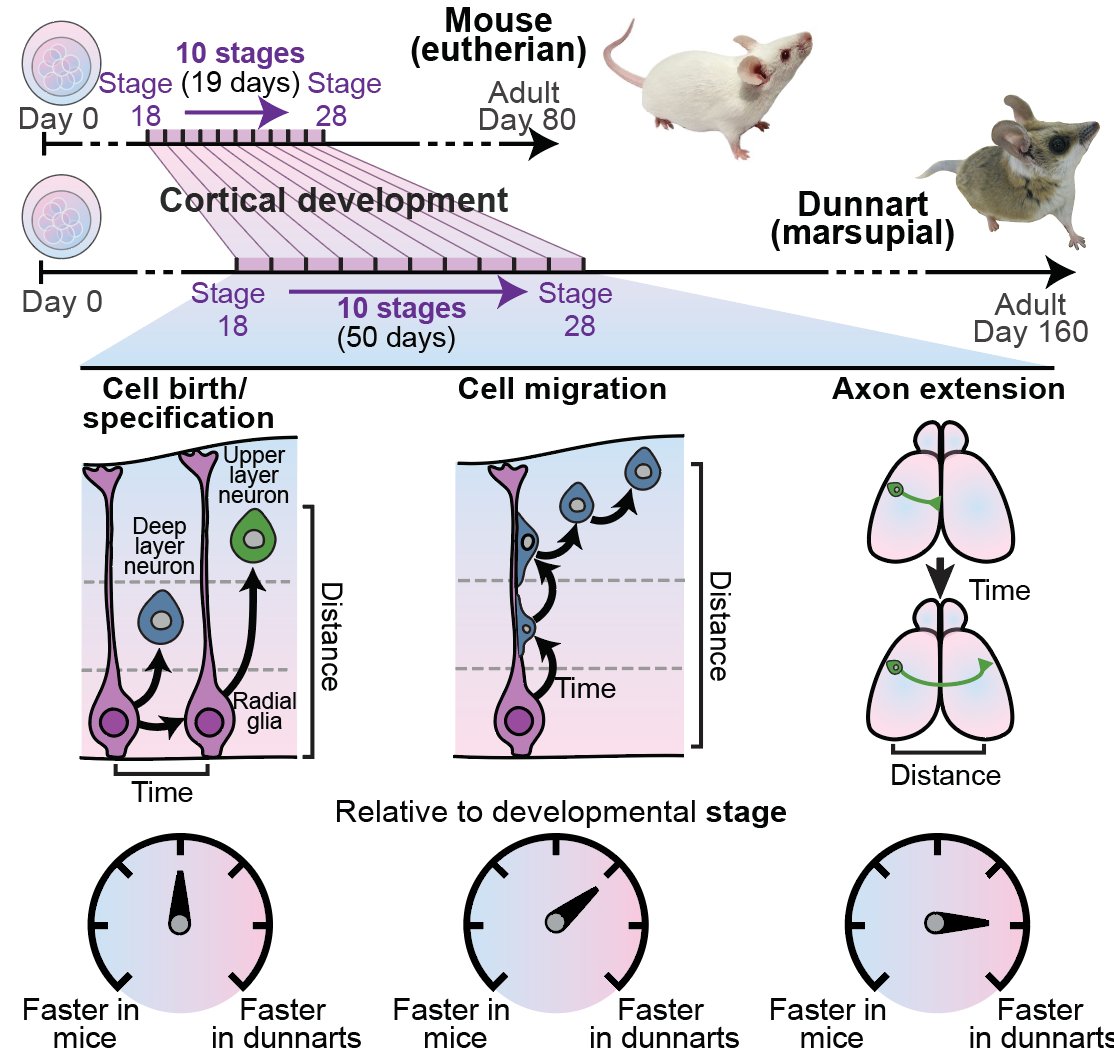
Big congratulations to co-first authors @AnnalisaPaolino and @ElizzyH86 for publication of their work on timing of mammalian cortical neurodevelopment! Very proud to be a member of this exciting and wonderful new lab of @LauraRoseFenlon and @rsuarezsaa!
New work from our lab out now in @NatureComms! A similarly sized marsupial takes 3x longer to develop than a mouse, but do all cortical neurodevelopmental processes temporally scale to different timeframe uniformly? No! 🦘👩🔬🧠🔬https://t.co/mo1uc5fnQm
Another fantastic paper from the lab of @rsuarezsaa and @LauraRoseFenlon from the work of PhD students @ElizzyH86 and @EJBailey_Neuro profiling brain cytoarchitecture of the extinct Tasmanian Tiger. Great work everyone!
Very proud of this collaborative effort between @rsuarezsaa and my labs out in PNAS today describing the brain of the extinct Tasmanian Tiger from 100-year-old slides! The beautiful drawing is further testament to @rsuarezsaa 's many varied talents 🔬🥼🧠https://t.co/zXmSl2brMU
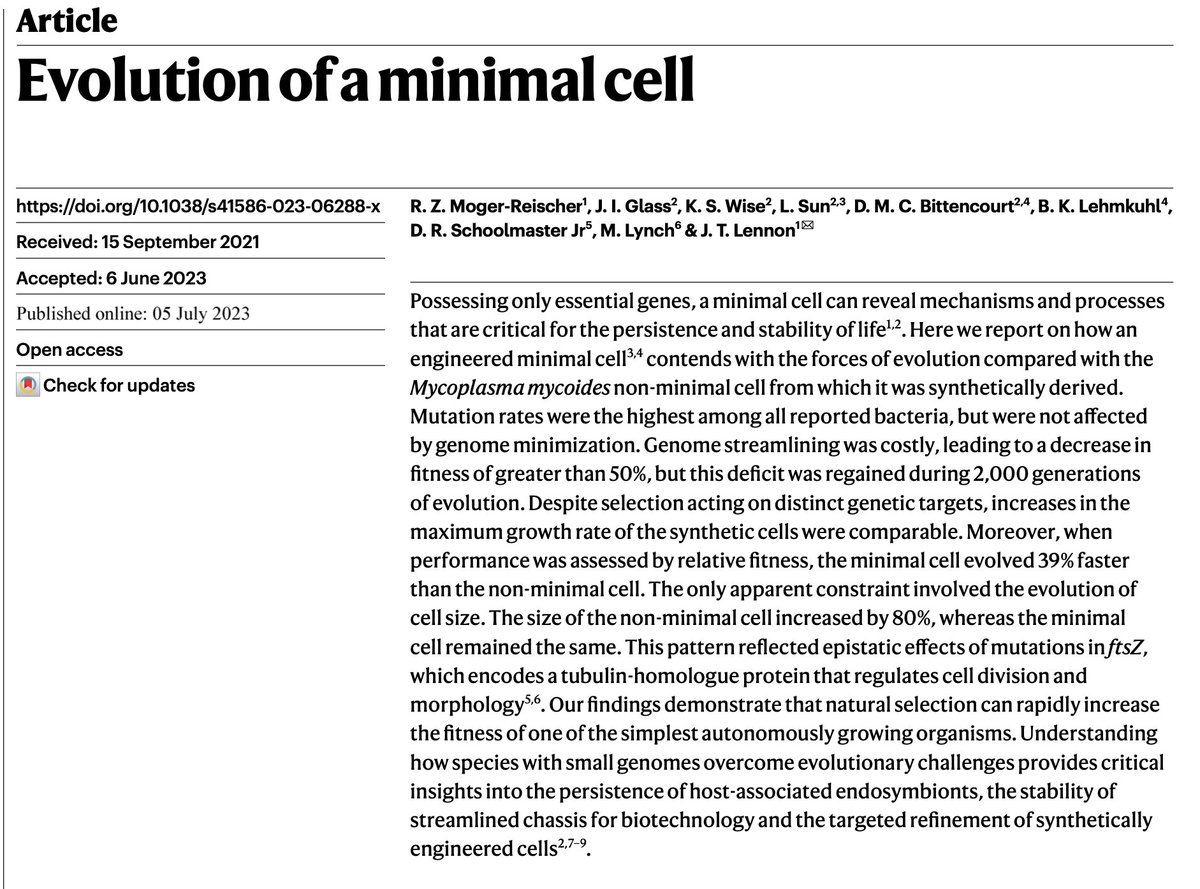
A mind-blowing paper has come out today in @Nature
In 2016, JC Venter Institute scientists trimmed a bacterial genome to its barest minimum required for life to synthesize what they called a "minimal genome" (https://t.co/Rk8oZJ0bUj).
Today, a group of scientists from Indiana University reports how that minimal genome evolved over 2000 generations in comparison to the non-minimal genome.
The authors found that even when you reduce a bacterial genome to its absolute minimum where every nucleotide matters, the genome undergoes mutational events generation after generation as much as the non-minimal genome. One simply cannot stop the evolution.
Just over 300 days of evolution (equivalent to 40,000 years in humans) the minimal cell has gained everything it lacked in fitness on day one in comparison to the non-minimal cell.
When comparing the evolved traits between the minimal and non-minimal cells, the scientists found something striking. The evolutionary process increased the cell size of non-minimal cells but not that of the minimal cell. But that is not the striking part.
The scientists were able to identify the key mutation that resulted in cell size evolution. And it turned out that the mutation that helped the non-minimal cells to grow bigger is the same that helped the minimal cells to stay smaller. Growing bigger had a survival advantage for non-minimal cells and not growing bigger had a survival advantage for minimal cells. So, the mutation had a context-dependent effect. This just demonstrates that the evolutionary effects on traits have no absolute direction. All that matter is what is beneficial for the organism's survival.
The conclusion of the paper is metaphorically a quote from the Jurassic Park movie:
“Listen, if there’s one thing the history of evolution has taught us is that life will not be contained. Life breaks free. It expands to new territories, and it crashes through barriers painfully, maybe even dangerously, but . . . life finds a way". (https://t.co/UlxRlb86CT)
https://t.co/zA9OAqSoAu
Brain development occurs postnatally (in the pouch) in marsupials, enabling us to study when, where and how neuronal activity starts in the cerebral cortex 🧠🔬🦘🤩. Check out our paper below in @PNASNews on 2-photon Ca2+ imaging in dunnart joeys @QldBrainInst @UQMedicine (1/n)