@biral_r@UK_MTO@grok The composition might have changed somewhat. It used to be roughly 80% energy carriers according to the U.S. and most of that probably crude oil. More transits, but decreasing outflows might be higher attack intensity (more engine room hits) or composition change (e.g. +cargo).
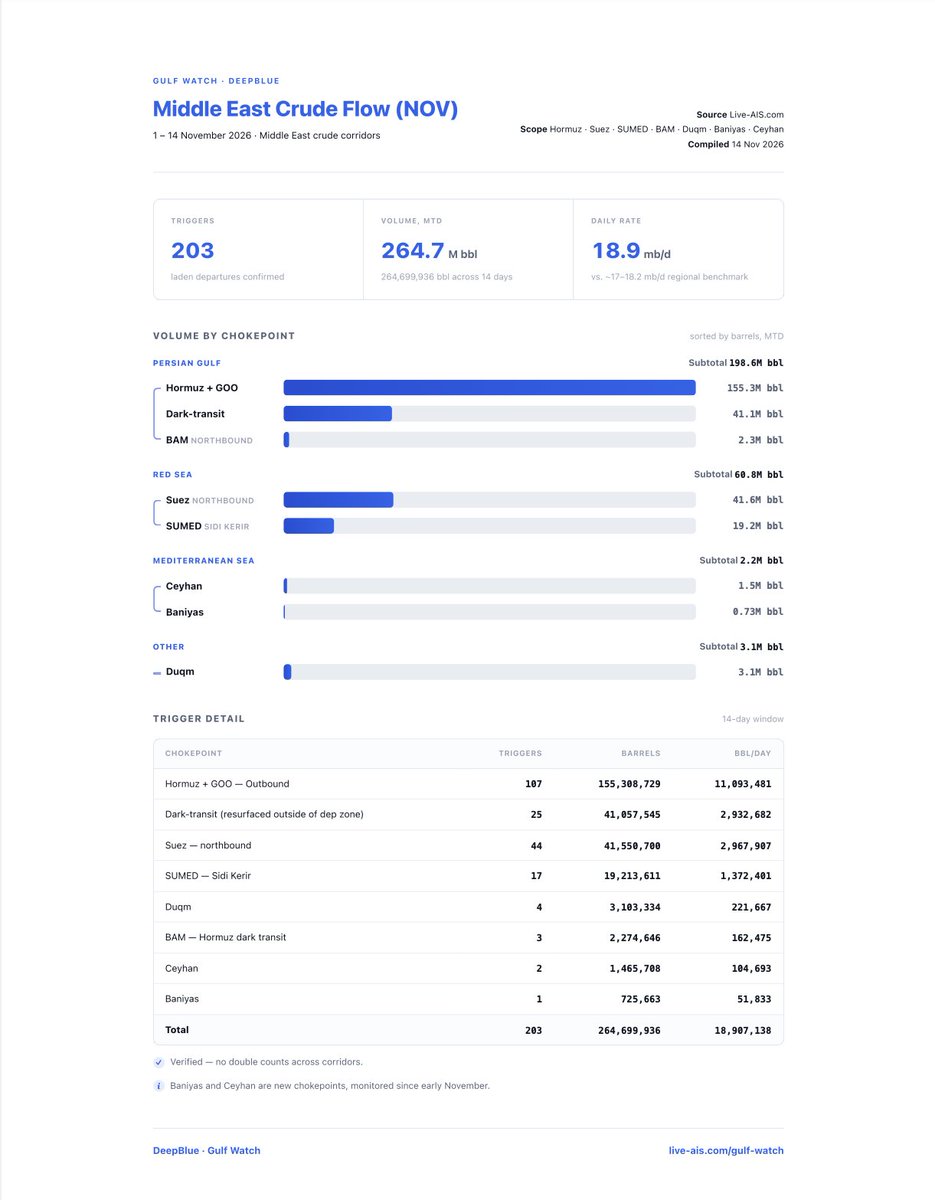
CRUDE FLOW Update - NOV MTD
So we're experimenting with a different reporting format from our usual weekly 7MDA. Highlights:
- MTD Volume
- Laden voyages
- Chokepoint breakdown
- Volume by commercial fleet
Note: Large number of laden crude transits seem to re-surface on AIS - well outside of Gulf of Oman, Arabian Sea and Indian Ocean, closer to Malacca even when Asia bound and closer to Gulf of Aden on rare occasions - when west bound. We're thinking other trackers may have missed to see this dataset/trend, as there appears to be no slowdown in outbound crude at all, as per our tracking data. This, despite the huge uptick with Iran offensive in the Hormuz late Sep and all through Oct and early November.
Gulf Watch: https://t.co/oDAdDpg6B5
- Subscribe for instant alerts or daily digests with export destination details and crude flow insights.
Next week or December on, we'll have the GCC country-wise breakdown, for now dataset corroborates with Bloomberg's export data and we'll keep testing for couple of weeks more.
@business #OOTT
@Rory_Johnston Do you think Dems will cede Hormuz (freedom of navigation) to Iran, pay $300b in war reparations, lift sanctions, for...? Iranian demands are likely a non starter, the war will likely continue.