AMD acaba de dar un golpe fuerte en la IA local.
Lisa Su subió al escenario con un mini PC del tamaño de un libro grueso en una sola mano y ejecutó en vivo un modelo de 235 mil millones de parámetros. Sin datacenter. Sin cloud. Sin alquilar GPUs.
El protagonista es el Ryzen AI Max+ 395 (Strix Halo). Es el primer chip x86 que une CPU y GPU con 128 GB de memoria unificada. En Linux, el GPU puede usar hasta ~110 GB de esa memoria.
Para ponerlo en contexto: una RTX 5090 tiene 32 GB y una 4090 tiene 24 GB. Este pequeño equipo ofrece más del triple de memoria accesible para modelos grandes, en un chasis compacto.
En pruebas específicas de inferencia (como DeepSeek R1), superó en más de 3x al rendimiento de una RTX 5080 cuando el modelo no cabe en la VRAM de la tarjeta de Nvidia.
El precio real del equipo con 128 GB (GMKtec EVO-X2) suele estar entre $1,800 y $2,500 según ofertas (el kit oficial de AMD es más caro).
Para quien usa mucho IA, esto cambia las cuentas: en vez de pagar cientos de dólares al mes en suscripciones (Claude, ChatGPT Pro, Cursor, etc.), puedes correr modelos potentes localmente con Ollama, LM Studio o similares. Privacidad total, sin límites de tokens y sin que te corten el servicio a las 3 a.m.
No es que las suscripciones vayan a desaparecer mañana, pero para muchos casos de uso (RAG con documentos privados, prototipos, agentes locales, etc.) esta opción se vuelve muy atractiva.
Estamos viendo el inicio de una nueva etapa de IA local accesible y potente??
China approved the first exports of Indium Phosphide (InP) substrate for 2026 and it shipped at the end of May, which should help alleviate bottlenecks in the optical communications market, DigiTimes reports. $AXTI $COHR $LITE https://t.co/yaqCvfCysa
🚨Everyone is still buying the chips. The bottleneck already moved.
A GPU that computes in nanoseconds and waits microseconds for data is a stranded asset. At 1.6T speeds, copper runs out of physics. The constraint on AI is no longer how fast you can think. It's how fast you can move what you thought.
Jensen has now said it twice in three months.
At GTC in March: "Is copper going to still be important? The answer is yes... Are you going to scale up optical? Yes. Are you going to scale out optical? Yes... We need a lot more capacity for copper. We need a lot more capacity for optics. We need a lot more capacity for CPO."
Last week at Computex, on Marvell's stage: "Optics where you must, copper where you can." Then he called Marvell the next trillion-dollar company and the optical complex repriced within days. The same keynote put a date on the handoff: 200G per lane is the last generation where copper is sufficient. After that, optics takes the rack.
Translation: not copper OR light. Copper now, light next, unprecedented amounts of both. 🔥
The chain is unavoidable: AI tokens are profitable → more GPUs → more bandwidth → copper hits its wall → photonics becomes the chokepoint.
And the smart money stopped debating. Follow the closed deals:
→ $NVDA has committed at least $6.5B to photonics in three months: $2B into Lumentum, $2B into Coherent, a $500M stake in Corning, and a piece of Ayar Labs' $500M round. Direct investments to secure its own light supply.
→ $MRVL paid $3.25B for Celestial AI, up to $5.5B with milestones, to build what its CEO calls a silicon photonics powerhouse.
→ $CRDO closed DustPhotonics two weeks ago. Ciena bought CPO startup Nubis for $270M.
North of $10B of strategic capital locked up one supply chain in under a year. Capital like that doesn't chase a theme. It secures a bottleneck.
LAYER 1: WAFER. Every laser starts as a crystal.
🟠 $AXTI: the InP substrate leader. The first chokepoint in the stack.
🟡 $IQE: compound-semi epiwafers feeding the laser makers. Speculative, but structurally upstream.
LAYER 2: LIGHT. Photons don't make themselves.
🟠 $LITE: revenue +90% YoY last quarter to $808M. EML shipments doubled and management says demand still exceeds supply across EMLs, pump lasers, and transceivers. NVIDIA just wired them $2B. OCS backlog past $400M plus a multi-hundred-million CPO order for 2027.
🟢 $SIVEF (Stockholm: SIVE): the external light source. CPO does not emit its own light. Every optical engine needs a continuous-wave InP laser feeding it, and that is the layer you cannot engineer around. ELS modules with POET hit production readiness end of this year. Disclosure: long.
🟣 $POET: the optical engine wildcard. Its Optical Interposer pairs with Sivers' lasers on external light sources for CPO, with a LITEON module deal stacked on top. Binary commercialization, real architecture.
LAYER 3: OPTICS AND MODULES. Where light meets the rack.
🟠 $COHR: the volume anchor in transceivers, holding NVIDIA's other $2B check.
🔵 $AAOI: Q1 revenue +51% to a record $151M, datacenter revenue more than doubled, $124M of 800G orders plus a $200M+ 1.6T order in hand. Scaling Texas capacity toward 500K+ units a month by year-end, targeting $1B+ revenue this year. Domestic supply while everyone fights over offshore. Disclosure: long.
🟠 $FN: the foundry of optics. When Fabrinet is building, the orders already exist.
THE INTERCONNECT: the layer the rack cannot route around.
🔵 $CRDO: just closed DustPhotonics. SerDes → DSP → silicon photonics → system integration, one company, 800G through 3.2T. Electrical AND optical, end to end. FY26 revenue tripled to $1.34B at 68% gross margin. The toll booth on both roads. Disclosure: long.
🟠 $MRVL: $3.25B for Celestial AI, and Jensen's trillion-dollar nod on the Computex stage.
🟠 $AVGO: switch silicon, optical DSPs, CPO engines. They define the socket.
🟠 $ANET: the AI spine. 100K-GPU clusters get stitched together in light.
LAYER 4: PACKAGING, FIBER, FOUNDRY. Where photons get industrialized.
🔵 $TSEM: the neutral silicon photonics foundry. Prints wafers for whoever wins.
🟣 $LPKF: glass-substrate packaging for glass-based CPO. Real technology, binary commercialization.
🟠 $GLW: AI racks demand several times the fiber density of legacy cloud, and NVIDIA just took a $500M stake. Corning sells density.
LAYER 5: TEST AND THE ANALOG UNDERLAYER. Complexity is a tax paid in validation.
🔵 $AEHR: silicon photonics test, ramping with the cycle. '
🔵 $VIAV: every 800G and 1.6T transceiver gets validated before it ships. The gate the market prices like an accessory.
🔵 $SMTC: the drivers and TIAs that fire the lasers. Sits directly under the LPO trade.
🔵 $MTSI: the high-speed analog behind 1.6T engines.
🟠 $CIEN: transport. Even long-haul is buying light.
💡The counter-thesis, because every map needs one. The honest debate on this stack is whether these are genuine bottleneck assets or cyclical optics suppliers enjoying peak demand at peak multiples. Lumentum's May print showed +90% growth with the stock up roughly 1,400% over the prior year at a triple-digit trailing multiple. That is a price for perfection. Most of these names live or die on a handful of hyperscaler capex lines, and one digestion quarter hits the whole stack at once. CPO timing has already slipped once. Architecture risk is real: LPO, CPO, and stretched copper are still fighting for the same sockets. The cycle is real. So is the gravity. 🔥
But the bears have to explain one thing: $NVDA, $MRVL, $CRDO, and $CIEN just spent over $10B securing this supply chain with their own balance sheets. The people with the best information are paying up for the layers.
The market owns the top of this stack. The asymmetry is at the edges: wafer, light, packaging, test.
Own the layers, not the logo.
Bookmark this for the weekend. Then tag the one investor you know who's still all compute and no interconnect. 👀
Some napkin math on $AAOI:
> Management explicitly told you that their mid-2027 target is $471M transceiver revenue - that's $5.65B annualized just from their 100G/400G, 800G and 1.6T lines.
> The biggest risk is management doesn't achieve this (it is ultimately a huge ramp, but one they've raised capital for). But if they do, that puts AAOI at roughly 2.4–2.9x P/S at today's market cap. That is stupid cheap compared to larger optical peers: Lumentum trades around 15x FY2027 sales and Coherent around 8x FY2027 sales.
> CPO laser also sits on top as a free option (GS already predicts this will reach ~$100B in 2028).
> $AAOI (pluggables) will be a big beneficiary if CPO is delayed as Semi Analysis argues in their CPO report.
I think $AAOI, while not without risk, presents great risk to reward. NFA - I am long.
Full analysis below, including my take on the "risk" that management is unable to succeed in ramping production.
Brilliant article by @Aktiehedonist
One of the best grounded deep dives I’ve read on $AAOI.
No hyper-bullish narrative, no hype, just a cold, honest look at the numbers, the execution, and the risks.
I’m long $AAOI (~5% of portfolio), but it’s very much a “pending execution” position.
If they execute - I add.
If they fumble - I cut.
I went through every earnings call across the entire 800G and 1.6T supply chain and mapped out the actual supply vs. demand.
The $LITE CEO said it best: "We are significantly under shipping demand. It's certainly greater than that 30% number. We are having to make choices as to who we support."
> $LITE has every laser it can make through the end of 2027 already sold.
> $AAOI is expanding capacity 10x and the CEO still said demand will outrun it through mid-2027.
> $FN said demand far exceeded what they shipped last quarter. Named lasers as the first constraint.
> $CIEN added $600M to its backlog in a single quarter. Now sitting at $7.7B.
> $CSCO raised its hyperscaler AI order guidance from $5B to $9B mid-year with one quarter left. That is purchase orders. Not projections.
Full report is free to read. Link in replies or link in bio.
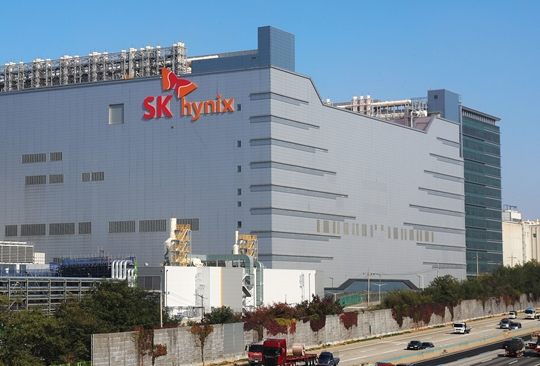
South Korean 🇰🇷 memory chipmaker SK Hynix is reportedly looking to choose the Nasdaq for its planned 🇺🇸 listing
The planned listing could come as early as this August - Reuters
JEFF BEZOS JUST EMERGED FROM STEALTH WITH A $41 BILLION AI STARTUP CALLED PROMETHEUS
$12 billion raised. Valued at $41 billion. Coming out of stealth today.
The backers: Bezos personally, JPMorgan, BlackRock, Goldman Sachs, DST Global, and Arch Venture Partners.
The mission: do for engineering and manufacturing what large language models did for text.
Bezos is calling it an "artificial general engineer." Instead of training on words from the internet, Prometheus ingests data from the physical world to accelerate the manufacturing of skyscrapers, smartphones, jet engines, and everything in between.
In Bezos' own words: "Something that today was going to take 100 engineers 10 years to build, if you can change that to taking 10 engineers one year to build, you're just going to get way more things built."
This is Bezos' first CEO role since stepping down from Amazon in 2021. He's co-leading it with Vik Bajaj, former Google X executive.
(Source Semafor)
The Numbers:
3.8% Q2 GDP Growth (Atlanta Fed estimate)
139,000 jobs added in May (above 126,000 expected)
Inflation at 0.1% MoM (vs 0.2 expected) and 2.4% YoY
Trade deficit cut in half
Polymarket odds of recession down from 66% in April to 23% today
Trump approval +6 in Morning Consult, +7 in Rasmussen
Democrat Party approval -49 in Quinnipiac
On June 9, optics stocks fell as one on a "CPO is late, sell photonics" logic. The next day the same names bounced, and in the same week NTT and SK wired $500M into optical communications. Who misread the clock?
In the new piece:
- A ladder that makes DSP, LPO, NPO, and CPO clear in one read, even for non-specialists
- Where Lumentum, Coherent, AAOI, and Sivers actually sit on it, and who is CPO-agnostic
- The capital that flowed into photonics in the same week as the selloff, itemized
Do not sell the power plant because the lamp is late.
Given token economics, we really need @apple’s new ceo to go all in on workstations that can run local, open source models
Ideally, with a router that can flip between local models and frontier models when the former gets stuck.
And America needs an open source champion — we really should not be comfortable with the Chinese owning the open source LLM market to the extent they do
Markets should be cheering on domestic champions like $AAOI.
Since it's ideal to support critical AI infra from laser fab to production in the US, rather than being a bear.
Feels like everyone just outsources transceivers to Asia like Malaysia or Thailand...
With $INTC, $IQE, $XFAB, $MU, $WOLF, $SOI, $SIVE, and others...
If you haven't noticed by now, they're all critical to US supply chains. And every one of them are getting subsidies for securing Western supply chains.
Before a major trade was to short developing US/Western equities, then hedge with subsidized foreign ones.
As seen with the energy/solar firms that went bankrupt, this backfired a lot on US AI infrastructure years later with the power grid.
I wanted to help change this mindset, since I believe it's very positive sum to invest in building up critical Western supply chains like photonics today.
Especially if $AAOI hits their $471m/month projections after reshoring their production to America.
Instead of hoping they fail and calling critical nodes in the supply chains memestocks/bubbles, maybe it's good to change mindsets a bit so we don't see a repeat of the US Solar sector years later.
US/EU don't just hand out subsidies or CHIPS act grants to anyone.
BREAKING: President Trump says he directed the US Military to execute a “secret mission” in the Strait of Hormuz which resulted in over 100 million barrels of crude oil crossing through Hormuz.
AMD strikes back! $AMD
"Under the modeled 100 kW rack scenario, AMD EPYC 9965 delivers an estimated 2.37x the rack-level throughput of the NVIDIA Vera baseline and roughly 1.6x that of Intel Xeon 6980P. Next-generation AMD EPYC “Venice” is projected to extend the Vera comparison to 3.30x" https://t.co/76i6mBARPA