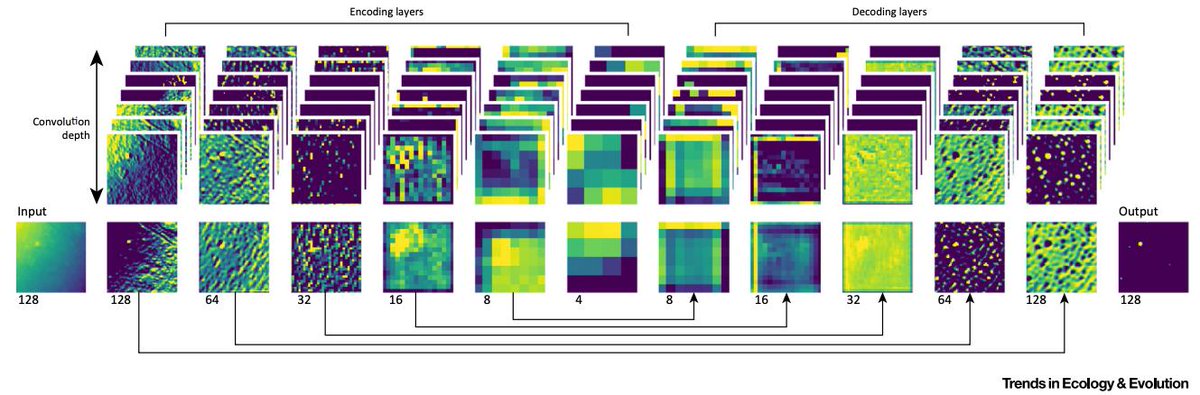
Excited to share our work discussing how CNNs and hi-res remotely sensed data can help reveal ecological patterns. Much more coming in this realm coming soon!
Manuscript: https://t.co/QQ8K0iyg6i
Repo: https://t.co/kg5NGR9yIg
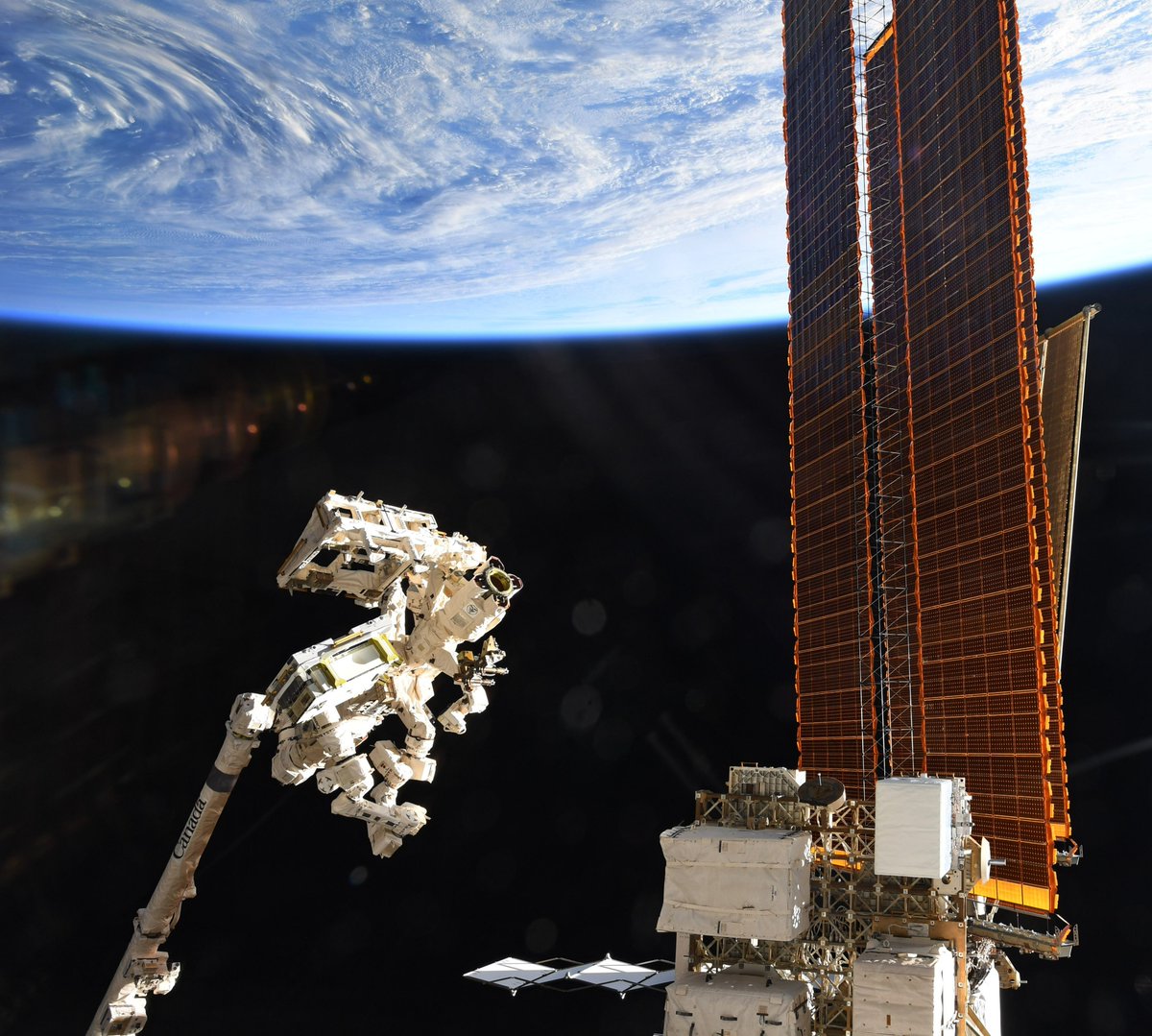
While a lot of new science keeps us busy inside @Space_Station, important science is being conducted outside the station as well. @NASAJPL payload EMIT hitched a ride on @csa_asc Canadarm2 to its new home where it will study dust composition and its effects on Earth’s climate.
a bittersweet end to fieldwork at Sedgwick - for now - stay tuned for research results on all things🍃💦✈️🌳🌞🍂🔬 @NidhiVinod4 @AnnaJOngjoco #ShiftForScience@NASAJPL
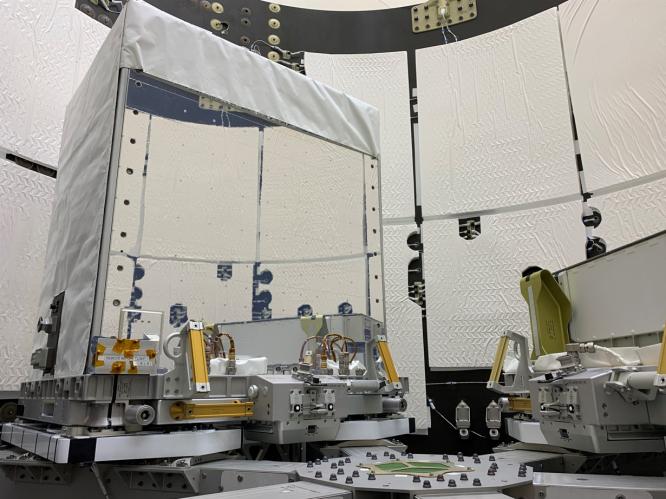
Packing for launch 🧳
EMIT has been loaded into the "trunk" that will travel aboard a SpaceX cargo resupply mission to the @Space_Station. The instrument will map Earth's arid dust source regions, gathering info about particle color & composition as it orbits Earth.
Demo videos now available so you can see what ImgSPEC can do for #openscience. ImgSPEC builds on the @NASAEarthData & @ESA_EO MAAP collaborative platform. ImgSPEC expands MAAP use cases to centralize contributions from users outside of NASA missions. https://t.co/brEfHCcNIE
We're looking for a postdoc to join our team at @NASAJPL to support this effort. Imaging spectroscopy is inherently interdisciplinary, and we encourage applications from folks of all backgrounds. See the posting here, or DM me with questions https://t.co/WXdzNRN3cz
No one owns the rainbow. We're very excited to announce that through support of @NASA's OSTFL, @davidray and I will be leading an effort to expand the quality, stability, and efficiency of #OpenSource imaging spectroscopy retrievals using isofit https://t.co/KYSAh0sBFD
We were fortunate to get this opportunity as one of 8 excellent proposals selected by @NASA OSTFL, including @xarray_dev, @arxiv, and more. You can see the full list here: https://t.co/7Czo9QrSWK
Together we can dramatically accelerate scientific advancement and impact! Join us on October 14 and then join us in NASA’s transformation to Open Source Science. https://t.co/hRvlntX64W
Help me shake my booty!!
I've joined the Concordia Shuffle team to raise funds for the Nadia Chaudhri Wingspan Award. This award will be given annually to a graduate student from an underrepresented group who wants to do neuroscience research @Concordia.
🧠👩🏾🔬🔬🧪
Please RT! Seeking a post-doc for a @NASA project to use hyperspectral remote sensing for assessing grassland plant diversity @okstate, led by @GholizadehRS. Lot’s of exciting opportunities. To apply or for more information https://t.co/3cDpB5Y9m2
@chr_fronge@ashiklom711 Hey, I'm one of those! We follow a Caltech procedure that's relatively recently been streamlined to make it pretty straightforward.
The new IPCC report is a clear call to action. Our world is changing; only "strong, rapid and sustained reductions" in GHGs will stabilize the climate.
After a few field campaign cancellations due to COVID-19, #FRAGMENT@ERC_Research project is finally back on the field!!, this time in the desert of Dyngjunsandur, Iceland (1/n)
45 years of imaging spectroscopy articles show a disconnect between machine learning research and pressing science challenges. A cultural shift is needed. https://t.co/P7lBSW8hXF
Siloing doesn't cut it. Coupling machine learning and imaging spectroscopy for the geosciences requires the hard work of direct collaboration to achieve the most gains. @davidray and I discuss:
Imaging spectroscopy, aka hyperspectral imaging, which involves collecting spectral data from airborne and satellite sensors is expected to benefit from machine learning.
Story by @davidray@pgbrodrick@NASAJPL
https://t.co/TrCK3bnkmV
We have a new paper out in PNAS today, with @biogeocycle @ErikaSZavaleta @FunktionalEco @connor_morozumi@dluis_hernandez and Jae Pasari: Trait-based filtering mediates the effects of realistic biodiversity losses on ecosystem functining https://t.co/mp1FCFv30d