Honey, stop the scroll! 🍯🐻 @fortnums has unveiled a giant 8.4m Winnie the Pooh-inspired beehive at @stpancrasinternational to celebrate 100 years of Disney’s Winnie the Pooh.
Inspired by Fortnum’s own working beehives, the immersive installation invites visitors to discover the story of bees and honey-making before exploring Fortnum’s exclusive Winnie the Pooh collection, including the world’s first official 100 Aker Wood Hunny, alongside limited-edition food, homeware and hampers. And of course, don’t forget to snap some seriously sweet photos! 📸
Open until 31 August - don’t bee late to see it! 🐝✨
📍St. Pancras International
#LondonMakesItPossible #VisitLondon #FortnumMason #WinnieThePooh #Disney
If you love London, and appreciate this account, kindly share this post to help others find and follow us at @Lost___London.
Help us bring the bygone days of our glorious city into the hearts and minds of modern day people.
Thank you. 🤝
In 2005, David Beckham opened his football academy in Greenwich, London.
Among the young footballers there that day was an 11 year old boy named Harry Kane.
Standing beside him was Katie Goodland, a girl he had known since their school days in East London.
They posed for a photograph with Beckham.
At the time, it was simply a picture of two children meeting one of England's biggest football stars.
Harry and Katie could never have known what the next two decades would bring.
The childhood friends grew closer, began dating as teenagers, and built a life together.
Harry kept chasing football.
He rose through Tottenham's academy, endured loan spells, fought for his place, and eventually became one of the greatest goalscorers England has ever produced.
In 2018, he captained England at the World Cup and won the Golden Boot.
In 2023, he broke Wayne Rooney's record to become England men's all time leading goalscorer.
And the girl standing beside him in that old photograph stayed beside him through the journey.
Harry proposed to Katie in 2017.
They married in June 2019 and went on to build a family together, becoming parents to four children.
Years after that photograph was taken, Harry even joked that Beckham was probably Katie's childhood crush.
But life had written a different story.
The boy who once stood beside his football hero became England captain.
And the girl standing next to him became his wife.
Sometimes, an ordinary photograph is only ordinary because we haven't seen the future yet
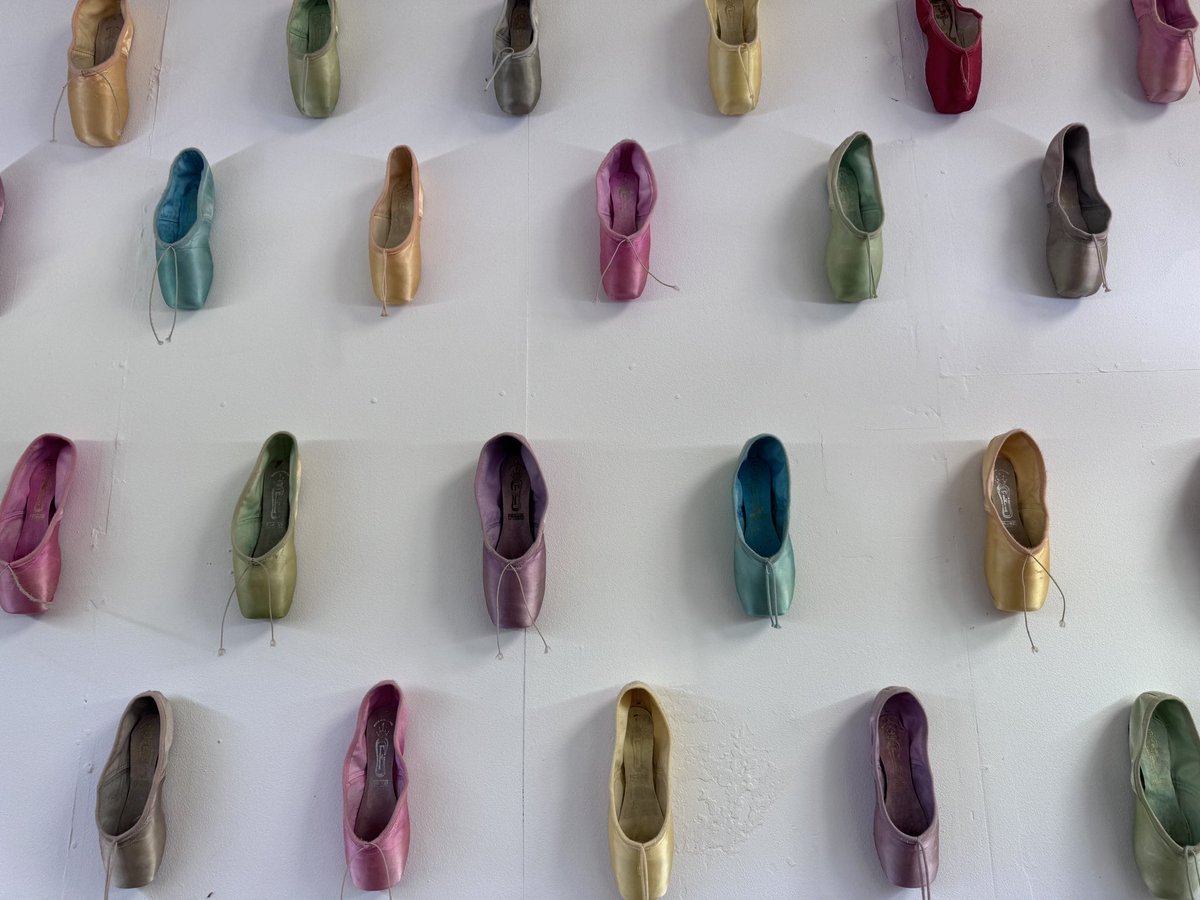
I had a very fun morning at Freed of London — a 97 year old factory in Hackney specialising in making the world’s finest point ballet shoes 🩰
Each year they sell over 300,000 shoes, all made in London by a team of exceptional makers and exported to the world.
My favourite bit: each shoe carries a mark that uniquely connects it to its specific maker - like a crown or a castle.
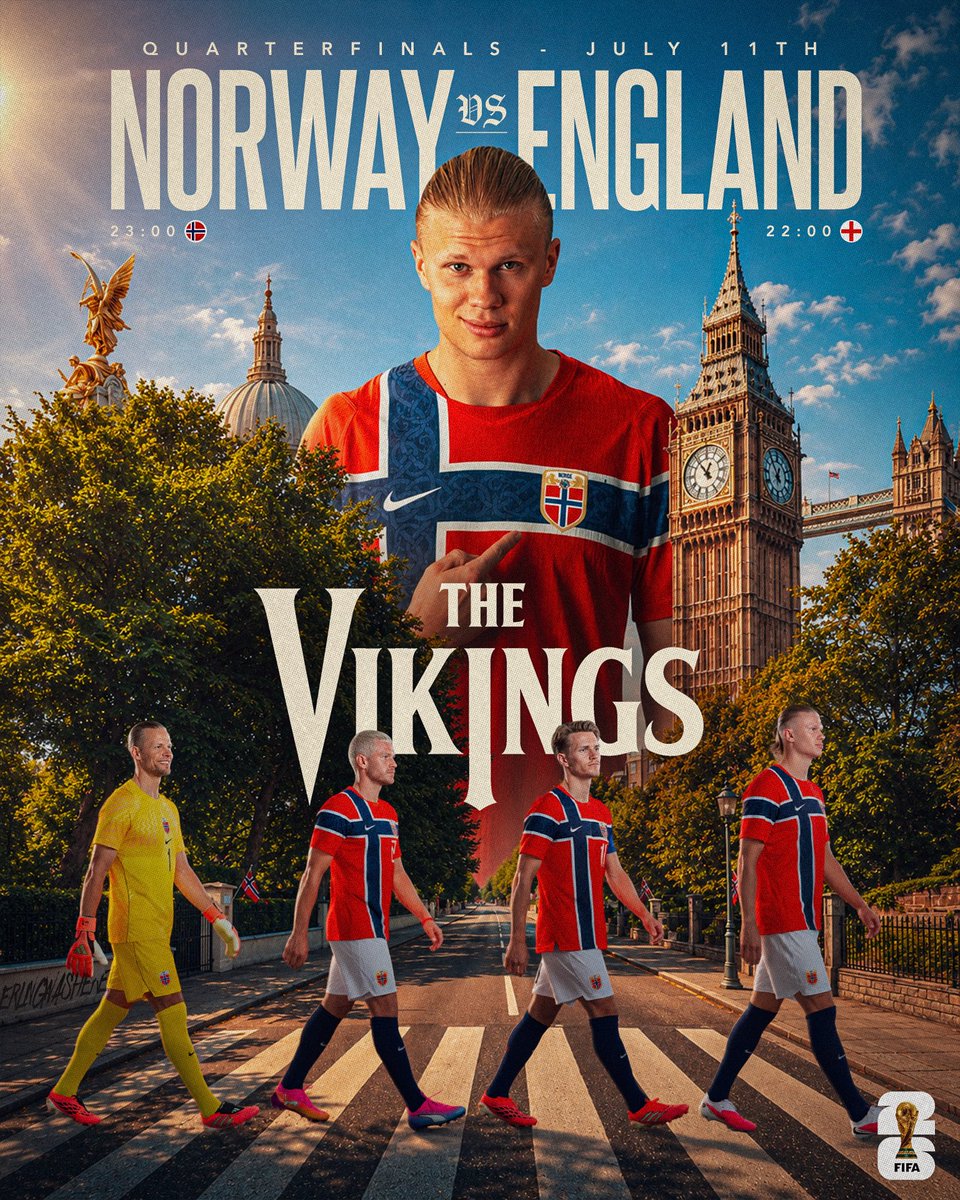
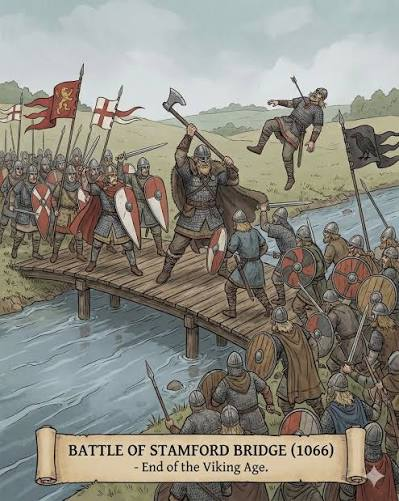
The last match up this big between England and Norway was at Stamford Bridge... in 1066...
We won that one, but lost to France in the final. 960 years of hurt..
🇬🇧 Every British river. 🌊🇬🇧
Has a name older than English. Older than Rome. You still say it.
The Thames. The Romans wrote it as Tamesis. But the name they wrote was already old when they arrived.
A pre-Celtic name passed to the Celts, passed to Rome, passed to us. The name has changed only in the shape of the sound.
The Severn. The Welsh called her Sabrina. A river goddess in the Brittonic tongue. And the Severn still carries her name today.
🏞️ The Trent. The Celts called it Trisanton. A name meaning the trespasser. The river that bursts its banks. And it still bursts its banks.
The Avon. The word means river. The Britons called every river the Avon. The English kept the name.
The Tyne. A Brittonic name meaning the flowing one. The Dee. A name meaning the goddess, the holy one. The Britons named her sacred and the English left her sacred.
The Anglo-Saxons came. They renamed villages. They renamed hills. They renamed almost everything they could. But they did not rename the rivers.
The rivers were too holy. The names were too rooted.
And so the Brittonic words stayed in English mouths.
The Britons did not vanish. Their words did not vanish. Their descendants became the British. And the British still name the river the same way. Every time.
🇬🇧 British people speak a language older than English. Every day. Without noticing. The Britons named the water. The British still call it the same.
━━━━━━━━━━━━━━
The river names are not relics.
The villages changed names. The rivers kept theirs.
Help us pass our history downstream. 👇🙏
👉 https://t.co/rih7iKwnvf 👈
Be part of us. ☝️🇬🇧
Be Proud Of Us. 🙏🇬🇧
Today I would like to show off a great work of art. Painted by a young person and a very talented former pupil of my school.
I think it captures my gorgeousness totally!
Thank you TB, you’ve got a great future ahead of you. ♥️🐾
#cats#CatsOfTwitter#Hedgewatch
If government can do this to #WASPI women it can do it to anyone. They thought we would go away, we are not,we haven’t come this far to be denied justice based on faulty reasoning. It is now a matter of principle as well as an injustice.
Read our latest update here and please donate if you can to help us right this shocking historic wrong. Thank you.
https://t.co/azZsZ8O57y
"The Nowhere Door" refers to a curious architectural quirk located on Three Colt Street in Limehouse, East London.
It is an old, decorative green door set directly into a solid brick wall, leading absolutely nowhere.
A plaque on the wall states that it is a replica of the door to the "Old Limehouse," which was built around 1705 and demolished in 1935. The original door was preserved and donated to the Ragged School Museum.
We're not giving up. We're not giving in. #WASPI women are #notgoingaway. We're taking the #DWP to Court for its shocking defiance of the Ombudsman. Please support our Crowdjustice fundraiser. Follow the link to our latest update 👇 #JusticeForWASPIWomen
https://t.co/Unq0XH7aCh
🇬🇧 On a Berkshire hillside there is a chalk horse 3,000 years old.
100 generations of British people have refused to let it fade.
Its name is the Uffington White Horse. It sits on the chalk of the Berkshire Downs. And it was cut around 1,000 BC by Britons of the Late Bronze Age.
They cut a trench into the turf. And filled it with crushed chalk. They cut a horse 110 metres long. Visible from miles.
Chalk hillside art does not last. Grass grows. Silt fills. Without care, a chalk figure disappears within a generation.
🏔️ The Uffington White Horse should have vanished by the Iron Age. It did not.
Because every generation that has lived near it has scoured it. Cleared the grass. Refilled the chalk. Kept the design alive.
The Iron Age tended it. Rome tended it. The Anglo-Saxons named the hill after it. A Welsh poem of 600 AD mentioned it as already ancient. Medieval villagers held a festival to scour it. Victorian villagers wrote songs about it. And every year, modern volunteers continue.
3,000 years of British people. Bronze Age carvers. Iron Age tribes. Roman Britons. Anglo-Saxon farmers. Medieval villagers. Victorian families. And the British still here today.
The carvers who cut the horse became Britons. Their descendants became the British. 100 generations have tended the same horse. 100 generations have refused to let it fade. The horse is alive because the people have stayed.
This is what continuity looks like. Not a memory. Not a museum. A horse kept alive by hand.
🇬🇧 If you want to know whether the British are still here, look up.
━━━━━━━━━━━━━━
The chalk has been re-cut by hand for 3,000 years.
Most British kids have never been up the hill.
Our work is made in Britain, for Britain.
Take your kids up the hill. 🙏
👉 https://t.co/rih7iKwnvf 👈
Be part of us. ☝️🇬🇧
Be Proud Of Us. 🙏🇬🇧