Regenerative Finance is so much more than "climate change" initiatives...
It is about shifting the economy by transferring control of capital to communities most affected by racial, economic, and environmental injustices.
#ReFi#Web3#GiveToEarn#blockchain
Receiving this message from @HelpersSocial regarding the ongoing impact of our solar projects for rural communities in Nigeria is the absolute best way to start our day☀️💛
At Purpose for Profit, liquidity is backed by real assets—loans. As loans are repaid, liquidity becomes available, ensuring that if you want to exit, we can help with payouts. While there's a six-month lockup on new purchases, once tokens unlock, you'll have the flexibility to trade on decentralized exchanges and, eventually, centralized platforms. We’re building a system that combines real-world assets with the flexibility of crypto.
"If you're building in web3 & you're not thinking about ownership economies you are missing the point." 💚
Super relevant & action-inspiring topic for S8 of the @greenpillnet podcast; the first episode is packed full of valuable insights ⬇️
I’m really frustrated by the mentality of “you did not support me, therefore my app/token/product failed.” Even more so by “you did not support me, therefore you don’t support anyone.”
Protocols should work like hell to put founders in the best position to be successful. But the final result is always on you, the founder. You are responsible for building a business, which also means you are responsible for pivoting or changing when the business isn’t working.
Sometimes this is interpreted as “x protocol doesn’t care about x industry anymore.” But if the only way your project will succeed is if the host blockchain promotes you, or invests in you, or buys you, then that is a problem. For everyone. It means you aren’t building a viable business. It means the protocol is throwing money at bad businesses.
The thing that sucks most about being a founder is you might work like hell and make incredible sacrifices while doing everything “right”, and still fail. Maybe it was bad luck. Maybe it was unfair. But if all you do is yell at the system to change how they support you, then you are wasting time you could be spending building a better product.
It’s tempting to look at other ecosystems and say “look what they are doing, just do that for me.” If what they are doing is actually better, you should launch on them! Don’t stay on a chain just out of loyalty. Force chains to be better by rewarding the systems doing it right.
I say this as someone working at a protocol that has grappled with founder support in the past. But I also say this as a former founder. There’s nothing worse than shutting down a company because your business failed. It’s agonizing. It takes literal years to recover. I’ll never forget the day I had to tell thirty people that what we’d worked so hard on was over.
The urge is to lash out. You want to blame the system, VCs, platforms. You worked hard, so it should have worked.
Therein lies the trap. Hard work does not guarantee success. There is no award for “I should have won”.
The sad truth is that 95 percent of startups die. It might seem like we want that to be lower, but a world where only 80% of a protocol’s startups die is probably one where the protocol goes bankrupt, ending the music for everyone.
Instead of “you gave this team support and me nothing”, you need to ask: why didn’t I succeed at getting the attention I needed? Why isn’t my product resonating? Why is no one banging down the doors to promote me? Figure out what you need to change that is under your control.
Otherwise, you are going to jump to a new chain and most likely go through the whole thing all over again. It is not you that failed, it’s all of Ethereum. It is not you that failed, it is crypto itself.
Believe it or not, I find this problem optimistic. Some apps do succeed. We do have room to grow. Protocols *can* compete with one another on founder experience. Distribution matters, and Ethereum is bad at it. All of these are solvable. All of them are opportunities under our control.
Where we start:
- Protocols need to communicate clearly what they are looking for, and what they provide.
- Protocols need to say “no” clearly and more often.
- Protocols need to get way better at spotting winners and handing them jet fuel, rather than scattershot grants.
- Founders need to clearly communicate what they need. “Base supports founders more” is meaningless. “Base helped me get 1000 paying users by tweeting and a Wallet ad” is clear.
- Founders need to own their destiny. If your company isn’t working, change something. If it’s the chain’s fault, change chains. If it’s the market’s fault, pivot.
It is a protocol’s job to create opportunity. It is a founder’s job to seize it. We have work to do on both.
One of the biggest challenges nonprofits face is sustainable funding for operations 💸⚙️
While donors often prioritize direct impact, core funding is vital for long-term success.🌱
@jhruth of @climate_program shares how @glodollar can help CCN solve this 🎯
Full chat below 👇
@AlanaDLevin Hi @AlanaDLevin ! We're building a regenerative-giving platform that turns donors into economic stakeholders. Would love to share our https://t.co/xrG5TvbBrD deck with you. DMs open!
@AlanaDLevin Hi @AlanaDLevin ! Saw your tweet about "holy grail" ideas - We're building a regenerative-giving platform that turns givers into economic stakeholders. Would love to share our https://t.co/xrG5TvbBrD deck with you. DMs open!
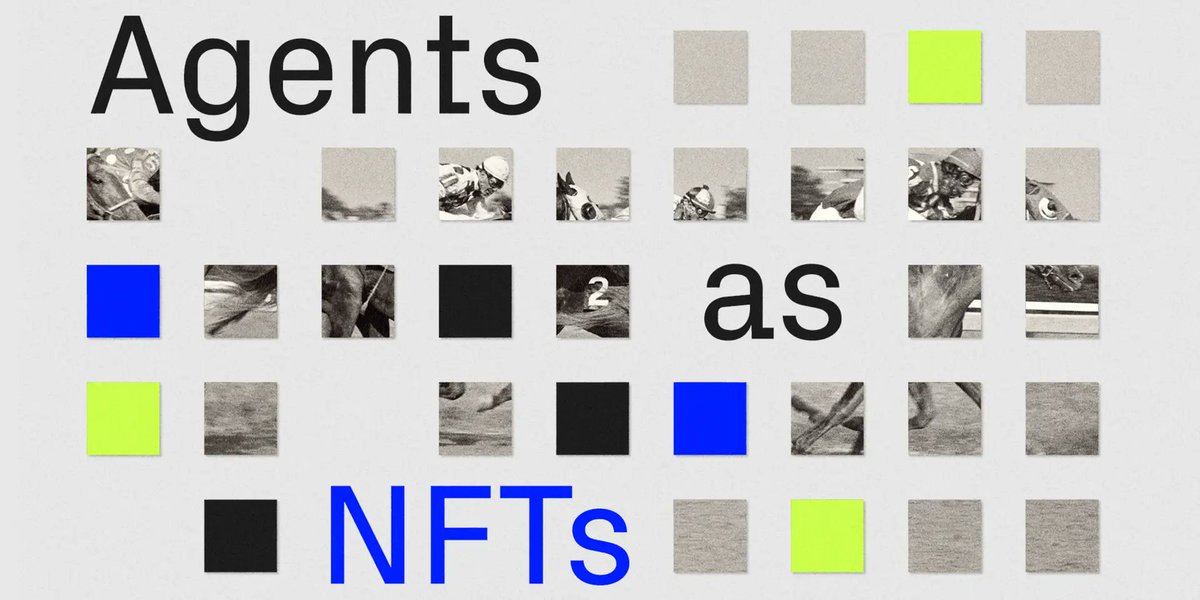
One way to look at NFTs is that they are valuable because they allow digital property to reflect features we associate with property in the physical world.
Think about owning a house. When you buy the house, you get a deed, which provides provenance via a chain of title. As the owner, you unilaterally possess the property and have the right to exclude others from using it. And if you improve the house, those improvements run with the property. Normal digital assets do not have these features, but NFTs can embody them.
NFTs have so far only reached product-market fit with art, which generally only utilizes the first two features. Take Asymmetrical Liberation, a piece from Botto. It certainly utilizes provenance to prove it was the first piece generated in Botto’s Genesis Period, and its holder has unilateral control over it. But there’s no way its holder can improve the art (nor would that make sense). The closest NFTs have leaned into this improvement feature is probably with video game NFTs, like when a player’s action in the game levels up a character. This feature is far too underexplored with NFTs.
I think one really interesting use case for NFTs that can impart all three of these features of property in the physical world is agents. The key insight is that agents have “memories” that allow them to record their experiences performing tasks for their principals. These experiences are unique, which makes them non-fungible. An NFT could represent an agent, and holding this NFT could provide exclusive read/write access to an associated memory slot in a trustless memory layer (functioning effectively as a “license” to these memories). This memory layer is exactly what companies like Plastic Labs are working on.
Agents as NFTs would embody the three features of property in the physical world:
Possession. The holder of the NFT will have the exclusive right to access the agent’s memories.
Improvements. The agent’s memory will update every time the NFT holder uses the agent, gaining holder-specific experience. The agent will also remember the refinements of the holder.
Provenance. Because the agent can only be used by its NFT holder, a record of past holders will indicate its experience, functioning like a “resume.”
Leaning into these features of property in the physical world will allow for a highly specialized and differentiated agent that isn’t possible today. For example, imagine J. R. R. Tolkien held a certain NFT agent and used it while writing The Hobbit. Let’s say you want to write your own fantasy novel and are seeking an agent to help you. The fact that this agent was provably owned by Tolkien, and only Tolkien, indicates it has experiences that will be helpful for drafting a fantasy novel. If you acquire it, the agent would have added value because only you will be able to access it; the agent is a differentiator for you.
While the majority of agents will probably make more sense as collective agents offered to the public via an API like any SaaS product, agents as NFTs enable something more akin to a racehorse. Racehorses are more valuable when they provably come from certain trainers, their training stays with the horse from owner to owner, and they can only be possessed by one rider at a time.
Agents as NFTs unlocks a net-new design space in software I’m excited to see play out.
Africa's path to mass crypto adoption isn't theoretical.
It's happening now, and the growth trajectory is... beautiful.
What happens when we combine:
• 230M Nigerians (63% under 25)
• Kenya's 75% mobile money penetration
• Ghana's surging remittance market
• South Africa's institutional infrastructure
And add real resources:
• Developer education programs
• Local-first infrastructure
• Regulatory partnerships
• Targeted funding for African builders
The result won’t be incremental. It will be exponential.
I believe Africa will onboard the next millions of users to crypto.
Not as investors or traders.
As daily users of better financial tools.
That's why we're putting resources where they matter:
• Funding African teams directly
• Supporting local communities like @Web3Bridge or @web3_savannah
• Creating pathways for developers to be successful
• Supporting policy frameworks that protect innovation
We need to stop short-term thinking.
We need to recognize that the most innovative financial solutions will come from where they're needed most.
If you're building in Africa, I want to help amplify your work - DM me.
🔒 Trust is everything in the nonprofit world. That’s why we use blockchain—to ensure transparency, prevent fraud, and track funds securely. Every transaction is recorded, so donors and communities know exactly where the money goes.
Building impact with accountability. 💡 #BlockchainForGood #Transparency #PurposeForProfit
Regenerative Finance is so much more than "climate change" initiatives...
It is about shifting the economy by transferring control of capital to communities most affected by racial, economic, and environmental injustices.
#ReFi#Web3#GiveToEarn#blockchain
@LiannaAdams Amen! Let’s chat sometime and share a bit about what we are both doing to push this forward! Would also love to share what I have built in https://t.co/WVcCBc8IAp and why it exists… lmk @LiannaAdams ⚙️