We're interested in nuclear and medical physics, astro physics, energy system and resources, material and nano physics, geological physics and electronics
To improve the universal understanding of the ☢️ ionizing radiation symbol to enhance nuclear safety & security, the IAEA & @isostandards introduced a supplementary symbol designed to be universally understood as ‘Danger — Run Away — Do Not Touch!’.
By @iaeaorg
To improve the universal understanding of the ☢️ ionizing radiation symbol to enhance nuclear safety & security, the IAEA & @isostandards introduced a supplementary symbol designed to be universally understood as ‘Danger — Run Away — Do Not Touch!’.
By @iaeaorg
Today 15 December is the birthday of Henri Becquerel who was a French physicist, Nobel laureate, and the first person to discover radioactivity. For work in this field he, along with Marie Curie and Pierre Curie, received the 1903 Nobel Prize in Physics.
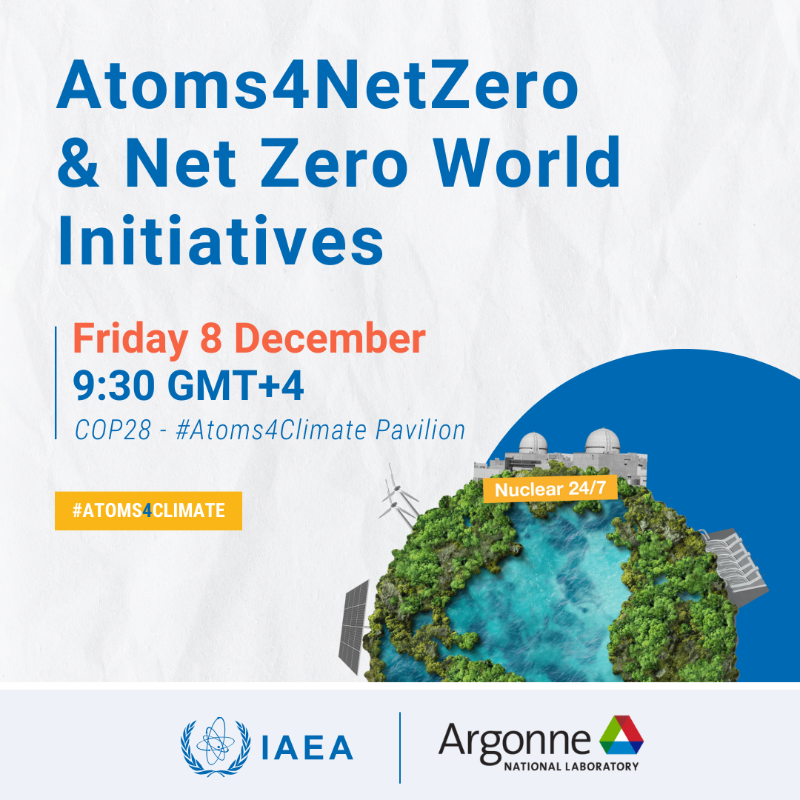
Today is Youth Day at #COP28. Join us for another action-packed day at the #Atoms4Climate Pavilion, with our next generation of nuclear energy and climate leaders taking the stage.
Find more information and watch all events live: https://t.co/3AznkyFKBToday is Youth Day at #COP28. Join us for another action-packed day at the #Atoms4Climate Pavilion, with our next generation of nuclear energy and climate leaders taking the stage.
Find more information and watch all events live: https://t.co/3AznkyFKBToday is Youth Day at #COP28. Join us for another action-packed day at the #Atoms4Climate Pavilion, with our next generation of nuclear energy and climate leaders taking the stage.
Find more information and watch all events live: https://t.co/3AznkyFKBToday is Youth Day at #COP28. Join us for another action-packed day at the #Atoms4Climate Pavilion, with our next generation of nuclear energy and climate leaders taking the stage.
Find more information and watch all events live: https://t.co/3AznkyFKBb
The 'eureka' moment of Archimedes is a famous story that illustrates how a sudden insight can solve a problem. According to the story, Archimedes was asked by King Hiero II of Syracuse to determine whether a crown made for him was pure gold or mixed with silver. Archimedes did not know how to measure the purity of gold without damaging the crown, so he was puzzled by this problem.
One day, he went to take a bath and noticed that the water level rose as he immersed himself in the tub. He realized that the amount of water displaced by his body was equal to the volume of his body, and that this principle could be applied to measure the volume of any irregular object. He then thought that by comparing the weight and volume of the crown with those of a pure gold sample, he could determine if the crown was adulterated or not. He was so excited by this discovery that he jumped out of the bath and ran naked through the streets, shouting “Eureka!” which means “I have found it!” in Greek.
This story is often used as an example of the eureka effect, which is the common human experience of suddenly understanding a previously incomprehensible problem or concept. The eureka effect is also known as the Aha! moment or insight. It involves a shift in perspective or a break in mental fixation that allows the solution to appear clear and obvious. The eureka effect is associated with positive emotions and a sense of confidence in the solution.
The eureka moment of Archimedes is also the basis of his famous principle, which states that when a body is immersed in a fluid, it experiences an upward force equal to the weight of the fluid displaced by the body. This principle explains how ships float, submarines dive, hot air balloons fly, and many other phenomena involving buoyancy.
Physics degrees offer students the chance to explore and understand the fundamental building blocks of the universe, with a good range of career options after university. Physics degrees are highly respected by employers and offer ample career opportunities.
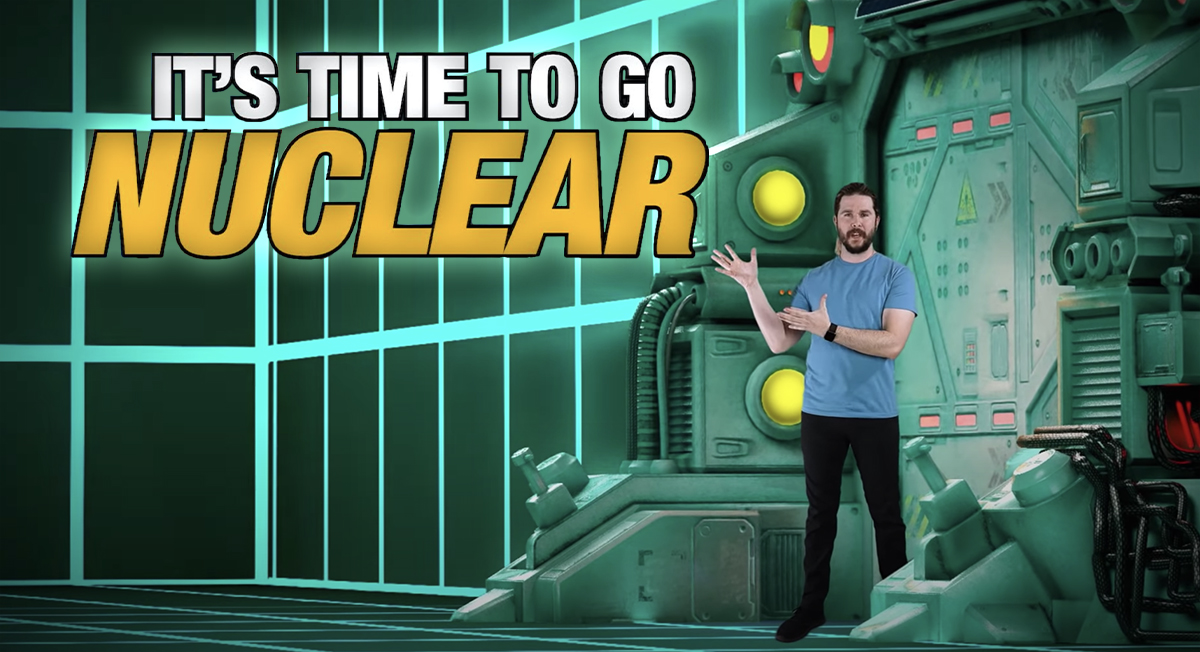
IT’S TIME TO GO NUCLEAR
Why do we need #nuclear power?
Science communicator @Sci_Phile explains why nuclear is safe and effective, and how @INL is leading the way to a future of clean, abundant #energy: https://t.co/rNMZVU5arZ
@nuclearsciweek
From
Today (November 6, 1932) is the birthday of Francois Baron Englert, winner of the Nobel Prize for theoretical discoveries about the origin of the mass of atomic particles.
Today (October 21, 1833) is Alfred Nobel Birthday, the Swedish scientist who formed the Nobel Prize and invented the dynamite ammunition, though he also made several important contributions to science, holding 355 patents in his lifetime.
Today (August 30, 1871) is the Birthday of Nobel Laureate Ernest Rutherford, the father of nuclear physics, who discovered the nucleus by alpha scattering.
Today (August 9, 1911) is the Birthday of William Alfred Willie Fowler, the Nobel Prize-winning American nuclear physicist who made theoretical studies on nuclear reactions.