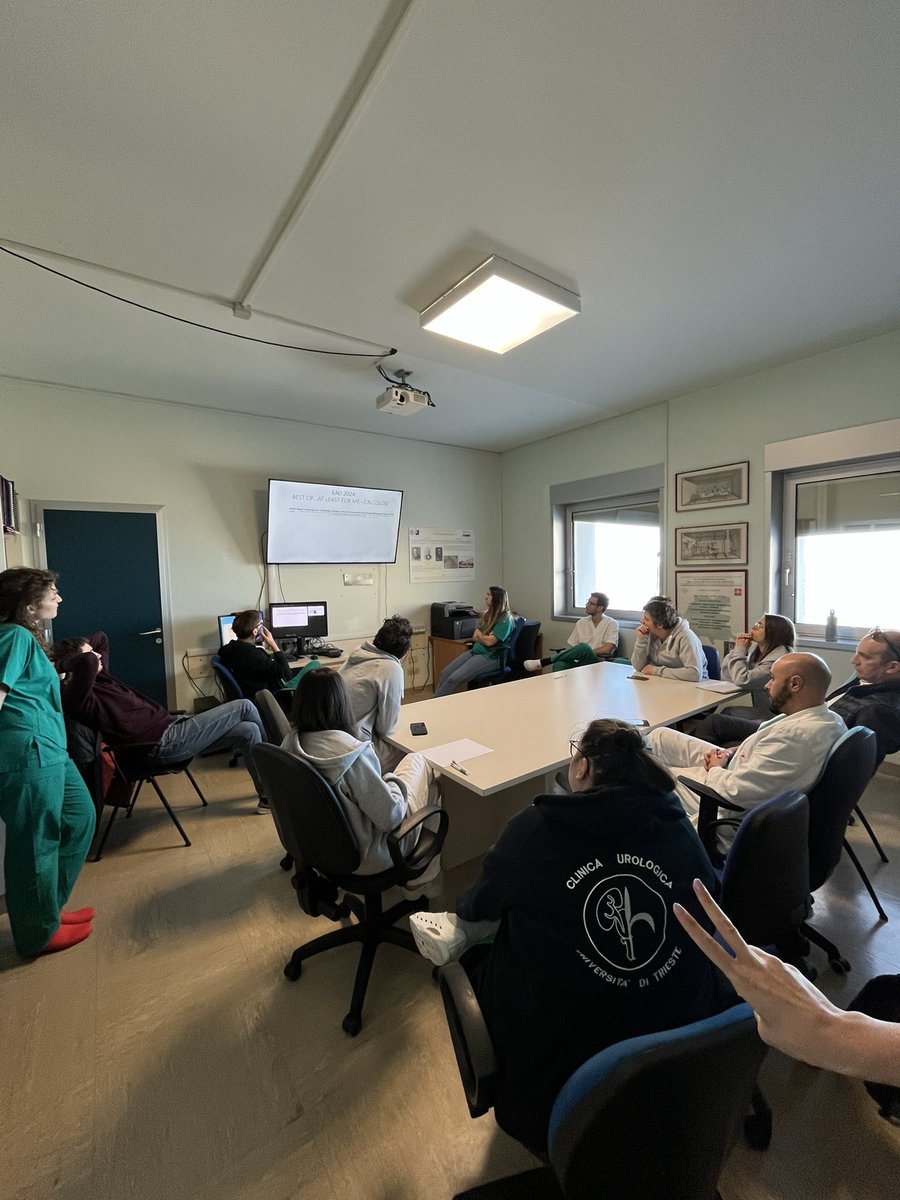
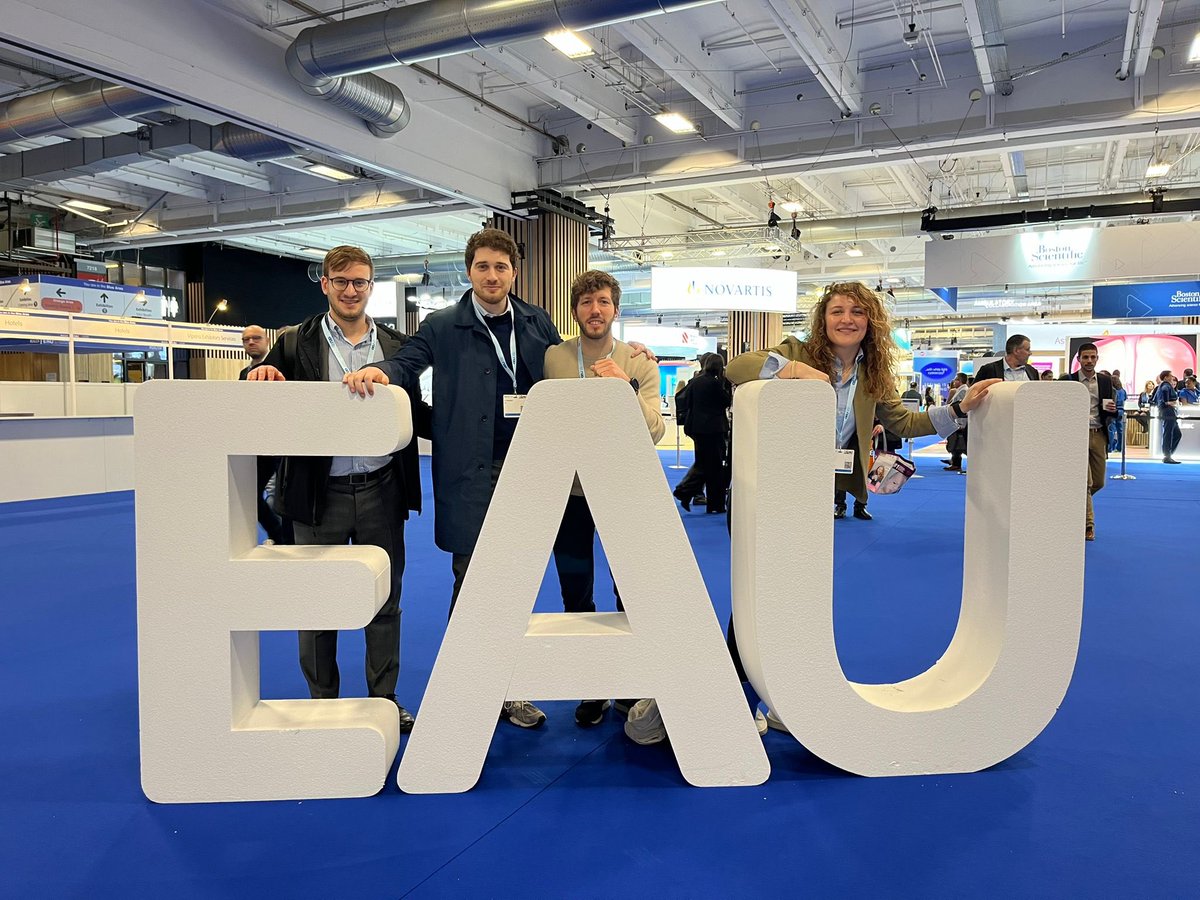
📍 Oggi il corso “Focus on New Flexible Ureterorenoscopy for Urolithiasis” dedicato alle nuove frontiere della RIRS e dell’endourologia.
Live surgery, casi clinici e confronto tra esperti su gestione mini-invasiva della calcolosi urinaria.
@gioliguori33@UniTrieste@AsugiFVG
🩻Contrast-induced AKI:
one of the biggest myths still shaping clinical decisions
For decades we were taught:
👉 “Contrast damages the kidneys”
👉 “Avoid CT with contrast in CKD”
👉 “Hydrate, protect, delay imaging if needed”
But what if… most of this is wrong?🤔
->The uncomfortable reality
Modern evidence shows:
👉 Low-osmolar contrast rarely causes true nephrotoxicity
👉 Even in CKD, AKI, and ICU patients
👉 The risk is often overestimated—or nonexistent
So where did the fear come from?
📍 1950s high-osmolar contrast (actually toxic)
📍 Poorly controlled observational studies
📍 “Creatinine rise = contrast injury” assumption
👉 Correlation became causation
👉 And the dogma stayed
⚠️What recent data tells us
��� No difference in AKI rates with vs without contrast
✔ No benefit from bicarbonate, NAC, or aggressive hydration
✔ Even ICU and AKI patients show no worsening outcomes
->Translation to real life
👉 The patient was going to develop AKI anyway...Not because of contrast!!
->The real problem: “Renalism”
👉 Avoiding necessary imaging
👉 Delaying diagnosis
👉 Choosing inferior tests
And that leads to:
❌ Missed PE
❌ Delayed sepsis source control
❌ Worse outcomes
->Clinical mindset shift
Instead of asking:
👉 “Will contrast harm the kidneys?”
We should ask:
👉 “Will NOT doing the scan harm the patient?”
->Who still deserves caution?
✔ eGFR <30
✔ Severe hemodynamic instability
✔ Multiple nephrotoxins
Even then:
👉 Optimize volume
👉 Minimize dose
👉 Don’t delay critical imaging
🤓Bottom line
✔ Contrast nephrotoxicity exists… but is rare
✔ The fear is bigger than the risk
✔ The harm of NOT imaging is often greater
In critical care
👉 We don’t treat creatinine
👉 We treat patients
And sometimes…
👉 The most dangerous thing is NOT the contrast
👉 It’s hesitation.
📃Reference
Florens N, Demiselle J.
Kidney360 7: 445–449, 2026. doi: https://t.co/CWzi7WC9Wx
💥 “Screen or not to screen?”
After 23 years, ERSPC finally answers.
📊 ERSPC (n = 162,236 men, 55–69 yrs)
🔹 Screening: repeated PSA testing
🔹 Control: no screening
⏱️ Median follow-up: 23 yrs
🎯 Results
🧬 ↓ Prostate cancer mortality: 1.4% vs 1.6% (RR 0.87 [0.80–0.95])
➡️ 13% relative & 0.22% absolute risk reduction
📈 NNI = 456 | NND = 12 → better harm–benefit ratio
⚠️ Overdiagnosis: +27 extra cases / 1000 men (mostly low-risk)
🧩 Who should be screened?
✅ Men 50–69 y with ≥15 y life expectancy
✅ Earlier (40–45 y) if BRCA2+, family history, or African ancestry
🚫 Stop if >70 y, frail, or PSA < 1 ng/mL at 60 y
💡 Takeaway:
PSA screening saves lives - just not everyone’s.
Target the right men, at the right age, using risk-based + MRI-guided screening.
📖 Roobol MJ et al. NEJM 2025
🔗https://t.co/msFgNpODRI
#OncoTwitter #MedTwitter #ProstateCancer #Screening #ESMO25
@OncoAlert@myesmo@esmo_open@ASCO@NEJM@Uroweb@AmerUrological@UrologyTimes@EUplatinum
Cibi afrodisiaci:mito o realtà?🍸
Ostriche, cioccolato fondente, spezie… alcuni alimenti aiutano testosterone, buonumore e circolazione.
Il vero segreto? Testa e atmosfera.
Ce lo spiega la Dott.ssa @alexandra_sarto@gioliguori33@AsugiFVG@UniTrieste
Bollino Rosa per la Clinica Urologica: un nuovo importante riconoscimento premia il nostro impegno per la salute delle donne.
Leggi qui ► https://t.co/AxvhgXXLfD
🔵 Bollino Azzurro "Onda" alla Clinica universitaria di Urologia
La Clinica urologica dell’Ospedale di Cattinara, sede della Scuola di Specializzazione in Urologia di UniTS, si conferma un’eccellenza nazionale nel trattamento del tumore della prostata
🔎 https://t.co/oP2qs52iul
Attenzione! 4 neo-urologi in circolo!
Congratulazioni dott.ssa Runti Ottavia, dott. Morreale Carmelo, dott. Piasentin Andrea, dott.ssa Bignù Cecilia!
Come tradizione, sono state consegnate le “chiavi” della Clinica Urologica.
@AsugiFVG@UniTrieste@gioliguori33@SIU_urology
Testicular torsion: an avascular testis at color Doppler ultrasound is not enough to prove the diagnosis. #BeyondTheAbstract with Irene Campo and @Nicp85Pavan. #ReadNow on UroToday > https://t.co/RPbpsyPnJT @MUN_journal