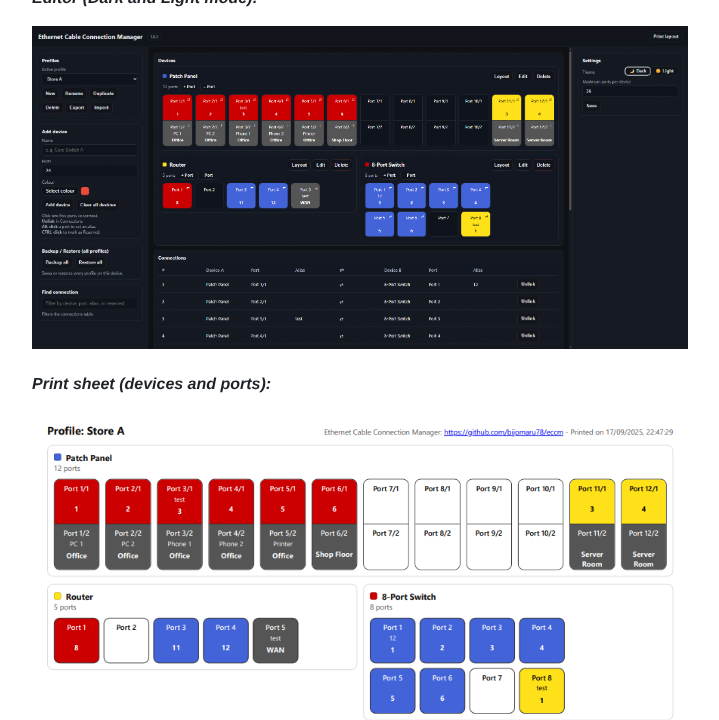
Here's an image reflecting what your current life might look like, centered around a tech-focused workspace filled with your various projects, equipment, and tools.
Ask ChatGPT
“based on what you know about me. draw a picture of what you think my current life looks like���
past your responses below.
thanks again @mreflow & @danshipper
VLANs do not automatically make a homelab secure.
They create boundaries.
The firewall rules decide whether those boundaries actually mean anything.
Segmentation without policy is mostly nicer network diagrams.
#HomeLab#Networking#Security
In the early '90s I learned that the North Sea is really shallow (the reason the waves are so nasty) and the rigs there are not floating but rise from the sea floor. Also, there are many rigs in the Gulf of America in 2x deeper water than even the deepest 700m of the North Sea.
An oil worker in the North Sea has captured incredible footage of a floating oil rig.
The largest and deepest offshore platform ever built, called “Troll A” stands at about 303 m bellow sea level, and had a total height of 472 m (this is not it).
In many applications, you need a map from strings to integers. In python, you might do it like so...
d = {"apple": 100, "banana": 200, "cherry": 300}
If you have 1 million keys, that can use a lot of memory!!! Like over 100 bytes per key!
I have published a new library that uses about 9 bytes per key. That's right. Just 9 bytes. You use it like so:
from fastconstmap import ConstMap
d = {"apple": 100, "banana": 200, "cherry": 300}
m = ConstMap(d)
m["apple"] # -> 100
m.get_many(["banana", "cherry"]) # -> [200, 300]
It can be significantly faster (e.g., 2x in some cases) than the a standard dict. Further, you can serialize it and deserialize it to disk or to a network for convenient reuse.
I'm traveling the world for a bit, starting with China but then hopping around the globe, anywhere. Open to any adventure. No plans, only a backpack. Hoping to meet & get to know humans from all walks of life. The pic is from a long hike on the Great Wall. For me, as a fan of history, this was an epic experience.
In China, first I'm visiting a few big cities & talking to engineers at the heart of China's AI revolution. After that, if feeling crazy enough, I'm hitchhiking (first time) across rural China for a few weeks. Hitchhiking because I think it's the best way to meet rural folks who I would otherwise never get the chance to meet. I hope to do the same in US and other places.
I have a request, if you have a travel recommendation, fill out the form(s) below if you feel like it. Or share with folks who might have advice about such travel.
Form 1 - travel recommendation:
If you can, recommend to me an interesting place I should visit anywhere in the world. For this, fill out form 1. Not touristy stuff, but something off the beaten path, that tourists may not know about, but is legendary. It could be as remote as meeting a herder in the mountains who is a local legend. Asia, Middle East, Europe, India, South/North America, Africa, Australia, anywhere. In China, I'm hoping to visit maybe Heibei, Shanxi, Shaanxi, Gansu, Sichuan, Yunnan, etc, so recommendations for spots to visit are helpful.
Form 2 - coffee:
If you want to grab a coffee with me anywhere in the world, fill out form 2 (please don't use form 1 for that).
Anyway, I hectically tossed stuff in backpack. Realizing I don't have a clear plan of any kind, which is probably the only way to do it. LFG.
Love you all ❤️
Here's my conversation all about @FFmpeg, the legendary open-source software powering most video on the Internet. In the episode, I talk with Jean-Baptiste Kempf and Kieran Kunhya. JB is lead developer of VLC and Kieran is FFmpeg contributor, codec engineer, and the person behind the now-infamous @FFmpeg account on X.
VLC (@videolan), by the way, is also a legendary piece of open-source software: it's a video player that can open basically anything & has been downloaded over 6 billion times.
I think both FFmpeg and VLC are two of the most important and impactful software systems ever created, both open source, and both created & maintained by volunteers: brilliant engineers from all walks of life.
Thank you to everyone who contributed to FFmpeg and VLC, and in general to all engineers giving their heart & soul to building systems used by millions (or billions) of people, and often doing so not for money, status, or fame, but purely for the love of building great software and doing good for the world.
Thank you to the builders! 🙏❤️
Shoutouts in this chat to @ID_AA_Carmack@karpathy@elonmusk@TimSweeneyEpic and everyone who is a contributor & fan of open source!
It's here on X in full and is up everywhere else (see comment).
Timestamps:
0:00 - Episode highlight
2:17 - Introduction
5:35 - Weirdest things VLC opens
9:59 - How video playback works
19:20 - Video codecs and containers
30:07 - FFmpeg explained
51:07 - Linus Torvalds
55:46 - Turning down millions to keep VLC ad-free
1:10:04 - FFmpeg & Google drama
1:29:18 - FFmpeg developers
1:35:55 - VLC and FFmpeg
1:40:29 - History of FFmpeg
1:43:46 - Reverse engineering codecs
1:57:01 - FFmpeg testing
2:01:08 - Assembly code (handwritten)
2:25:26 - Rust programming language
2:34:42 - FFmpeg and Libav fork
2:43:04 - Open source burnout
2:50:51 - x264 and internet video
3:04:07 - Video compression basics
3:11:04 - CIA and fake VLC
3:21:39 - Ultra low latency streaming
3:39:07 - AV2 codec and video patents
3:48:59 - VLC backdoors
3:59:14 - Video archiving
4:05:51 - Future of FFmpeg and VLC
FFmpeg developer Paul Mahol says it's legally questionable that an AI can rewrite his work from C to Rust and the human repo owner change the licence from LGPL to MIT:
https://t.co/MeWC3naMrD
Many FFmpeg developers do not tolerate violations of their copyright
I'm no philosopher; but, no, it cannot. Mathematics is a conceptual framework we use to reason about certain aspects of the world around us. Some concepts, fairly intuitive, some not. Mathematics does not exist outside the human mind. Stuff that it represents does.
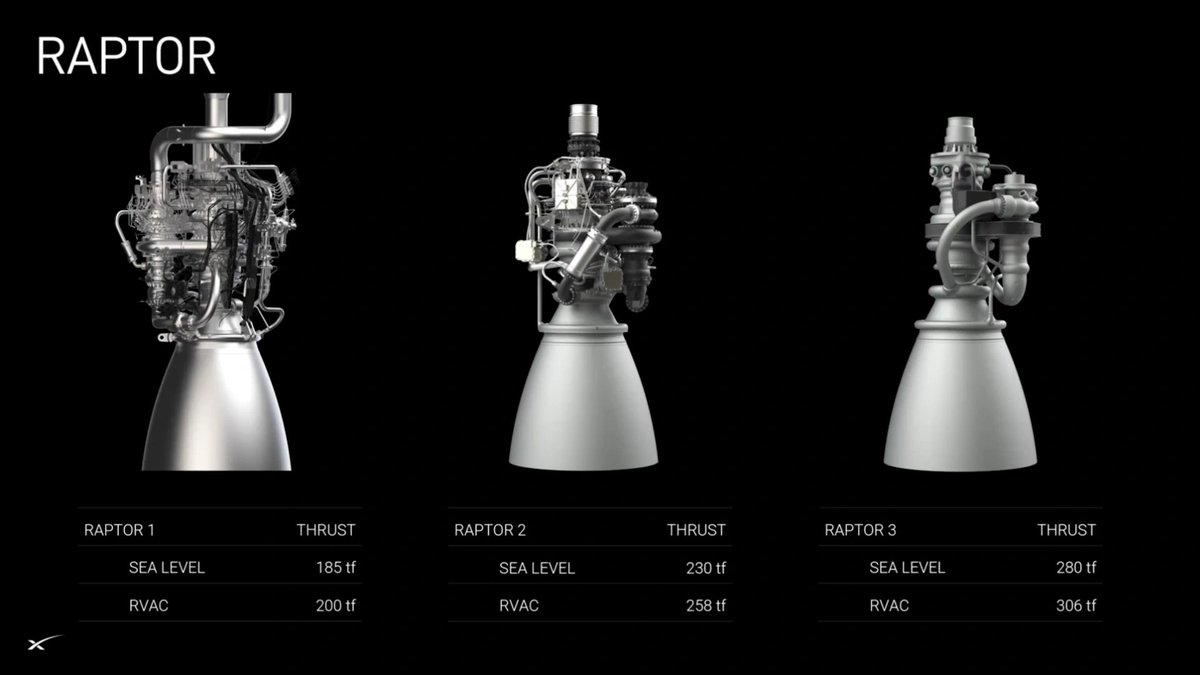
Raptor 3 is engineering black magic
SpaceX’s Raptor is the FIRST full-flow staged combustion engine to ever fly - only the 3rd ever built (after the Soviet RD-270 and the 2000s US demo that never flew)
→ Both fuel-rich + oxidizer-rich preburners
→ 100% of propellant through the turbines before the main chamber
→ Auto-ignites from hot preburner gases (no Merlin igniter fluid)
→ Record 350 bar chamber pressure
Raptor 3 goes even crazier:
Everything internalized with regenerative cooling. No heat shields. No fire suppression system. Saves 10+ tons
This is how Starship becomes rapidly reusable
Life is too short to worry about little things. Have fun. Fall in love. Regret nothing, and don't let people bring you down. Study, think, create, and grow. Teach yourself and teach others.
I watched a senior dev move his hand from the keyboard to the mouse.
He clicked "File," then "Save."
The entire motion took 1.4 seconds.
I tapped on his shoulder.
I asked if he was allergic to efficiency or just enjoyed the scenic route.
He looked confused and said he was just saving his code.
I told him that 'Ctrl+S' takes 0.2 seconds.
Over a year, his mouse usage costs the company three days of development time.
He said it was muscle memory.
I told him his muscles were bad at math.
I unplugged his mouse and forced him to use Vim.
I don't trust any "expert" in the AI field who, when asked "What is consciousness?", can't immediately give a succinct, cogent answer tailored to the current audience.
Reduced Docker image size from 2.1GB to 180MB. Deployments 8x faster.
The original Dockerfile:
- Started with ubuntu:latest
- Installed everything via apt
- Included dev dependencies
- Copied entire project directory
- Left build artifacts
- No layer optimization
The problems:
- Pull time: 6-8 minutes
- Registry storage costs high
- Deployment took forever
- Security scan found 47 vulnerabilities
- Most from unnecessary packages
What we optimized:
1. Base image
- ubuntu:latest (2.1GB) → alpine:latest (5MB)
2. Dependencies
- Removed dev dependencies
- Multi-stage build
- Only production packages
3. Layer caching
- Copied requirements first
- Installed dependencies
- Then copied source code
- Leveraged Docker layer cache
4. .dockerignore
- Excluded .git, tests, docs
- Removed 800MB of files
The new image: 180MB
The impact:
- Pull time: 6min → 45sec
- Build time: 8min → 2min
- Deploy frequency: 2x per day → 15x per day
- Registry costs: $340/month → $60/month
- Security vulnerabilities: 47 → 3
- Kubernetes pod startup: 90sec → 12sec
Every MB in your image costs time and money. Optimize Docker images like you optimize code.







![lemire's tweet photo. In many applications, you need a map from strings to integers. In python, you might do it like so...
d = {"apple": 100, "banana": 200, "cherry": 300}
If you have 1 million keys, that can use a lot of memory!!! Like over 100 bytes per key!
I have published a new library that uses about 9 bytes per key. That's right. Just 9 bytes. You use it like so:
from fastconstmap import ConstMap
d = {"apple": 100, "banana": 200, "cherry": 300}
m = ConstMap(d)
m["apple"] # -> 100
m.get_many(["banana", "cherry"]) # -> [200, 300]
It can be significantly faster (e.g., 2x in some cases) than the a standard dict. Further, you can serialize it and deserialize it to disk or to a network for convenient reuse.](https://pbs.twimg.com/media/HIVM-TAWgAAhnsP.jpg)