Ώρα μηδέν για την “Οργή του Ποσειδώνα”! Πυλώνας η “Ασπίδα του Αχιλλέα”
👇Πρώτα στα αγγλικά στο @IsraelHayomEng. Τώρα στα ελληνικά στο @GeopoliticoGR, σε μετάφραση του @cirithungol21.
Η Οργή του Ποσειδώνα είναι το δόγμα για εκείνη τη στιγμή. Η αφορμή της είναι στενή και η τελική της κατάσταση καθορισμένη: μόλις η Τουρκία χρη��ιμοποιήσει τον κατεχόμενο βορρά ως όργανο πολέμου εναντίον του Ισραήλ, η σύγκρουση τερματίζεται με τον τερματισμό της τουρκικής στρατιωτικής κατοχής και την αποκατάσταση της ουσιαστικής κυριαρχίας στην Κυπριακή Δημοκρατία.
Η Ασπίδα του Αχιλλέα είναι επομένως ένας πυλώνας της Φάσης Μηδέν του Ποσειδώνα.
Μια αντιπαράθεση Ισραήλ-Τουρκίας γύρω από την κατεχόμενη Κύπρο θα έθετε την Ελλάδα μπροστά σε μια ιστορική επιλογή. Η Αθήνα θα μπορούσε να χαρακτηρίσει την κρίση ως πόλεμο κάποιου άλλου, να απαιτήσει αυτοσυγκράτηση, να αποδεχτεί την ταχύτερη δυνατή κατάπαυση του πυρός και να παρακολουθήσει την Τ��υρκία να ανοικοδομεί τη θέση της οποίας η κατάρρευση δημιούργησε το πρώτο σοβαρό άνοιγμα εδώ και δεκαετίες.
Το να μείνεις στην άκρη είναι η ασφαλέστερη απόφαση για μια εβδομάδα και η πιο δαπανηρή για μια γενιά. Η μη επιθετικότητα είναι μια κυρίαρχη επιλογή, η παθητικότητα όχι.
Η Κύπρος προετοιμάζεται να δεχτεί το άνοιγμα, η Ελλάδα προετοιμάζεται να μην το κλείσει.
Η Τουρκία δεν χρειάζεται να κατακτήσει κανένα από τα δύο κράτη. Ο εξαναγκασμός της Αθήνας ή της Λευκωσίας να επιστρέψει στη λογική του 1974 θα αρκούσε. Γι’ αυτό η Ιερουσαλήμ, η Αθήνα και η Λευκωσία δεν μπορούν να μπουν σε έναν πόλεμο με ασύμβατα κριτήρια τερματισμού, ενώ το Παρίσι, το Λονδίνο, η Ουάσινγκτον και οι Βρ��ξέλλες λειτουργούν με διαφορετικά ρολόγια.
Το Ισραήλ έχει μάθει τον χάρτη της συνθήκης. Το Άρθρο 5 του ΝΑΤΟ έχει γεωγραφία: Οι τουρκικές δυνάμεις που σταθ��εύουν στην κατεχόμενη βόρεια Κύπρο δεν μετατρέπουν την περιοχή σε Τουρκία. Η Κύπρος έχει το Άρθρο 42(7), τη ρήτρα αμοιβαίας βοήθειας της ΕΕ. Ο διπλωματικός χώρος μάχης είναι επομένως ευρωπαϊκός, όχι ΝΑΤΟϊκό. Το Ισραήλ αρνείται στην Άγκυρα το πλαίσιο του ΝΑΤΟ που θα επιδιώξει.
Ο εξευρωπαϊσμός προετοιμάζεται, ποτέ δεν κατασκευάζεται: το άρθρο 42(7) είναι συνέπεια, όχι παγίδα. Η Τουρκία μπορεί να επιλέξει το παρακλάδι, όχι τον προορισμό.
Ολόκληρο το άρθρο στο Geopolitico 👇
🔗 https://t.co/FyLL86imfP
The Republic of Somaliland stands with the Republic of Cyprus 🇨🇾 and Greece 🇬🇷 against aggression from Somalia and Turkey.
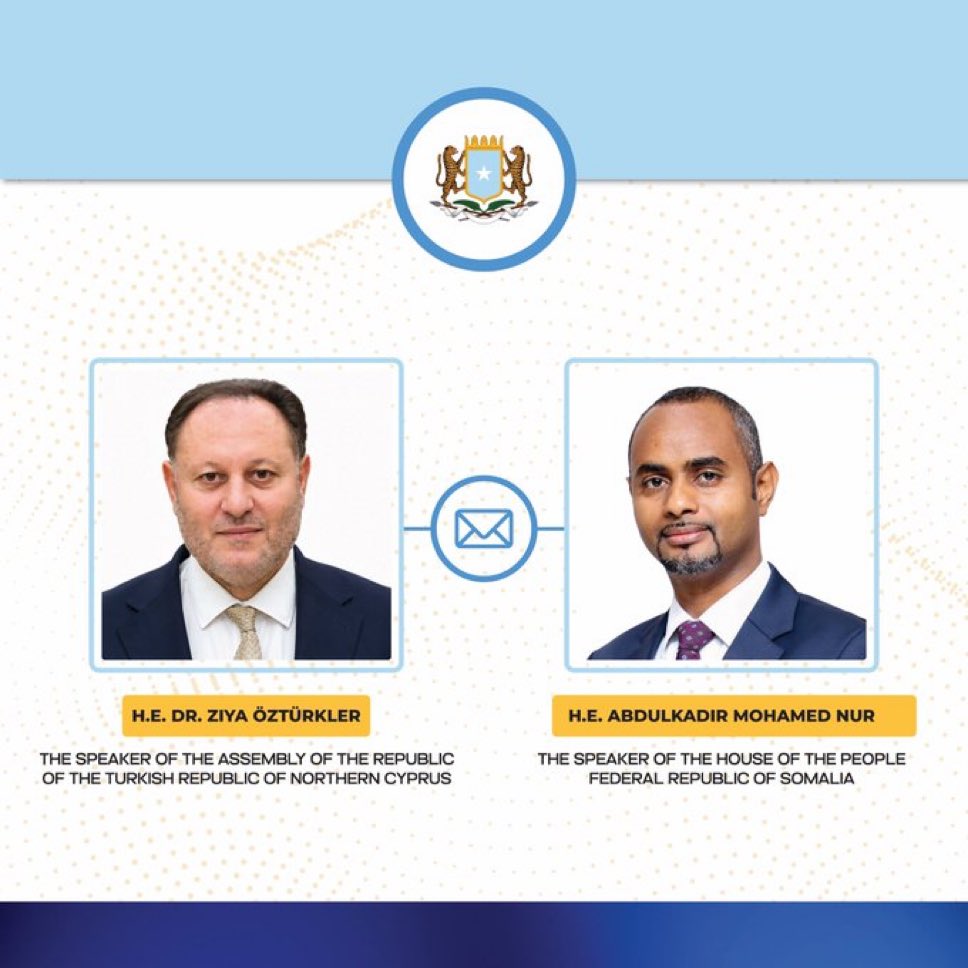
The failed state of Somalia’s Parliament Speaker’s engagement with the Speaker of Northern Cyprus raises significant questions.
Greece and Cyprus should take a fresh, strategic look at the Republic of Somaliland.
Recognizing Somaliland would create new opportunities for diplomatic, economic, and security cooperation, while strengthening a shared position against Somalia and Turkish aggression.
Turkey is a shameless hypocrite.
Turkish Foreign Minister Hakan Fidan now declares:
“Egypt is our natural partner on all issues.”
Not long ago, under Recep Tayyip Erdoğan, Turkey branded the removal of Mohamed Morsi an “unacceptable military coup,” accused Egypt of “state terrorism,” called Sisi an “illegitimate tyrant,” and demanded the reinstatement of its ideological brother from the Muslim Brotherhood.
For years Ankara turned itself into a full-blown centre of subversion against the Sisi government — hosting Muslim Brotherhood leaders, activists, and media outlets that pumped out anti-Egypt propaganda day and night.
Then, in the 2020s, reality hit. Turkey needed Egypt’s markets, investment, and strategic weight. It also needed to break the growing Greece–Egypt–Cyprus energy and security axis in the Eastern Mediterranean. Suddenly the “coup regime” became a “natural partner.” Relations were restored, trade talks accelerated, and even joint military exercises appeared on the table.
Egypt has its own interests and understands that money is money. It reopened the door.
But Cairo does not forget. It will never fully trust the “hypocritical friend” that spent a decade trying to undermine it while waving the Muslim Brotherhood flag.
It will never accept Turkey as the major power in the region instead of Egypt
@AlsisiOfficial #Egypt #MakkahAgreement #MeccaAgreement #history
Europe Must Defend Its Borders, Not Spain’s Empire
A nation state has the right to defend its borders, preserve its character and regulate admission. This is not a retreat from liberal democracy but its precondition.
Not every person seeking work, security or opportunity qualifies for asylum. When Europe conflates asylum, labour migration and unlawful entry, it dilutes protection for the persecuted, corrodes public consent and weakens the nation state in liberalism’s name.
Schengen did not abolish borders; it externalised them. Internal freedom depends on an enforceable external frontier.
Nor does sovereignty sanctify every inherited frontier.
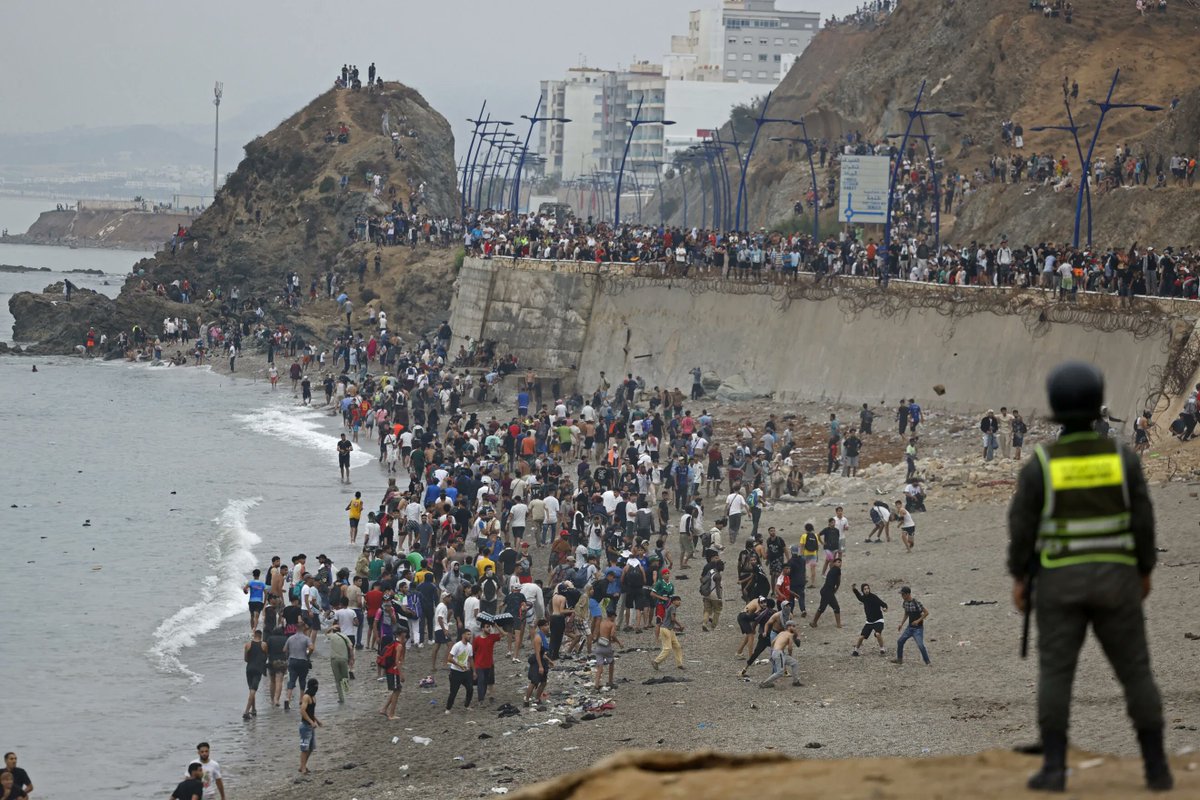
Ceuta and Melilla carry strategic weight, not strategic value. They are exposed enclaves, readily converted into migration corridors and pressure points. They afford Spain little leverage while imposing permanent vulnerability.
Spain’s claim to Gibraltar is legitimate; so is Morocco’s claim to Ceuta and Melilla. Their legal histories differ; their imperial logic does not. Spain cannot repudiate an imperial enclave on its own coast while retaining two on the African coast.
Morocco is not Europe’s migration problem but its first line of containment. It polices routes and dismantles networks; the Ceuta crisis confirmed that role. Yet it settles for grants, gestures and assurances in return for strategic utility. The failure is underpricing, not coercion: a regional power should convert stability into influence, investment and standing, not negotiate beneath its weight.
Europe requires enforceable borders. Spain requires strategic coherence. Morocco must exercise the power it already possesses.
🇨🇳 Imagine drawing a math equation on a blackboard... and watching it instantly come to life.
At the 2026 World AI Conference in Shanghai, a company unveiled an AI-powered blackboard that transforms handwritten equations into live graphs and simple sketches into interactive 3D models in real time.
If this technology reaches classrooms, math lessons could look very different in the future.
Writer: Monica
52 YEARS OF TURKISH INVASION & ILLEGAL OCCUPATION🚨
Thousands killed, women raped, families destroyed and 200 thousand made refugees.
My own family suffered unimaginable horrors as explained in the video below.
The illegal occupation continues to this day
We will never forget
Στο μεταξύ ο Ισπανός τερματοφύλακας έχει κόψει εισιτήριο πρώτης θέσης για να βλέπει τον αγώνα από μέσα.
Στο τέλος θα ζητήσει να κάνει κι αυτός μία απόκρουση, έτσι για το βιογραφικό.
#wc26gr
🇸🇦🇮🇱 Scoop: Saudi Arabia is advancing a plan to sideline Israel from the India–Middle East–Europe Economic Corridor (IMEC), known as the "Peace Railways" project, by rerouting the corridor through Syria instead of Israel, two sources tell @Jerusalem_Post
https://t.co/5IXoGbR3la
Europe Cannot Defeat Moscow Until It Prices Ankara
👇 A Line of State essay in @tovimacom.
Europe does not lack a Russia policy.
It lacks the courage to price the machinery that keeps Moscow alive.
Putin’s Russia must be defeated: on the battlefield, through energy severance, shadow fleet disruption, technology denial, financial exposure, and the demolition of the imperial myth that turns borders into hostages.
Ankara is not a spectator to that war.
It is the exemption machine inside the Western system.
TurkStream. Akkuyu. Russian crude. Sanctions leakage. Trade corridors. Diplomatic equivocation. Hamas access. Occupied Cyprus. Greek compression. Bosphorus leverage. An Eastern Mediterranean turned into an Ankara tollgate.
Moscow assaults the European order from outside.
Turkey monetises its hesitation from inside.
Brussels calls the transaction stability.
That is not strategy.
It is surrender with paperwork.
Europe cannot arm Ukraine, sanction Russia, invoke sovereignty, and reward the NATO state that occupies EU territory, prolongs Russian endurance, hosts Hamas, pressures Greece, and sells indispensability back to the West.
Cyprus is not a complication.
It is occupied European territory.
Greece is not a bilateral file.
It is Europe’s maritime front.
The Eastern Mediterranean is not a dispute map.
It is the corridor through which Europe either connects to the Levant, Egypt, the Gulf, India and Asia, or asks Ankara for permission.
The price must be indivisible: no Customs Union upgrade without Cyprus compliance; no defence integration without sanctions alignment; no strategic access while Hamas infrastructure stands; no place in Europe’s security architecture for a state that weaponises NATO from inside the room.
Kaliningrad brings the standard back to Moscow.
If the Kremlin’s doctrine is that force reopens borders, conquest legislates, and old maps become wars, then Königsberg cannot remain Europe’s forbidden word.
Not revenge.
Not annexation.
Deimperialisation.
A demilitarised Königsberg, with civil rights, protected Russian culture, restored heritage and European security, is not nostalgia. It is the end of Russia’s Baltic forward base.
Putinism must be broken without ceding Russia to China or amputating Russian civilisation from Europe. The regime is the enemy. The Russian people are its first captives.
Europe’s doctrine is this: defeat Moscow, price Ankara, restore sovereignty infrastructure, and stop outsourcing freedom to routes, gates and vetoes others can close.
Brussels does not lack leverage.
It lacks decision.
My new article in To Vima:
Europe Cannot Defeat Moscow Until It Prices Ankara.
🔗 https://t.co/lje9hpJ9Ai
NATO is a collective alliance that safeguards the security of all its members. It is not a body created to further one autocrat’s irredentist vision. The Trump administration should remember that before approving F-35 sales to 🇹🇷
My latest for @FDD
While the world's attention is focused on major geopolitical headlines, a quiet but significant shift is taking place within the British monarchy. Not through dramatic speeches, but through official paperwork that may prove even more revealing.
Buckingham Palace has released its latest Sovereign Grant Report, and it includes updated wording describing King Charles III's constitutional role.
For centuries, the British monarch was described as the "Supreme Governor of the Church of England and Defender of the Faith." The new wording states that the King "...protects the space for faith within a multi-faith nation."
Legally, the historic title granted by Henry VIII cannot be changed without Parliament. However, this marks the first time the Palace has officially reflected Charles III's long-held vision. As far back as 1994, he said he wanted to be a defender of all faiths, not just one.
Why has this sparked such intense debate now?
Many Britons pointed to the contrast this spring: the King issued a warm and detailed message marking the end of Ramadan, yet no special Easter address to the nation followed. Buckingham Palace responded that Queen Elizabeth II also rarely gave Easter addresses, as they were never a constitutional requirement.
Critics—including some Anglican bishops—argue that this creates a double standard:
• Christian holidays are increasingly framed in broad terms of "shared values," "humanism," and "inclusivity."
• Celebrations of other faiths receive direct and specific recognition.
In trying to be a monarch for everyone, Charles III is seen by some as risking the support of Britain's traditional majority. For many critics, the new wording is not a symbol of progress but a sign that the Crown is moving away from the country's Christian heritage.
To them, a "neutral monarch" risks becoming an "absent monarch" in the very role where previous generations expected spiritual leadership.
⚡️⚡️⚡️BREAKING: 🇷🇺 Even Moscow, long insulated from the worst disruptions, is now enforcing fuel rationing as Ukrainian drone strikes continue to slash 🇷🇺 refinery output. #Gazpromneft stations cap sales at 30 litres of gasoline (60 litres diesel) per customer with no jerry cans allowed, while several #Lukoil outlets limit purchases to 20-30 litres, sparking queues across the capital. Shortages that originated in Crimea, southern Russia & Siberia have prompted authorities to hunt for emergency imports from Kazakhstan, India & other partners, while considering lower fuel quality standards to stretch limited supplies. #FuelCrisis #RussiaEconomy Photo: @Reuters
Chinese leader Xi Jinping made a strong public statement that has already been described as a major sensation in world politics.
> "China no longer considers it possible to support Russia in its war of aggression against Ukraine. We believe Russia's actions are counterproductive and violate the fundamental principles of international law. We call on Russia to immediately withdraw its troops from the territory of Ukraine," Xi reportedly said.
According to sources said to be close to diplomatic circles, Beijing has gone even further. China is reportedly demanding significant territorial concessions from Russia in the Far East, particularly in Siberia. Beijing is no longer willing to pay the enormous economic price for what it sees as the Kremlin's adventure.
The war has reportedly dealt a serious blow to China's economy, global trade, and international reputation. According to these claims, Beijing believes Russia is losing the war and is now trying to secure an outcome that will be as advantageous as possible for China.
Something Doesn’t Add Up: Who Is Lying About Lukashenko’s Visit to China?
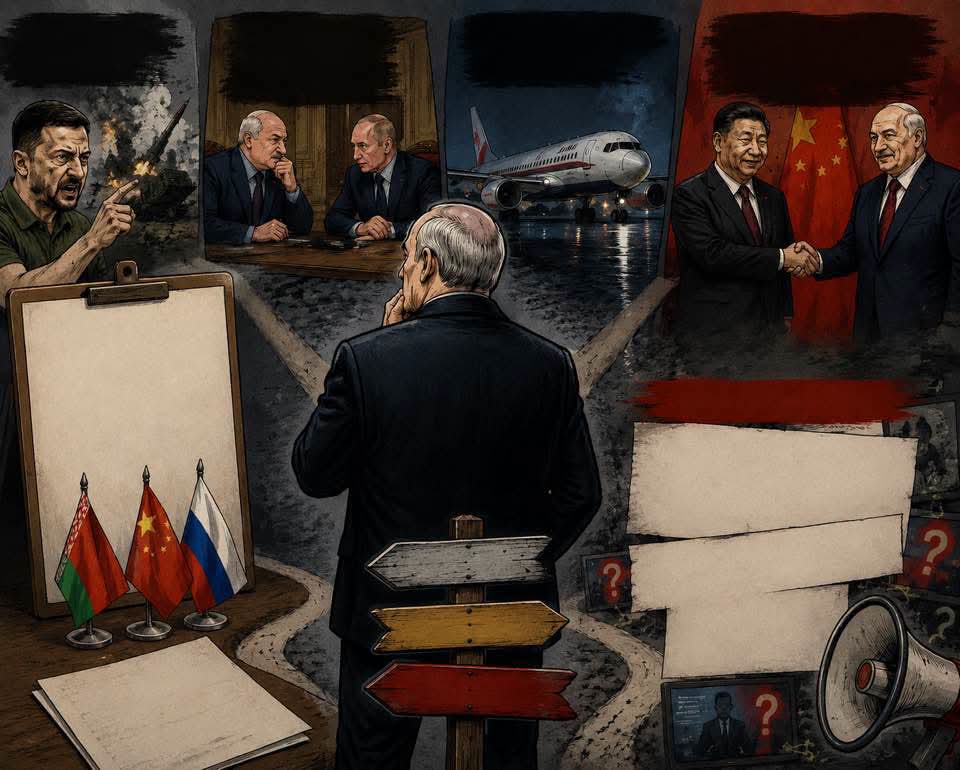
When you put the timeline together, it becomes difficult to believe this was just another routine diplomatic visit. Kyiv’s ultimatum, two days of closed-door talks with Putin, a secret overnight flight to Beijing, and Xi Jinping’s public remarks about sovereignty form a sequence that raises obvious questions.
Official statements from Minsk and Beijing describe the trip as a “planned working visit” within their strategic partnership. But high-level diplomacy rarely works this way. Presidents do not suddenly fly to China at night without prior announcements after lengthy private meetings with another head of state. The secrecy and urgency strongly suggest the visit was driven by a developing crisis — namely, Ukraine’s warning that Belarusian military infrastructure could become a target.
Everyone involved appears to be telling only part of the story.
The Belarusian and Chinese governments are following standard diplomatic practice. Acknowledging that Lukashenko urgently sought consultations with Beijing after Zelensky’s warning would signal weakness. Calling it a routine visit allows both governments to avoid that impression.
Russian pro-government media have gone to the opposite extreme, portraying the visit as proof that China has fully backed Belarus. That interpretation is exaggerated. Beijing regularly speaks about protecting sovereignty when dealing with partners across the world. Xi Jinping’s language was consistent with long-standing Chinese diplomatic messaging.
Kyiv’s position appears different. Rather than bluffing, Ukraine is signaling a new reality: it will no longer tolerate Belarusian territory being used to support attacks against Ukraine without consequences.
The episode also exposed Belarus’s greatest vulnerability.
By allowing Russian forces to use its territory and infrastructure, Minsk has effectively made itself a potential target for Ukrainian retaliation. Lukashenko does not fully control all military activity inside Belarus, yet his country would bear the consequences of any escalation.
Economically, Belarus depends on both Russian support and Chinese trade routes. If military strikes spread into Belarus, the Belt and Road corridor through the country would lose much of its strategic value. China needs Belarus as a stable logistics hub, not as another battlefield.
Lukashenko has long balanced between Russia, China, and the West. Today that room for maneuver has largely disappeared. His sudden trip to Beijing looked less like an act of confidence than an attempt to secure political backing at a moment of growing uncertainty.
Most likely, Lukashenko sought reassurance from Xi Jinping. But while China values a stable Belarus, Lukashenko himself is not indispensable. Beijing is unlikely to risk its broader global interests to protect one leader.
There is no evidence of a secret alliance or dramatic betrayal. This looks much more like crisis diplomacy hidden behind carefully crafted diplomatic language.
The most plausible explanation is that Moscow and Minsk coordinated their response to possible Ukrainian actions before urgently briefing Beijing on the risks of further escalation.
The conclusion is straightforward: no one is telling the full story. Minsk and Beijing are downplaying the emergency nature of the meeting, while parts of the media are exaggerating its significance. The visit was almost certainly prompted by growing security concerns, but China remains committed first and foremost to its own strategic interests.
Kazakhstan refused to save Russia from the fuel crisis.
According to unofficial data, Kazakh oil workers refused to supply gasoline to the Russian Federation to ease the acute shortage that arose after Ukrainian strikes on Russian refineries.
Reuters previously reported that Moscow requested about 50 thousand tons of AI-92 gasoline from Astana. Officially, Kazakhstan’s Energy Minister stated that no request from Russia had been received.
Against the backdrop of the shortage in border regions, “gray” exports of gasoline from Kazakhstan through private channels have begun. The authorities of the republic stated that they are actively fighting such "supplies".