Why are they describing this as a “sophisticated recording device” that they “used their models to understand”. It was a USB stick wrapped in toilet paper with the website he bought it from written on it
We discovered a sophisticated recording device that was hidden inside one of our offices. We used our models to understand the device and where it had come from, identifying that a specific employee had planted it a few days earlier. We referred the matter to the FBI, and we’re grateful to the agents and prosecutors who moved quickly to make an arrest. The FBI’s investigation is ongoing and we will continue to support their work.
At this time, we have no indications of this individual inappropriately accessing or exfiltrating model weights, source code, or customer data. The employee was terminated.
We take protecting our technology, data, and people seriously, and as a matter of national importance. Our security program is designed to protect against a wide range of threat actors, from insider risks to cybercriminals to nation states, and this case is an example of how AI can help address these sophisticated security threats.
Per-joint Gaussian noise is a terrible way to explore a 20+ DoF hand
We introduce EigenDEXplore, which explores along coordinated patterns from human hand motion, while keeping full control of every joint
Better learning, from tool use 🔨 to reorientation 🔄 to bimanual 👐
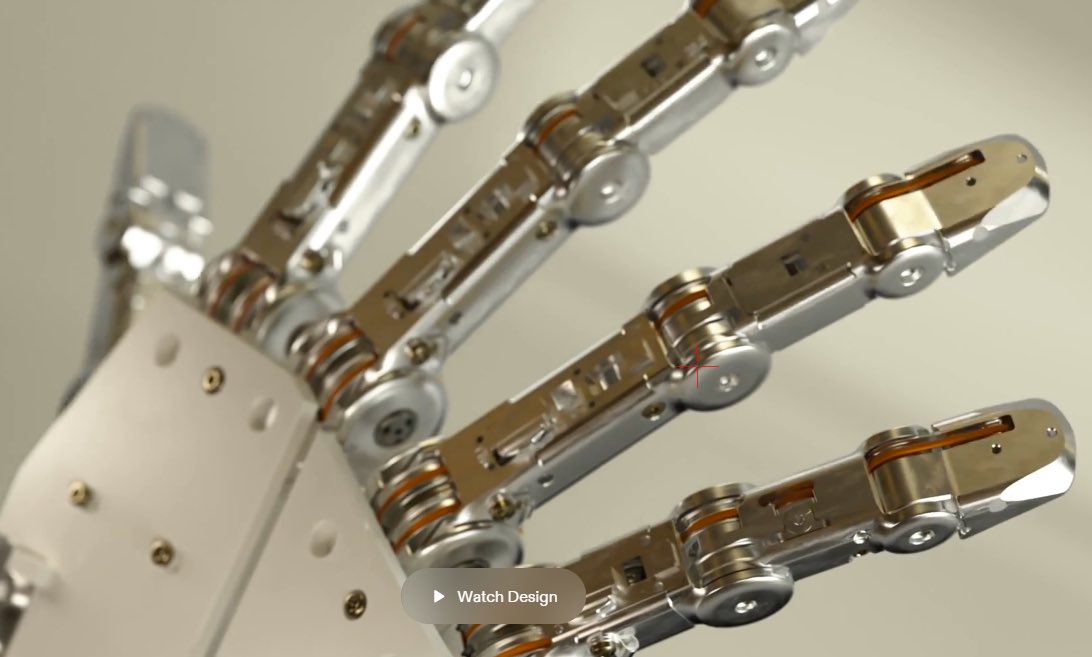
Today we give Atlas dexterous hands, with the strength to take on real work, and the simplicity for mass manufacturing. Like the body, the hands are designed with high fidelity simulation in mind, to enable sim-to-real RL. If you give dexterous hands to a robot, make them do dexterous things.
More thoughts here
Blog: https://t.co/z8xNB8KKXV
Video: https://t.co/iETKTwNIXn
@lihanc02@aliteracy Yeah I think this is broadly correct as an intuition for why they both work. See the MIP comparison in the Much Ado About Noising paper as well
I think the source of confusion is that for certain motors and applications this is an issue, particularly when dumping maxed current against a locked rotor (true stall). But humanoid standing doesn’t operate in that regime (with straight knees nominal balance torques are ~zero!)
I think the source of confusion is that for certain motors and applications this is an issue, particularly when dumping maxed current against a locked rotor (true stall). But humanoid standing doesn’t operate in that regime (with straight knees nominal balance torques are ~zero!)
Again, this is not true for sinusoidally commutated motors which have balanced currents. Even for trapezoidal commutation controller oscillations amplified by the gear ratio would vary the electrical angle enough to balance the winding heat
@chris_j_paxton Yeah near metastable points oscillation is an inevitability. But even in general if you look at phase portraits of neural nets commanding PD set points they’re basically always oscillating even if you can’t see it because the gains are so soft and the control rate is so low
This is incorrect. Sway increases RMS torque (∝heat), incurs velocity dependent friction and iron losses, and deviates from minimum energy (gravity neutral/singular) posture. The arguments given don’t apply to current driven sinusoidal PMSM drives either
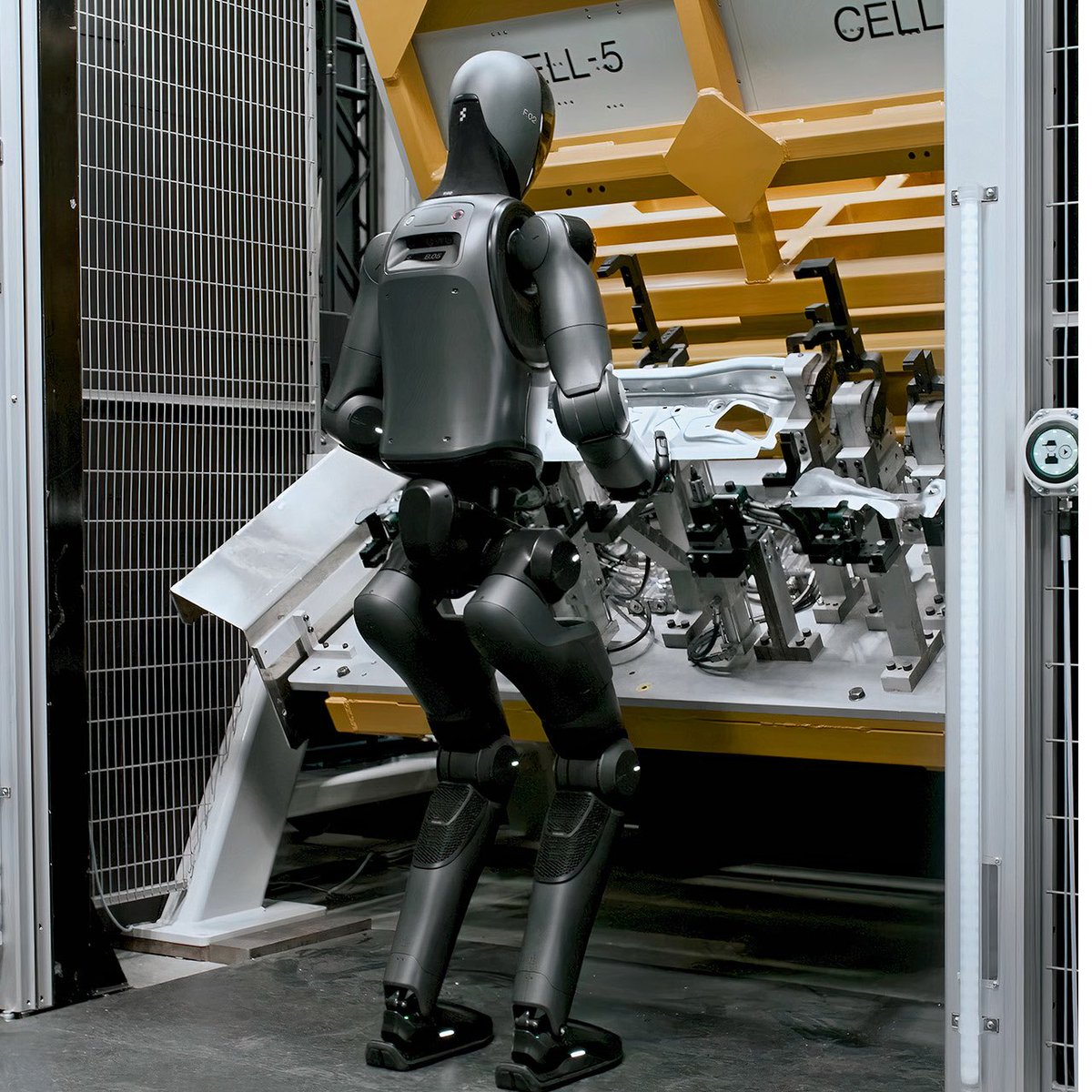
This human-like swaying is a necessity, not an effect
Without it, motors would stall and quickly overheat plus the battery would rapidly drain
Standing rigidly at attention requires high current that can cause systemic damage to multiple components
Walking is easier
If I had to guess I’d say the swaying is either an aesthetic choice or an indirect consequence of the controller gains/sim-to-real. But it’s not energetically efficient
This is incorrect. Sway increases RMS torque (∝heat), incurs velocity dependent friction and iron losses, and deviates from minimum energy (gravity neutral/singular) posture. The arguments given don’t apply to current driven sinusoidal PMSM drives either
@observie Don’t know how well it holds up but I liked this design I saw at CoRL. Looked like mostly cheap plasma cut sheet metal and extrusion for the structural components with 3D printed infill.
@1x_tech is unbelievably underrated in terms of hardware design. One of very few humanoid companies truly innovating in that space and taking risks no one else is. Huge congrats on the launch @ericjang11
And it isn’t because they don’t know how to btw. It’s an intentional choice to minimize cost because their market is not work it’s 30 second DeepMimic dance clips
Not claiming that actuator heating is a fully solved problem but cheap Chinese humanoids are at the extreme of this design space. Using outrunner motors with low gear ratios, using non-potted drone stators, not using fans or proper heat sinking etc
In Seoul for CoRL/Humanoids! Feel free to DM me if you’re in the area and you want to chat in person about the humanoid industry, RL, sim-to-real, behavior cloning, optimal control or open positions @agilityrobotics
@maiamindel@questionableway O9A is more like satanism fan fiction writing club. Discord server that grooms mass shooters is a better description of “TCC” or “the com”
@teortaxesTex In the US we wait weeks and pay thousands of dollars for a single CNC part, and that’s if a shop will even give you a quote. In Shenzhen people don’t bother 3D printing prototypes because it’s faster to have them milled