was at a community event and was asked a somewhat sad question: should developers be afraid of the labs eating the new possibilities jev opens up?
with AI (system one) + software (system two):
1. there's no going back to a world without system one models
2. you control the software!
3. there's no way AI could beat the efficiency of this combo
4. you don't even send the model providers your whole program logic
I think the days of "wrapper" apps will be seen as some of the darkest in software because people essentially did all of their programming in a system message and sent it over to a third party who was incentivized to bake that behavior into their 1st party product...
keeping your logic in code and only asking AI for the minimum reverses that and keeps all of your logic yours. if you decompose enough, model providers can't even figure out what you're working on
We'll be spending a lot more time trying to understand the outputs of language models. A few thoughts, tips & tricks:
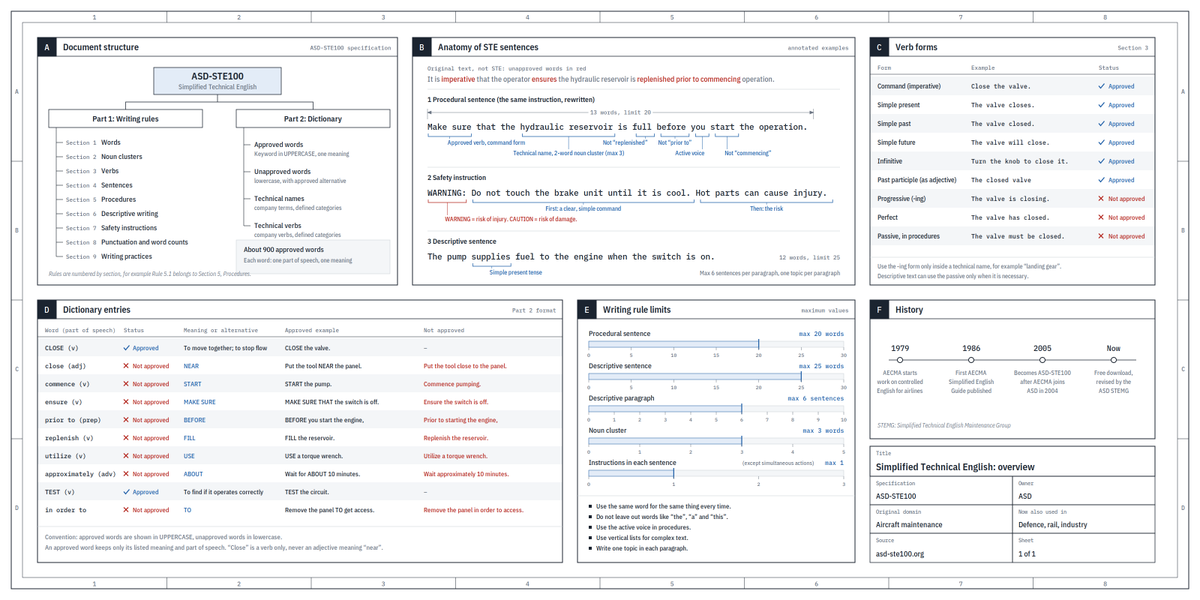
Writing. Something I've had success with: Ask your LLM to explain something in ASD-STE100, it's a controlled language specification originally developed for aerospace maintenance documentation. LLMs well-versed in this language and it comes with heavy constraints on clean writing style that I often find a lot more readable. Sometimes I've tried to soften it a bit e.g. ask for "80% of the way to ASD-STE100" because the spec is quite stringent. But even better:
Diagrams / images. Instead of writing, ask your LLM to create a diagram. These can be a lot easier to process, parse, and understand. But even better:
Web pages. Ask for output "in HTML" to get a beautiful, interactive webpage. LLMs are getting really good at frontend and can create beautiful experiences, animations, etc. But even better:
Explainer videos. The output format I am most bullish on is fully custom / bespoke explainer videos generated on any arbitrary topic. Experiment with things like "Create a 3b1b style video explainer on X. Use my ElevenLabs API key for audio narration". (you'd need an API key for the latter or you can ask your LLM to find you decent free alternatives that use your local compute). This is actually starting to work!
In summary:
- As LLMs get better, they will do more and more of the legwork autonomously, and a lot more of our work will rise up the abstractions into oversight and understanding.
- Luckily, LLMs can help here too because as intelligence and code are increasingly abundant, you can ask for large, custom, discardable software artifacts (e.g. web apps, video explainers) that would have never made sense to create before. Push the boundaries here and you'll be surprised.
I was encouraged this week to see the leaders of the frontier labs agree on the need for them to slow down the pace of AI development. Given the stakes, it’s a good and necessary first step.
But I’m even more encouraged by the growing recognition that how this powerful new technology develops should be at the center of our public debate.
I’ve been watching the progress on AI for over a decade now, and one thing that’s clear to me is that the potential impact of this technology is not overhyped. It’s also moving at lightning speed – and even faster than those who are engineering it can keep up with.
I’m not an AI accelerationist who believes it will lead to some techno-utopia, and I’m not a doomer who thinks it will inevitably lead to humanity’s destruction.
But whether this technology results in amazing breakthroughs in medicine, energy and education or unleashes huge economic disruptions, greater inequality, and potential catastrophe will depend on the choices that we make right now – choices that should be made not just by the companies involved, but by all of us.
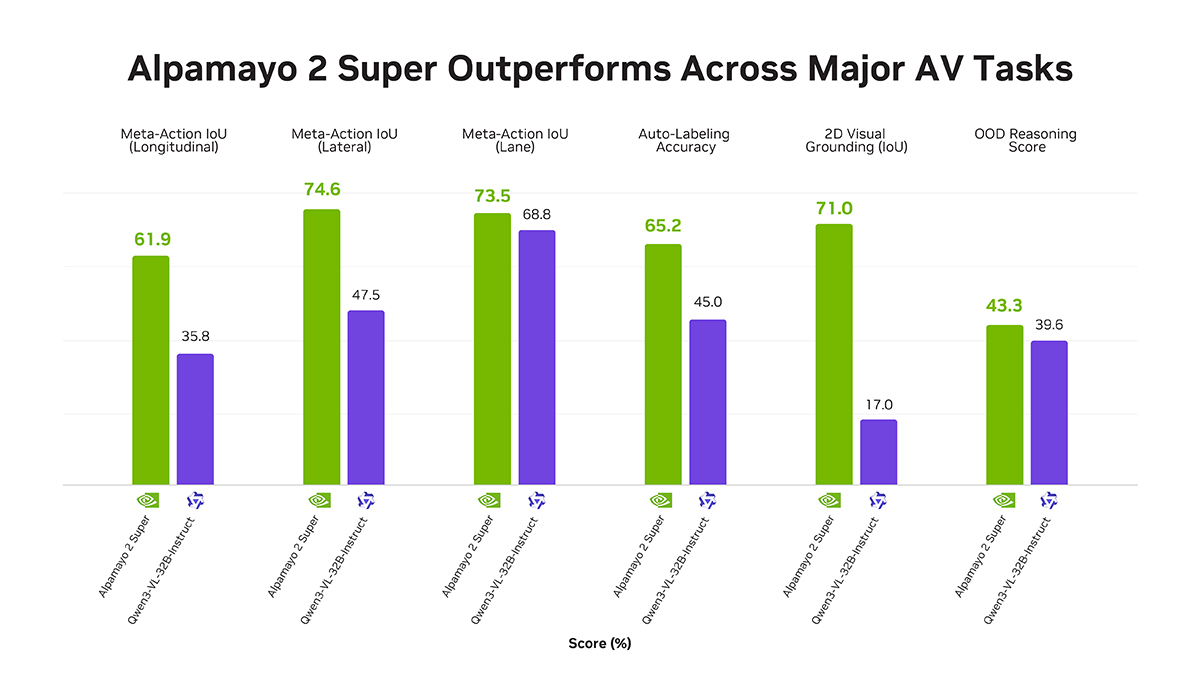
Today, we’re launching Alpamayo 2 Super, our frontier open reasoning model for autonomous vehicles.
Beyond seeing, Alpamayo understands and reasons through the complex world - thinks before it acts.
It’s a powerful backbone for robotaxis, trucks, shuttles, delivery vans, tractors and the long tail of mobile robots—billions of autonomous machines someday.
We’re releasing it for commercial use under OpenMDW-1.1 so teams can inspect it, fine-tune it and deploy it—open models advance safety and security.
The next wave of AI is robotics—and it starts with autonomous vehicles.
Great work, Alpamayo team!
https://t.co/2PYCCXWjZh
I see Claude Code making mistakes when running background agents. Status feedback is missed, and no tracking of agent running status and thereby being in illusion that some background is still happenning are two common problems i am observing recently. anybody seen the same?
Department of Expenditure had issued a clear and unequivocal advisory on how consultancies are to be awarded government contracts. In particular, it states that qualification criteria for government contracts should be commensurate to the project. Till now it was common for eligibility to be restricted through unnecessarily high turnover and payroll requirements that could only be met by a tiny club. This levels the playing field for Indian consultancies and new entrants.
Yesterday, my OpenAI collaborator and I gave a detailed talk on the Huggingface incident, our models creating "the message board", model misalignment, and more.
https://t.co/zUR1dqmuzi
I hope it can answer a lot of the questions folks have, and we will release a full detailed postmortem at a later time!
LOVE THE NO
All founders should learn to Love The No.
— The No brings clarity. You know where you stand; things can only get better from here.
— The No sharpens the pitch. Every rejection tells you what didn’t land.
— The No filters fast. A quick No beats a slow “Maybe” every time.
— The No builds resilience. The founders who win are the ones still standing after 99 of them.
— The No isn’t the end. It’s just not-yet, or not-them.
To get to Yes, you’ve got to Love the No.
@myprasanna@vorfluxai@Rippling This is the extact setup I have locally built didn’t realize this is being built as product . Looks amazing only thing to take care is product is never perfect technically. It an output of design and architecture choices you made. I manage them using blocks in code.
A HARVARD psychologist says: “if you’ve achieved nothing by 25, you’ve avoided the most destructive illusion of youth”
> In 2021, a Harvard psychologist surprised a lecture hall with an unexpected statement:
“If you haven’t accomplished much by 25, you may have escaped one of youth’s biggest illusions.”
At first, the room laughed.
She wasn’t kidding.
> The illusion of early success.
In your early 20s, the brain seeks quick proof of worth ~status, attention, rapid achievements.
But psychologists warn that chasing recognition too soon can lock people into roles or paths they never consciously chose.
They decide too early… and spend years trying to undo it.
> The exploration phase.
Research on career development suggests that people who explore more before 30 often build stronger long-term directions.
Testing ideas.
Making mistakes in public.
Changing course.
At 25 it looks like confusion ….but by 35 it often turns into clarity.
People who feel “behind” in their mid-20s frequently gain something others miss:
Perspective.
Patience.
And a clearer sense of what truly matters to them.
That foundation often leads to better decisions later on.
At the end of the lecture, the psychologist left the students with one final thought:
“You’re not meant to have life fully figured out at 25.”
“You’re meant to discover who you’re not.”
Most important piece from enterprise perspective . Must read if you are thinking to leverage ai. However do not make this a roadblock right away. Start taking smaller bets and then see how to go about solving for this concern once your figure ai usage patterns and roi.
Two bets are being placed on AI right now.
Fat Models: control the model, own every layer above it. One model, one interface, one company.
Rebel Alliance: the best product at each layer wins, and no one company can be best at all of them.
The market's pricing in the first. We think the second is structurally positioned to win.
What better interview to summarize today, other than @kunalb11's classic interview with @lennysan from two years ago?
India Runs on Different Physics
Kunal Shah, founder and CEO of CRED, interviewed by Lenny Rachitsky (Lenny's Podcast)
Summary: Kunal Shah, philosophy major and CEO of a $6B fintech, argues that Indian markets operate on rules Western frameworks miss: low trust concentrates brand power, low per-capita income caps ARPU, no Indian has ever been paid hourly so time has no price, and a failed founder still struggles to land an arranged marriage. Take the frames seriously and you stop copying Western playbooks into a market with different physics.
1. The Delta 4 Threshold. A product earns adoption only when its efficiency over the old solution scores at least four points higher on a ten-point scale. Uber versus the old cab clocks nine versus three and passes. Online suit shopping scores roughly five versus offline at six or seven and fails, which is why nobody brags about it and everybody reverts. Hit Delta 4 and you get irreversibility, failure tolerance, and zero-CAC growth from people who cannot stop sharing; miss it and no amount of polish saves you.
2. The Failed-Founder Penalty. In India a failed founder still struggles to land an arranged marriage, and inside a CPG company the manager who held a stable brand for five years gets promoted over the colleague who took a 0-to-1 swing and missed. Risk aversion is the rational response when society punishes failure harder than it rewards attempts. Contrast Portugal, where the church buried Vasco da Gama and the other explorers next to royalty because risk-takers were given the highest social marker the country had. India is changing, but until the social penalty for failure shrinks, "all bad behavior comes from being short-term" applies to nations as much as people.
3. The MAU-Farm Trap. Global apps love India because data is cheap, smartphones are ubiquitous, and user counts dress up public-market slides; Shah estimates Meta makes three or four dollars per Indian user per year. Indian ARPU is capped by per-capita income of roughly $2,500/year, so the Western "few hundred million users" thesis forces founders to leave India to find revenue. Netflix, Spotify, Amazon Prime, and Disney+ all discovered this the hard way after launch. Treating an Indian user as the same currency as a US user is the canonical investor mistake.
4. The No-Hourly-Pay Civilization. No Indian has ever been paid an hourly wage in their life, which is why most Indians cannot tell you what their hourly income is at any salary level. Several Indian and other Asian languages do not have a word for "efficiency." A culture without a price on time will not pay for time-saving products, which is why Indians earning $100/hour in the West will still spend an hour to save $10 on a flight. Build for time-savings in India only after you have built a product whose value the customer can see directly in cash.
5. The Focus Inversion. In low-trust nations, weak institutions push consumers to concentrate trust in a handful of brands, which is why Tata sells salt, jewelry, and cars under one name and why super-apps exist almost exclusively outside the high-trust West. The US "focus on one thing, make it 10x better" advice inverts in India because trust earned in one place can be lent to the next, and low ARPU forces you to monetize across the basket. The oldest brand in the world is Chyawanprash, named after the person who made it, and Indian consumer trust still routes through human names. Build for trust concentration, not category purity.
6. CRED's 25-Million Bet. CRED's central insight, in Shah's framing, was that the value of time and per-capita income in India is concentrated in 25 million families that look more like global consumers than the average Indian, and building only for them paid off. The only thing India and China ever had in common was population size, so copying a country's profit pools without copying its values is how startups die. India is the rare market where men spend more on fashion than women, because female labor participation is low and the divorce rate is under 1%. Profit pools encode what a country actually values; build to the values, not the headcount.
7. The Brahma-Vishnu-Shiva Cycle. Every founder runs through create, sustain, and destroy, and the best ones cycle back to destruction periodically instead of staying in sustain mode for too long. Zuckerberg played Shiva over the last few years and tore Meta down to grow it back. The same founder is also an "uncertainty absorber" for employees, investors, and customers, and a seed investor wants the opposite kind of uncertainty than a sovereign-fund cap-table will tolerate. Evolving the absorption profile as the capital base evolves is most of what scaling a founder actually looks like.
8. Hyperlocal Envy. Indian founders get trolled in their own comment sections while Elon Musk gets adoration from the same accounts, because envy is hyperlocal: you don't envy people who feel far away, you envy the person who was just like you a few years ago. The defense is to ignore criticism from anyone who has not outperformed you and seek feedback only from those who have. Shah's framing: "elements with lower valencies are called noble gases because they are hardest to get a reaction from." Be noble in the comment threads that don't matter and reactive in the conversations that do.
9. The Crocodile Operating Manual. Species that have survived 100 million years unchanged share three traits: they can drop metabolism at will, they have the highest conversion rate per attempt at securing food, and they adapt across environments. When COVID hit, you either lowered metabolism and survived, or you burned cash and disappeared. A predator is whoever burns the fewest calories to earn the most calories; the senior person's job is to be the chief problem solver. Shah asks each direct report monthly what the hardest problem they solved was, and notes how few can answer.
10. Wealth as Stored Energy. Wealth is a way of storing energy, and energy is not zero-sum, so chasing wealth equality is fighting physics. Humans are the only species that has converted kinetic, thermal, solar, and nuclear energy to our advantage, which is why aggregate wealth has compounded since the Industrial Revolution and will compound further through AI and fusion. The practical move is to let people chase wealth and use the surplus to lift the floor. Information asymmetry is the entrepreneur's version of stored energy: collect dots, connect dots, repeat, and ChatGPT will make the world increasingly unfair to people who cannot ask great questions.
11. The Gift of Struggle. Successful parents can give their kids almost everything except the one gift that built them, which is real struggle. The chip-on-the-shoulder that drives immigrant CEOs and self-made founders has no substitute; Shah's deepest motivation is still escaping the financial crisis his family lived through when he started working at 15. The biggest profit-making scheme of the era is telling people to love themselves, and the antidote is to keep evolving. Wish for a life so full of content that when you are old you have endless stories.
Is it okay to drive at 75–80 km/h in the rightmost lane when the speed limit is 120 km/h?
I was honestly frustrated and I had to keep honking, but he never moved aside to let faster traffic pass.
I eventually had to overtake from the left and when I did, I noticed he was busy texting/browsing on his phone.
Also, are these modified number plates even legal?
@HYDTP
My compliments to the founders of Hyderabad based @vectortechnics on amazing work 👏
May your tribe grow and make Telangana the most sought after destination for aerospace industry