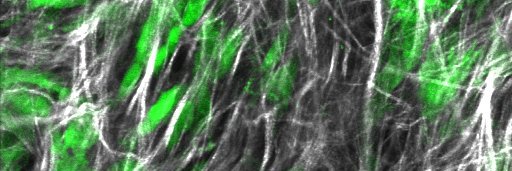
Check our new preprint defining a novel cell engineering approach to generate "physically optimized" T cells that move better through complex solid tumor environments to better encounter and kill carcinoma cells!
https://t.co/DNZWax30u8
@theNCI@AmericanCancer#CCBIR#CMITIE
We are very excited to share our newest results, published in Science Advances: “Compressive stress-driven Piezo1 activation and Rho-ROCK mechanotransduction promote tumor progression via epigenetic mechanical memory”. https://t.co/TzwsRBuMHx
New in @ScienceMagazine: Endeavor Award team members @SageJulien and K. Christopher Garcia have engineered "trikines"—synthetic cytokines that mix & match receptor signals to rewire immune cells.
The result? Better tumor control & far less toxicity.
https://t.co/XIjqMe1eNq
Check our new preprint defining a novel cell engineering approach to generate "physically optimized" T cells that move better through complex solid tumor environments to better encounter and kill carcinoma cells!
https://t.co/DNZWax30u8
@theNCI@AmericanCancer#CCBIR#CMITIE
An update to the Hallmarks of Cancer framework for understanding (and researching) what causes human cancers. https://t.co/3d6pYrcAJ5
Douglas Hanahan
@CellCellPress
Researchers harness lipid nanoparticles and mRNA to generate CAR T cells in vivo to target hepatic stellate cells that drive liver #fibrosis in MASH, and show this strategy can dampen fibrosis and inflammation in mice. @ScienceTM https://t.co/sr7vCm4fcR
We’re excited to announce that Anirban Maitra, MD (@Aiims1742)—a pre-eminent physician-scientist whose work has widely influenced the field of pancreatic cancer research—has been appointed the new director of @Perlmutter_CC here at NYU Langone.
For more: https://t.co/a710zOE04c
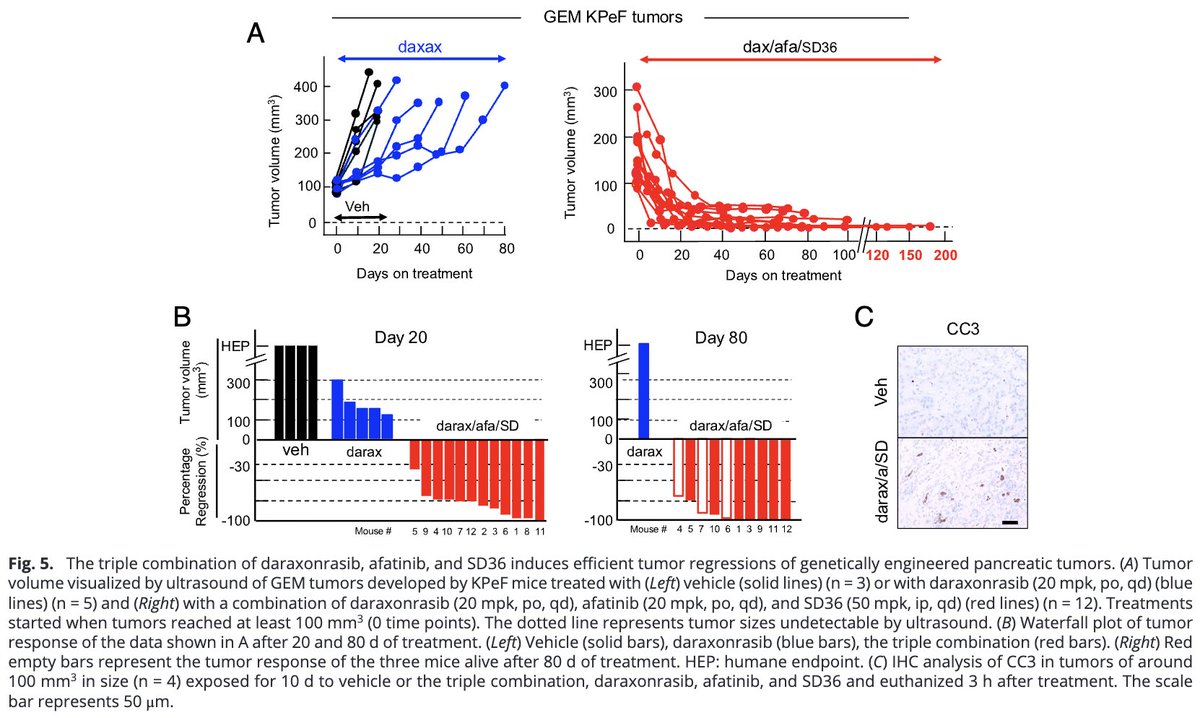
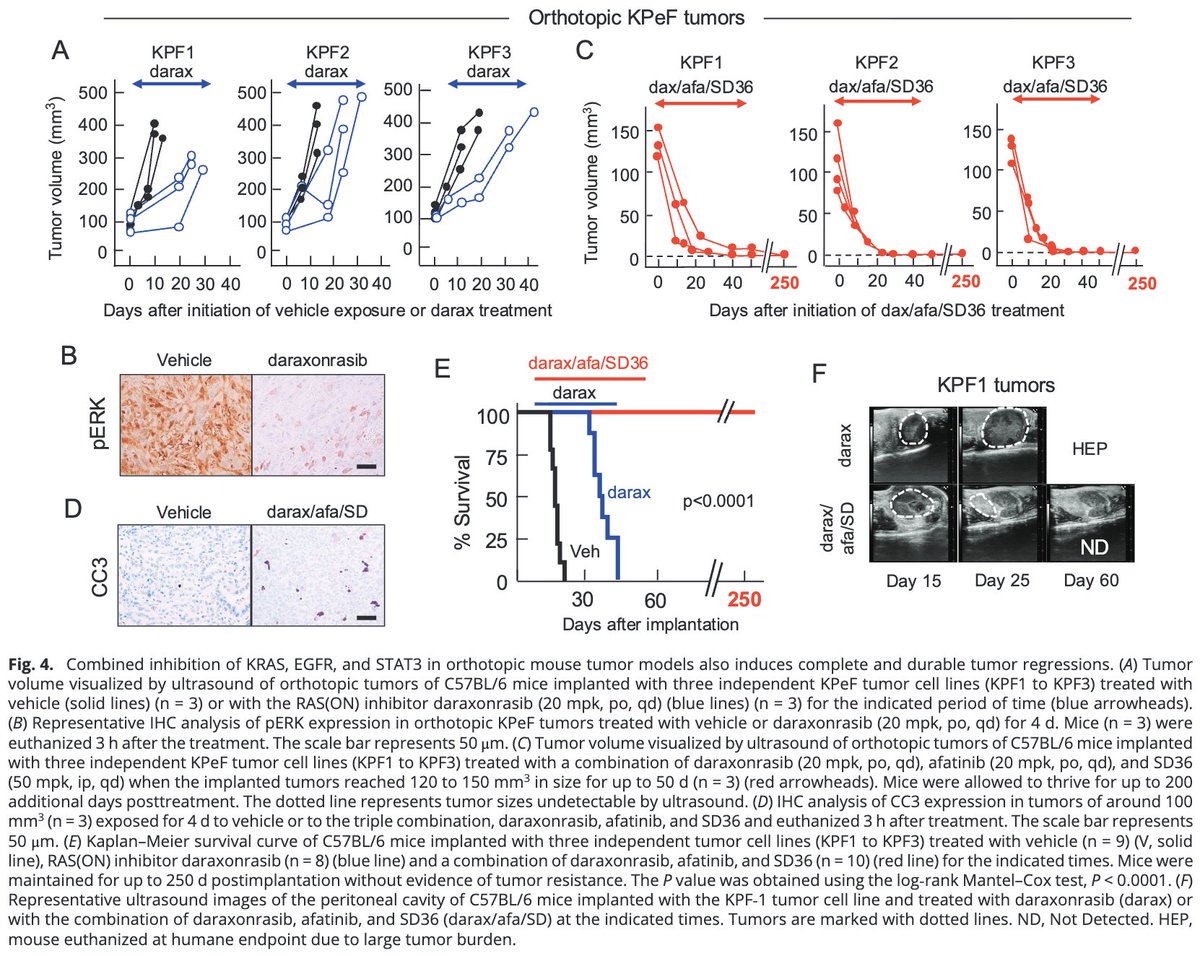
Pancreatic ductal adenocarcinoma needs better RAS inhibitors.
But that alone will not be enough.
In this preclinical study KRAS blockade predictably activates EGFR and STAT3. As long as one escape route remains open, pancreatic tumors persist.
Upfront triple inhibition of RAS (daraxonrasib), EGFR (afatinib) and STAT3 (SD36) achieved complete and durable tumor regression with no relapse beyond 200 days
The signal is strong, but the message is clear:
even if RASolute-302 (phase 3) 🔜is positive, RAS monotherapy will not be sufficient, especially in metastatic PDAC. Progress in RAS driven cancer depends on controlling resistance safely.
https://t.co/aRnjS8Iwj1 @OncoAlert
We're looking for a Research Assistant / Senior Research Assistant to join our team. If you're interested in studying the extracellular matrix and tumour microenvironment in cancer, then get in touch. Applications will be reviewed on a rolling basis.
https://t.co/70jqZHNGS3
Just in case any one is wondering: Biomedical scientists spend an average of 12 years in training before reaching an independent position. That is more than most medical residences.
🚨 Exciting Opportunity Alert! 🚨
Are you passionate about understanding why cancer patients relapse and uncovering the secrets of tumor dormancy and metastasis?
Join our dynamic lab @templemedschool and @FoxChaseCancer
✨ Please RT to spread the word! ✨
We are thrilled to announce that Dean Andrew Alleyne has named Professor Jonathan Sachs as Head of the Department of Biomedical Engineering! Sachs joined the University of Minnesota faculty in 2006.
Read more: https://t.co/rQtmZl5K7m
Very excited to share our preprint on #AI directed Deep Visual Proteomics (DVP) on #PancreaticCancer precursor lesions (PanINs), in collaboration with @OmicVision@MundAndreas
Thousands of proteins from as few as ~100 precisely microdissected cells in archival samples!
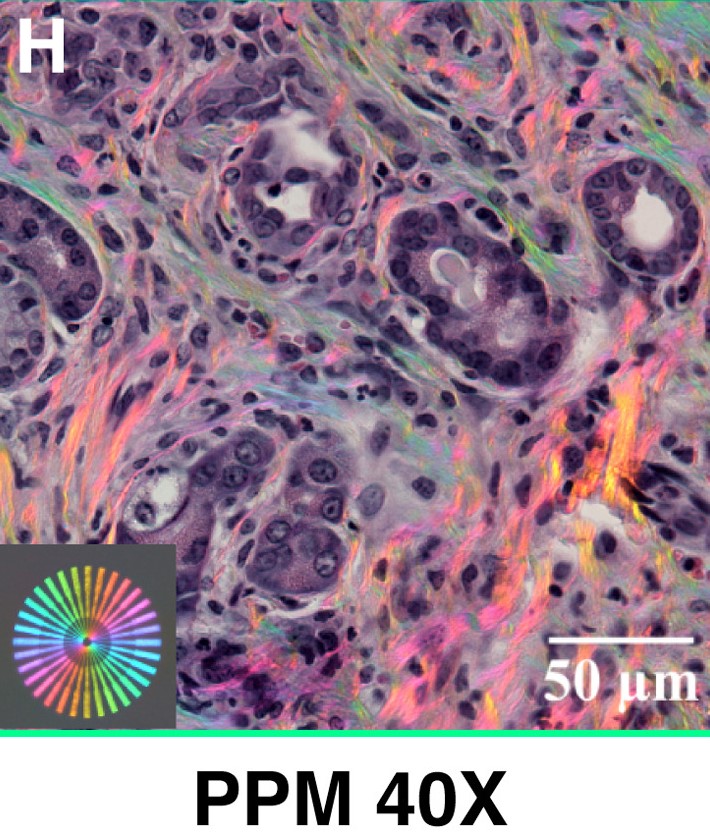
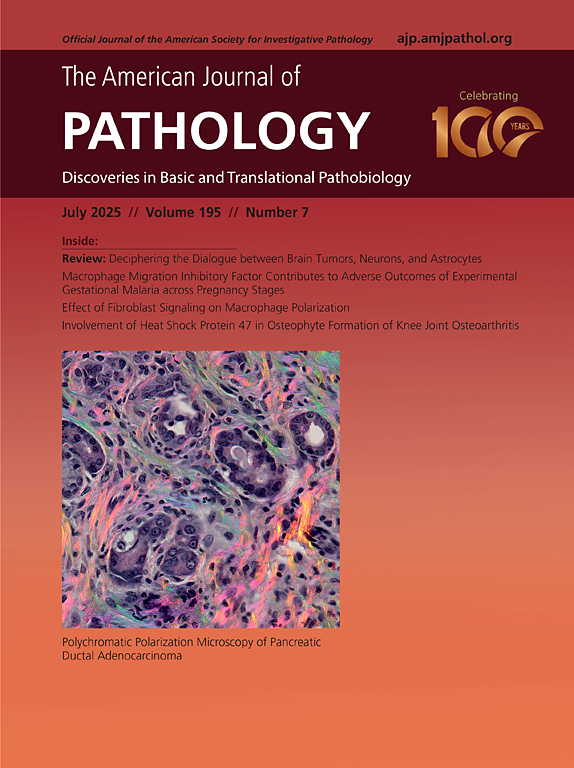
Want to get direct quantitative ECM orientation data in histology slides in an easy straightforward way? Check out our new paper on PPM. @theNCI@UWMadisonLOCI@AmericanCancer
https://t.co/c8sBCSA2wu