El Dr. Michael Breus trabajó durante 26 años como especialista en sueño en Stanford.
Aquí hay 5 advertencias sobre el sueño que compartió:
1) Despertarse entre las 2 y las 3 de la madrugada
the learning-related interaction between the pMFC and the hippocampus diminishes. As a result, the ability to learn from negative experiences and to avoid repeating mistakes declines.
the learning-related interaction between the pMFC and the hippocampus diminishes. As a result, the ability to learn from negative experiences and to avoid repeating mistakes declines.
✳ The genetic feature in question (the A1 allele) is associated with a reduction in dopamine receptors in the brain. In individuals carrying this genetic variant, the brain's error monitoring system (pMFC) exhibits a weaker response to negative feedback
A community college professor named Marty Lobdell taught the same study skills lecture for 30 years. The video quietly became one of the most watched educational recordings online, with over 10 million views.
He spent his career watching students fail not because they were lazy, but because no one had taught them how their brain actually works when learning something difficult.
The lecture, “Study Less Study Smart,” contains a powerful framework.
Your brain cannot sustain focus the way most people believe. Studies show the average learner hits a wall between 25 and 30 minutes. After that, efficiency collapses. You’re still sitting there, but almost nothing is being absorbed.
Lobdell told the story of a student who planned to study 6 hours a night, 5 nights a week. Thirty hours total. She failed every class. She was not lacking effort. She was confusing time near books with actual learning. The fix is simple: when focus drops, stop, take a 5 minute rewarding break, then return. That reset makes a massive difference.
He also destroyed the myth of highlighting and re reading. Recognition is not the same as recall. To prove it, he read 13 random letters. Almost no one remembered them. Then he turned them into “Happy Thursday.” The entire room recalled them instantly. The brain stores meaning, not repetition.
This is why elaborative encoding works so well.
Finally, he shared the most important principle: 80 percent of study time should be active recitation. Close the book and explain the material in your own words. Teach it to someone else or an empty chair. Retrieval is where real learning happens.
His closing line stuck with me: If this information does not change your
behaviour, you have not actually learned it.
The best students do not study more hours. They stop confusing the feeling of studying with the reality of learning.
A German neuroscientist published a book in 2012 arguing that smartphones are quietly producing the first generation in human history whose brains will shrink before they turn 30, and the media spent the next decade trying to destroy him for saying it.
His name is Manfred Spitzer.
He runs the Psychiatric University Hospital in Ulm and directs Germany's largest transfer center for neuroscience and education.
The book is called Digitale Demenz, which translates as Digital Dementia, and it became one of the best-selling popular science books in German history almost the moment it was published.
The press hated him for it. He was called Germany's most controversial brain scientist, accused of being a Luddite, a moral panic merchant, and a fearmonger who hated children.
None of that stopped the book from being translated into more than a dozen languages, and almost none of it engaged with the actual neuroscience he was citing.
The phrase digital dementia did not even start with him.
It started with South Korean doctors in the late 2000s, who noticed something strange in their clinics. Patients in their twenties were arriving with memory complaints that had previously only shown up in much older adults. Forgetting numbers they used to know by heart. Losing the ability to recall directions in cities they had lived in for years. Struggling to remember conversations from earlier the same day.
The doctors connected it to the rise of smartphone use, which had hit South Korea harder and earlier than almost any other country on Earth. Spitzer picked up the phrase and built an entire book around the neuroscience that explained it.
The core thesis is brutally simple. The brain behaves like a muscle. It grows when you use it, and it atrophies when you do not. Every cognitive task you outsource to a device is a task your brain is no longer practicing, and the neural circuits responsible for that task are no longer being reinforced. Over time, they weaken in exactly the same way an unused muscle weakens.
Spitzer was not arguing that smartphones would give you Alzheimer's. He was arguing that decades of cognitive outsourcing would produce a measurable decline in the underlying machinery, long before any clinical diagnosis would catch it, and that the decline was already showing up in young adults.
The mechanism is what made him impossible to dismiss. By the early 2010s, there was already deep evidence that the brain physically remodels itself in response to use. London taxi drivers who had memorized the entire street map of the city had measurably larger hippocampi than the average person, which is the brain region responsible for spatial memory.
Musicians who practiced for thousands of hours had thicker auditory cortices. Spitzer's argument was just the dark side of the same finding. If the brain grows in response to use, then it must shrink in response to neglect. And if every cognitive task adults used to perform with their own memory, navigation, arithmetic, attention, and reading was now being handled by a glowing rectangle in their pocket, then the regions responsible for all of those tasks were quietly being underused for the first time in human evolutionary history.
Then the supporting data started landing.
A 2020 study at McGill University tracked 50 regular drivers and measured GPS use. The heavy users had weaker spatial memory than the rest, and when researchers retested a subset three years later, those users had declined the fastest. The same hippocampus London cabbies had built up by ignoring shortcuts was being slowly hollowed out in everyone else by accepting them.
A 2024 MIT study scanned the brains of people writing essays with and without ChatGPT. The AI group showed 55 percent weaker brain connectivity than the group writing on their own. 83 percent of the ChatGPT users could not recall a single line from essays they had written minutes earlier. The damage stayed even when the tool was taken away.
A 2024 paper out of Norway recorded EEG scans of students writing words by hand versus typing them. The handwriting condition lit up the entire learning network. The typing condition produced almost nothing.
Every one of these findings is exactly what Spitzer predicted in 2012.
The most uncomfortable line in his book is the one almost nobody in the German press wanted to print.
He pointed out that the people building these devices were not letting their own children use them. Steve Jobs did not let his kids near an iPad. Bill Gates capped his children's screen time at 30 minutes a day. The senior engineers at Google were sending their kids to Waldorf schools that banned screens entirely.
The people who knew the most about what these products were doing to the developing brain were the ones protecting their own families from them, and almost nobody on the outside was asking why.
The generation he was warning about is now in their twenties.
The first cognitive scans of what we did to them are starting to come back, and the pattern is exactly what he said it would be.
The brain you were born with is not the brain you will die with.
You are training it every day. The only question is which direction.
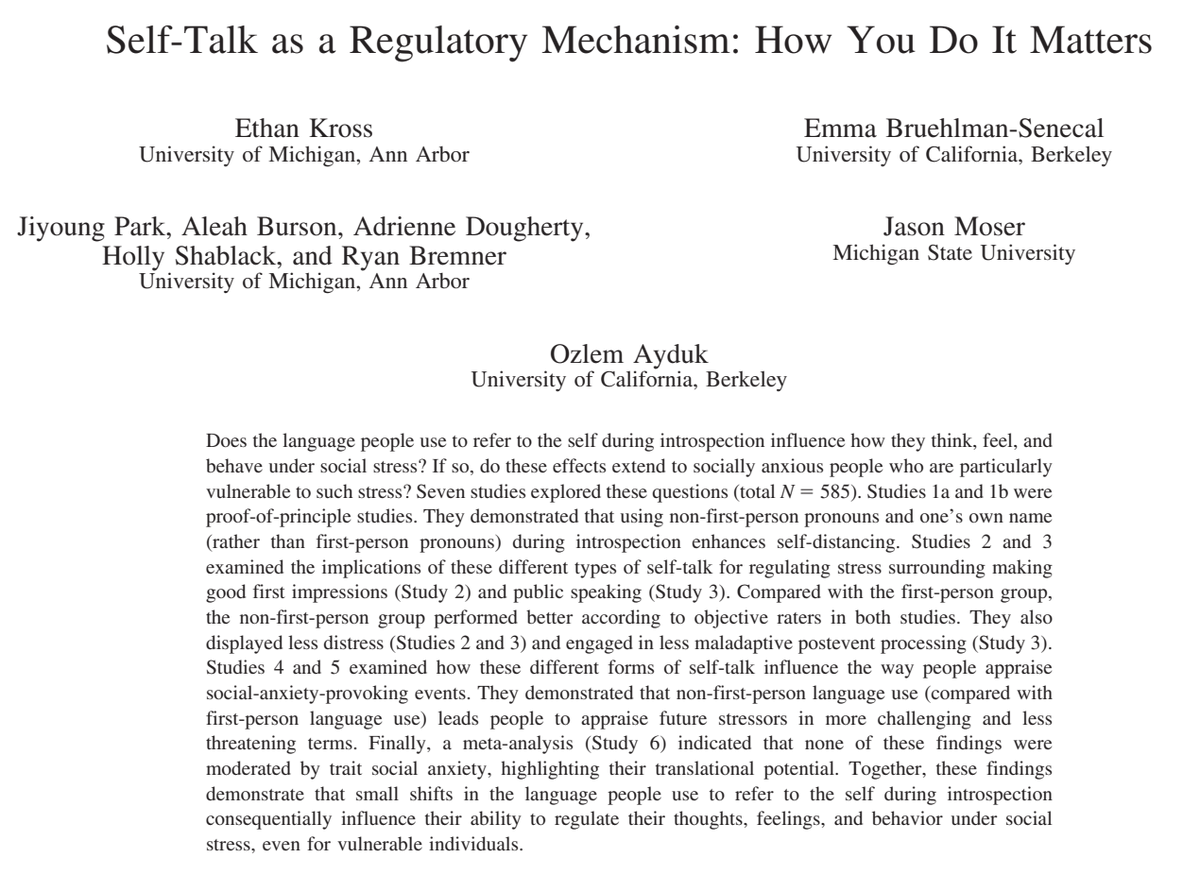
Speaking to yourself in third-person is a performance enhancer.
Across 7 studies, people who used “you” or their own name instead of “I” under social stress had:
↑ objective-rated performance
↓ distress
↓ post-event rumination
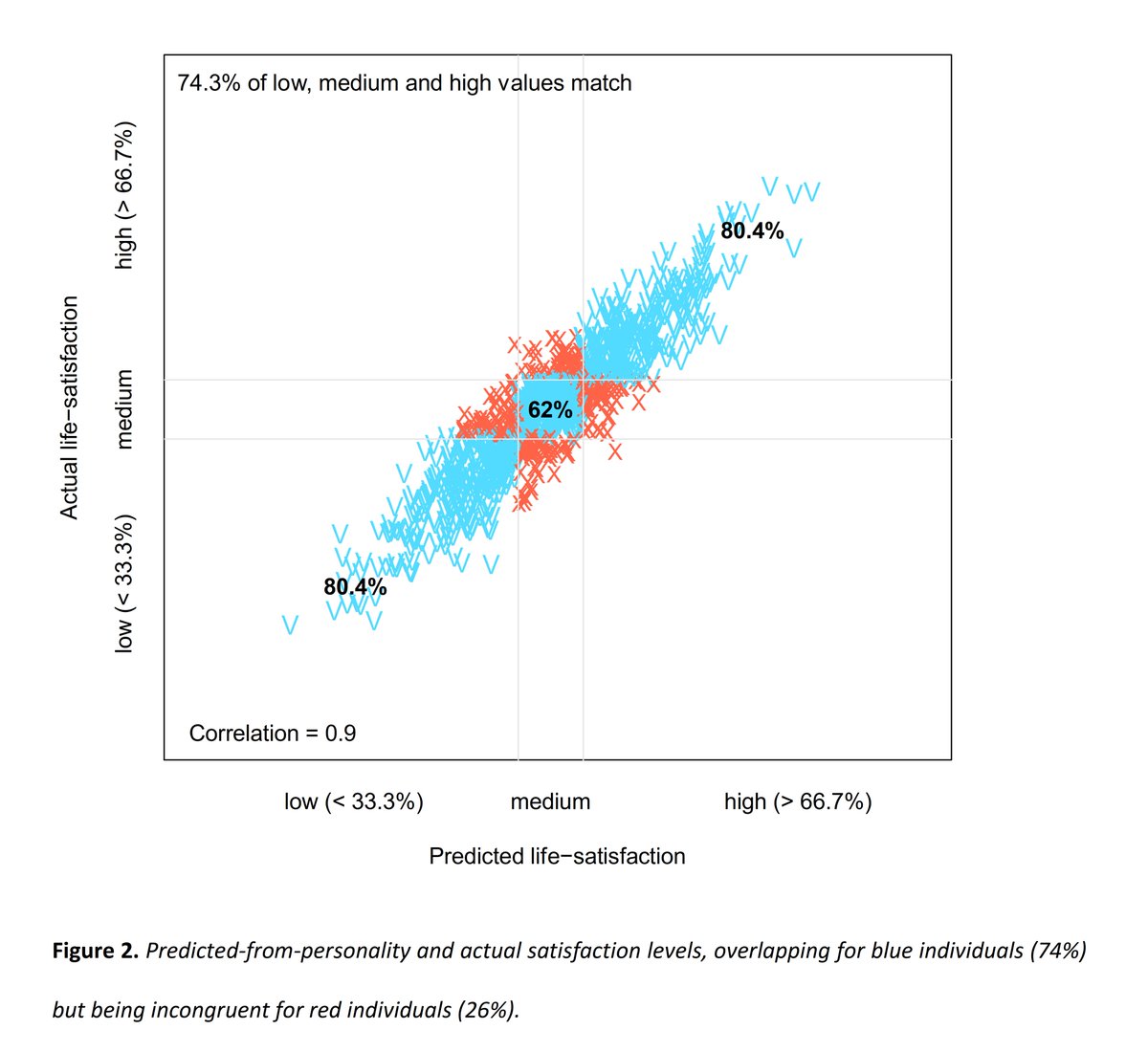
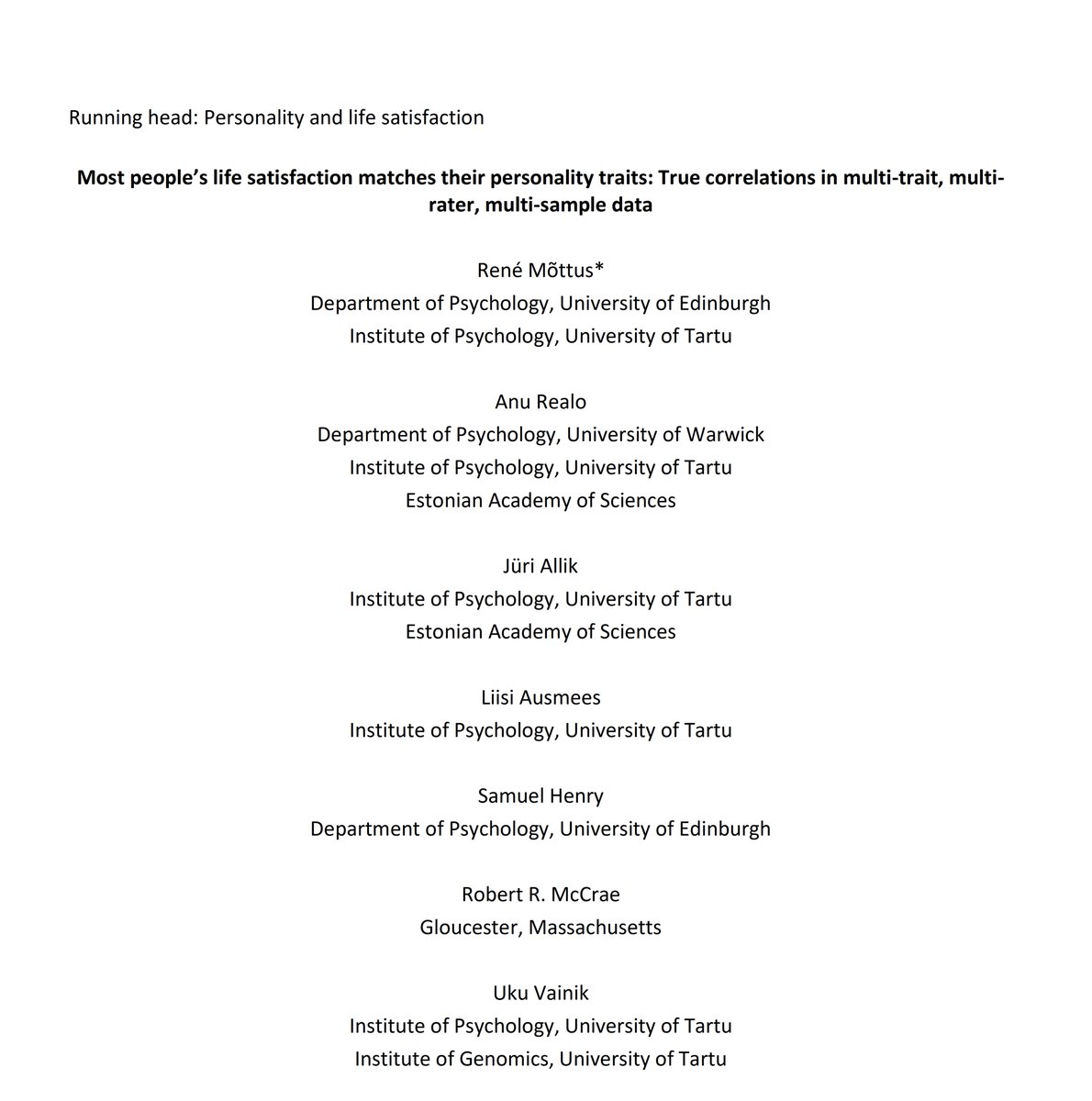
Bir kişinin yaşam doyumunu, bazı kişilik özelliklerine bakarak şaşırtıcı bir kesinlikle (r=.80) tahmin edebiliyoruz.
Yaşam doyumuyla en negatif ilişkisi olan özellik: sıklıkla insanlar tarafından yanlış anlaşıldığınıı hissetmek.
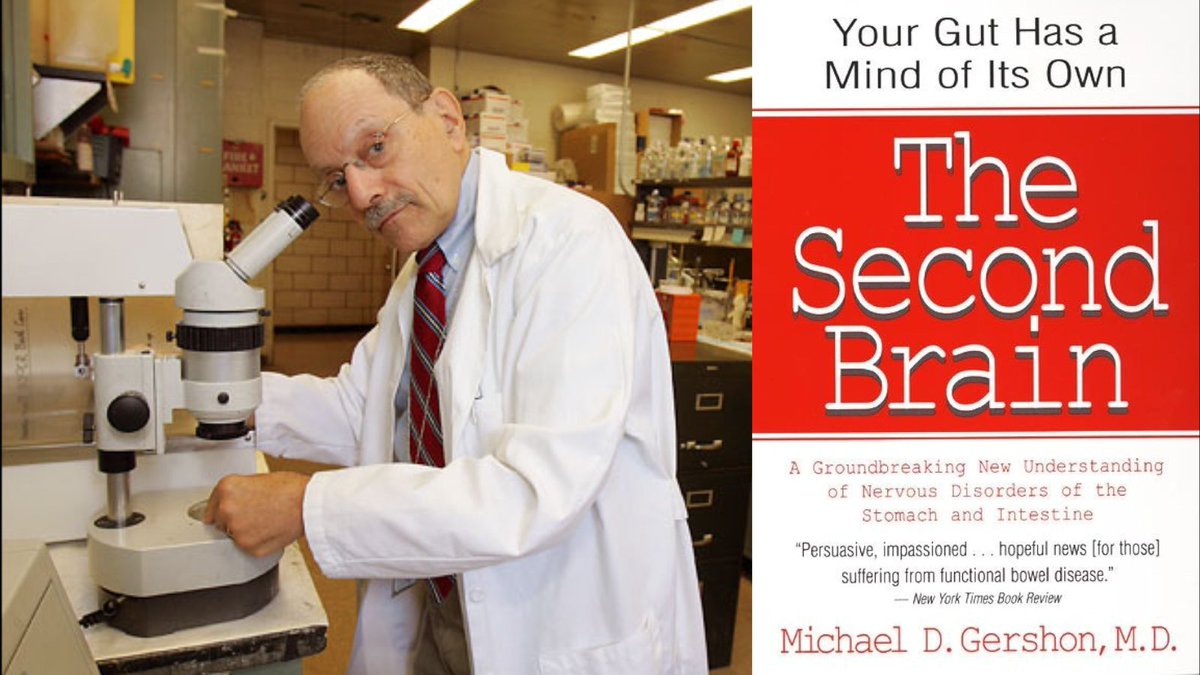
A neurobiologist at Columbia spent 30 years proving that the gut has its own brain, and the day he finally published the book that named it, almost every psychiatrist in America stopped returning his calls.
His name is Michael Gershon.
He runs the Department of Anatomy and Cell Biology at Columbia University Medical Center in New York, and the field he built from the ground up is called neurogastroenterology in short brain-gut axis.
The book that announced it to the world was published in 1998, and the title alone tells you everything about what he was up against. He called it The Second Brain.
The claim sounded like science fiction in the 1990s. Gershon was saying that the human gut contains its own fully functional nervous system, with around 100 million neurons embedded in the walls of the alimentary canal, which is the nine-meter tube running from your esophagus to your anus.
That is more neurons than your entire spinal cord, and more than your entire peripheral nervous system put together. The gut was not just digesting food. It was running its own intelligence, with its own reflexes, its own memory, and its own way of deciding what to do without asking the brain in your head for permission.
The medical establishment treated this as borderline heretical when he first started publishing it. The brain was supposed to be the command center. Everything else was supposed to be the periphery. A second brain in the belly did not fit the architecture anyone had been taught.
Then the data started piling up, and it was impossible to argue with.
The first finding that broke the old model was about serotonin. You might have heard Andrew Huberman talking about it on his podcasts. Serotonin is the neurotransmitter associated with mood, well-being, sleep, and depression. Every antidepressant on the market targets it.
The assumption for decades was that serotonin was a brain chemical, produced in the brain, regulated in the brain, and responsible for what happened inside the brain.
Gershon's lab showed that 90 to 95 percent of the body's serotonin is not produced in the brain at all. It is produced in the gut, by specialized cells called enterochromaffin cells embedded in the intestinal lining.
Your stomach and intestines are the largest serotonin factory in the human body, and the brain in your skull is producing only a tiny fraction of what is circulating below your neck.
The second finding was even harder to swallow. The vagus nerve is the longest cranial nerve in the body, running from the base of the brain down through the neck, the chest, and into the abdomen, where it branches into the gut. For most of the 20th century, doctors assumed the vagus was the brain's way of giving orders to the digestive system, in the same way the brain gives orders to the rest of the body.
The actual measurements showed almost the opposite. Roughly 90 percent of the fibers in the vagus nerve are carrying signals upward, from the gut to the brain, and only a small fraction are carrying signals downward. Your gut is sending nine times more information to your head than your head is sending to your gut.
The bandwidth is wildly asymmetrical, and almost all of it is going in a direction the medical textbooks had quietly been wrong about for decades.
The implication of those two findings together is what changed psychiatry.
If most of your serotonin is being produced in your gut, and most of the information flowing through your vagus nerve is moving from your gut to your brain, then your mood is being shaped from the bottom up far more than it is being directed from the top down.
The feeling of dread before a difficult meeting. The sudden clarity after a good meal. The low-grade anxiety that will not go away no matter how much you talk through it. All of it is downstream of signals that started below your diaphragm.
A 2019 study at McMaster University put the final piece in place. Researchers gave mice oral antidepressants and watched what happened. The drugs activated the vagus nerve from the gut side, and the gut-to-brain signaling was what produced the antidepressant effect.
When they cut the vagus nerve and tried the same drugs, the antidepressant effect disappeared completely. The drug was not working on the brain directly. It was working on the gut, and the gut was working on the brain.
The follow-up research on the microbiome made the connection even tighter. Mice raised in completely sterile environments with no gut bacteria produced about 60 percent less serotonin in their intestines than normal mice. When the bacteria were reintroduced, serotonin production returned to normal.
The trillions of microorganisms living in your digestive tract are not passengers. They are running the factory that makes the chemical your antidepressant is trying to manipulate.
The most haunting line from Gershon's interviews is the one I keep coming back to.
He said the second brain does not do philosophy or poetry, and it cannot help you write a novel. But it is the brain that decides whether you wake up in the morning feeling like the day is full of possibility or feeling like something is wrong before anything has even happened.
The mood you assume your conscious mind is generating from your thoughts is mostly being generated underneath you, by a nervous system you cannot feel and cannot consciously access, in an organ you have spent your entire life thinking about as a digestion machine.
The decision your gut makes about how you are going to feel arrives in your head a fraction of a second before your brain catches up to it. The conscious thought is the explanation your mind invents for a verdict that has already been reached somewhere lower.
You did not feel uneasy because you were thinking dark thoughts.
You started thinking dark thoughts because your gut was already uneasy.
your brain is always becoming better at whatever you repeatedly do. that’s why repetition changes people more than motivation ever will. if you spend every day stressing, overthinking, comparing yourself to strangers online, replaying old mistakes, and expecting the worst, your brain slowly starts treating those patterns like home. it begins scanning the world for more proof that you’re not enough, that life is against you, that things won’t work out. the scary part is your brain doesn’t care if the pattern is helping you or destroying you. it only cares about what gets repeated.
but the same thing works in your favor too. when you repeatedly choose discipline, growth, gratitude, focus, and belief in yourself, your brain slowly reshapes around those things as well. at first it feels unnatural because your old patterns are louder, but over time your perspective changes. challenges stop feeling like signs to quit and start feeling like part of the process. your mind becomes whatever it practices most. so be careful what you keep giving your attention to because eventually, your thoughts become your reality.