Oxygen already killed most of the life on Earth once. The first time it filled the air, around 2.4 billion years ago, it was so poisonous that nearly everything alive died. Scientists call it the Oxygen Catastrophe.
Back then the oceans were full of tiny microbes, and none of them used oxygen. Then one kind, an ancestor of the green scum you still see on ponds, started giving off oxygen as a waste gas, the same way you breathe out air you don’t need. Oxygen is a wrecker. It rips apart the delicate machinery inside a living cell, including the DNA, and as it built up in the water and then the sky, it triggered the first mass extinction this planet had ever seen.
A few survivors hid in the mud and deep underground where the gas couldn’t reach, and some of their descendants are still down there. But one tiny cell did something nobody else did. It ate a bacterium that had learned to use oxygen rather than die from it, and instead of digesting its meal, it kept it alive inside itself. That trapped bacterium became the mitochondria, the little engines that power your cells right now. Almost every cell you are made of carries hundreds or thousands of them, all descended from that one strange truce with a poison.
The trade was worth it because burning food with oxygen releases about 18 times more energy than burning it without. It is the reason anything can swim fast or think hard. Every big, fast-moving animal on Earth, you included, runs on the gas that almost ended life.
Oxygen changed the sky too. Some of it floated up high and turned into ozone, a thin layer that blocks most of the sun’s harshest rays. Before that shield existed, raw sunlight was strong enough to fry the DNA of anything out in the open, so life had to stay underwater, where a few feet of sea soaked up the danger. For almost two billion years, nothing lived on land at all. Only once the ozone grew thick enough, a few hundred million years ago, did the first plants and animals crawl out of the water.
And the old poison never really left. Every second, the oxygen your cells burn throws off tiny broken bits called free radicals, and they keep nicking your DNA and the proteins around it. The damage adds up, slowly, your whole life. Back in 1956 a scientist named Denham Harman suggested this slow rusting from the inside is a big reason we get old. People still argue about how much it matters, and no antioxidant pill has ever been shown to make anyone live longer, but the basic idea has held up. The gas keeping you alive right now is also quietly wearing you down, year by year. The joke just got the timing wrong. Oxygen really does kill slowly, and billions of years before we showed up, it already proved it can kill fast.
instead of watching 2 hours of Netflix tonight, watch this Stanford lecture
it's the clearest explanation I've seen of how ChatGPT and Claude actually work
useful whether you've never touched AI in your life or have been using it every day for the past year
I took the key ideas and turned them into a practical guide on how to actually get 100% out of Claude
find it below
Instead of watching Netflix tonight, watch this 2-hour Stanford lecture.
It will teach you more about how LLMs like ChatGPT and Claude are actually built than most people learn in years working in AI.
Stanford released it for free.
Save this.
Andrej Karpathy spent 4 minutes in an interview explaining a single idea
about how most people haven’t even started learning how to use AI
and everyone paying $20/month for a subscription.. that's not really using Claude at all
his point is that the real skill gap is the ability to build with AI
he identified 4 behaviors that break Claude Code and put them all into one file
a developer expanded it into 21 rules and published it - 82,000 stars and #1 on GitHub Trending
coding accuracy jumped from 65% to 94%
here's what these 21 rules actually are and why most developers using Claude every day have never configured them
the full breakdown is covered in the article below 👇
Andrej Karpathy built a method that improves AI skills automatically.
Your Claude prompts are failing 30% of the time.
Here are 5 prompts that fix it👇
(Save for later)
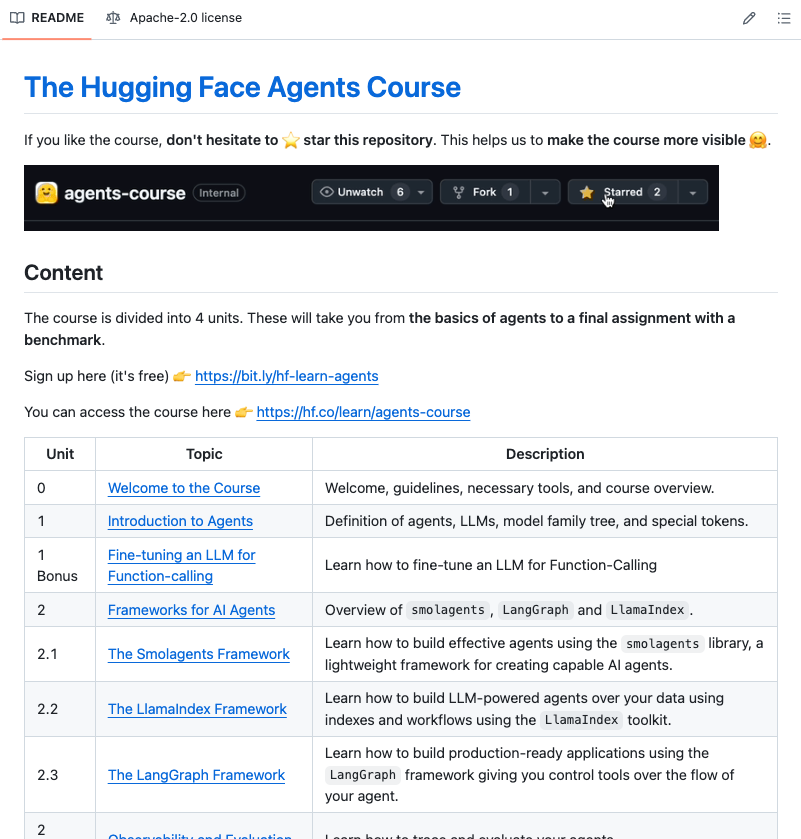
Hugging Face dropped a full AI Agents course and it's completely free.
Most agent tutorials teach you to wrap 3 API calls in a for-loop and call it an agent.
This is different.
Here's what you actually get:
→ Unit 1: Agent fundamentals, LLM internals, model family trees, special tokens
→ Unit 2: 3 production frameworks back to back smolagents, LangGraph, LlamaIndex
→ Bonus: Fine-tune an LLM for function-calling from scratch
→ Unit 3: Agentic RAG how agents retrieve and reason across real data
→ Bonus: Agent observability, tracing, and evaluation
→ Unit 4: Build, test, and certify your own agent on a live public leaderboard
This goes from "what is an agent" to deploying one that gets scored against every other student in the world.
100% Opensource and free.
Link in comments.
data scientists on the job hunt go analyze this new dataset NOW
go find interesting insights, and blog/post/tweet about it. at worse it's good practice.
at best you catch a hiring manager's attention, and can add this interesting real-world project to your resume/portfolio
Best career advice that I can give: Don't ever attach yourself to a person, a place, a company, an organization or a project. Attach yourself to a mission, a calling, a purpose ONLY. That's how you keep your power & your peace. It's worked pretty well for me thus far.