Remembering the films of director Bharathiraja, a visionary who took Indian cinema into real villages, filling the screen with landscapes, dialects and lives rarely seen with such authenticity
A thread of some of his most iconic films, curated by @hindolheroic 🌸
🧵:
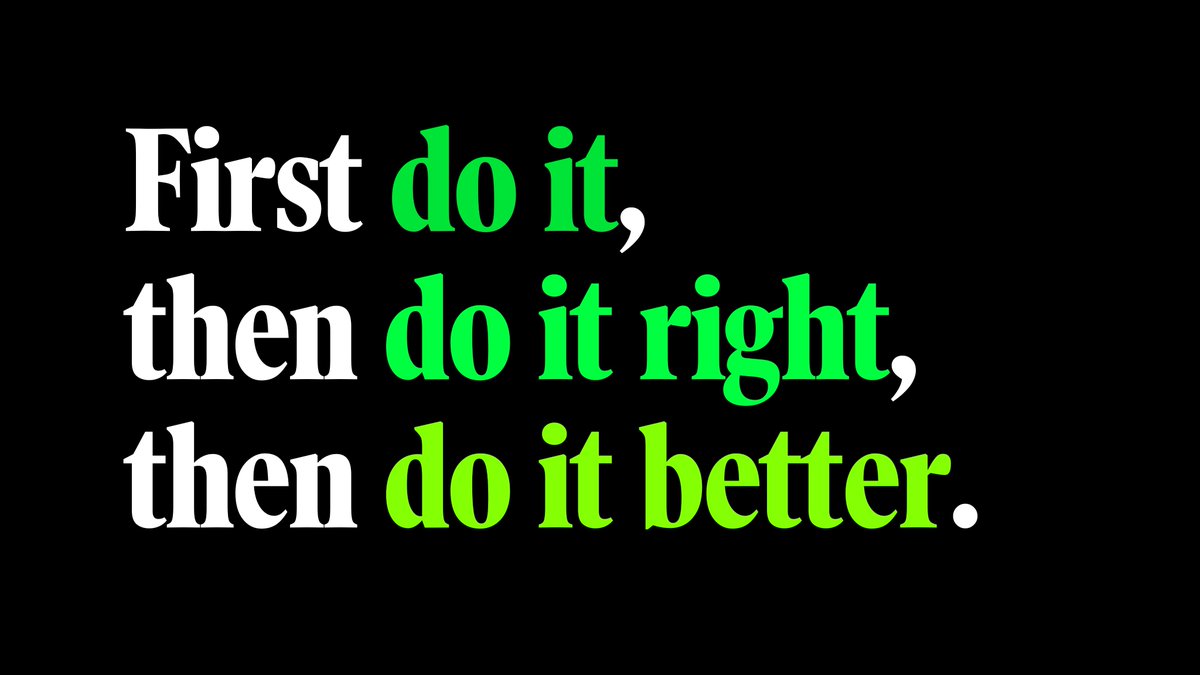
"First do it, then do it right, then do it better."
Just start. The journey to success often begins with a single step, but that first step can be the hardest to take. It's easy to get caught up in the fear of failure or the desire for perfection, but I hope this quote I first shared in 2013 can be a reminder of the importance of simply getting started as we go into 2024.
Just Start Somewhere
"Start slow if you have to. Start small if you have to. Start privately if you have to. Just start." - James Clear
Taking that first step doesn't require perfection or immediate mastery. The key is to overcome inertia and take action, as this action will lead to progress, learning, and (if you’re lucky and consistent) ultimately success.
When you start, you allow yourself the opportunity to grow, adapt, and move forward.
The Power of Starting
Beginning a new project or habit often feels daunting. According to psychologists, we tend to overestimate the pain of starting and underestimate our ability to persist.
However, studies show that "small starts" predict eventual success better than initial enthusiasm or early progress. This phenomenon is known as the fresh start effect - taking the first step energizes us and bolsters motivation.
So focus on starting without putting pressure on perfection. Progress and course corrections will follow.
First, Do It: Embrace the MVP Mindset
Doing it = get the simplest MVP out.
A Minimum Viable Product (MVP) represents the simplest version of a product or idea that allows you to test, gather feedback, and iterate.
By embracing this mindset (just get something done - it's OK if rough, a prototype, a draft), you focus on progress over perfection, understanding that getting something out into the world is far more valuable than waiting for the perfect moment.
Expand Your Comfort Zone
Venturing outside one's comfort zone can elicit fears of failure. Leaning into discomfort not only builds confidence and skills, but research shows it makes us more receptive to learning. Recognize that fear is often the mind's way of urging us to grow. Don't let it stop you from progressing.
Then, Do It Right: Refine and Correct
Doing it right = fix correctness issues.
Once you've taken that first step and put your MVP out into the world, it's time to refine and correct. This stage is about learning from feedback, identifying areas of improvement, and making adjustments accordingly.
It's a chance to iterate on your idea, ensuring that it meets the needs of your audience or customers while aligning with your vision.
Cultivate Curiosity and Resilience
Meeting new challenges with curiosity and resilience makes venturing outside our comfort zone more sustainable and enjoyable. Cultivate curiosity about growth opportunities and your capacity to rise to them. Set mini-challenges to incrementally expand your horizons.
When facing inevitable setbacks, avoid self-criticism and tap into resilience - the ability to recover, learn and continue progressing.
Self-compassion, adaptability and maintaining perspective are key here. With consistent effort, you build confidence in your ability to start, stumble, learn and work toward mastery.
Finally, Do It Better: Strive for Continuous Improvement
"Doing it better = iterate towards an ideal end-state (e.g., make it fast)."
The journey doesn't end with merely doing it right.
The final step is to continuously improve, striving for excellence and growth.
By iterating towards an ideal end-state, you demonstrate a commitment to progress, ensuring that your product, idea, or project remains relevant, innovative, and successful.
Set New Goalposts
As you improve, have a clear idea of when you are “done” or update your goalposts. Elite athletes turn small gains into competitive edges via the aggregation of marginal gains. Identify areas of potential improvement and set measurable stretch goals, from increasing efficiency to enhancing user delight.
Overcoming the Greatest Barrier to Progress
"The greatest barrier to progress is not lack of resources or talent, but fear of failure."
Recognizing that fear of failure is the most significant obstacle in the pursuit of success allows you to confront it head-on.
By acknowledging this fear, you can focus on taking that first step, knowing that once the ball starts rolling, it becomes much easier to keep it in motion.
Remember that starting is more than half the battle. Don't wait until you feel ready, because the perfect moment may never come.
The Bottom Line
Rather than striving for perfect execution, embrace the power of starting - put forth an MVP, soft launch an initiative, or set a milestone. Progress begets motivation. By simply starting, you open the door to growth and innovation. The rest will follow.
Embrace the power of starting and then iterating until you're happy.
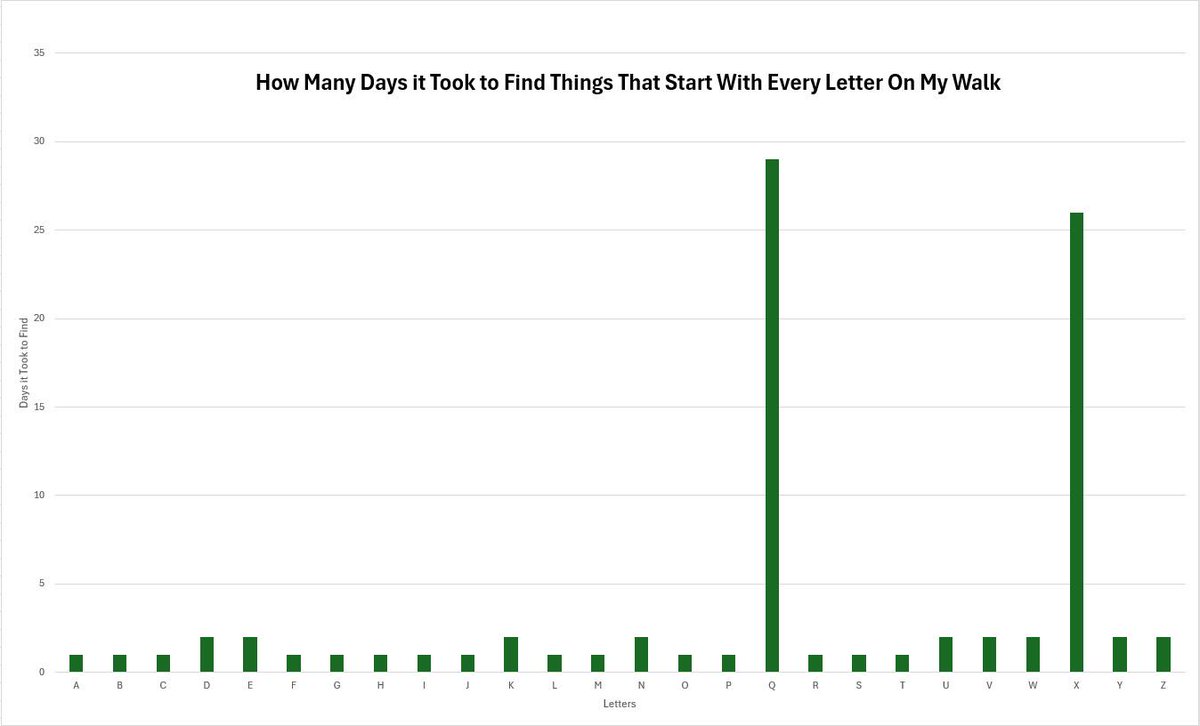
Someone tracked how many dog walks it took to spot something starting with each letter, A to Z.
Most letters took a day or two. Q took 29 walks. X took 26.
“The secret to doing great work is always to be a little underemployed. You waste years by not being able to waste hours.”
This Amos Tversky quote is 1000x more true today. As technology accelerates, reserving time and energy for indulging your curiosity is ever more important.
Really feeling that these days.
Using LLMs for close reading provides a way to ask questions, explore rabbit holes, personalize, & build intuition
Two examples in 🧵:
- @jeremyphoward reads chapter of @ericries's new book (Incorruptible)
- @johnowhitaker reads a dense machine learning paper (LeJEPA) 1/
How do we make invisible progress visible?
"If you look at technologies that are really good at building habits, they’re great at visualization. You’re playing a video game; you have a score in the top corner of the screen. It’s increasing all the time as you go through the level.
Every time you pick up a weapon or a ruby or a gem or whatever, there’s a little jingle or a chime; there’s some kind of power-up. Even the pitter-patter of footsteps as you run through the level is a signal that you’re progressing.
So you have all these visual and audio signals of progress; the feedback is immediate. And if you compare that experience of just playing this level for 15 minutes to what it’s like to sit down and try to write a blog post or record a podcast interview or do anything in the normal world, it’s very different.
The feedback comes much slower in real life.
My parents like to swim. And one of the challenges of swimming is that your body looks exactly the same when you get out of the water as it did when you jumped in. If they’re doing it for the visual results, it takes two years for your body to change in the mirror. And so they have a little habit tracker where they just put an X down for each day they do their workout, and then at the end of the month, they count up how many workouts they did and compare that number to the month before.
Putting that X down at the end of the workout is such a small little thing, but it’s one little visual signal that we showed up and we did the right thing today, that I did what I was supposed to do. It’s a way of visualizing your progress.
Finding ways to visualize your progress as you go through your habits is important because a hallmark of almost any compounding process is that the greatest returns are delayed."
(James Clear on The Knowledge Project)
Habits that have a high rate of return in life:
- sleeping 8+ hours each day
- lifting weights 3x week
- going for a walk each day
- saving at least 10 percent of your income
- reading every day
- drinking more water and less of everything else
- leaving your phone in another room while you work
I saw this book trending on Hacker News today.
It looks like a great resource for reviewing important math concepts used in computer science.
(bookmark it)
@bargava@karpathy@diabrowser@comet Now @YouTube has a "Ask" feature under its videos. It can summarise and you can ask any other follow up questions. I wish they give option to integrate note apps so that we can save the chat/notes.
Google Colab is officially coming to @code! ⚡️
You can now connect VS Code notebooks directly to @GoogleColab runtimes. Get the best of both worlds: the editor you love, powered by the compute (GPUs/TPUs) you need. → https://t.co/prgImNfEd2