SIR Under Scrutiny: Who Approved the SIR?
If the Election Commission Didn't Decide, Then Who Did?
#WEF#Agenda2030
https://t.co/B44RjQU5hR
"The Election Commission's Principal Secretary is writing that the EC has not taken a decision on the SIR" – Anjali Bhardwaj
"I filed an RTI petition asking a straightforward question—provide a copy of the file in which the decision to conduct the #SIR was made."
In response to the petition, the ElectionCommission stated in writing:
"The Election Commission has not taken the decision to conduct the SIR."
If the Election Commission did not decide to conduct the SIR, then did the Ministry of Home Affairs make the decision? Who decided?
A huge exercise involving 100 crore voters is happening, but the Election Commission shows zero accountability.
#ElectionCommission #ECI #RTI #Transparency #Democracy #VotingRights #ElectoralRolls #DigitalIndia
BREAKING: INSTAGRAM HAS BEEN RUNNING PAID ADS PROMOTING CHILD SEXUAL ABUSE MATERIAL IN INDIA!
This is causing harm to children in the real world because @instagram is providing a marketplace for child sexual abuse. When BBC reporter @divyaconnects questions Head of @Meta in India. This is how he responds. Investigation by @bbcworldservice.
The Supreme Court has reaffirmed that walking on footpaths is a fundamental right. Yet in Delhi, that right exists only on paper.
This ground report is an indictment of years of civic apathy; footpaths swallowed by encroachments, dug up, blocked by parked vehicles, vendors, debris and poor planning, forcing people onto dangerous roads.
The biggest victims? Children, senior citizens, persons with disabilities, patients, and anyone who simply wants to walk safely.
A city that cannot protect its pedestrians cannot call itself world class.
@MCD_Delhi@LtGovDelhi@CMODelhi@CPDelhi@MoHUA_India
#RightToWalk #PedestrianRights #Delhi
#WhereIsMyFootpath
https://t.co/EsFYws1Th3 via @timesofindia
Let's call it what it is - a death sentence for millions! And the pollution from this facility will not affect just the neighbouring areas but all of Delhi NCR! Shame!
For > 15 years, residents of Sukhdev Vihar, Jasola & surrounding areas have fought a lonely battle against waste incinerators, through courts, protests and petitions. Their reward?
Another expansion:(
Delhi's waste problem will not be solved by burning more mixed waste. It will be solved by segregation, recycling and accountability.
The people who have borne the smoke, ash and health risks deserved relief, not a larger furnace.
#Tehkhand #HelpMeBreathe #WasteToEnergy
via @appriseParas@htTweets
For > 15 years, residents of Sukhdev Vihar, Jasola & surrounding areas have fought a lonely battle against waste incinerators, through courts, protests and petitions. Their reward?
Another expansion:(
Delhi's waste problem will not be solved by burning more mixed waste. It will be solved by segregation, recycling and accountability.
The people who have borne the smoke, ash and health risks deserved relief, not a larger furnace.
#Tehkhand #HelpMeBreathe #WasteToEnergy
via @appriseParas@htTweets
As long as waste segregation, decentralised processing & scientific disposal remain on paper, these disasters will keep repeating.
Once the flames are out, accountability cannot be extinguished with them. We deserve a transparent investigation, public disclosure of emissions, and a time bound plan to prevent another toxic dump fire. @PMOIndia
A baby in the womb cannot wear a mask, choose cleaner routes, or escape toxic air. Yet the evidence is increasingly clear? pollution is reaching our children before birth.
How much more science do we need before clean air becomes a public health priority? Protecting mothers and babies must be at the centre of every air quality policy. @PMOIndia
“Centre clears ₹9k-cr scheme to replace BS-IV trucks, buses…”
This is a welcome step. Trucks and buses make up a small share of vehicles in Delhi-NCR but contribute disproportionately to pollution, so targeting them can deliver significant air quality benefits. The mix of incentives; interest subvention, fuel vouchers, tax concessions and OEM discounts, could help accelerate the shift to cleaner BS-VI and electric vehicles.
The real test, however, will be implementation. Will operators participate at scale? Is scrappage infrastructure ready? And will NCR states implement the scheme effectively? While this can reduce transport emissions, lasting improvements in Delhi's air quality will also require action on dust, construction, industry and biomass burning. Success should be measured by vehicles replaced and pollution reduced, not just the funds allocated. @PMOIndia
https://t.co/TOxyWqFMD1 @PTI_News@AparnaBose4
“Plantation for illegal felling of 1,100 trees in ridge gets namo oxygen park tag”
Calling ecological restitution an achievement is like calling a fine a reward.
https://t.co/jJ8IzJVaDu via @kush_junglee@timesofindia
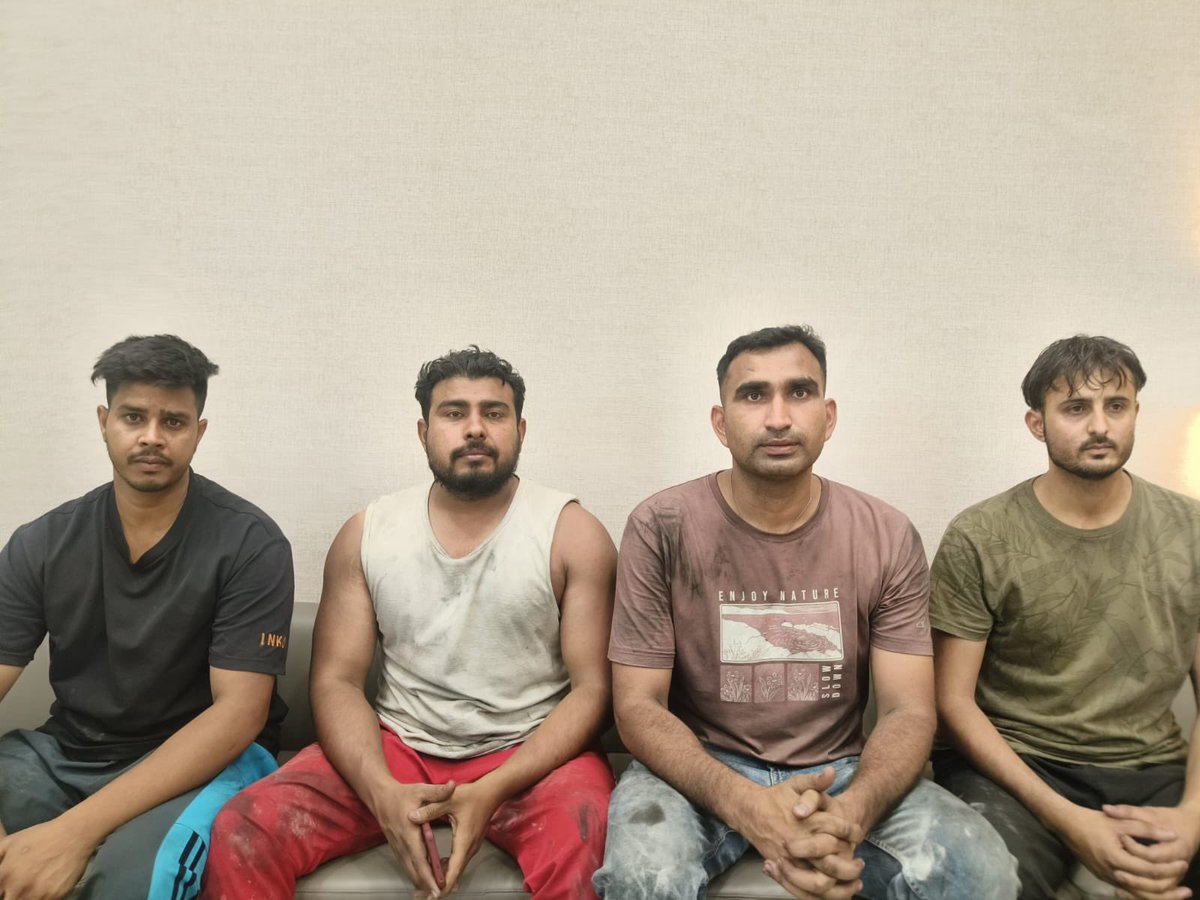
When systems fail, individual heroes rise. These are people who rescued people and administered CPR in the hauz rani fire . (L to R) Amir Khan, Mohd Shoaib, Wasim Raja and Mohd Afzal
An invisible crisis is unfolding across Delhi. Ground level ozone exceeded standards at more than half of monitoring stations this May, with some locations recording nearly 3 times the safe limit. Our children cannot wait. We need urgent, science based action on ozone pollution.
https://t.co/1WaaOGuiFj via @kush_junglee@timesofindia
https://t.co/hPHMpDBCYV
Just because you can’t see the pollution doesn’t mean summer air is safe to breathe either… only if we deal with pollution at sources throughout the year can we hope for anything to change! @gupta_rekha@mssirsa
Sharing this with concern.
It’s a long note…
Manavi, my daughter, is again unwell today -mild chest congestion, difficulty clearing phlegm and vomiting. Doctor has now advised starting nebulisation again.
What worries me is that there seems to be no respite fm pollution even in peak summer. Even conditions that shld normally help dispersion r not translating into relief at ground level in our area. For those of us living in this rapidly urbanising part of Gurugram, the air remains polluted across seasons -winter or summer.
In fact, last winter we had to temporarily move out of Gurugram because after prolonged years of exposure to bad air, her ability to cope has genuinely diminished. She is 24 now and we have been living in Gurgaon since 2008.
She was much better whn we were away earlier this yr. Since returning in Feb, I hv genuinely felt a decline again in her stamina & overall health.
What is also important to say is this: many gated communities with substantial tree cover are often perceived as “green” and relatively protected. But sadly that greenery creates a false sense of protection fm air pollution.
Within and around this residential area- sec 50 -several hundred ongoing redevelopment and builder floor projects, large surrounding commercial developments and fractured infra issues, besides all of this -we hv our own “malba hill” on our boundary.
One drive around the complex &you can visibly see fine dust settling over vehicles,balconies & even inside homes. Residents witness open malba movement, construction dust,
broken roads, sariya &stone cutting & exposed soil daily mostly without even basic dust mitigation norms being followed
What is painful is that this is not new
I had written to CAQM as far back as 2023 asking who exactly was responsible for implementing and monitoring construction dust mitigation norms within these residential urbanising sectors , as well as highlighting the need for a policy review of low-body tractors used for movement of soil, sand &debris. To their credit, CAQM did respond and forwarded directions to MCG for monitoring and action.
But on ground, not one communication from MCG was ever received by me, and more importantly, little visibly changed.
Over the years one has developed a ground-level understanding of these violations -what causes them, how pollution travels thr these sectors and what mitigation measures could reduce exposure if sincerely implemented, inc the waste burning issue across residential sectors.
And then there is the monitoring data.
Last night the Sector 51 CPCB monitor showed AQI worsening from 204 at midnight to 228 at 2 AM. PM2.5 peaked at 376 -severe category.
At the same time:
Vikas Sadan AQI: 97(Satisfactory)
Teri Gram AQI: 99(Satisfactory)
Gwal Pahari: no data
See the contrast …residential versus other areas
As citizens collective @CleanAirBharat, we hv been consistently documenting &highlighting these issues over several years
Beyond the monitors, the real indicator is what your own body feels -the heaviness in the air, visible dust/smoke, throat irritation, cough and recurring congestion in children and elderly.
We had again escalated these issues to CAQM in February and April this yr with evidence &details of local dust sources. Yet even in peak summer of 2026, these pollution levels continue.
As a citizen, as a parent, as a member of Clean Air Bharat, and as someone who has been voluntarily working on these issues since 2013, I sincerely appeal to the concerned authorities to please see the lives behind these numbers and the complaints.
At some point,we residents are left simply documenting lived experiences because the truth must be recorded and inaction documented too.
Just wanted to ask others as well -how are your children or elderly family members coping with the air right now in #Gurugram? Sharing this with some concern
@CAQM_Official@MunCorpGurugram@OfficialGMDA@DC_Gurugram@moefcc@HspcbN@CPCB_OFFICIAL@ulbharyana
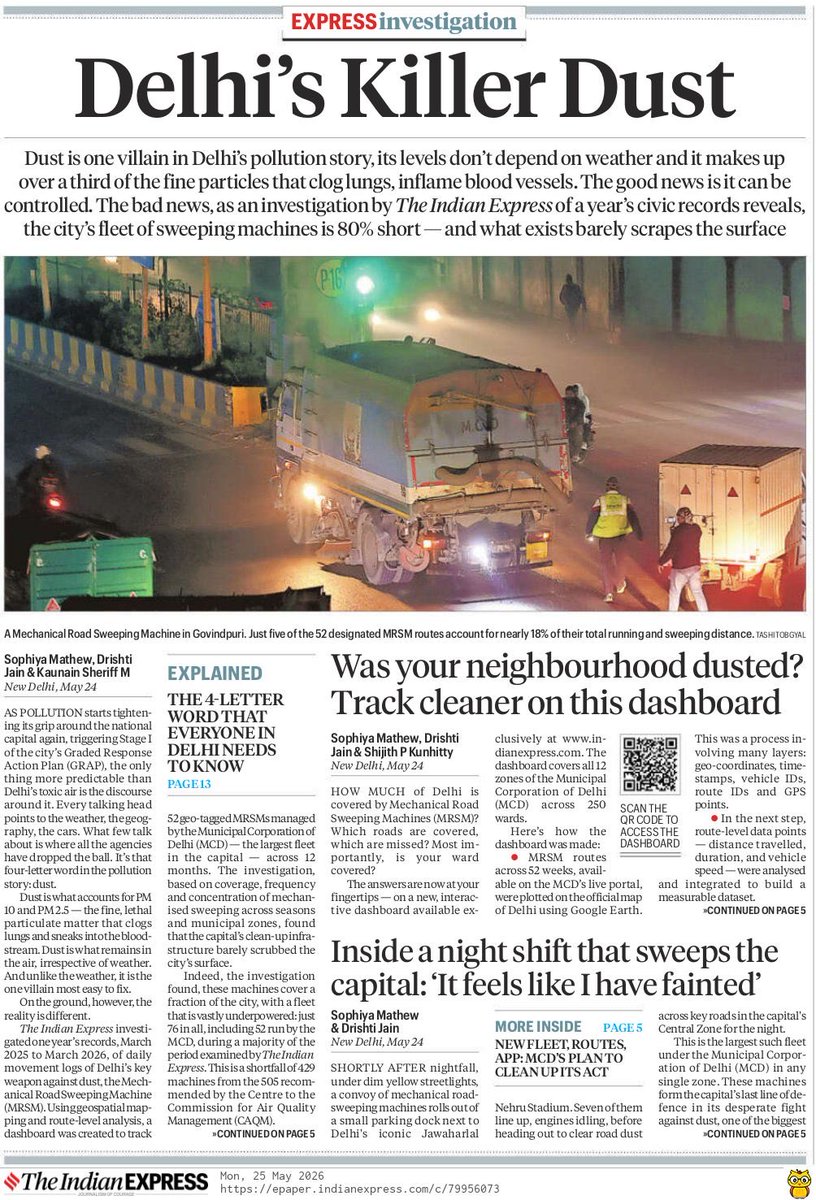
The image of Delhi’s “clean roads” is strangely cinematic; giant sweeping machines gliding through empty streets at night.
The reality is men walking beside them for hours, coughing into cloth masks, shovelling cow dung, unclogging garbage by hand, and reaching home feeling “like fainted.”
A detailed insightful on ground story by @SophiyaMathew1@Drishti_jain02@kaunain_s@IndianExpress exposing reality of Delhi’s fight against dust. Spending two nights following the city’s road sweeping machines, and the workers behind them, across some of the capital’s dirtiest stretches.
https://t.co/jGK65h5AO4
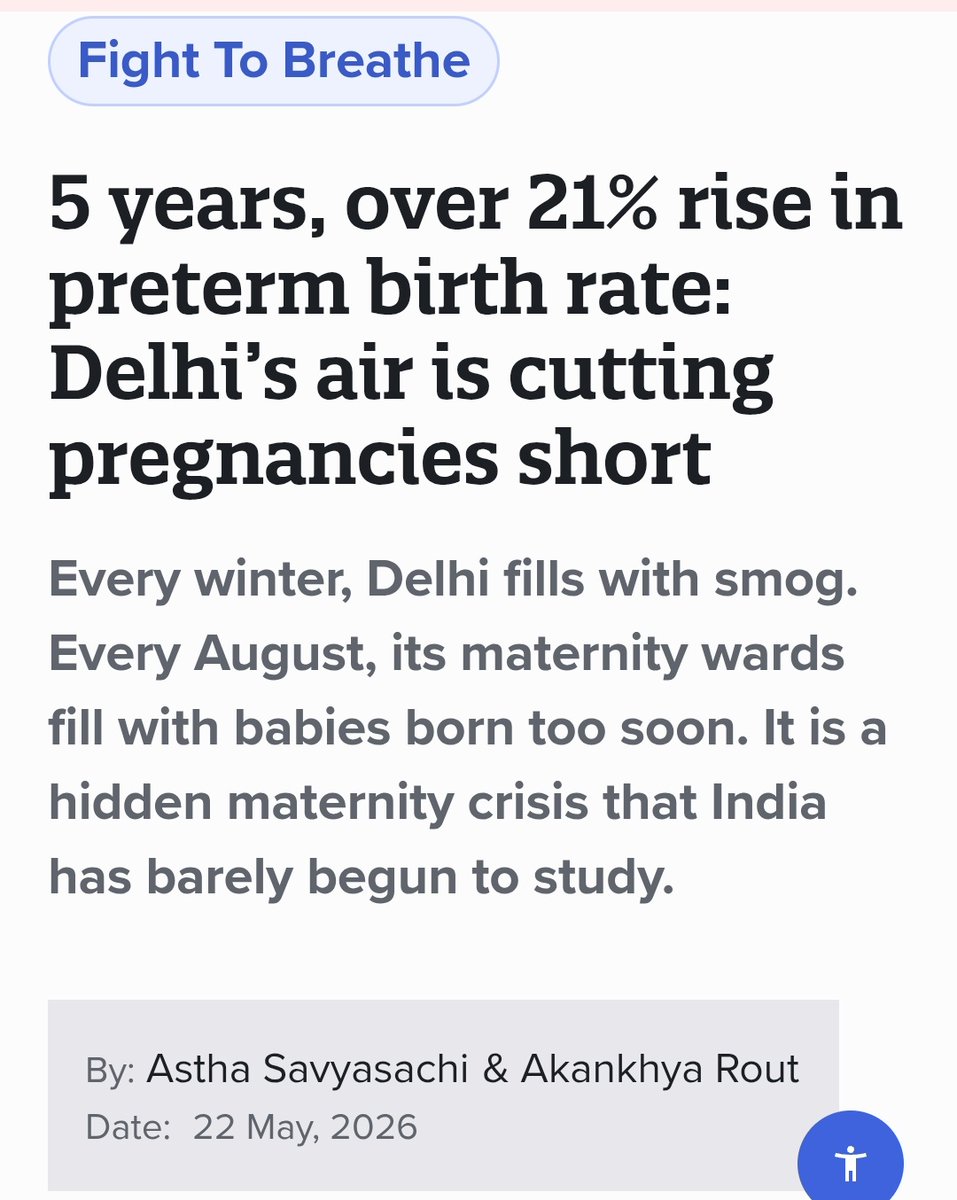
Delhi's air is cutting pregnancies short.
You can sprinkle water around AQI monitors but that won't stop real world problems
Story by @SavyasachiAstha and @AkankhyaAk72623
Breaking news!
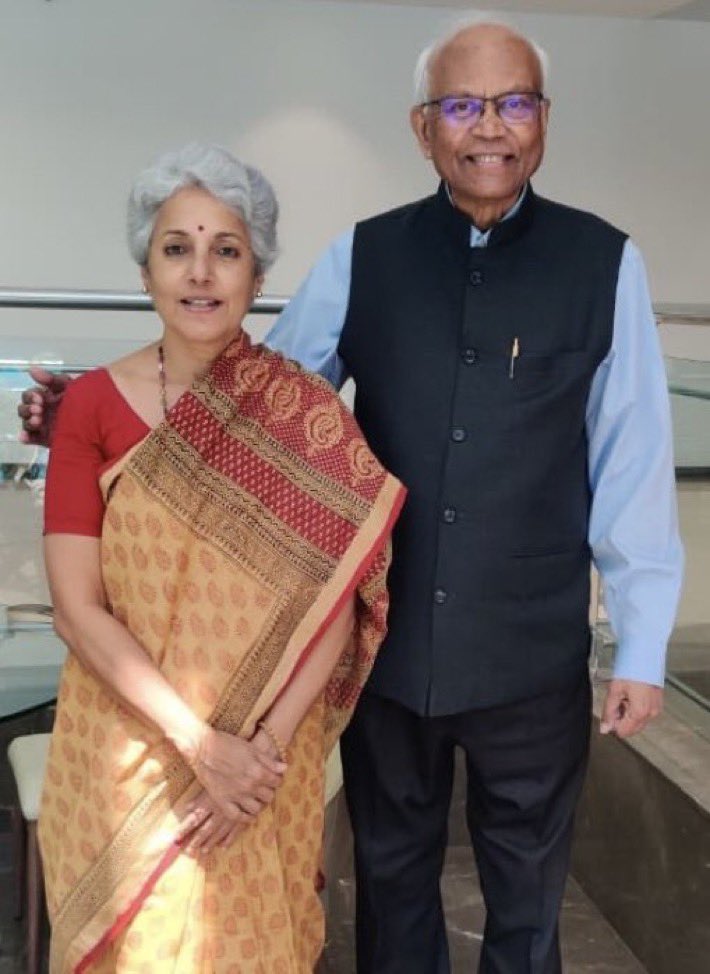
Dr Soumya Swaminathan @doctorsoumya has been elected as FRS, Fellow of Royal Society, one of the highest global hours that a scientist can receive.
@royalsociety
With her father Bharat Ratna Prof Swaminathan also being elected as FRS, this is the first daughter-father FRS duo from India.
Also she is the second Indian woman scientist being elected in 365 years history of Royal Society, the first being Prof Gagandeep Kang.
Very proud moment for Indian Science & indeed for us Indians.
Heartiest congratulations dear Soumya!
@PMOIndia@DrJitendraSingh@PrinSciAdvOff@CSIR_IND@ICMRDELHI@IndiaDST@DBTIndia@PuneIntCentre
Dwarka forest in Delhi is being destroyed under Supreme Court–directed orders.
As the destruction begins, families of hungry Nilgai — Asia’s largest antelopes — are being forced out of the forest and onto the streets of Dwarka in search of food and shelter.
@mssirsa@moefcc can you help them ? At least let some part of the 12 acres be left for them to live a dignified life !
And the real impact will now depend on strict enforcement, regular inspections, penalties for violations, and on ground monitoring to ensure dust pollution is actually contained, not just covered on paper. @CAQM_Official
“Delhi can’t keep treating waste management reform like an endless pilot project. The Solid Waste Management Rules were first notified in 2016. We are now in 2026, and the MCD is saying Delhi may need another year to frame by-laws. That’s a full decade lost while landfills keep growing, drains keep choking, fires keep poisoning the air, and mixed waste keeps making segregation impossible on the ground.
Every year of delay has real consequences on our children’s health⬇️ • More untreated waste dumped at Ghazipur, Bhalswa & Okhla. • More methane emissions/landfill fires. • Higher public health costs for nearby communities. • Lost recyclables because segregation isn’t enforced properly. • Informal waste workers continuing without adequate integration or protection. • No accountability for bulk waste generators despite repeated promises
The frustrating part is that none of this is “new policy territory.” Four way segregation, user charges, BWG accountability, decentralised processing; these have all been discussed for years. If by-laws from 2016 already existed, what exactly justifies another year long delay?
Delhi doesn’t have a waste crisis because citizens don’t know what to do. It has a governance & enforcement crisis. Without notified by-laws, timelines, prosecutions, penalties and institutional accountability, “implementation plans” remain PowerPoint exercises while the city literally drowns in garbage.” @BhavreenMK