ModelPolisher, a powerful yet streamlined curation tool designed to enhance the quality and compliance of systems biology models, has reached version 2.1.
✔︎ Better FAIR data standards compliance
✔︎ SBML best practices
✔︎ MIRIAM semantic annotations
https://t.co/x9EK5dHzSI
New paper in Imaging Neuroscience by Aref Kalantari, Markus Aswendt, et al:
Automated quality control of small animal MR neuroimaging data
https://t.co/2Z1Zlsbd0c
Graph Artificial Intelligence in Medicine
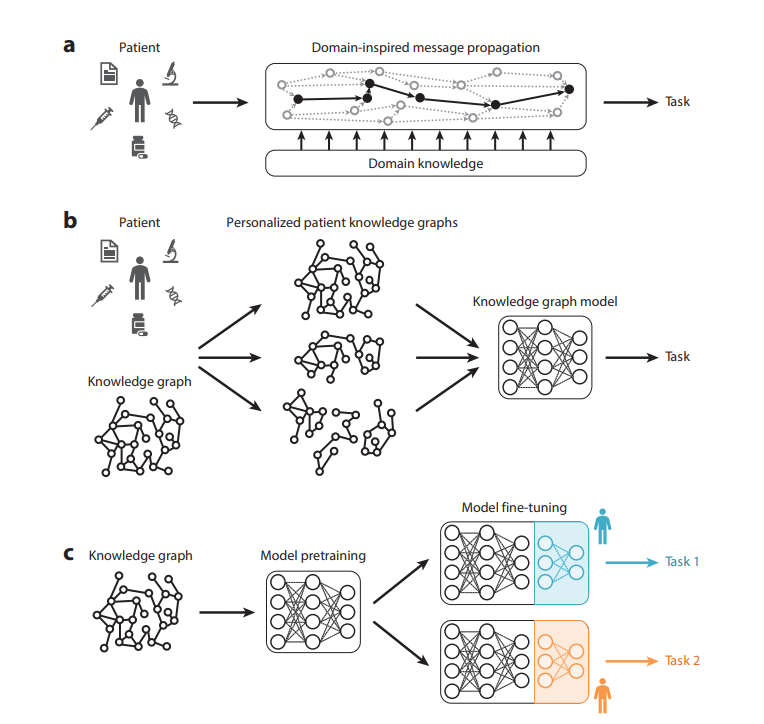
In clinical AI, graph representation learning, mainly through graph neural networks and graph transformer architectures, stands out for its capability to capture intricate relationships and structures within clinical datasets.
With diverse data —from patient records to imaging— graph AI models process data holistically by viewing modalities and entities within them as nodes interconnected by their relationships. Graph AI facilitates model transfer across clinical tasks, enabling models to generalize across patient populations without additional parameters and with minimal to no retraining.
However, the importance of human-centered design and model interpretability in clinical decision-making cannot be overstated. Since graph AI models capture information through localized neural transformations defined on relational datasets, they offer both an opportunity and a challenge in elucidating model rationale.
Knowledge graphs can enhance interpretability by aligning model-driven insights with medical knowledge. Emerging graph AI models integrate diverse data modalities through pretraining, facilitate interactive feedback loops, and foster human–AI collaboration, paving the way toward clinically meaningful predictions.
---
To learn more about Graph AI, Knowledge Graphs, and LLMs and meet Leaders and Innovators join us in Connected Data London on December 11-13. We've been working with Knowledge Graphs for more than 20 years, and sharing it with the world since 2016.
#KnowledgeGraphs #DataScience #AI #Analytics #SemTech #EmergingTech #DeepLearning #GNN
https://t.co/UtUsHwldir
The article "Combining Multiple Attack Methods for Effective #Adversarial Text Generation" has been published in #openaccess. It describes the approach that won first place in an competition in the area of information #credibility. https://t.co/ZFjohxKikS #ncbr#infostrategi
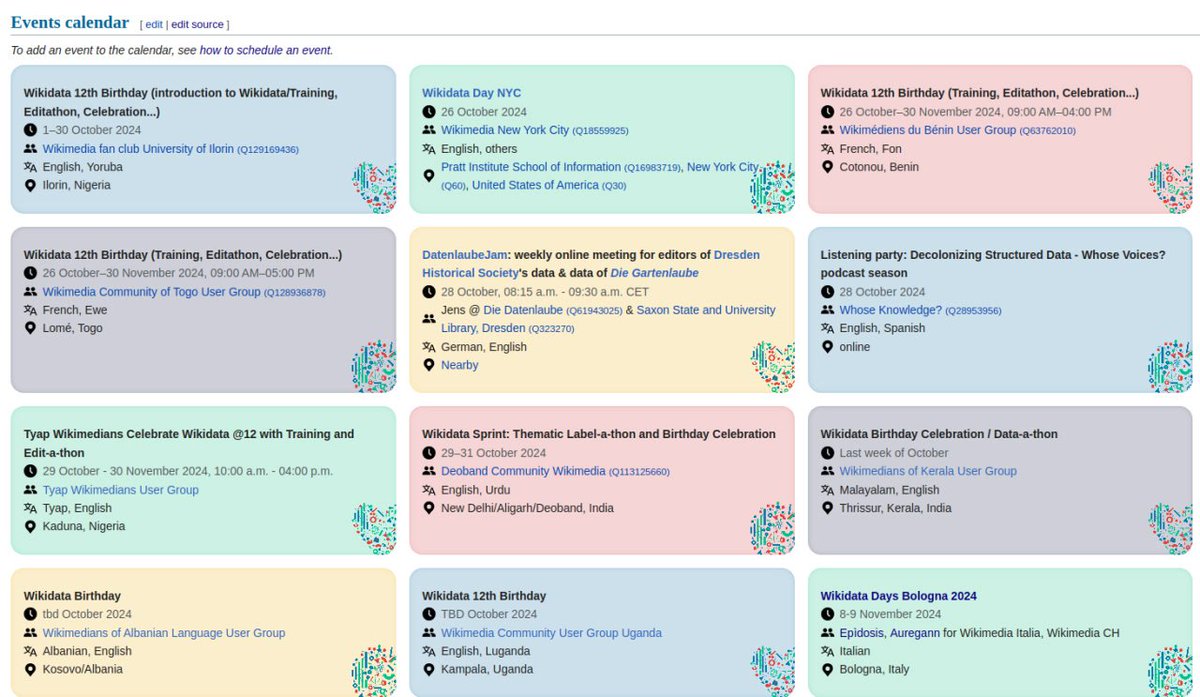
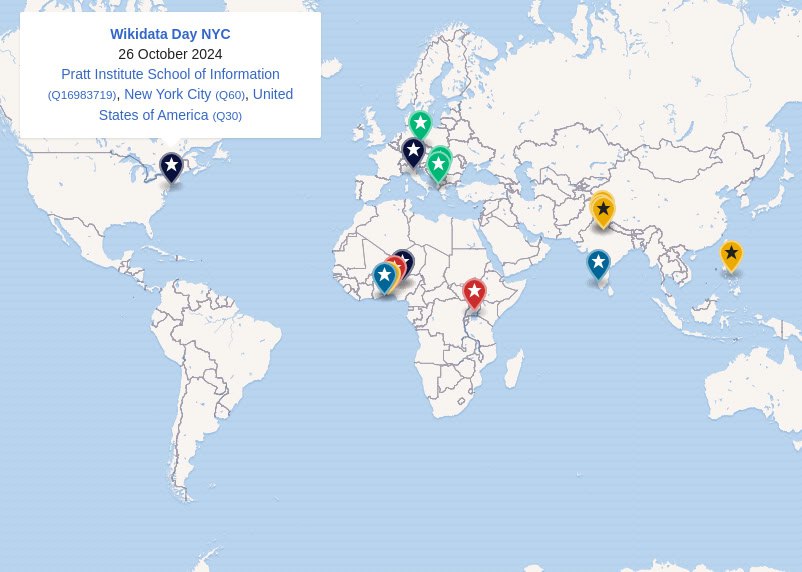
🎉 Check out the new calendar and interactive map for Wikidata birthday events! Find events near you: https://t.co/DhUHs0Hr4A
Want to organize your own? Schedule it here: https://t.co/P0ih4uwn3R
Need financial support? Apply for a microgrant by Sep 1st: https://t.co/7YphhIFzTV
Analysis of the Successful and Bankrupt Digital Currency Exchanges Based on #OpenData. Some measures were collected from #Wikipedia and #Wikidata. https://t.co/1qhLKxa2fw
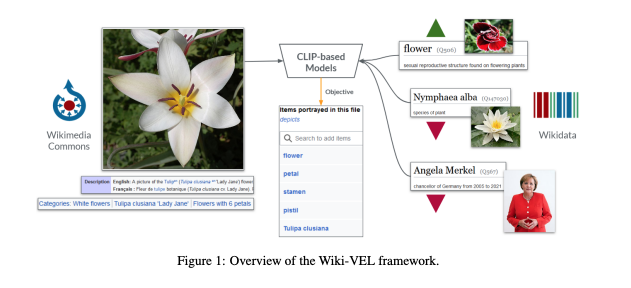
"Wiki-VEL: Visual Entity Linking for Structured Data on Wikimedia Commons" predicting labels for Wikimedia Commons images based on Wikidata items as the label inventory.
(Bielefeld et al, 2024)
https://t.co/FqZmScBtFH
@frimelle@gdm3000
Our scientists took part in an international competition on the analysis of multi-author writing style #PAN2024. The research resulted in an article “Team OpenFact at PAN 2024: Fine-Tuning #BERT Models with #Stylometric Enhancements”. https://t.co/XxP5vX5fQy #ncbr#infostrategi
We are pleased to announce that #BIS2025 conference will be held on 25-27 June 2025 at the @UEwP (Poznań, Poland). Save the date!
Additional details and a submission system will be available soon. Call for Papers and other information: https://t.co/hI6VToq0cv
"The Future of Wikidata Events" report, Subway stations and Aotearoa Asian artists: here is what happened around #Wikidata over the past week! https://t.co/Lphuy56ekH
A great team of students from Purdue came together to help ensure Wikidata's data is in good shape. They prepared mismatches between Wikidata and other data sources for review. Read more about their work here:
https://t.co/rAq8b6bSp7
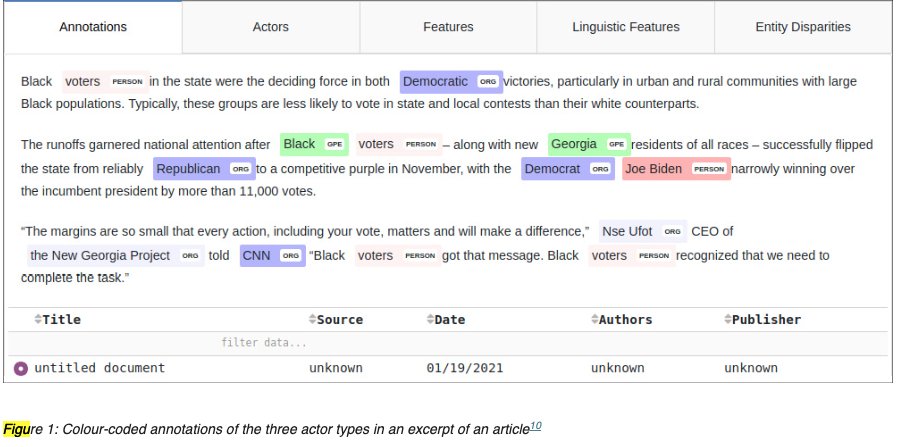
"Diversity and bias in DBpedia and Wikidata as a challenge for text-analysis tools" comparing the two data sources with respect to their ontological coverage and diversity, and describe implications for analyses of text corpora.
(Berendt et al, 2024)
https://t.co/Dltn6jn5yd
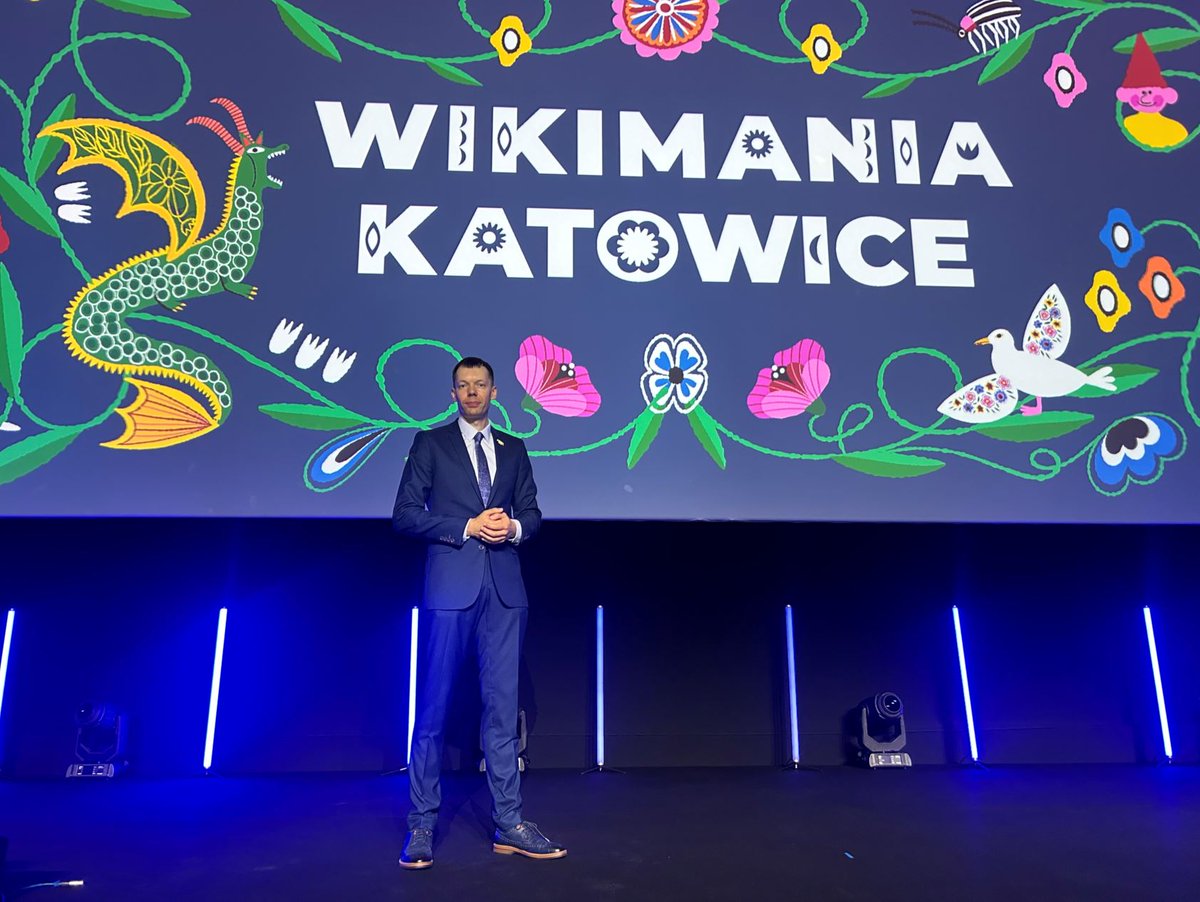
During the @Wikimania 2024 conference, the results of scientific research on measuring #Americanization in various regions of the world based on #OpenData from @Wikipedia and @Wikidata were presented. https://t.co/krrBiyBDlq
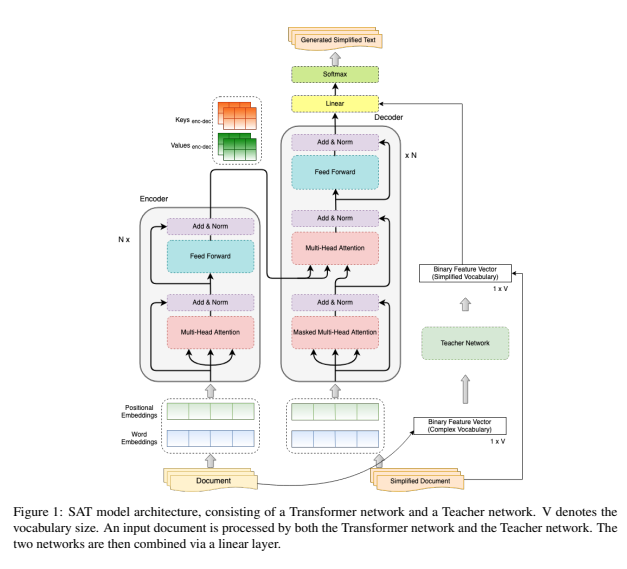
"Text Simplification via Adaptive Teaching" a new text simplification model using a teacher network and a text generation network, tested on the D-Wikipedia dataset and the WikiDoc benchmark dataset.
(Bahrainian et al, 2024)
https://t.co/mbX6Od2sqX
The work of our scientists on the analysis of #cryptocurrency exchange has been published. Based on financial data and information collected from open Internet sources such as #Wikipedia and #Wikidata some models were developed. https://t.co/8c6ymzBI54
Have you ever wanted to train LLMs in pure C without 245MB of PyTorch and 107MB of cPython? No? Well now you can! With llm.c:
https://t.co/PoGTZIwASL
To start, implements GPT-2 training on CPU/fp32 in only ~1,000 lines of clean code. It compiles and runs instantly, and exactly matches the PyTorch reference implementation.
I chose GPT-2 to start because it is the grand-daddy of LLMs, the first time the LLM stack was put together in a recognizably modern form, and with model weights available.