Finally landed in LA and checking out the places I'll be spending most of my waking hours inside as part of @UclaPsychRes. Proud to be a part of @UCLASemel and back on the best coast after my 12-year hiatus. Guess you can't keep this California boy away from tacos and the beach!
Retatrutide, the most potent GLP-1 agent in this family of drugs to date, had a marked benefit vs sleep apnea in a randomized trial, in people with obesity, just published @NEJM AHI-apnea-hypopnea index
https://t.co/W4rnr4Vy0A
To whom it may concern,
Medicine needs to stop glorifying 24-hour workdays and 80-hour work weeks.
They compromise a physician's health.
Sleep-deprived physicians are more prone to error which compromises patient care.
Medicine needs to evolve by letting go of outdated rites of passage.
“When I found an antipsychotic that works for me, it was like drinking from a firehose of lucidity. It was too much, too fast, too soon. After years of unrecognized on-and-off psychosis, normal sanity felt alien.” Sam de Selby
https://t.co/ep3LT1YtLr
@tylerblack32 Some patients do know what's causing their depression, and self-treat it, and do fine. It's the ones who don't, can't, and stay depressed who bother seeking mental health treatment at all (and then they get pathologized because that's what they're paying for).
The Generative Psychometrics Newsletter (subscribe for free here: https://t.co/hkc06rg95n )
AI-GENIE is now available on CRAN
The AI-GENIE R package for Automatic Item Generation with Network-Integrated Evaluation is now officially available on CRAN. You can install it directly with install.packages("AIGENIE").
View AI-GENIE on CRAN: https://t.co/TqgaQs8ufM
AI-GENIE tutorial paper updated
Our tutorial paper on AI-GENIE has been updated with the latest version. You can read the new version on arXiv and PsyArXiv:
arXiv: https://t.co/4Z5aYBDSAk
PsyArXiv:https://t.co/faQcLeGB5I
PCA vs EGA paper updated
Our paper comparing PCA and Exploratory Graph Analysis for Generative Psychometrics has also been updated:
PsyArXiv: https://t.co/nXzZG4K1zq
Thank you for following our work. More updates are coming soon.
Best regards,
Hudson Golino
The Generative Psychometrics Team
https://t.co/hkc06rg95n
🧵The (Dying) Art of Prescribing an Inpatient Admission ( from a previous post) 🚨1/2
Much like the declining use of Clozapine, MAOIs, and Lithium, the practice of prescribing a well-organised and targeted inpatient admission is gradually losing its prominence.
Here are my insights as an inpatient psychiatrist over the last 10 years and why it’s one of the most powerful interventions in psychiatry. 👇
There is a misconception in psychiatry that in-patient psychiatry is only about the acutely unwell or acute psychosis.
This cannot be further from the truth.
In my role, I navigate through a myriad of cases, covering a broad spectrum, often at the end of multiple opinions and referrals from across the country.
Inpatient psychiatry, while capable of addressing acute cases, offers a unique advantage beyond the acute spectrum.
1. It sets up a powerful foundation for Understanding and Problem Solving.
2. It allows the psychiatrist, the team and the patient the opportunity to maximise the potential of treatment.
3. The aim is to maximise patient functioning
“If I had an hour to solve a problem, I'd spend 55 minutes thinking about the problem and five minutes thinking about solutions”. (Einstein)
The Value of In-patient Admission:
1/ Information points :
When it comes to problem-solving, the most valuable ingredients are information points.
In-patient admission helps generate a concentrated source of information.
Consider it a melting pot where insights from registrars, psychologists, social workers, occupational therapists, nursing staff, and medical colleagues blend, compressing years of information into just a few weeks.
Add information points from the patient and family through daily observations, which act as powerful material for problem-solving.
2/ A unique holding and containing environment:
Daily throughout the entire duration of the admission, a psychiatrist holds and contains the patient's information in their mind that doesn’t stop at the end of the day.
Each implemented step prompts the psychiatrist to contemplate the anticipated change or outcome.
3/ The Initial Stages:
The initial phase of the admission often involves psychopharmacology (symptom relief moving to more targeted pharmacology as the formulation evolves), as a significant amount of treatment resistance involves untreated biological/medical components.
In the initial stages, it's not just about treating the severe symptoms; it's about enhancing pattern recognition.
Robust pattern recognition is built upon four pillars:
Phenomenology - Neuroscience - Psychopharmacology - Treatment Choice
The most effective approach to boost pattern recognition involves repeatedly cycling through the stages of:
Predict - implement - evaluate - change
within a condensed timeframe.
Consider it akin to mini-audits, and more significantly, envision the invaluable learning from this iterative process!
Inpatient admission condenses years of interventions into a compact, well-defined, and strategically managed process.
It ensures the patient can witness tangible changes, like improvements in cognition, activity, sleep, and perception (PACES), all to achieve reasonable homeostasis.
This part is relatively easy.
4/ Testing Hypotheses (System 2 Thinking):
An in-patient admission curtails the psychiatrist's dependence solely on their judgment.
It underscores the principle that 'improvement is a multi-opinion endeavour.'
The unconscious yearning for improvement within the doctor is subjected to the litmus test of actual improvement, as observed by other team members.
Moreover, accountability takes centre stage.
The management of medication-induced side effects becomes the responsibility of the psychiatrist, operating within the broader team framework.
This approach can ‘force’ thoughtful consideration in the choices of treatments.
Continued 👇
I distinctly remember around 6th-7th grade, my friends and I at a bougie-ass southern CA public school took a major survey on drug use (maybe monitoring the future? nobody told us), and being the little shits we were, several of us independently thought it was hilarious to identify as Native American gangbangers who did cocaine three times a week in the back of a limousine.
🚨 The FDA has approved olanzapine (Weltruza) extended-release injectable suspension, a once-monthly subcutaneous long-acting injectable, for adults with schizophrenia. https://t.co/msiSo8994U
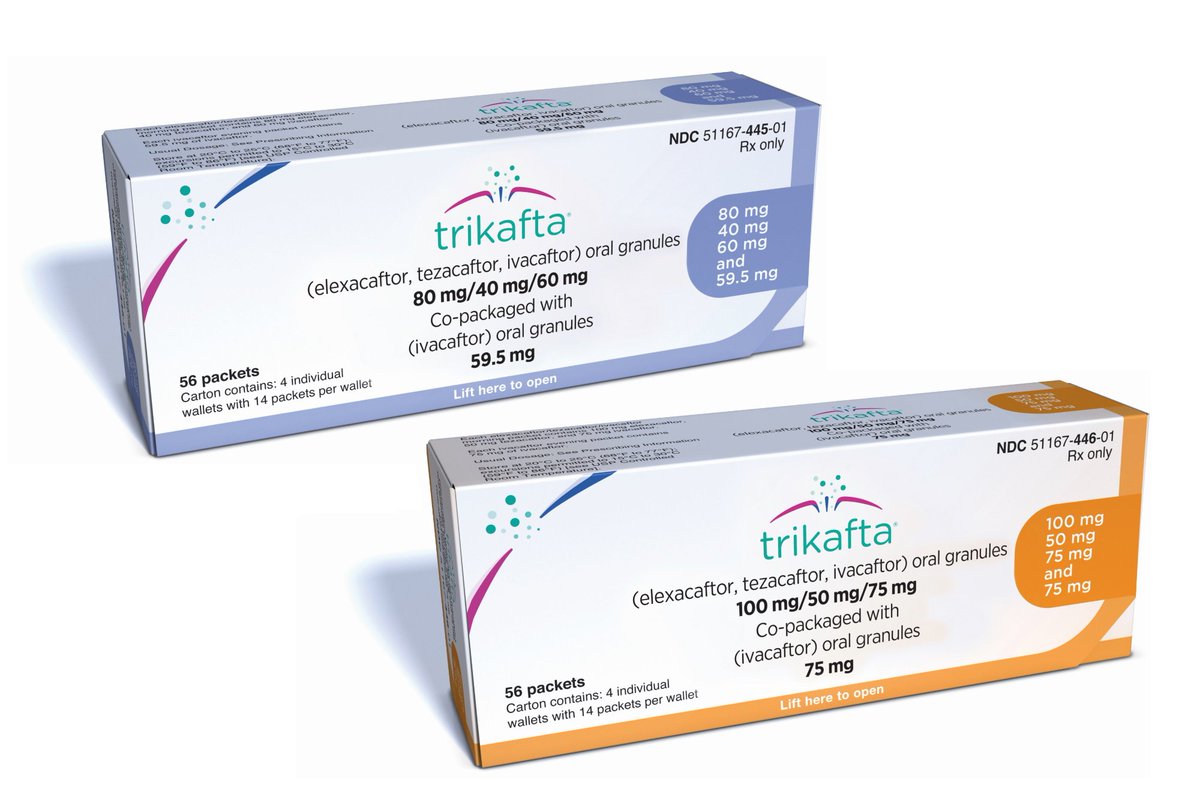
Trikafta is one of the most inspiring medical advances in decades.
Approved in 2019, the drug at first makes cystic fibrosis patients vomit up mucus for about a week.
They lose that week and then they gain a lifetime–a healthy, *normal length* lifetime.
Pharma brings miracles!
Key points from new analyses:
▪ Methylphenidate is not addictive when used for ADHD
▪ XR versions are less rewarding
▪ Tolerance develops to rewarding, energizing qualities, not to ADHD benefits
Can it not be both? Great example is adult medical genetics clinics, which are woefully understaffed (i.e., you're looking at a year wait-list easy) and many have to devote half their caseload to people self-referring for suspected Ehlers-Danlos syndrome.
I don't have the exact numbers, but from the last time in med school I spent time in one of those clinics it seemed like fewer than half of the people getting an EDS eval came out of it with a hypermobility-related diagnosis (which TBH could probably be avoided with a "your beighton score must be at least 5 to ride this ride"). What does it say about a specialty diagnostic clinic if you're only giving the diagnosis you're evaluating for to 20, 30, 40% of your patients (until someone convinces me otherwise, that's a slam dunk for a large portion of those people could have had a less comprehensive "screen-out" evaluation and ended up at the same result).
One of the things that rubs me a bit the wrong way in all of this discourse is how autism/ADHD testing for self-referred adults is largely treated like a human right. And these are historically underdiagnosed conditions in adults, so I get the need to compensate, but these are really expensive multi-day subspecialist evals that the system doesn't easily absorb the cost of (pretty similar to giving an MRI to everyone who asks for one in the emergency department, which we most certainly feel comfortable not doing). The amount of testing (especially in a public system) should be dictated by the provider (who theoretically follows guidelines and appropriateness criteria), and someone very motivated to say screw all that I want testing for X thing I know I have anyway (and then probably doesn't) has a whole cash-pay system they can avail themselves of if they so choose.
P.S. 8-10 years ago, NHS adult autism clinics tended to have a diagnostic yield of about 70% (which seems about optimal to me). PCP referrals were and still are required to get on the waiting lists for these clinics, but (a) I have a sinking suspicion that PCPs have stopped rigorously screening, and (b) I doubt most services are still diagnosing 70% of their patients.
"first do no harm" is not a thing and would paralyse virtually every medical option
- me, for the gajillionth time
I swear people say all sorts of things without thinking
I mean we already showed in a series of meta-analyses that psychedelics don't reduce HAMD scores within-person by any more than SSRIs do; placebo-referenced effects just look huge because of marked differences in placebo arms (small for PSY, med for SRI). Notably, esketamine trials (see second link) have pbo improvement on par with SSRIs.
https://t.co/pMvSyc2pbi
https://t.co/uGBUL2ahpS
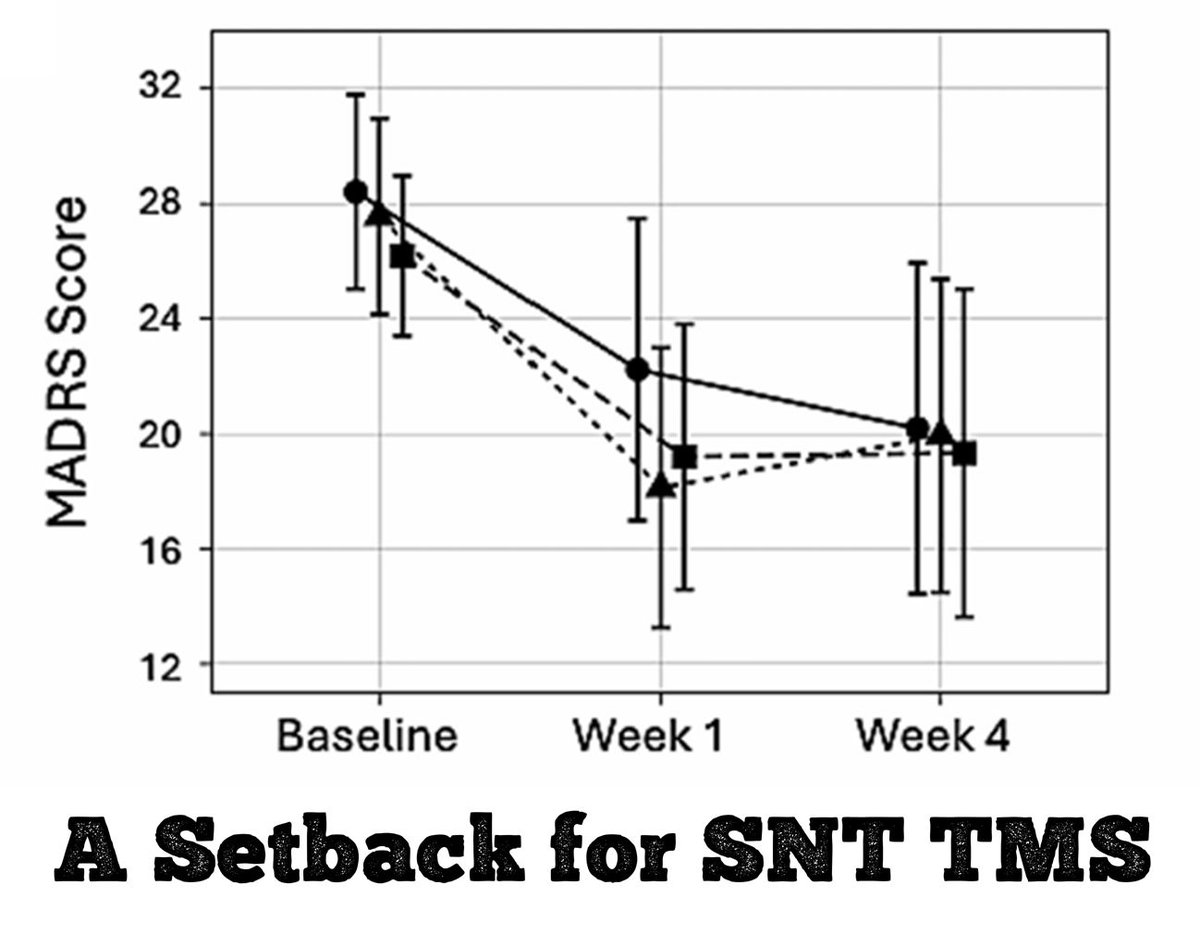
SAINT (SNT) TMS once promised outsized recovery rates for refractory depression, but two new trials from independent centers bring it back to earth:
https://t.co/f9ryWankwD
Thanks for the find @RecoveryDoctor
BREAKING NEWS
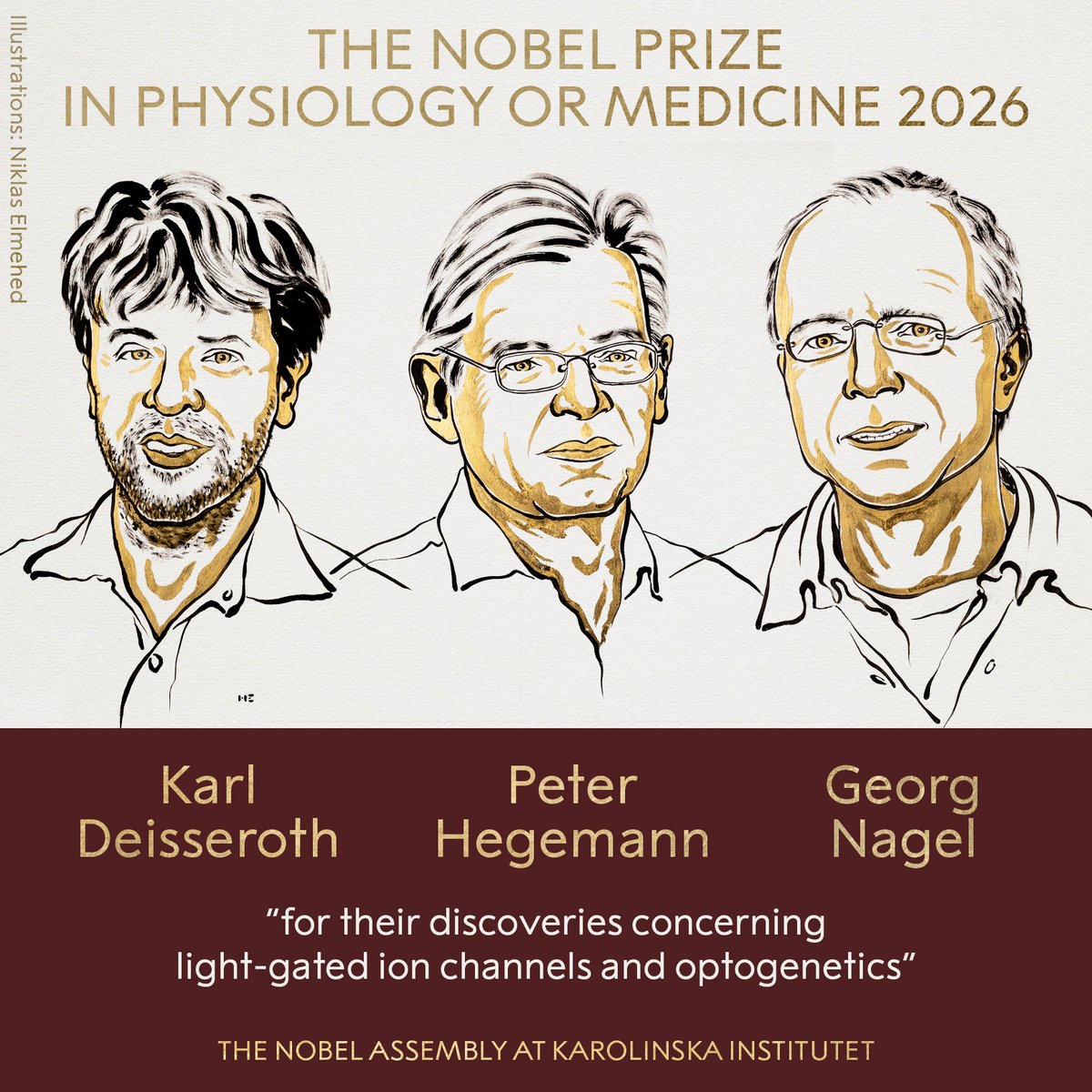
The 2026 #NobelPrize in Physiology or Medicine has been awarded to Karl Deisseroth, Peter Hegemann and Georg Nagel “for their discoveries concerning light-gated ion channels and optogenetics.”
New from the CDC in @JAACAP
https://t.co/NBAMFXpN6B
Different operationalizations of profound autism criteria were applied to the latest (2022) ADDM prevalence numbers. The 2025 Delphi-based definition (https://t.co/x4rPinIz2A) was used as a starting point.
▪️ 16.5% of autistic kids (0.5% of all kids) had PA by 2025 criteria (MV/NV OR low IQ) + low global adaptive functioning))
▪️ Prior (Lancet) definition had 33.5% higher prevalence
▪️ Allowing for mild ID to be included in the consensus definition increased prevalence 70.9%
▪️ Dropping the IQ criterion altogether (similar to federal IACC definition of MV/NV + safety concerns) reduced prevalence by 33.3%
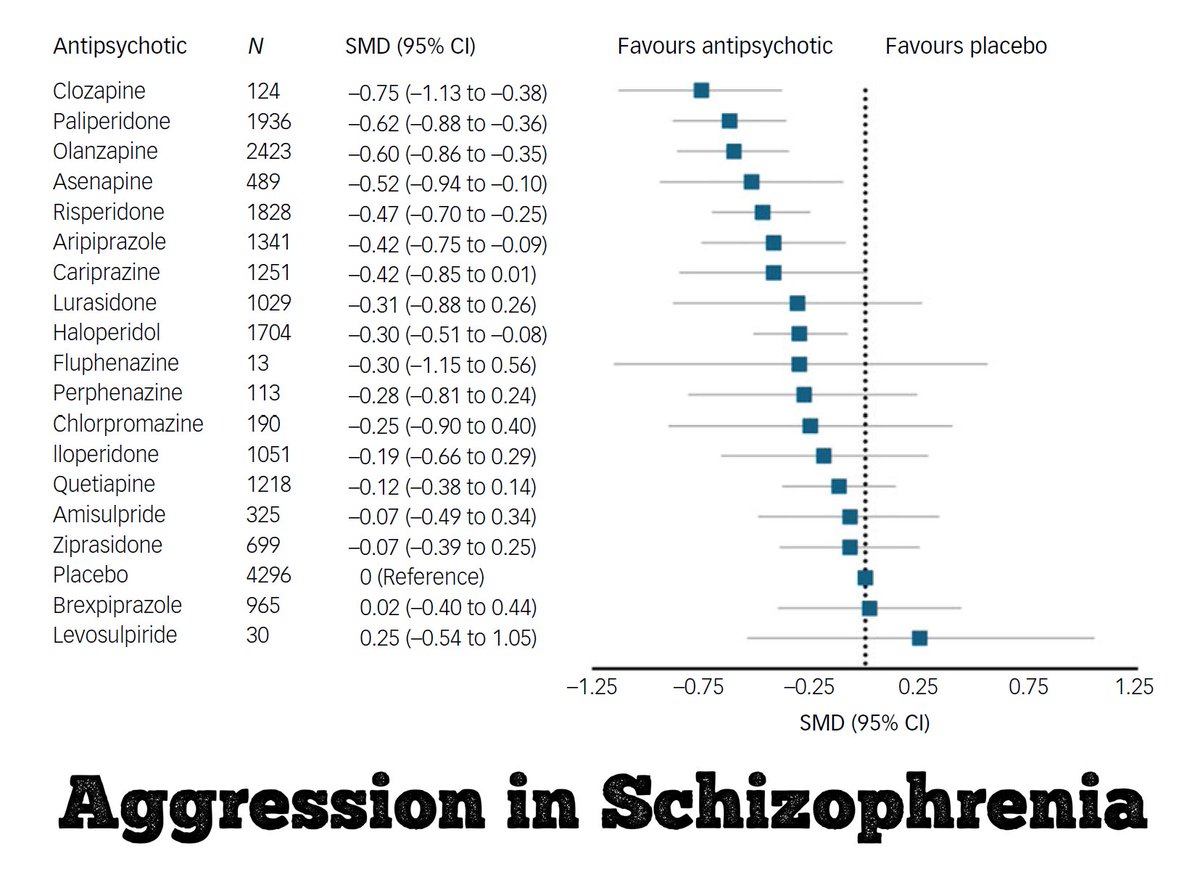
Which antipsychotic is most effective for aggression in schizophrenia?
Clozapine, concludes new network meta-analysis, followed by paliperidone and olanzapine. See full ranking:
https://t.co/WZZ20wwpd8
As I've been saying:
"In this nationally representative cross-sectional survey of US adults, self-attributed adverse outcomes were most frequent among respondents reporting ibogaine or 5-MeO-DMT use."
https://t.co/2QZL7OHr3J
Exploring the Perspectives of Siblings of Autistic Adults With Distressing Behavior: Perceptions of Positive and Negative Impacts | Journal of Autism and Developmental Disorders | 2026 https://t.co/FqivUQcdx3
Autistic & non-autistic "same-neurotype dyads... did not communicate more efficiently than mixed-neurotype dyads" "no differences in rapport were found between same- & mixed-neurotype dyads" https://t.co/AnATja9KaF "findings challenge key predictions of the double empathy theory"