Introducing SciFigure Studio
A free, browser-based figure editor for researchers. Create publication-ready multi-panel figures, edit PDFs, add annotations, proteins, DNA/RNA, chemistry, equations, and export in high quality.
🌐 https://t.co/DHdJEX2hvZ
#SciFigureStudio#SciComm
Silicon–vacancy spins can be used in phononic quantum devices, but improvements in coherence times are still required. It has now been shown that the spin coherence can be protected by continuous driving using acoustic waves.
https://t.co/szBkgzQauu
Interesting new model from AlphaFold team. Hoping something new will be release soon.
A New Gold-Standard for Binding Affinity Prediction
Knowing the 3D structure of a biochemical system is only the first step; effective drug optimisation requires knowing how strongly a molecule will bind to its target.
Traditional approaches are either limited to chemical space similar to the training data or by their high computational cost and difficulty of execution (e.g., physics-based approaches). Deep-learning based methods have more recently emerged that bring new speed to this task, but still lag behind physics-based approaches for accuracy.
IsoDDE surpasses all deep-learning methods by a considerable margin on three public benchmarks - FEP+ 4, OpenFE, and the recent CASP16 blind binding affinity prediction task.
In fact, remarkably, IsoDDE can surpass the performance of physics-based methods such as FEP, despite the fact that these require grounding in experimental crystal structures and IsoDDE does not.
By delivering highly accurate binding affinity predictions at speed, IsoDDE allows researchers to rapidly rank and optimise potential molecules across diverse chemical series during drug design programs.
https://t.co/QhmX0EZLnN
Shared quantum entanglement can be used to transfer quantum states from one location to another. An experiment has now demonstrated this transfer with higher efficiency than directly sending single photons through a lossy channel.
https://t.co/twp62JW0En
Single molecules that host isolated spins are promising candidates for applications in quantum technologies. Now it is shown that exchange interactions enable electric control of spins in two different molecular species.
https://t.co/V3QgtrWE34
Obtaining squeezed states in magnets are a key challenge for future spin-based sensing and information technology. Now thermal squeezing of magnons, where noise drops below thermal levels, is shown in a ferrimagnetic insulator device.
https://t.co/jvhnFn7Tlf
Biomolecular structure prediction is a full-stack challenge, not just a model benchmark.
See how NVIDIA accelerates structure prediction with GPU MSA search up to 177× faster, OpenFold3 inference up to 4× faster on NVIDIA Blackwell GPUs, and Fold-CP scaling to 32,000-token complexes across 64 NVIDIA B300 GPUs, composed into agentic workflows with BioNeMo Agent Toolkit. 🧬
Read the full blog https://t.co/dESN9t85IA
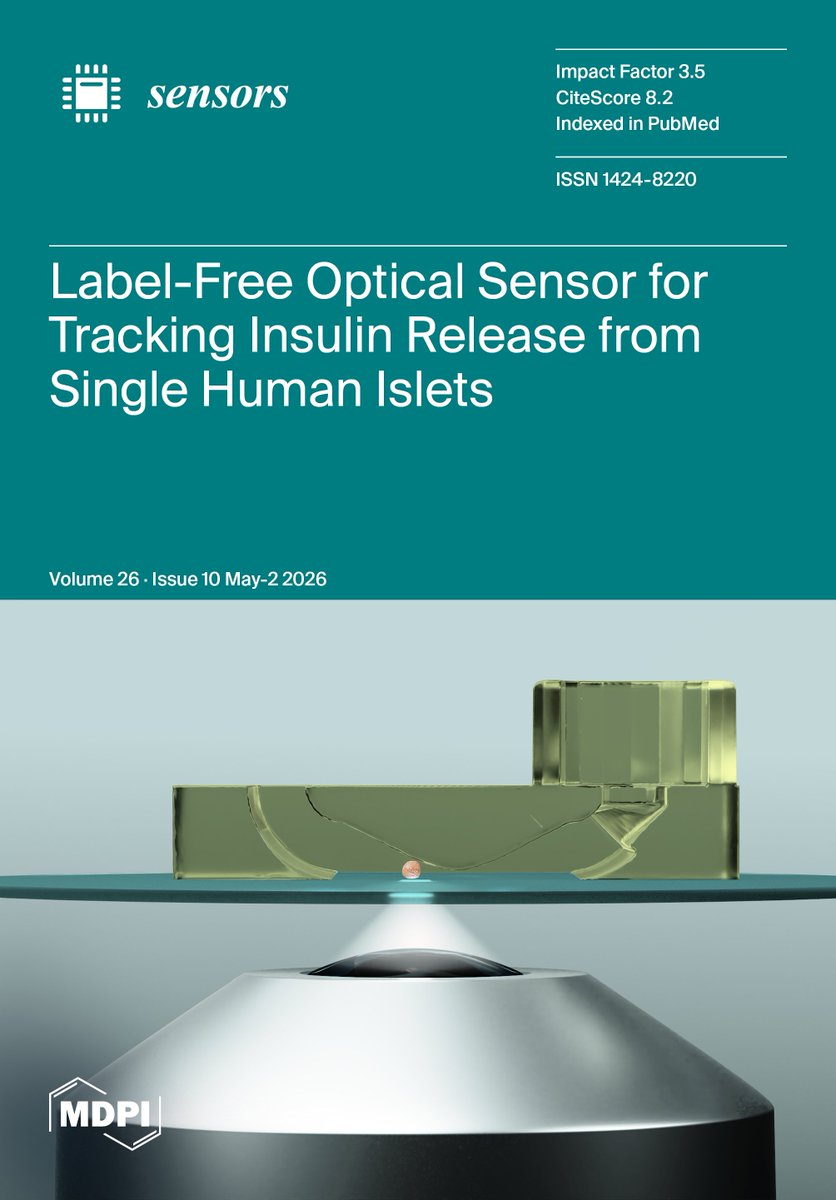
📢#IssueCover: Label-Free Optical Sensor for Tracking of Insulin Release from Single Human Islets
Cover Paper: https://t.co/YwGj1FgdOc
🧑🔬Authors: Mark F. Coughlan *, Lev T. Perelman *, et al.
@Harvard
📖Full Volume 26, Issue 10: https://t.co/LXAX2djyrc
📣Call for Reading:
#Review
Allergen Microarrays and New Physical Approaches to More Sensitive and Specific Detection of Allergen-Specific Antibodies
By Alyona Sukhanova, Igor Nabiev, et al.
https://t.co/BUEaFkyKYb
#allergen#microarrays#antibody#biosensor
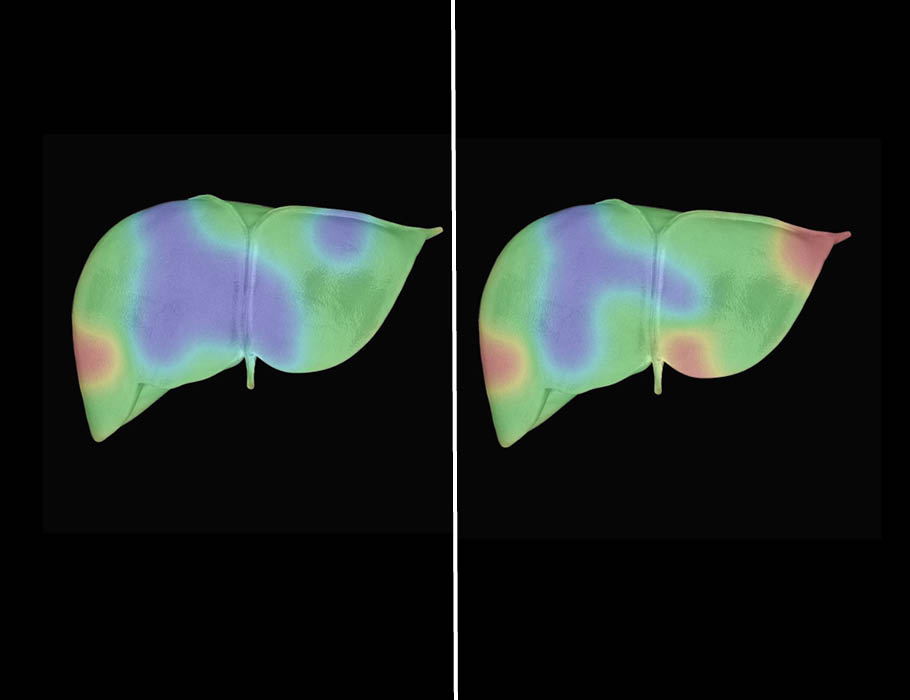
Scientists have applied noninvasive optical coherence tomography (#OCT) to evaluate tissue quality across the entire surface of human donor liver candidates, suggesting that OCT could complement traditional invasive biopsy approaches. @sbme_ou https://t.co/5cmSBF83eb
A #MachineLearning model based on 11 plasma protein markers predicts the risk of #thrombosis in patients with #cancer more accurately than standard risk scores, and uncovers IL-17A as a potential therapeutic target. @jzbos@ioavlachos@BIDMChealth https://t.co/fSk9ryJFkt
📣Call for Reading:
#Article
Electrochemical Detection of Prostate Cancer—Associated miRNA-141 Using a Low-Cost Disposable Biosensor
By Alexander Hunt, Gymama Slaughter
https://t.co/cZEpjKC0YE
#electrochemical#biosensor#open_access
A #MachineLearning model based on 11 plasma protein markers predicts the risk of #thrombosis in patients with #cancer more accurately than standard risk scores, and uncovers IL-17A as a potential therapeutic target. @jzbos@ioavlachos@BIDMChealth https://t.co/fSk9ryJFkt
@elonmusk@elonmusk this data is wrong. All the red highlighted ones are Indian states.. and then 'India' is written just below United States tag.. which doesn't make sense! 🙄
Modular Input–Output Biosensor Design Using De Novo Protein Switches
"we expand the range of LOCKR-compatible readouts beyond split luciferase to include ratiometric BRET and β-lactamase-based colorimetry."
https://t.co/LZNeqdfVL0
New paper at #ICRA2026 with/led by Matt Walter's team at TTIC. HapCompass: wearable haptic device for teleoperation that gives directional cues via asymmetric vibration! By mapping the robot's tactile measurements—improves teleoperation performance + better imitation learning!1/3