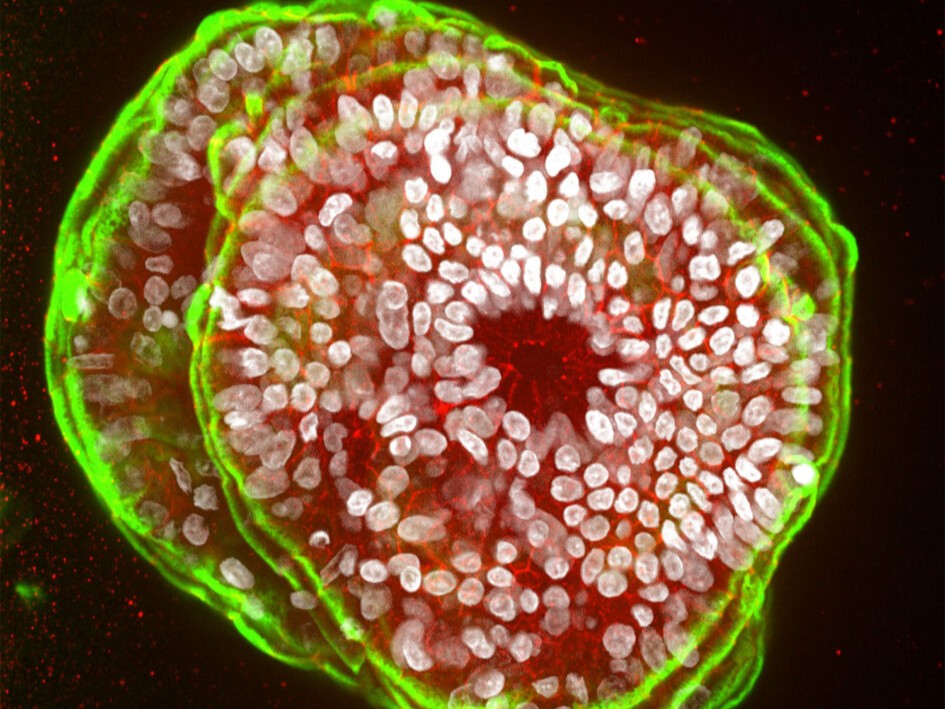
University of Basel scientists including Dr. Sandro Nuciforo and Markus Heim established a biobank of patient-derived #HepatocellularCarcinoma (HCC) organoids generated from diagnostic biopsies, capturing the diversity of clinical features across disease stages. 🧫 https://t.co/W3EH7LNHNI
🔓 #OpenAccess #Organoids
Brain organoids exhibit molecular signatures of their developmental age, according to a paper in Nature. The organoids successfully matured and developed traits resembling those of postnatal brains. https://t.co/VWXmRqOweq
"The lab-grown research models include organoids with similar cellular composition as natural organs, such as neurosphere cell clusters from brain cancers that have characteristics of neural stem cells."
One of the biggest questions in translational oncology is whether we can demonstrate that cancer models can faithfully represent patient biology. A new @Nature study provides evidence that NCI's Human Cancer Models Initiative does just that. https://t.co/e5liA2VP3E
First author Dan Yang and colleagues at Ningxia Medical University discuss advances in #EndometrialOrganoid generation and culture techniques, emphasizing how these models recapitulate key endometrial features. 🧫
📖 Read the review: https://t.co/Yha0QNr2pa
An RNA editing enzyme restrains the excessive proliferation of intestinal stem cells—a major hallmark of #aging in humans and other organisms—according to new work in @SciSignal involving fruit flies and data from mice and human samples. https://t.co/xbauPpYaII
Congrats to Dr. Senthil Muthuswamy, new Director of @theNCI's Center for Cancer Research. His lab's work growing patient tumors as 3D organoids—testing how they respond to drugs before a patient ever starts treatment—is some of the most practical translational science we have.
For readers interested in AI in drug discovery, this Review in the July issue discusses the application of AI-driven approaches for therapeutic target exploration, including challenges, limitations and case studies
https://t.co/ueiXGjZDFS
https://t.co/Ltliv6JJCw
The FDA’s drive to reduce animal testing in drug development has coincided with a boom in AI-powered biosimulation techniques such as multi-agent virtual scientists and digital twins, while organoids and other mature methods embrace AI to ramp up predictive power https://t.co/r04a9Ykqkb
NIH-funded researchers have developed a way to create specialized retinal blood vessel cells from human stem cells—opening new possibilities for studying and treating diseases like diabetic retinopathy.
These cells helped repair damaged blood vessels in mice and enabled researchers to build realistic "mini retinas" in the lab, helping unlock new insights into retinal diseases.
🔗 Learn more: https://t.co/f9GfuBfBiZ
What if doctors could test treatments on a mini version of your pancreas first? That's the promise of a personalized "disease-in-a-dish."
Salk scientists developed patient-derived pancreatic organoids—miniature pancreas models grown from a patient's own cells—that preserve the unique biology behind chronic pancreatitis.
Because the disease is driven by different molecular changes in different patients, therapies that work for one person may not work for another. Finding effective treatments has been especially difficult. Using this new platform, the researchers identified CFTR as a promising therapeutic target for many patients, bringing personalized treatment strategies one step closer.
Read more: https://t.co/Hpkkdd4z5T
#PrecisionMedicine #ChronicPancreatitis #Organoids #BiomedicalResearch #SalkInstitute