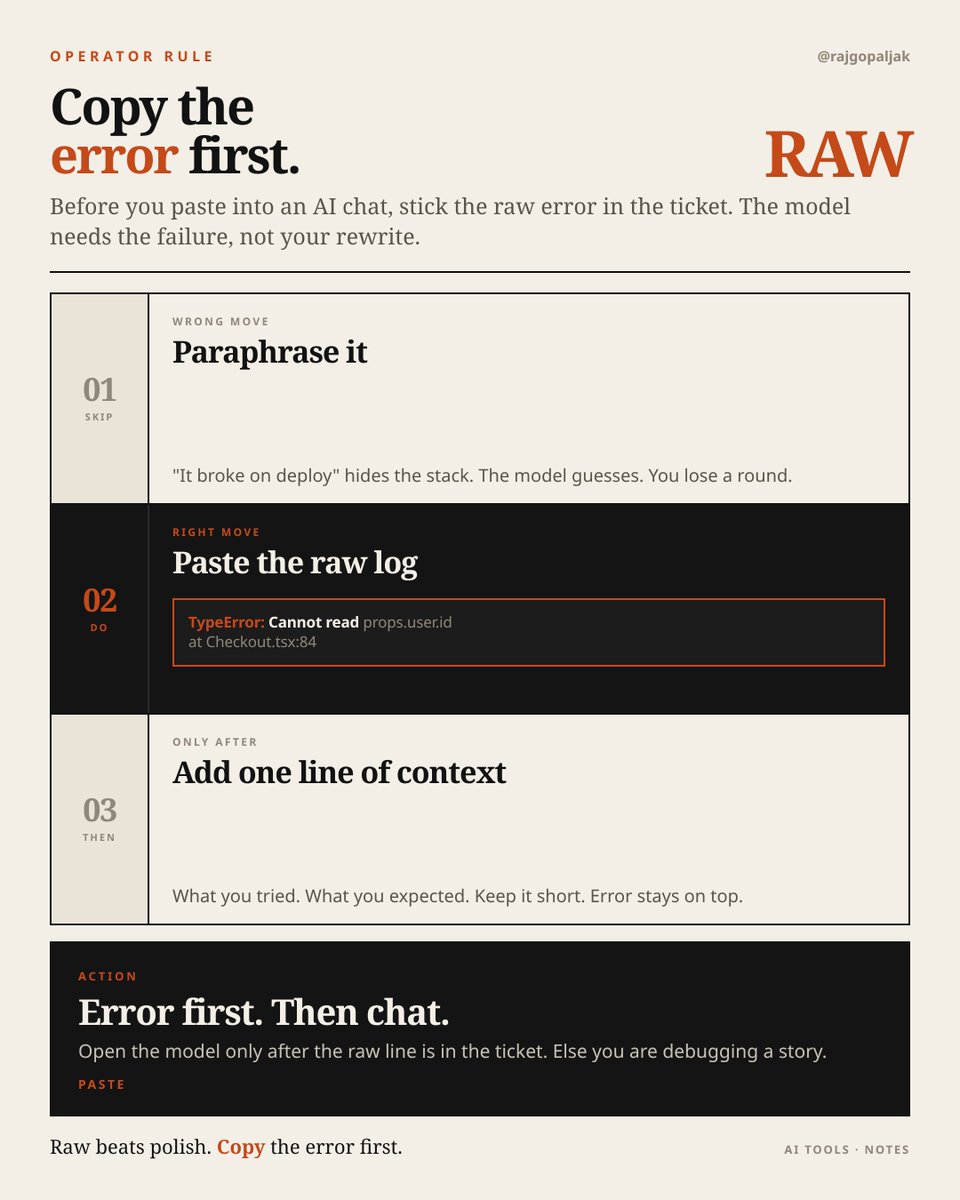
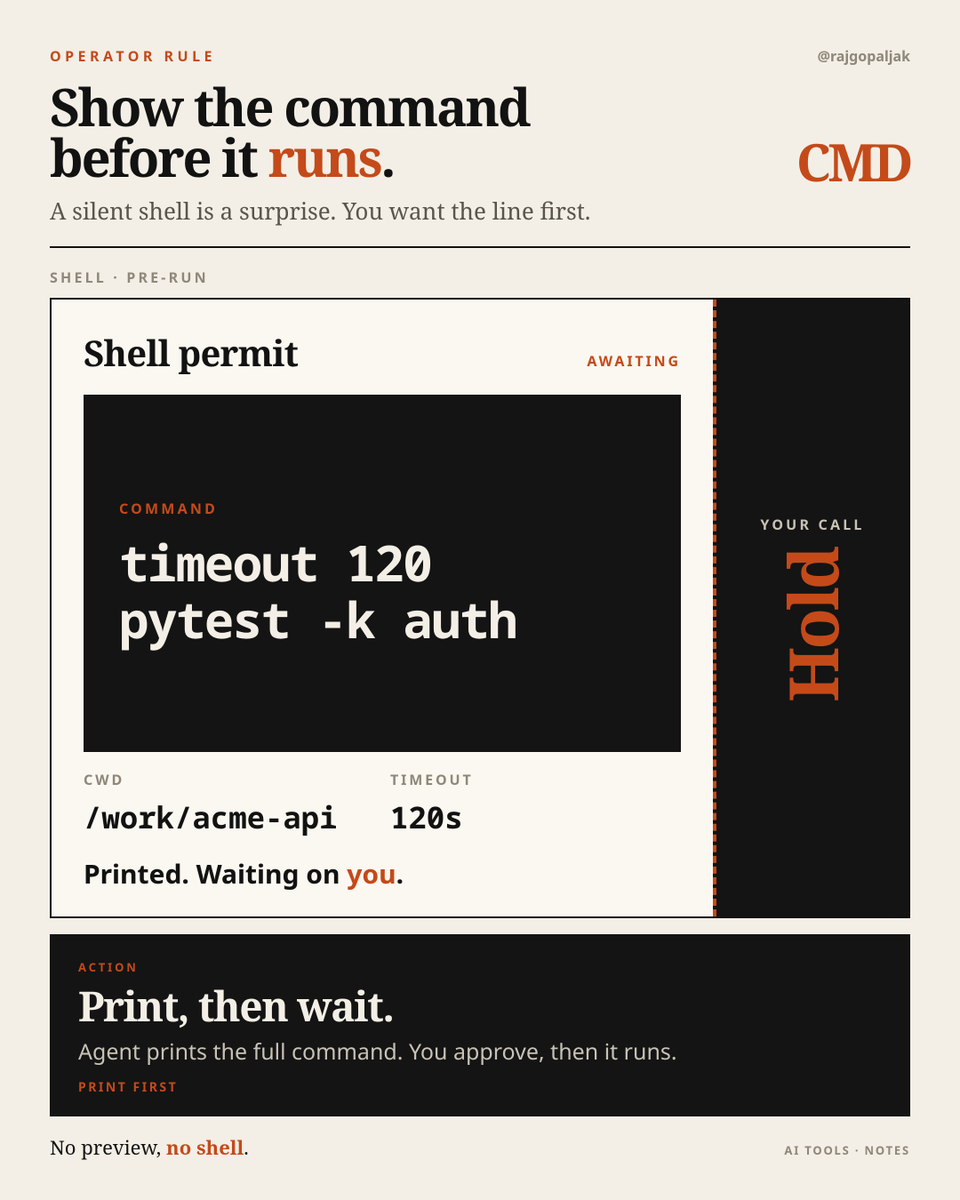
OPERATOR RULE: Copy the error first.
Before you paste into Claude or ChatGPT, drop the raw stack in the ticket. The model needs the failure, not your paraphrase.
@haider1 I would split the score into first-pass fixes and total time to a merged patch. A model can win the demo and lose after three repair loops. Same repo, 20 bugs, frozen tests would make the quarter-by-quarter comparison less slippery.
@oliviscusAI That 25% more compute to match is a 20% saving against the old baseline, not 25%. Does the comparison include the extra attention work and memory traffic? The science gain is much larger than the coding gain too.
@shcallaway@sazabi Five self-inflicted outages a day sounds like the alert loop needs a circuit breaker. Can the watcher roll back the last agent commit without asking Hermes? The repair path needs to survive the thing it is repairing.
@ItsmeAjayKV 87 of 103 is more useful than the average alone. Were input, reasoning and output tokens split out? Different tokenizers can make the raw count misleading. Dollars per accepted render would be a handy second chart.
@naumowf Right. A side-by-side prefill and decode curve at batch 1, 8 and 32 would settle a lot more than the porting timeline. Same model, same precision, same latency budget.
KEEP, for agent routing
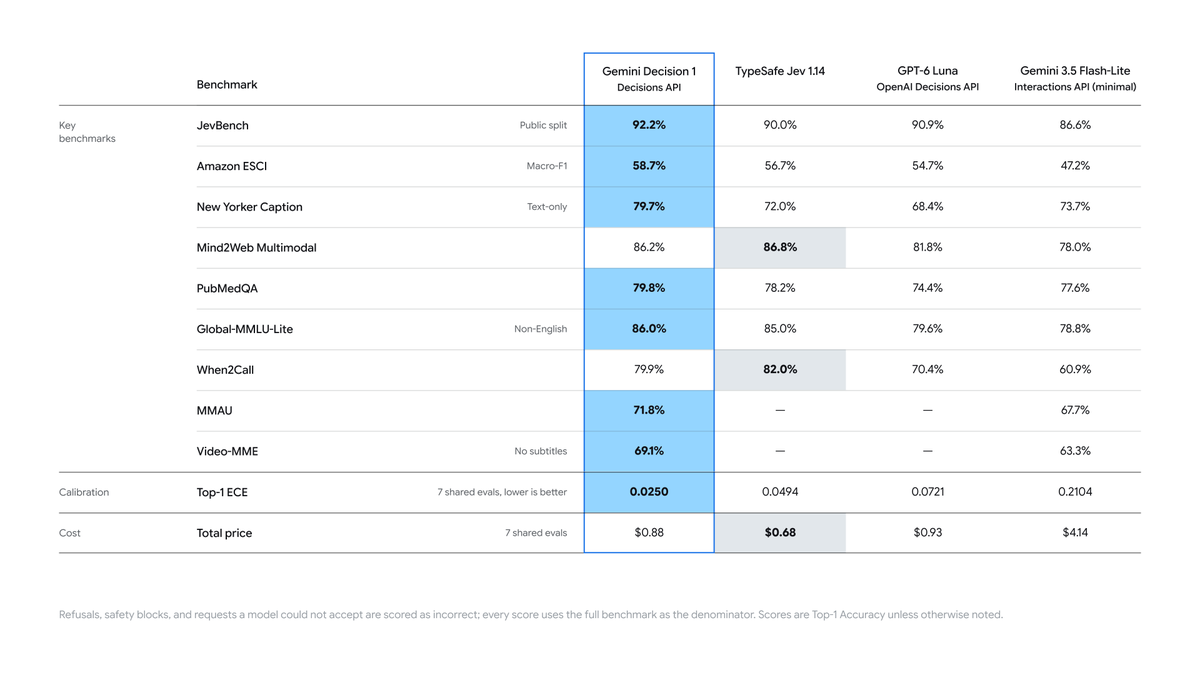
First look from the launch post, not tried yet. One call, up to 1000 yes/no or pick-one questions, with calibrated probabilities. Fits tool choice and policy checks. I'd still log the score with each call and spot check 50 by hand.
introducing the Gemini Decisions API
powered by Gemini Decision 1, our new multimodal decision model
get fast, calibrated decisions on up to 1000 questions at once across text, images, audio, video, and PDFs
try it today in AI Studio and via the Gemini API https://t.co/h3Kmz2ypDi
@joelniklaus@deepseek_ai@huggingface Good cleanup default, wrong task contract. Could the harness let a task declare which service must survive completion, then check its health before returning. Fixing these three cases by disabling cleanup risks leaking every other process.
@MaximeRivest The cheap baseline belongs in the search space too. Let the optimizer choose a small classifier, not just another prompt. Keep a held out set and include inference cost in the score, or it can optimize MNIST accuracy while making the workflow worse.
@jayleaton Would expose lane events in an optional trace, even if the client needs no tool support. The graph and aggregation drops make it useful to see exactly which expression was replaced. Otherwise a wrong answer is harder to separate from an engine rewrite.
@Infoxicador@badlogicgames@thomaspaulmann@mitchellh Direct to main and direct to production are different choices. I would want small commits, a green automated gate and a feature flag before copying this. Skipping PRs can work, skipping the place where somebody checks the change is another bet.
@webtkdev One catch in that gate. If npm start is a long running server, npm test never runs. Start it in the background, wait for a health check, exercise the dynamic route, then stop it and run tests. A successful boot can still miss a plugin loaded on first request.
@mattzcarey The search tool should return a commit SHA with every result. Otherwise the agent can plan against docs from one revision and code from another. Small repos save context, but a stale org index can quietly put the mismatch back.
@mattt Compiler checked tasks make this much more useful than a docs lookup demo. I would add a few APIs with near identical old names, then check deployment target errors too. Compiles on the newest SDK is not the same as runs on the app minimum OS.
@pauliusztin_ The placeholder needs a path back to the raw output. Keep the failing command, exit code and exact error outside the summary. A useful compaction test is whether the next turn repeats a command whose failure was already explained.
@0xLupin@0xMadder@_Worty The publish boundary matters even if prompt injection never goes away. Build jobs should not hold release authority. A separate release step with short lived credentials and human approval can stop a repo compromise becoming a package compromise.
@witcheer Does validation install dependencies in an isolated environment, or on the host running the command. A fresh contributor should be able to check a plugin without giving its install scripts access to their normal keys and files.
@Nonosam2 Give it an automated pass or fail check too. Then it can bisect instead of guessing from the diff. Keep the database snapshot and dependency lockfile fixed, or Friday and Monday may differ outside git.
@DimitrisPapail I would freeze a third attacker outside that loop. Otherwise the detector can get very good at spotting one attacker family and look safe. Hold out both trigger types and model families, then measure false alarms on clean weights too.