🚨 Application No: E-STO/2026/216405 REJECTED 🚨
Why is the government rejecting ST certificates saying “Other religions are not eligible”? @sureshkpujari
Under Article 342, ST status is based on TRIBE, not religion. Then why this discrimination?
#STCertificate @DistAdmKeonjhar
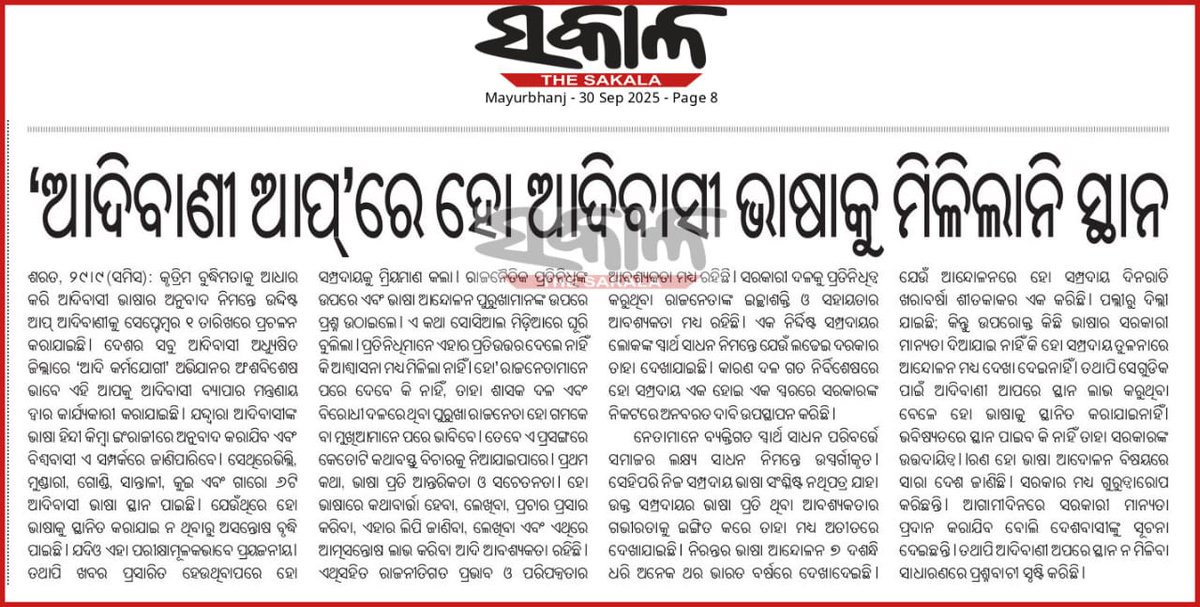
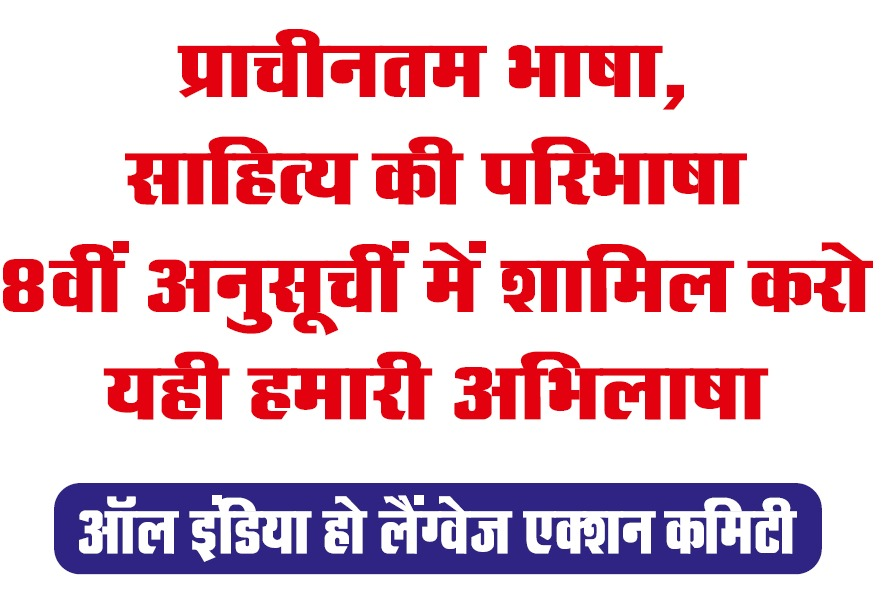
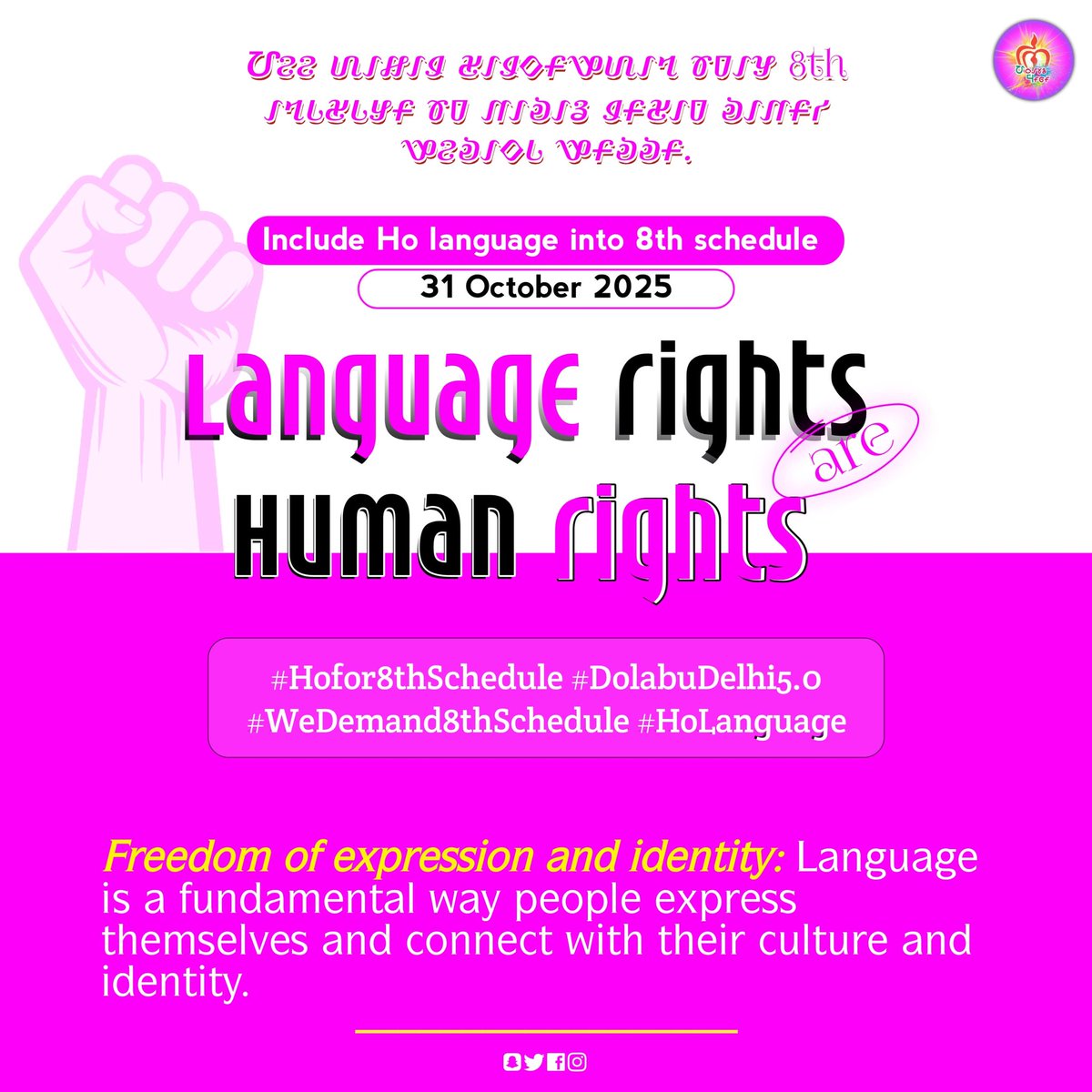
We strongly demand the recognition of Ho Language as the Second Official Language of Odisha and its inclusion in the 8th Schedule of the Constitution of India. This is the voice of lakhs of Ho-speaking people, a long-pending demand for linguistic justice, identity, and cultural..
We demand Ho Language as the Second Official Language of Odisha and its inclusion in the 8th Schedule.
This is the united voice of the Ho community for dignity, identity, and linguistic justice.
The time for recognition is now.
#8thScheduleForHo#RecogniseHoLanguage#AIHLAC
Why the Ho Language Should Be Included in the 8th Schedule of the Indian Constitution.
1. What is the Eighth Schedule?
The Eighth Schedule of the Indian Constitution (Articles 344 and 351) lists the officially recognized Indian languages.
Currently, 22 languages are included — such as Hindi, Odia, Bengali, Santali, Bodo, Manipuri, and Dogri.
2. About the Ho Language and Its Speakers:
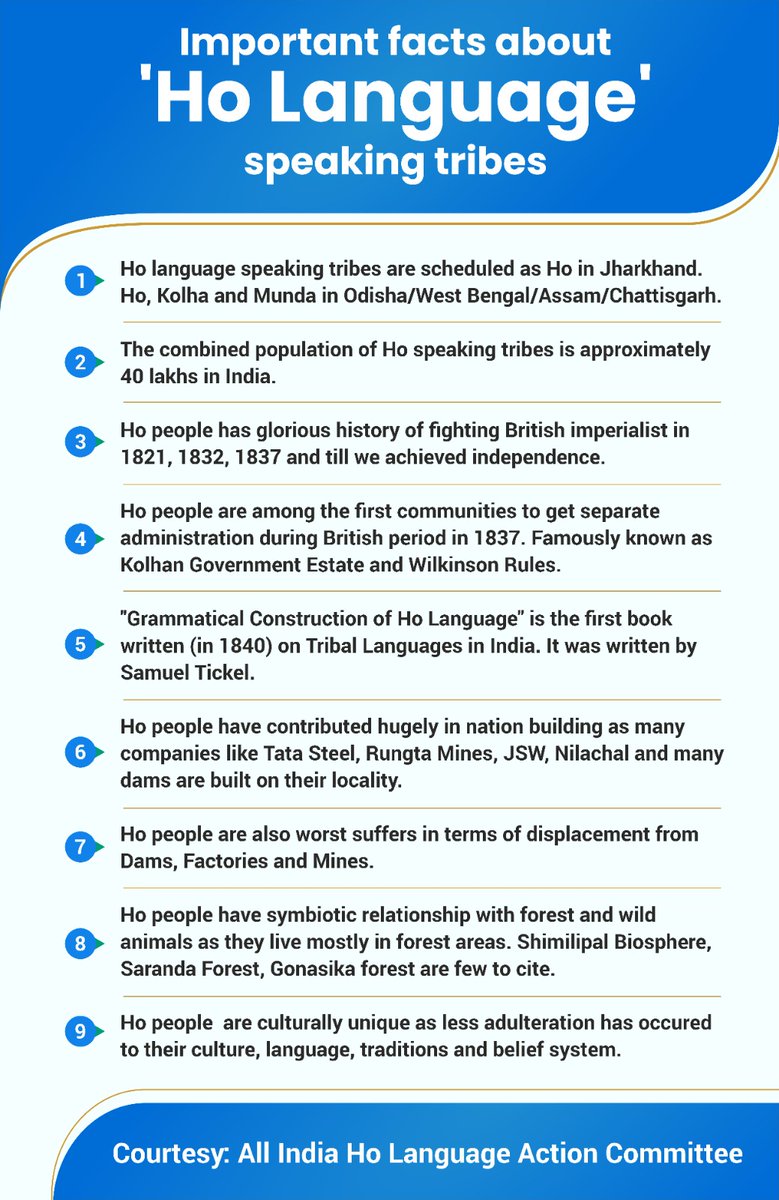
Ho is a Munda language of the Austroasiatic language family spoken primarily in India by about 2.2 million people per the 2001 census. It is spoken by the Ho, Munda, Kolha and Kol tribal communities of Jharkhand, Odisha, West Bengal and Assam and is written using Warang Chiti script.
3. Why Ho Language Should Be Included:
(a) Cultural Identity and Heritage
Ho is a distinct Austro-Asiatic (Munda) language with its own grammar, literature, and script. It holds centuries of oral traditions, songs, stories, and rituals that define the Ho people’s worldview. Official recognition will preserve these traditions and strengthen the cultural pride and unity of the community.
(b) Education and Employment
Inclusion in the 8th Schedule means:
Schools can teach in Ho as a medium of instruction in Ho-majority areas. The language can become a subject in universities and exams like UPSC, SSC, or State PSC. It will create jobs for teachers, translators, and cultural researchers. Education in one’s mother tongue also improves learning outcomes and reduces dropout rates among tribal children.
(c) Government Recognition and Support
Once included, the Ho language will be:
Used in official communication, publications, and translation. Eligible for grants and institutional support from the Government of India.Promoted through agencies like Sahitya Akademi and Central Institute of Indian Languages (CIIL).
(d) Digital and Technological Development
Inclusion encourages:
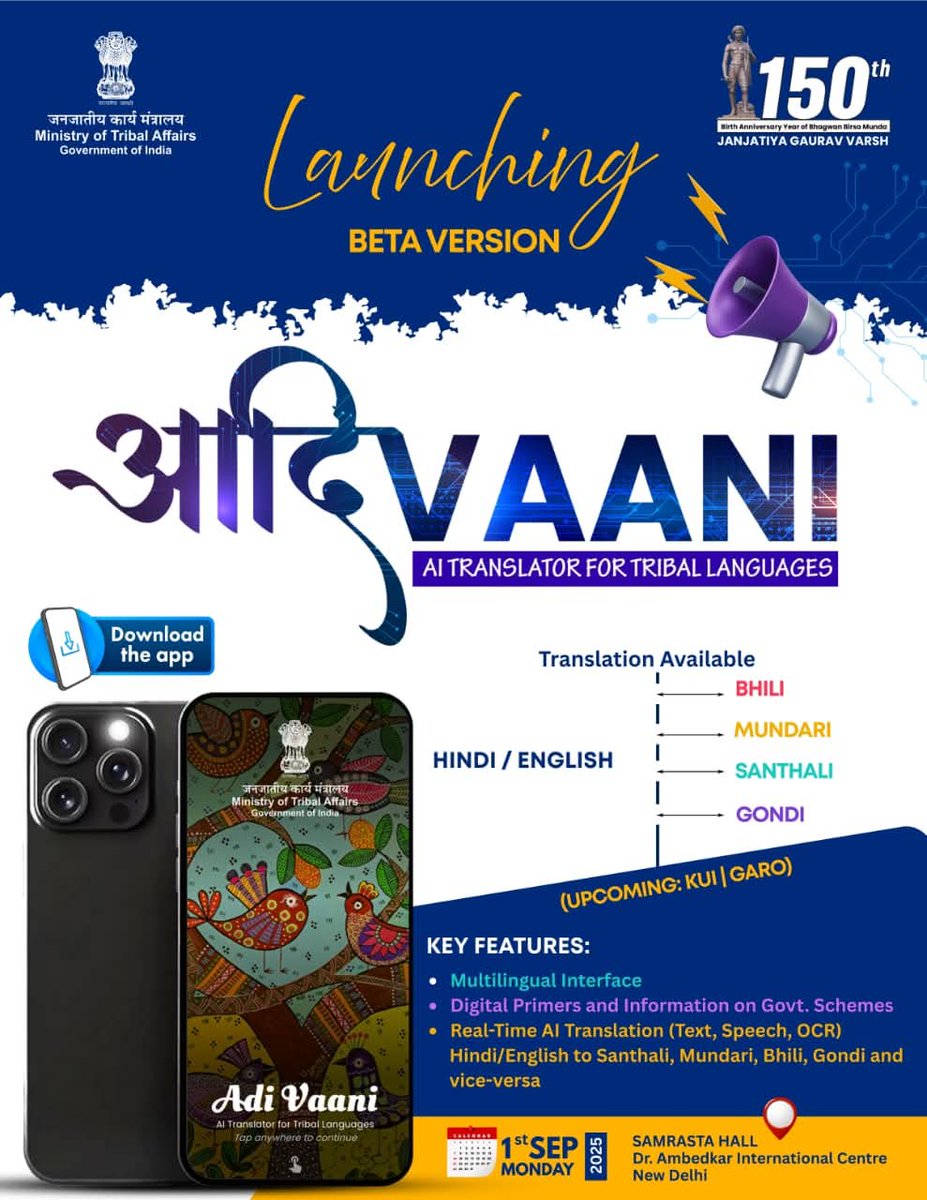
Integration in Google Translate, AI, and voice tools. Content creation in Ho on social media and web platforms. This ensures that Ho remains a living language in the digital era.
(e) Tribal Rights and Representation
Recognition in the 8th Schedule affirms that India values tribal languages as part of its national heritage. It enhances policy inclusion — enabling communication in health, education, and livelihood programs in the Ho language. It strengthens representation of the Ho people in national discussions about tribal development.
4. Impact on the Community
AreaPositive Impact: IdentityBuilds dignity and pride; strengthens cultural unity. EducationEarly learning in mother tongue; better academic performance. EmploymentNew teaching and translation opportunities. CulturePreserves oral traditions, literature, and Warang Chiti script. TechnologyEncourages digital innovation and online presence. National IntegrationRecognizes Ho people as an integral part of India’s linguistic map.
Including Ho language in the Eighth Schedule means more than linguistic recognition — it is about protecting a culture, empowering a people, and ensuring their equal place in the Indian identity.
#Hofor8thSchedule #DolabuDelhi5_0 #WeDemand8thSchedule #HoLanguage #StrengtheningAIHLAC #StrengtheningHoLanguageMovement #Movementfor8thScheduleRecognition #Hofor8thSchedule #DolabuDelhi5_0 #JulungYatra
#Movementfor8thScheduleRecognition
#HoFor2ndOfficialLanguageInOdisha
#WeDemand8thSchedule
#StrengtheningHoLanguageMovement
#Movementfor8thScheduleRecognition
#Hofor8thSchedule
#HoFor2ndOfficialLanguageInOdisha
#DelhiChalo5_0
#OurDemandGenuineDemand
#HoLanguageRecognitionOurConsitutionalRights
#WeDemand8thSchedule
@narendramodi@AmitShah@TribalAffairsIn@CMO_Odisha@ombirlakota@rashtrapatibhvn@MohanMOdisha@Naveen_Odisha@himantabiswa@BJP4India@GaneshRamBJP@BikerGirlkancha@HemantSorenJMM
Why the Ho Language Should Be Included in the 8th Schedule of the Indian Constitution.
1. What is the Eighth Schedule?
The Eighth Schedule of the Indian Constitution (Articles 344 and 351) lists the officially recognized Indian languages.
Currently, 22 languages are included — such as Hindi, Odia, Bengali, Santali, Bodo, Manipuri, and Dogri.
2. About the Ho Language and Its Speakers:
Ho is a Munda language of the Austroasiatic language family spoken primarily in India by about 2.2 million people per the 2001 census. It is spoken by the Ho, Munda, Kolha and Kol tribal communities of Jharkhand, Odisha, West Bengal and Assam and is written using Warang Chiti script.
3. Why Ho Language Should Be Included:
(a) Cultural Identity and Heritage
Ho is a distinct Austro-Asiatic (Munda) language with its own grammar, literature, and script. It holds centuries of oral traditions, songs, stories, and rituals that define the Ho people’s worldview. Official recognition will preserve these traditions and strengthen the cultural pride and unity of the community.
(b) Education and Employment
Inclusion in the 8th Schedule means:
Schools can teach in Ho as a medium of instruction in Ho-majority areas. The language can become a subject in universities and exams like UPSC, SSC, or State PSC. It will create jobs for teachers, translators, and cultural researchers. Education in one’s mother tongue also improves learning outcomes and reduces dropout rates among tribal children.
(c) Government Recognition and Support
Once included, the Ho language will be:
Used in official communication, publications, and translation. Eligible for grants and institutional support from the Government of India.Promoted through agencies like Sahitya Akademi and Central Institute of Indian Languages (CIIL).
(d) Digital and Technological Development
Inclusion encourages:
Integration in Google Translate, AI, and voice tools. Content creation in Ho on social media and web platforms. This ensures that Ho remains a living language in the digital era.
(e) Tribal Rights and Representation
Recognition in the 8th Schedule affirms that India values tribal languages as part of its national heritage. It enhances policy inclusion — enabling communication in health, education, and livelihood programs in the Ho language. It strengthens representation of the Ho people in national discussions about tribal development.
4. Impact on the Community
AreaPositive Impact: IdentityBuilds dignity and pride; strengthens cultural unity. EducationEarly learning in mother tongue; better academic performance. EmploymentNew teaching and translation opportunities. CulturePreserves oral traditions, literature, and Warang Chiti script. TechnologyEncourages digital innovation and online presence. National IntegrationRecognizes Ho people as an integral part of India’s linguistic map.
Including Ho language in the Eighth Schedule means more than linguistic recognition — it is about protecting a culture, empowering a people, and ensuring their equal place in the Indian identity.
#Hofor8thSchedule #DolabuDelhi5.0 #WeDemand8thSchedule #HoLanguage #StrengtheningAIHLAC #StrengtheningHoLanguageMovement #Movementfor8thScheduleRecognition #Hofor8thSchedule #DolabuDelhi5.0 #JulungYatra#Movementfor8thScheduleRecognition
#HoFor2ndOfficialLanguageInOdisha
#WeDemand8thSchedule
#StrengtheningHoLanguageMovement
#Movementfor8thScheduleRecognition
#Hofor8thSchedule
#HoFor2ndOfficialLanguageInOdisha
#DelhiChalo5_0
#OurDemandGenuineDemand
#HoLanguageRecognitionOurConsitutionalRights
#WeDemand8thSchedule
@narendramodi@AmitShah@TribalAffairsIn@CMO_Odisha@ombirlakota@rashtrapatibhvn@MohanMOdisha@Naveen_Odisha@himantabiswa@BJP4India@GaneshRamBJP@BikerGirlkancha@HemantSorenJMM
📢📢 The next SIGEL talk is tomorrow, Oct 10!
Join us for an exciting talk by Daan van Esch from the Speech team at Google.
We'll hear about Daan's work on under-represented languages, including building technologies that support 1000 languages!
✨Zoom link in the poster!✨
We are excited to hear from you and We hope you'll consider adding the @WarangChiti123 script of India's Indigenous Ho language to Gboard.
@daanvanesch 🕣pm (IST)