New preprint, marking a new direction for the lab. This work started with a 7:30 am call with a mom whose daughter was recently diagnosed with a rare disease @Dont4getMorgan#BPAN. We present phenotypes from a new mouse model mimicking a patient mutation. https://t.co/cezrBNmHXj
More than 1 year has passed since this first post below. Final and revised version of iFlpMosaics coming out very soon...all new genetic tools (plasmids, mice and cell lines) are available for shipment.
congrats to the other awardees, including our very own @dhnisz@MPI_MolGen!
They turn science fiction into reality: The 100 most important minds in Berlin science in 2024
https://t.co/OK6YjGD9G6
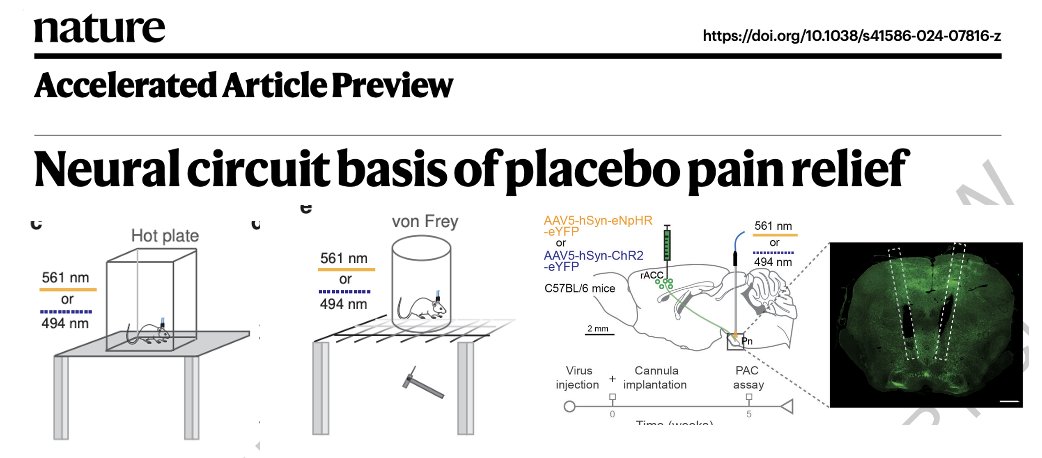
What causes the placebo effect? What are the neural circuits underpinning the placebo pain? What's the pons got to do with it? Chong Chen, Grégory Scherrer and colleagues hit it out of the park with their new paper @Nature.
Key Points:
- The authors remind us that the placebo effects are mind-body interactions.
- Expectation of pain relief can 'reduce the experience of pain.'
- Analgesia from the expectation of pain relief in this animal study is 'mediated by rostral anterior cingulate cortex (rACC) neurons that project to the pontine nucleus (rACC→Pn), a pre-cerebellar nucleus with no established function in pain.'
- Pontine nucleus neurons had 'an abundance' of opioid receptors present.
- Purkinje cells had activity patterns during pain relief expectation.
My take: WOW! A beautiful study and humbling to see a new circuit which may explain the placebo effect in pain. The frontal cortico-ponto-cerebellar pathway will definitely be drawing the attention of researchers and clinical-scientists around the world. As Tina Turner said, 'what's love (I mean the pontine nucleus) got to do with it? If you read this paper, and don't think science is fun, read it again.
https://t.co/ryJsGN9k2r #placebo #fixelinstitute #pain #parkinson
Happy Birthday, Rosalind Franklin! We celebrate her work and influence in science. Thanks to her, we have the historic Photo 51, which revealed that DNA has a double-helical structure!
This pandemic-era manuscript is now a Reviewed Preprint in eLife... Apical tufts can develop durable selectivity for behaviorally relevant stimuli (whether rewarded and unrewarded) during task learning.
https://t.co/9J89uxOn44
Out now in @NatureComms 🎉🍾 our study on how protein synthesis regulators determine the neuronal subtypes in the cortex. A great collaborative effort, a big thank you to all authors, particularly to Katya Borisova, @epiNewman and @MatthewKraushar 🤩
https://t.co/j7tDBzBNRo
Body, Brain, Behavior
Three Views and a Conversation
Authors: Tamas Horvath, Joy Hirsch, Zoltán Molnár
Describes the state-of-the-art in brain research, with a particular emphasis on the relationship between the brain and peripheral organs. https://t.co/HwYWuupYld
I asked my PhD adviser, 'When do you know you've become a scientist?' He replied, 'When you no longer seek validation from others.' - I’ve applied this wisdom to everything. @briandanielsli dedicated mentorship fueled my understanding of biology and its impact on human health.
Neuronal migration in the developing mouse cortex. This movie was generated in organotypic brain slices at embryonic day 15. Overnight live imaging every 10 minutes, using @NikonUSA laser-scanning confocal microscopy. Credit: @C_Kittock
Congrats Craig @Forester_lab superstar postdoc who led a fascinating study on how specialized translation underlies a differentiation program of red blood cells. Thanks to @sohitmiglani @mbarnalab Al Burlingame Juan Oses and all team! https://t.co/i8qWW88I7H
GGGOOOAAALLL
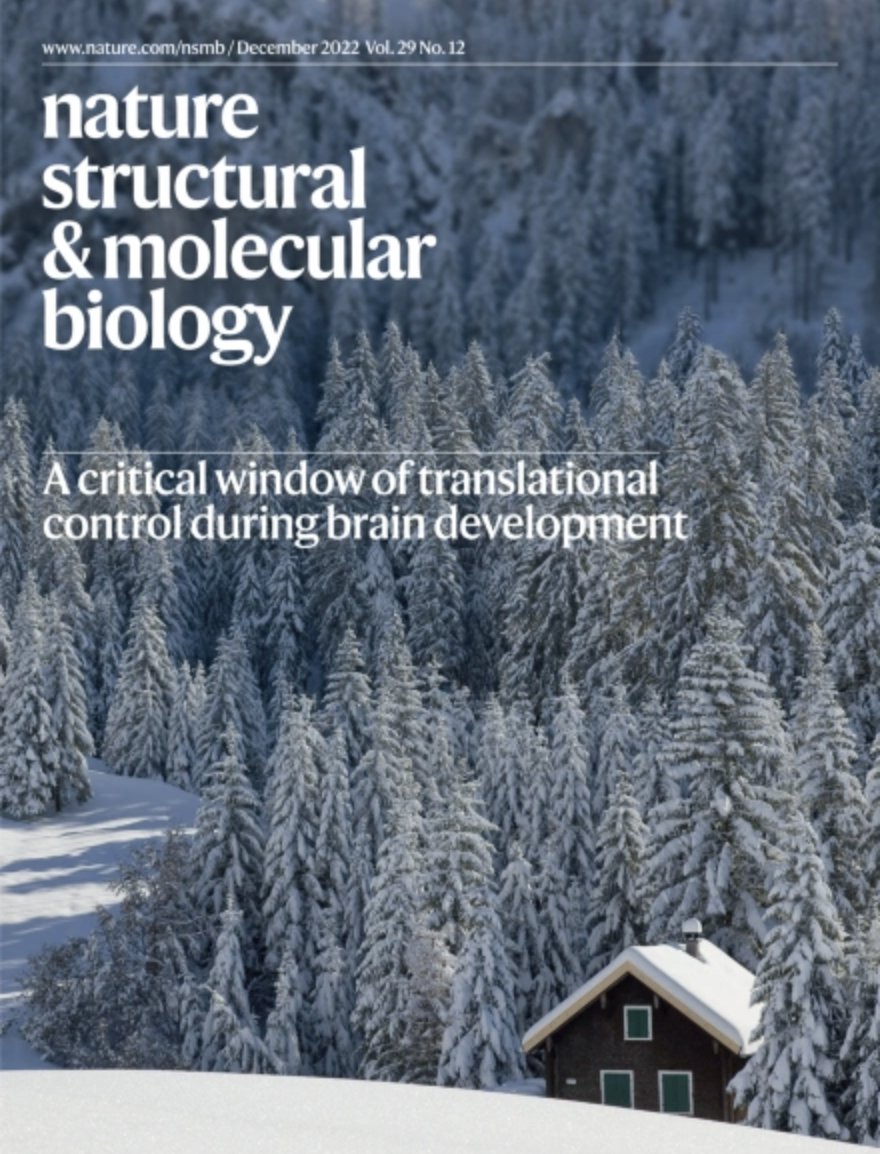
we made the cover!
huge thanks to the team @NatureSMB@sarakosman for highlighting our work!
https://t.co/t1nJBDIQnD
🤩😍🥰😊🥲
feelin' all the feels
🥲😊🥰😍🤩
How predicative are transcriptomes of cell fate choices?
This @ScienceMagazine article suggests that transcriptomes have limited predictive power for developmental fates during hematopoiesis.
The highest predictive accuracy from RNA levels was 60% in vitro and 51% in vivo.
We are recruiting! Multiple postdoc openings at Child Health Institute of NJ at Rutgers Robert Wood Johnson Medical school. Please reach out to labs listed in the SFN ad below. Great people & a great environment. And please pass along to those interested. https://t.co/gco2FJ3p7H