Using dark fibers and traffic noise, Czarny et al. analyze signal-to-noise ratios and source distribution of Rayleigh waves, characterizing the factors influencing surface wave propagation in an urban area.
Read more: https://t.co/flzbFytEQ0
Fale dźwiękowe tworzące #grzmot burzowy mogą wprawiać w drgania grunt. Badanie z udziałem Polaka pokazało, że powstające w ten sposób bardzo słabe wstrząsy sejsmiczne można wykorzystać do obrazowania budowy podłoża do głębokości nawet 100 metrów.
https://t.co/lZXdKNhIHe
Thunderstorms can generate acoustic waves that couple into the ground to produce seismic signals.
New research shows these “thunderquakes,” recorded by fiber optic cable, can be used to image Earth’s subsurface. https://t.co/qG3bWb6kYb
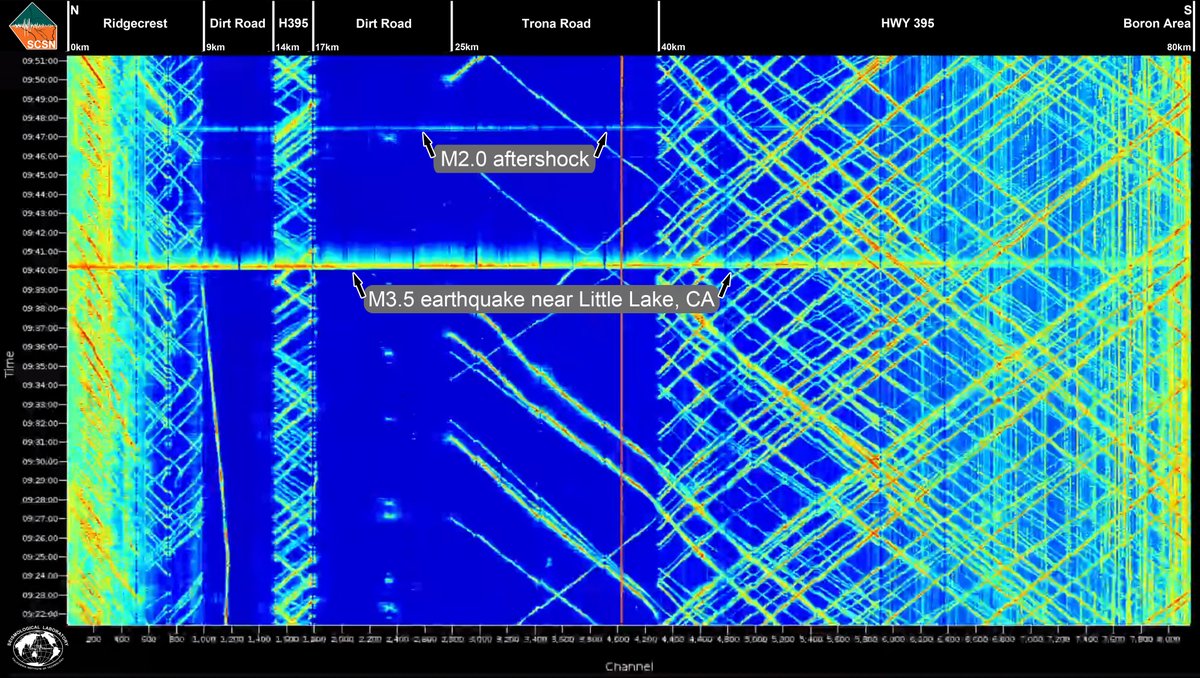
Big News! The SCSN is taking seismic monitoring and research to the next level with Distributed Acoustic Sensing (DAS)! We're now live-streaming seismic data from an 80km long DAS array in Ridgecrest, CA! View the stream and learn more at: https://t.co/hXEzGZeuC2
New paper in @ScienceAdvances
Using DAS deployed on existing telecom cables, we created new images from the Long Valley caldera highlighting a clear upper-crust lid confining the deep magma chamber: https://t.co/R95UwsuAi2
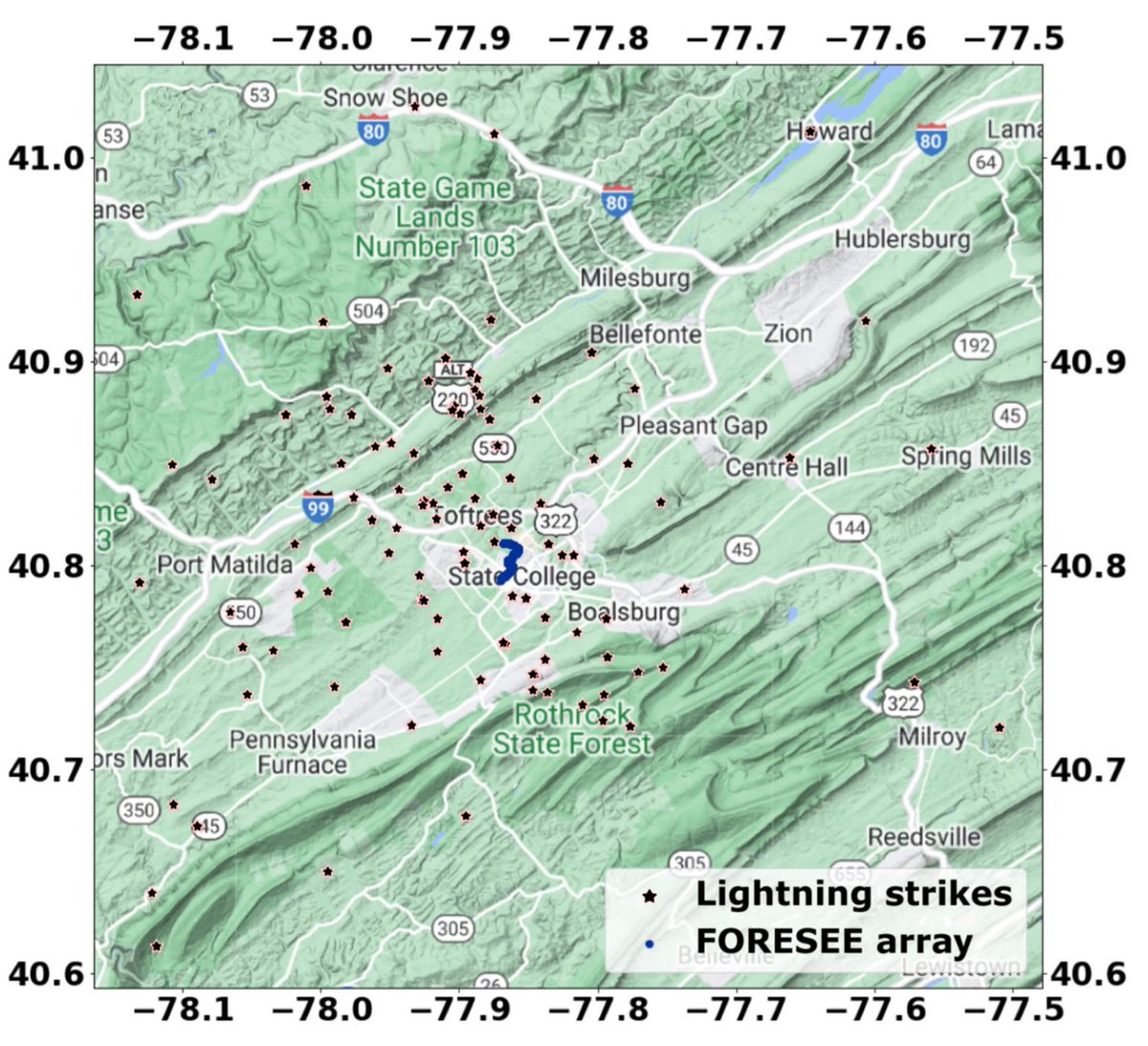
Wavefield Modeling and Analysis of Lightning Quakes Measured by a Distributed Acoustic Sensing Array #BSSA
Fiber optic cable snaking beneath the Penn State campus can detect seismic waves generated by lightning storms. (1/2)
https://t.co/MdnXn7YdzO
🌟Calling all Earth Explorers! 🌍✨Dive into a seismic treasure hunt in the "Frontiers in Seismic Tomography and Imaging" special issue of the Geophysical Prospecting journal!
Explore here: https://t.co/e7Wv7mGay5
@EAGE_Global#Geophysics#Seismic#Tomography#FWI#RTM
🧵1/2
Our latest @Nature paper shows the power of DAS. Using a 100km cable, we imaged four asperities breaking during a M6 event, whose image would otherwise be a blur. It is like having a new telescope, but for earthquakes! What if we have all the cables?!
https://t.co/n8r7yV1jlc
New @NatureComms paper led by @jxli42 shows how to better constrain earthquake focal mechanisms with DAS. It is challenging to pick P-wave first-motion polarities on DAS, but we find a clever way of doing it with relative measurements!
We recorded yesterday's devastating magnitude 7.8 earthquake in southern Turkey using a @PrismaPhotonics Distributed Acoustic Sensing interrogator unit in Israel, nearly ~600 km away! Such high-resolution DAS data will help study this destructive event.
Nap et al. successfully developed and tested self-sufficient and easily deployable seismic stations for monitoring glacier seismology at remote and hard-to-access glacial terrain.
Even deployable and recoverable from a (hovering) helicopter
Read more: https://t.co/dkWnqfkLvH
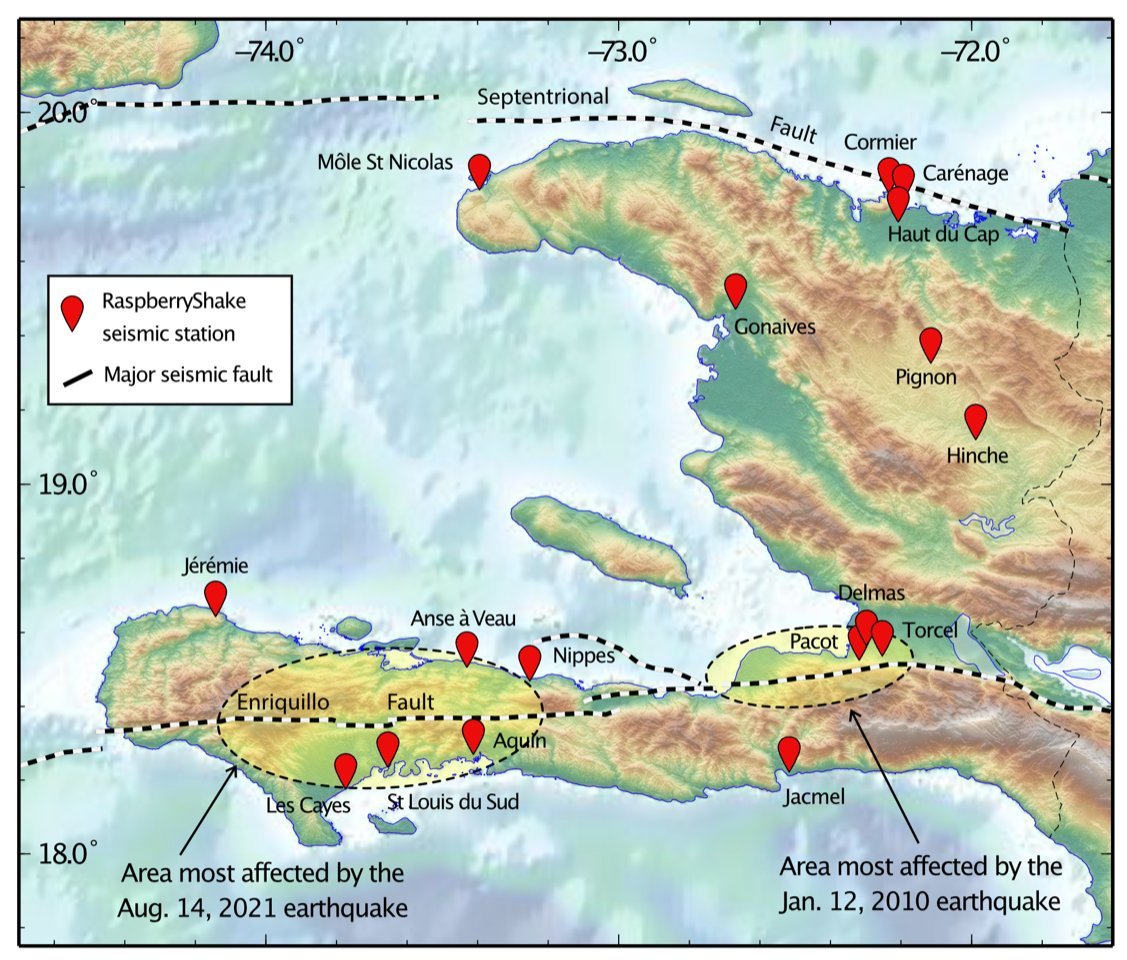
Postdoc opportunity in seismology + machine learning, to develop a Deep Learning algorithm to denoise data from low-cost seismometers and extract information on earthquake processes, with focus on @raspishake sensors in Haiti: https://t.co/qHuzR52V0K
Hi folks, I'll defend my PhD thesis tomorrow morning at 8:30 am (EST). If you are interested in seismic attenuation, full waveform inversion, or critical zone structure, feel free to stop by at Deike 541, or tune in at https://t.co/lTSszxfJC2 See you there!
Czy tylko ja mam takie dziwne skojarzenie, czy te reakcje Rosji na ujawnienie zbrodni w Buczy są odległą kopią reakcji ZSRR na ujawnienie zbrodni w Katyniu ?