Tinkering with agents having a tool to switch complexity levels.
The same tail appended LLM context sent to different size of LLMs seems much more tractable than having arbitrary rules like “plan with fable and write an MD file and hand it to GPT 5.5 for implementation”
We built a custom sales co-pilot on ClickHouse Agents, and 81% of our sales org uses it every single day to manage accounts worth hundreds of millions of dollars. They're having thousands of conversations that use our data warehouse, salesforce, internal docs and public feeds to support our customers.
We have observability of every conversation via Langfuse, so we can grade answer quality, optimise model selection and pass intelligence to other teams on where sales needs support.
It's built entirely on the ClickHouse Cloud stack using @ClickHouseDB , @LibreChatAI and @langfuse .
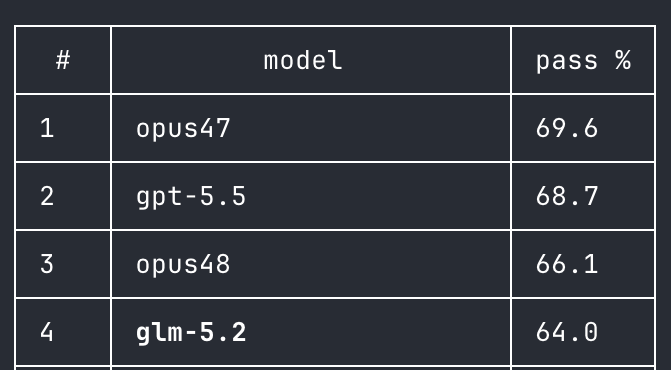
For the first time, an open weight model (GLM5.2) made it into the top 5 of our benchmarks for agentic analytics, and is well within the threshold to be seriously usable. I'm excited to see where that takes us.
GitHub friends: it'd be great to have a way, via the API/CLI, to upload photos to issues/pull requests.
AFAICT the only way to do it right now is browser emulating or hosting the content somewhere outside of GitHub, which means having agents help QA/upload visual artifacts sucks
@brian_armstrong Very cool stuff! Glad to know you guys use librechat. I work on it’s features and maintenance @ClickHouseDB
Let me know if we can help with making it more cost effective for you
@BenceRedmond I ask codex to run claude -p “command to diff +summary” or cursor’s agent for faster reviews.
Cursor’s skills for code review in their team kit are also pretty great! I use it with every agent!
@theo Cursor’s thermo-nuclear-code-quality-review to find maintainability issues.
Claude review to find lateral thinking ideas to simplify and throw away components while keeping the functionality.
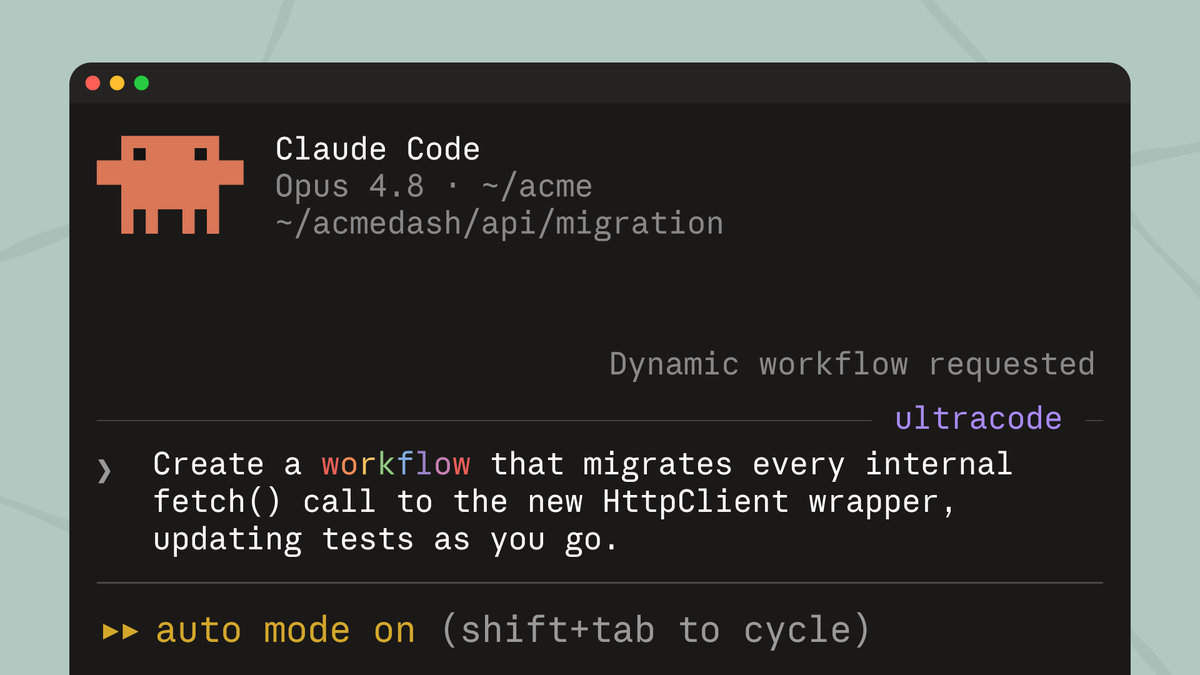
New in Claude Code (research preview): dynamic workflows.
Claude writes an orchestration script on the fly, then spins up a large fleet of coordinated subagents in parallel to take on your most complex tasks.
Use the word "workflow" in a prompt to get started.
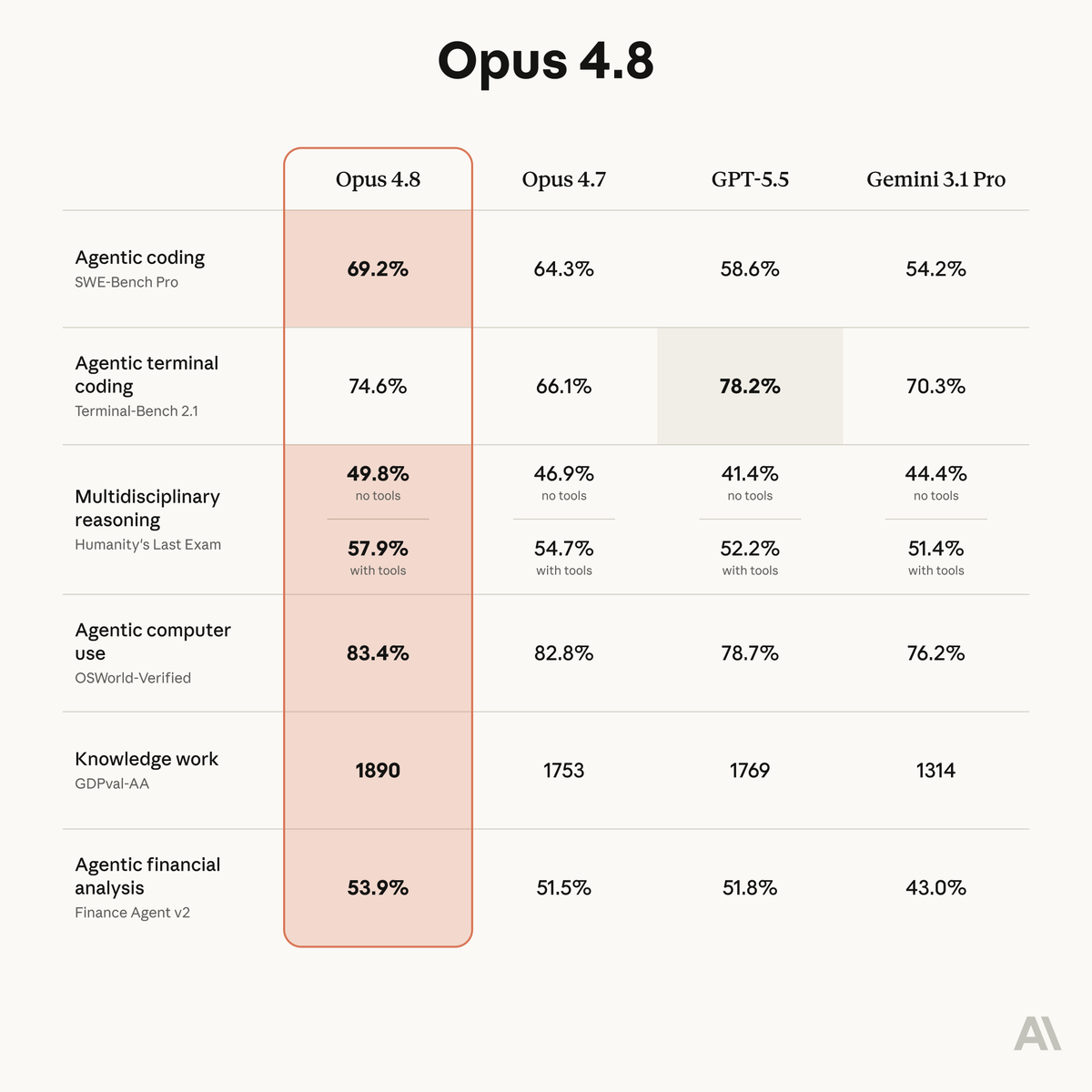
Introducing Claude Opus 4.8: it builds on Opus 4.7 with sharper judgment, more honesty about its own progress, and the ability to work independently for longer than its predecessors.
Available today at the same price.
I had a decent grasp of how LLM inference works. But I hadn't connected a lot of dots on how this can work in production where cost, throughput and latency matter. So I did a bunch of reading and wrote down what I understand.
https://t.co/CnzKnBWTqi
A lot of programming wisdom like “keep things extensible” don’t seem to apply anymore when you can sling thousands of lines of code every minute.
“Keep things verifiable” - write tests, precise types, benchmarks etc. still stands though