Gavin Baker on memory LTAs: “You might blow up your entire business and your franchise by breaking an LTA. And that was never the case before”
Talking about memory makers moving buyers onto long-term agreements (LTAs), he works through the game theory of what happens to a buyer who walks away from one:
“Let’s just think about the game theory of breaking an LTA. So there’s four companies that matter at scale. There’s Amazon with their Trainiums, there’s Google with their TPUs, there’s AMD, and then there’s NVIDIA who’s much bigger than everybody else combined.”
“Let’s just say it’s 2027, it’s very important to realize memory is, the more memory you put with FLOP for a given unit of compute, the more tokens you get out. It’s the single most important thing you could do to increase kind of token output per unit of compute. And then that obviously definitionally actually lowers costs, which is why the demand hasn’t responded at all negatively. There’s been no elasticity just because it’s kind of the only, it’s the axis that is dominating all others. And this is at some level, a giant Game of Thrones or emperors between these companies.”
“And okay, it’s 2027 or '28, you’re vaguely tempted to break one of these LTAs, try and get a lower price. But to a large degree, market shares are, I think for the next several years, are going to be determined by supply chain allocations and what you have pre-purchased. So if you break the LTA and you, and this is assuming we’re not in a severe oversupply situation, the game theory even holds in a severe oversupply situation. If you break your LTA, and then in the next two or three years, for any reason, leverage shifts back to the memory guys, you’re out of business. It’s over.”
“Let’s just say Google breaks an LTA. There’s an oversupply. I’m making this up, in '28, '29. They break their LTAs. Well, if they’re breaking their LTAs, it probably means, your oversupply, prices are coming down, and then, capacity naturally contracts. Well, what do you think is going to happen to Google’s allocations? And then, this is a cyclical industry, and oversupply is followed by undersupply. What do you think they think is going to happen to their allocations next time?”
“So I just think given that this is the axis around which kind of everything is revolving, man, you might blow up your entire business and your franchise by breaking an LTA. And that was never the case before.”
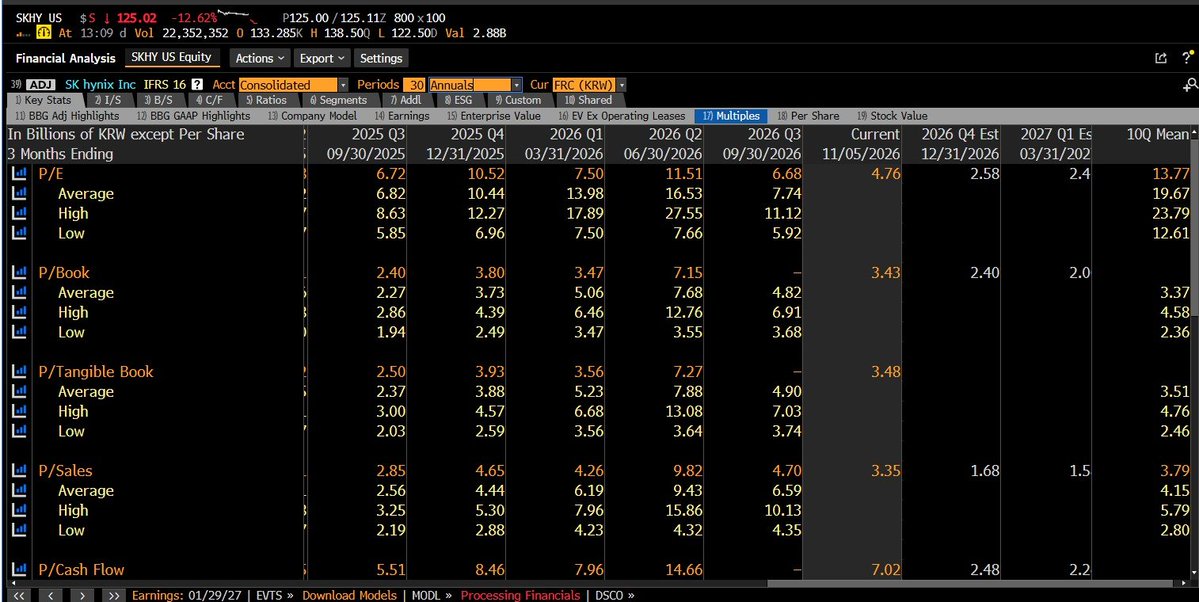
SK Hynix $SKHY on memory supply:
“A situation where supply cannot keep up with demand is expected to persist for some time, a constraint projected to continue through 2030.”
$NVDA $AMD $MU
Data centers in Loudoun County, Virginia: “We get $1.2 billion a year in local tax revenue, about 40% of all of our tax revenue...on 3% of our land”
Buddy Rizer, the county's economic development chief, explained how “data center alley” grew:
“We would have never looked at having 55 million square feet of data center, 230-some buildings. That was not the plan. The plan was to utilize the fiber loop, the internet exchange, to utilize a reclaimed water line, and buildings that were already built. That was the plan, right? And so that made a lot of sense.”
“But, you know, fast forward, today we are largely dependent on that. We get $1.2 billion a year in local tax revenue, about 40% of all of our tax revenue. And while that looks overwhelming, data centers take only about 3% of all of our land in the county. So it’s quite a return on investment. You know, 40%, $1.2 billion, on 3% of our land.”
Why the memory layer will become more and more important and how Instinct crushed it
“One thing about agents that is rare today but will be incredibly common in the next few years is this memory layer.
If you look at Instinct or Muse, one of the things that they have nailed is personalization and learning, making it seem like it is something for you.
I think memory is super, super early.” @hwchase17
Love to hear your thoughts @DhravyaShah@taranjeetio@noahrshinn@natfriedman
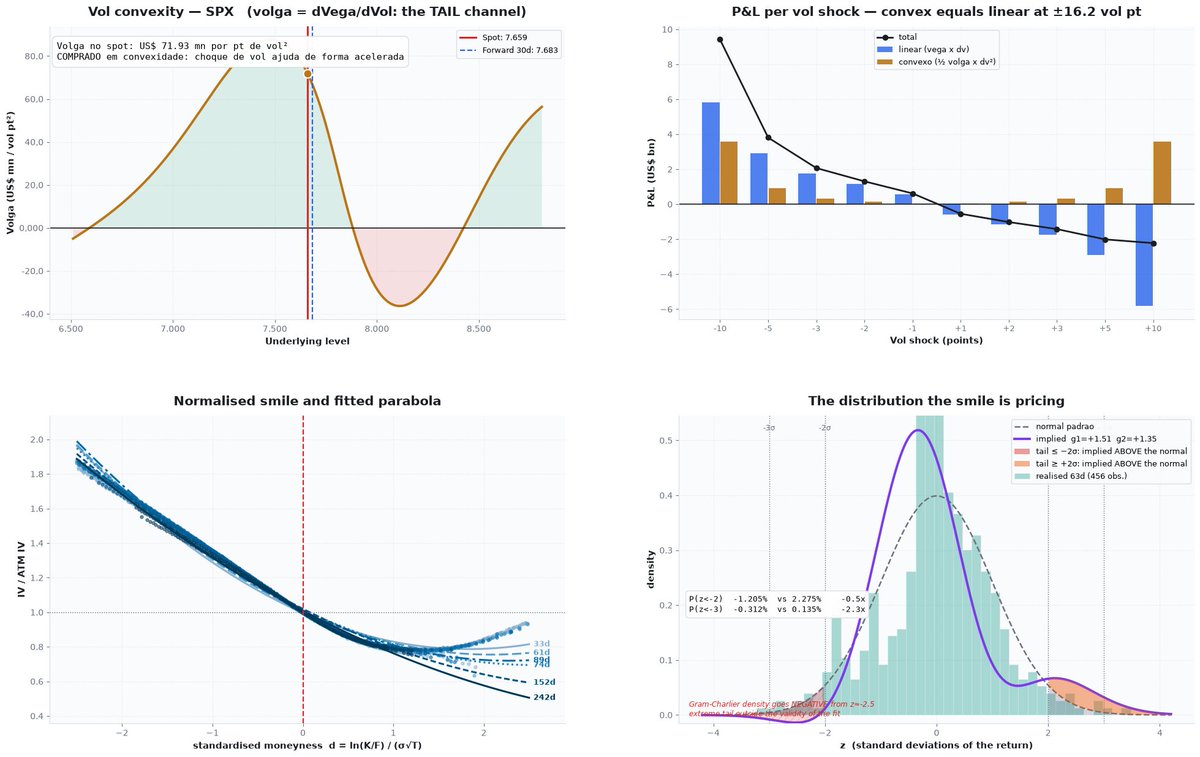
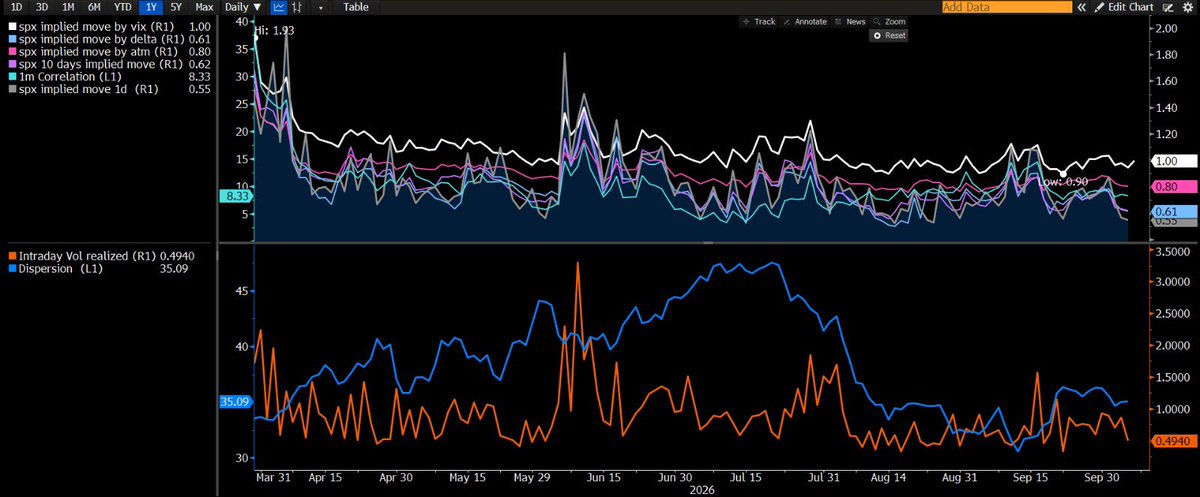
$SPX options positioning is short Vega, long Volga. Positive convexity cushions extreme volatility shocks, while elevated downside skew suggests the market is pricing meaningful left-tail risk.
@spotgamma@Alpha_Ex_LLC $VIXY
muitas contas do X, falando de uma black monday, o mercado de final de semana nao mostra isso, so um ajuste de sexta feira nos pregões asiaticos #SPX500 $SPY
@nikolas_dm https://t.co/qQJrfodrDu
Fizemos as contas, só tem uma probabilidade do Lula ganhar abstenção cair para menos de 17,5 isso nunca aconteceu, então fique esperto @nikolas_dm, se tiver sacanagem será aí.
@elonmusk Congrats! How much did this cost? With your wealth and power comes responsibility. You may be the only person alive capable of laying the foundations for a space civilization. Don’t waste your potential on distractions.
@IAPolls2022 possibly the last shred of credibility they have left... I hope that, after these midterm elections, people realize they cannot be trusted.
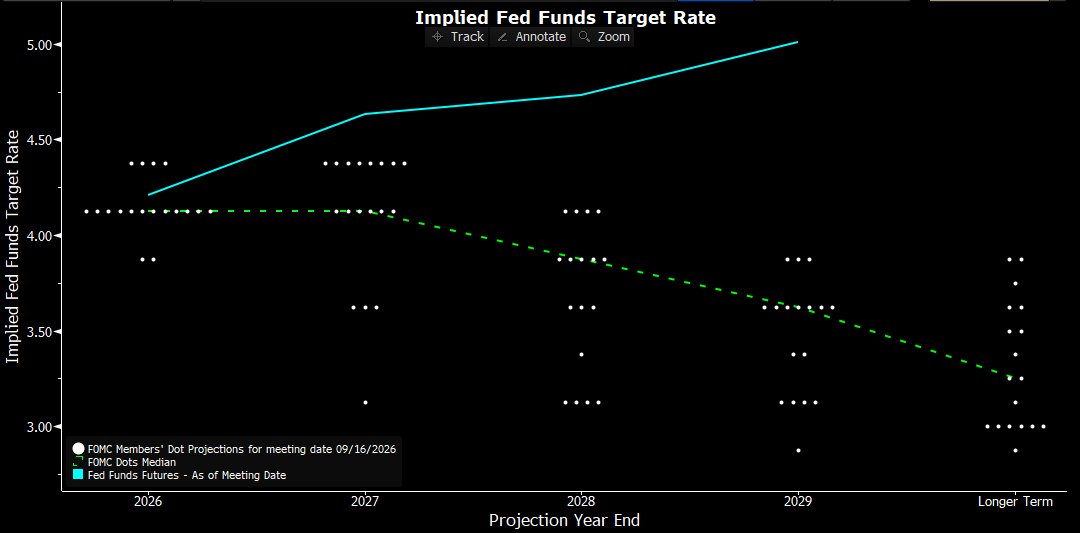
“Don’t fight the Fed” sempre foi uma máxima de mercado.
Só que hoje é exatamente isso que estamos vendo: o Fed projeta cortes, enquanto o mercado precifica juros bem mais altos à frente.
Desta vez, é o mercado dizendo ao Fed: não acreditamos nos seus cortes.
#fed
@Mayhem4Markets Governments long engaged in the practice of buying back their own debt without new funds while simultaneously issuing short-term bonds; it only came to be viewed as unusual after the GFC. Fiscal responsibility is not the Fed's job, and the market needs to ✋ 👀 for an easy ride.