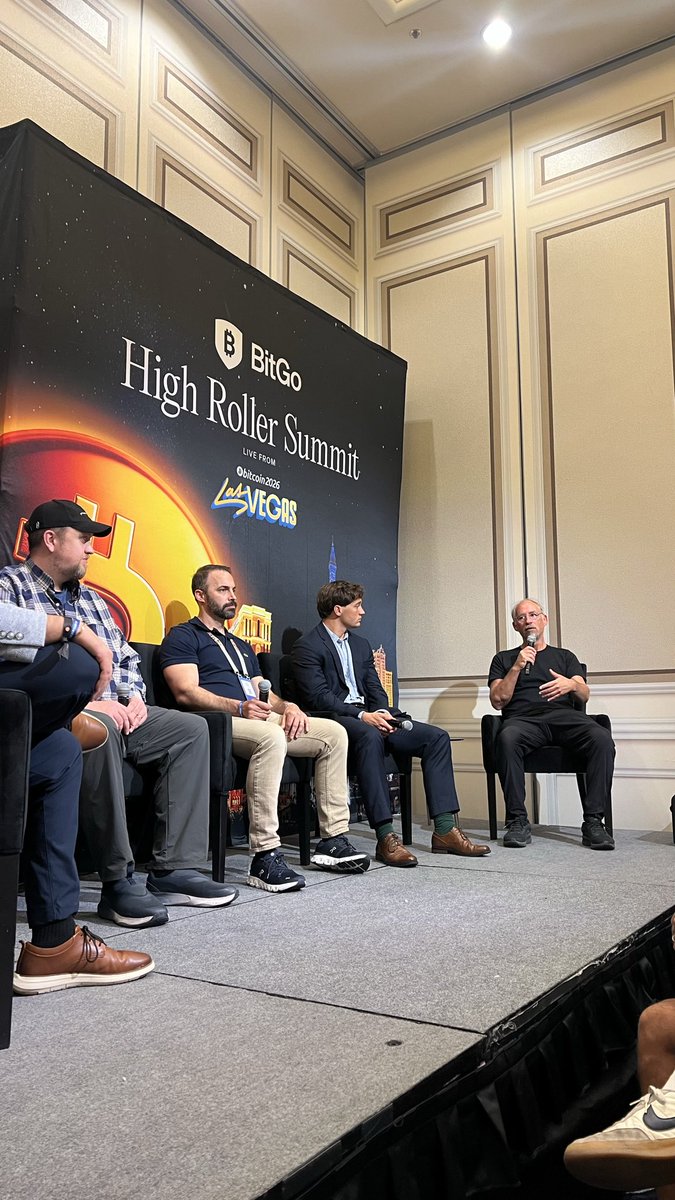
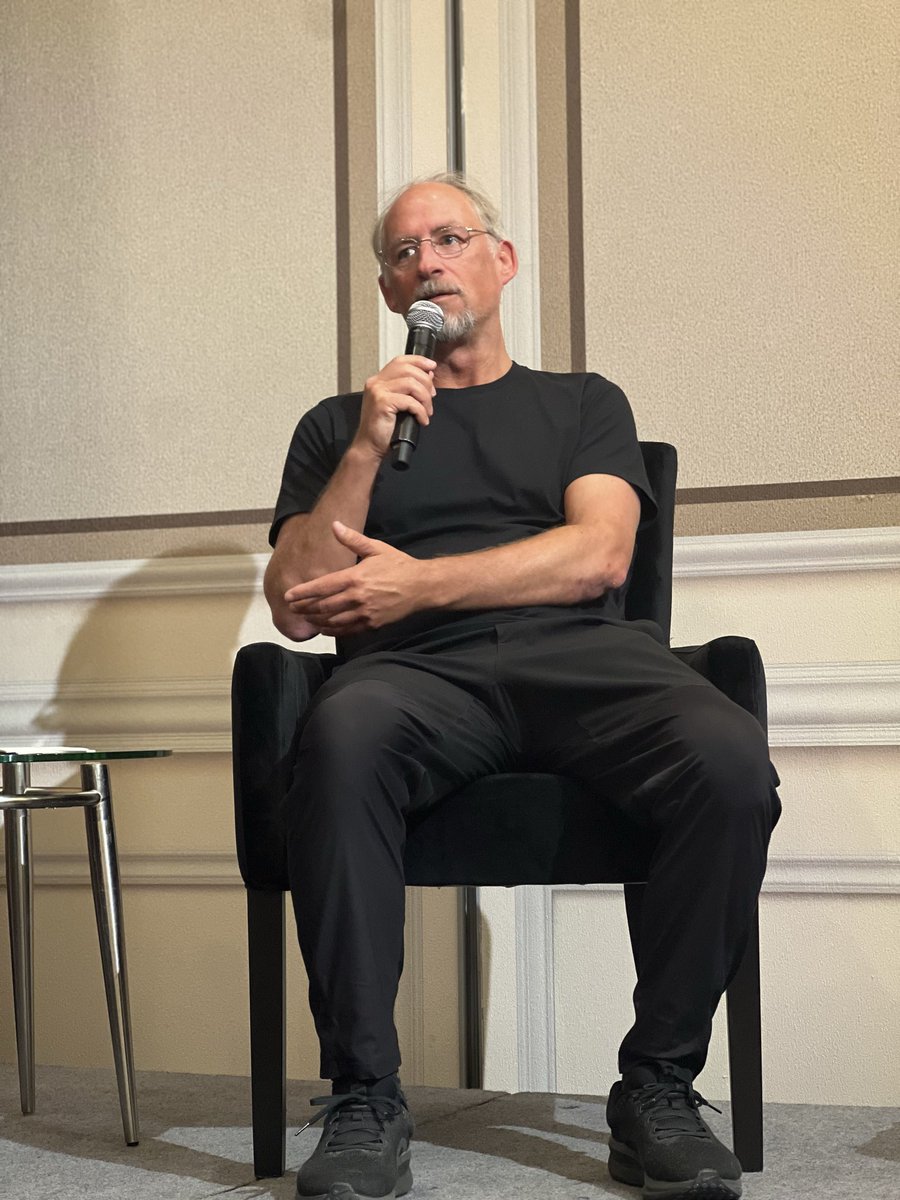
Special 🙏 to @DeSciBoston for bringing me to speak about how @quipnetwork will enable formerly impractical research computations at Boston's @blockchainwk
New Quip Node Manager build just released:
‣ Full stack in one command: node, dashboard, database
‣ Optional TLS, configured in-app
‣ Embedded dashboard
‣ Single health status
‣ Auto-updating images
Full changelog + downloads:
https://t.co/39mR5bM6F6
Upcoming Mindshare Stream
Join us on Wednesday, 3 June 2026, at 3:00 PM UTC for our next Mindshare Stream featuring the Amadeus Co-Founders; Leslie @talentnodes , Ivan @vans1631 and Dr. Richard @rcarback Co-Founder of @quipnetwork
They’ll be sharing key insights on the state of quantum computing, the implications of quantum resistance for blockchain infrastructure, and discussing when today's wallet security models could face real-world quantum threats.
Don't miss this opportunity to hear directly from the founders, gain a deeper understanding of the future of blockchain security, and stay ahead of one of the most important technological shifts of our time.
🎤 Streaming live on X and other channels.
Set your reminder and be there.
Introducing Quantum Echoes, an NFT collection powered by real quantum hardware.
Every mint is unique, seeded by quantum verifiable randomness.
Launching on @opensea.
Free open edition mint on Ethereum. Earn Eigen Keys to unlock rare traits.
Stay tuned for more info 🦋
JUPITER supercomputer has achieved the first full simulation of a 50-qubit quantum computer. This breaks the previous 48-qubit record, which doesn't sound crazy, until you understand how many more resources each qubit needs.
What happened:
- full simulation of a 50-qubit universal quantum computer
- leverages over 16,000 GH200 Superchips on Europe's JUPITER exascale supercomputer
- incorporates a byte-encoding compression technique, reducing memory needs eightfold
- employs a dynamic optimization system for efficient data exchange across the superchips
This is a critical testbed for developing and validating quantum algorithms like VQE and QAOA, exploring future quantum system behavior before physical hardware can execute such complex tasks. We will NEED to have efficient simulators of quantum systems, otherwise, how will we develop new algorithms.
Publicly addressing the recent official closing event at Consensus hosted by @tobiasTBV. Hosting a stripper party as a formal industry wrap-up is not "great BD", it is a liability that invites the exact Bloomberg headlines that hinder institutional progress.
Does this represent the standards expected by @BlackRock, @FTI_US, or @RobinhoodApp? As a founder, I am focused on building sustainable infrastructure, not navigating environments and individuals that openly signal this is how work "should" be done.
I am recommending that @proofoftalk remove him from the program. While I am just one CEO, I will not attend if his presence is confirmed. If the game is rigged to prioritize this culture over professional integrity, there is no point in playing.
.@LosAlamosNatLab recently shared how our annealing quantum computers are contributing to scientific discovery at the lab. Their researchers showed how D-Wave technology can be used not only for optimization, but as a controllable experimental platform to study how complex systems evolve, retain memory, approach tipping points, and behave at scale. This body of work reinforces something we’ve long recognized: our quantum computing technology can deliver value today on high-impact problems, now. #QuantumComputing $QBTS
https://t.co/DQJY9DFen6
Couldn't ask for a better partner in @brezshares & @nolimithodl
The first classical computers were built to break German crypto, but soon grew to transform every industry
Quantum is no different—if you're only focused on crypto you're missing the forest for a tree
Read more 👇
Wrapped up morning 2 of our sunrise yoga sessions on the beach at @consensus2026 ☀️
Thanks to everyone who woke up early to reach a superposition with us!
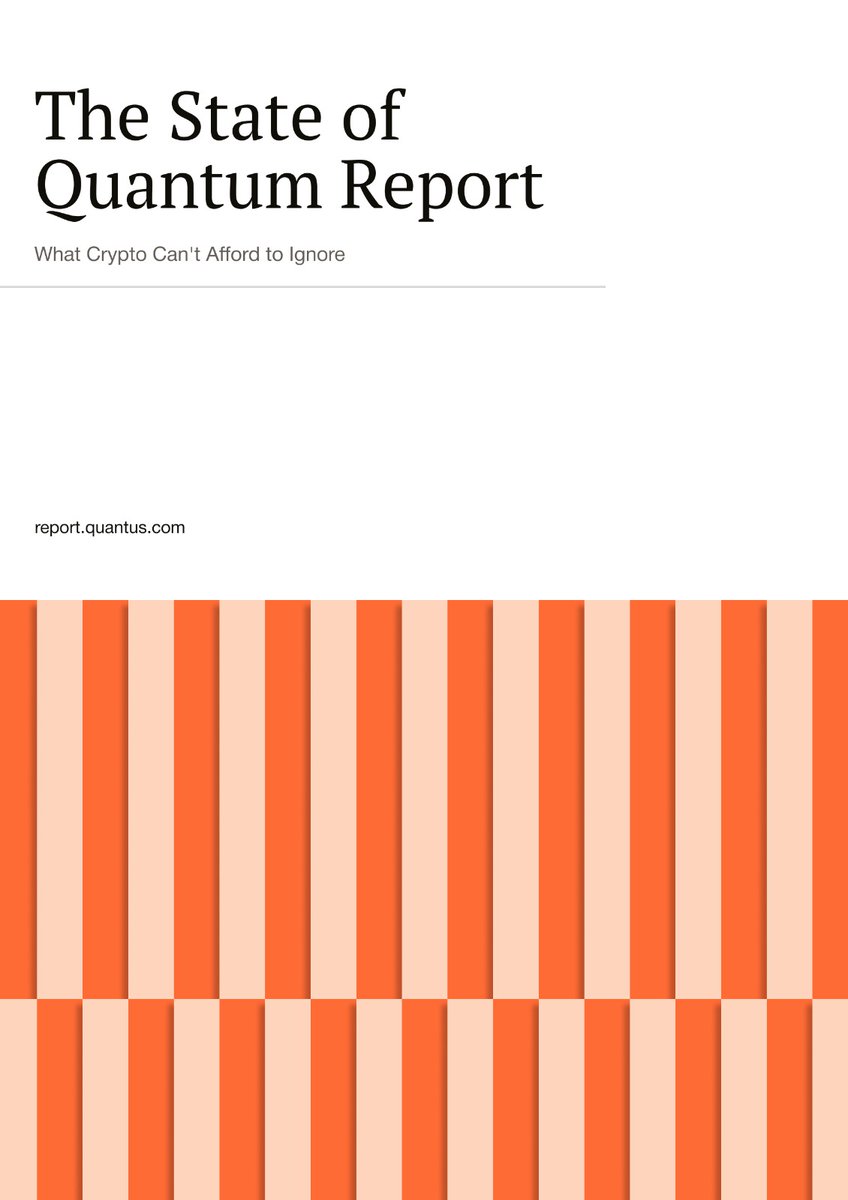
Excited to announce the 2026 @ProjectEleven Quantum Threat to Blockchains report.
I'm confident this is the most comprehensive resource you'll find on the intersection of quantum x blockchain infrastructure vulnerability.
Link in the comments 👇
the world’s best founders and developers.
the world’s biggest institutions.
our EasyA @consensus2026 hackathon kicks off 9am tomorrow morning.
see you there!
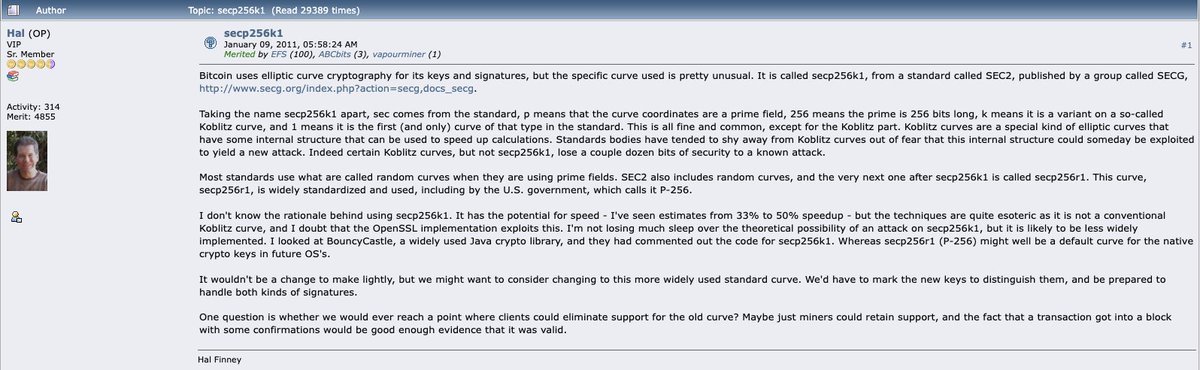
Fun fact:
secp256k1, the curve which secures all bitcoin, was NOT a NIST curve.
@halfin points this out in a 2011 bitcoin talk post.
NIST is part of the government, why would any threat actor in bitcoin take them at their word about how to do cryptography?
For 20 years, Scott Aaronson has been the person who tells you to calm down about quantum computing. His blog tagline: “quantum computers won’t solve hard problems instantly by just trying all solutions in parallel.” He has corrected more quantum hype than anyone alive.
Yesterday he was elected to the US National Academy of Sciences.
Today he titled his blog post: “Will you heed my warnings NOW?”
His words: “If quantum computers start breaking cryptography a few years from now, don’t you dare come to this blog and tell me that I failed to warn you. This post is your warning.”
He says the most reputable people in quantum hardware are now telling him a fault-tolerant quantum computer able to break deployed cryptosystems ought to be possible by around 2029.
He co-authored the Coinbase advisory board paper with Dan Boneh. The same Dan Boneh who co-authored the Google paper showing Bitcoin’s signature breaks in nine minutes with under 500,000 physical qubits.
This is not a vendor. Not a startup. Not a stock promoter. This is the most trusted voice in quantum computing, a newly elected member of the National Academy of Sciences, telling the world on the record: act now.
If Scott Aaronson is warning you, who exactly are you still waiting to hear it from?
https://t.co/FiZXYF8xew
@QtonicQuantum | https://t.co/HzeqTUESnf
"people whose judgment I trust more than my own on those topics—are now telling me that a fault-tolerant quantum computer able to break deployed cryptosystems ought to be possible by around 2029." - Scott Aaronson
https://t.co/7h8xANM5rT