“AI agents will outperform humans at almost all jobs by 2026–2027.” - The forecast is everywhere.
So we built the exam to test that claim, on real labor-market aligned work. On the hardest tier, top agents pass 2.6%.
Meet Agents' Last Exam (ALE), a rolling benchmark measuring whether agents can actually do real jobs. 🧵👇
Very excited to share that our paper "Towards a Science of AI Agent Reliability" was accepted at ICML 2026! See you in Seoul! 🎉
We just released our camera ready version with three important updates (details below). We also recorded a short video on the paper's contributions.
Main changes (full discussion at https://t.co/1a5r1jNFF4):
1️⃣We have added the latest set of frontier models to our evaluation (GPT 5.5, Gemini 3.1 Pro and 3.5 Flash, and Claude Opus 4.7) and find that they are not meaningfully more reliable than previously released models. Agent reliability is still far from being solved.
2️⃣We have updated the definition and measurement of our outcome consistency metric, which contained a typo in the pre-print we initially released. This caused us to under-estimate outcome consistency in our initial set of results. We have updated the paper and our codebase to the corrected metric. Despite this change, our new results show that outcome consistency is still surprisingly low across many reported models.
3️⃣We discovered multiple issues in our HAL Generalist Agent scaffold that we used for our experiments on GAIA. Notably, we discovered multiple instances of answer leakage and agents cheating on our evaluation. This caused us to slightly over-estimate both accuracy and reliability. At the same time, we noticed that the scaffold was overly constrained in terms of permissible software library imports. This caused us to slightly under-estimate both accuracy and reliability. We have done a rigorous audit of the scaffold and have fixed those issues. Overall, we saw that our resulting accuracy and reliability numbers are not meaningfully impacted by this change when compared to our original numbers.
📄Our paper: https://t.co/HAKHzASrOZ
📊Our dashboard: https://t.co/apbtxtsdvz
🎥Short video: https://t.co/uqIourw6C6
Joint work w/ @sayashk, @PKirgis, @khl53182440, @SaitejaUtpala, and @random_walker.
🏹5 Days of Trajectory.
Day 3 - An Open Source Training Stack for Continual Learning
Building the platform for continual learning requires both partnering with pioneering AI companies, as we showed on Day 2 with Harvey, and working toward frontier research, which we are highlighting today.
Continual learning means models that improve hourly from real production use. But with the size of frontier models, this becomes quite difficult. A Qwen-397b would need to spin up and tear down repeatedly across six GPU nodes, and that's valuable time gone.
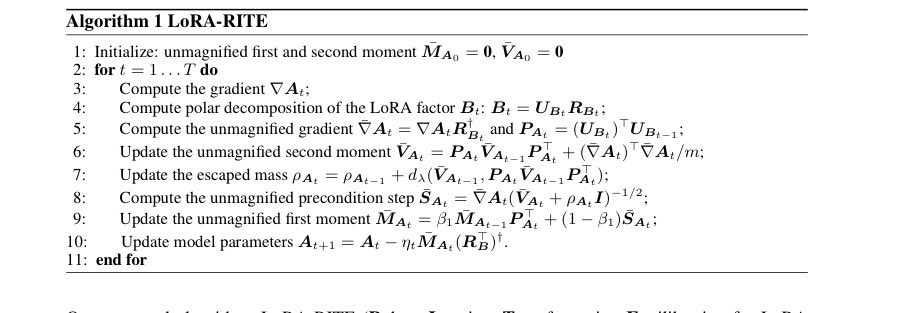
Our contribution is Continual LoRA (C-LoRA): many lightweight adapters running at once on one shared base model. Our insight centers on where the parallelism lives: instead of splitting one giant job across nodes, we load-balance many small jobs over a single base.
The result: 2.81x experiment throughput over single-tenant training, with no regression on rewards.
We built this together, with @anyscalecompute, @NovaSkyAI, and generous support from @GoogleCloud and @GoogleStartups. We've open-sourced on SkyRL as one of the first multi-LoRA, RL training platforms, so that every team can get to continual learning faster.
We’re very excited to see what you build, please reach out!
I’ve left Google DeepMind after an amazing chapter.
I’m incredibly grateful for the people I worked with, the things we built, and the lessons I learned from taking frontier AI research into production. DeepMind shaped how I think about research, product, evaluation, and what it takes to build AI systems at real scale.
As I wrap up this chapter, I wrote down something I’ve been thinking about a lot: evals.
We’re good at evaluating the models we have. We’re much worse at evaluating the models we’re about to build — especially if they cross into a new capability regime. We will have self-evolving models, but before that, we need self-evolving evaluations.
https://t.co/F1lUWxDG2D
Can Language Models Remember What They Learn? Introducing Procedural Memory Distillation (PMD): https://t.co/8fcAEPbkE4
PMD turns model attempts into reusable training memory, conditions a self-teacher on it, and distills the guidance into the student's weights.