Thrilled to share our latest publication! Our study on IKAROS and antigen escape relapse after CAR T cell therapy is now out! We found that low IKAROS expression in leukemia cells is linked to a higher risk of antigen escape relapse.
https://t.co/CSqaT1sQOO
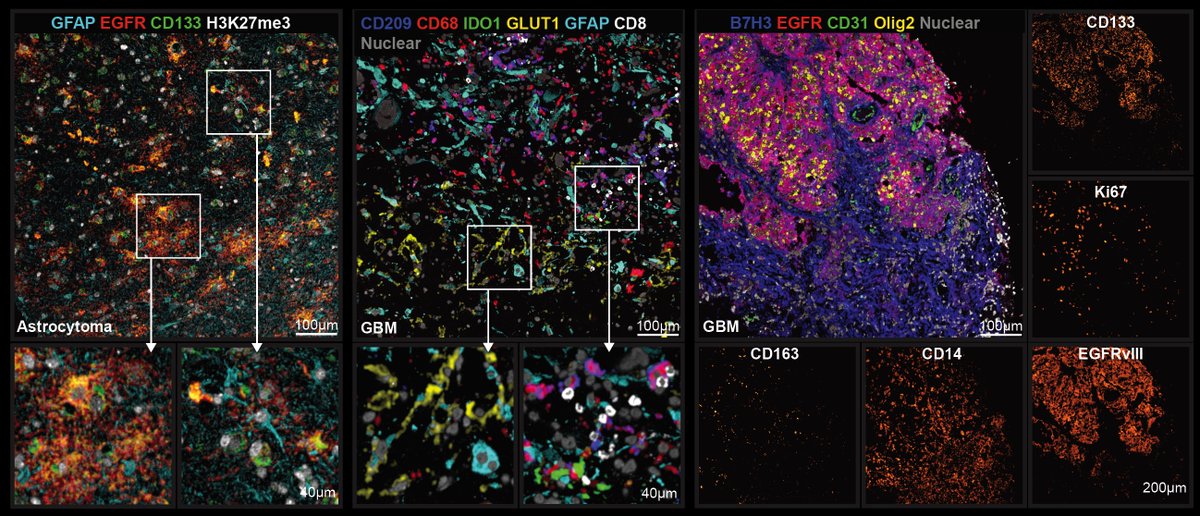
🧵 (1/8) Today, @BenOberlton and I are excited to share the preprint of our work on: A comprehensive multi-omic study of human gliomas, spanning diagnosis, treatment, and recurrence. We address the longstanding challenge of developing effective therapies for gliomas, which have shown limited response to immunotherapy and targeted treatments compared to other malignancies. #GliomaResearch #NeuroOncology #CancerImmunotherapy https://t.co/pE7ocTqgbj
I’m super excited to share what I’ve been working on for the last (many) years: a spatial + genomic + transcriptomic characterization of how the breast cancer microenvironment evolves through immunotherapy! (1/x) https://t.co/5bajDEQ2rP
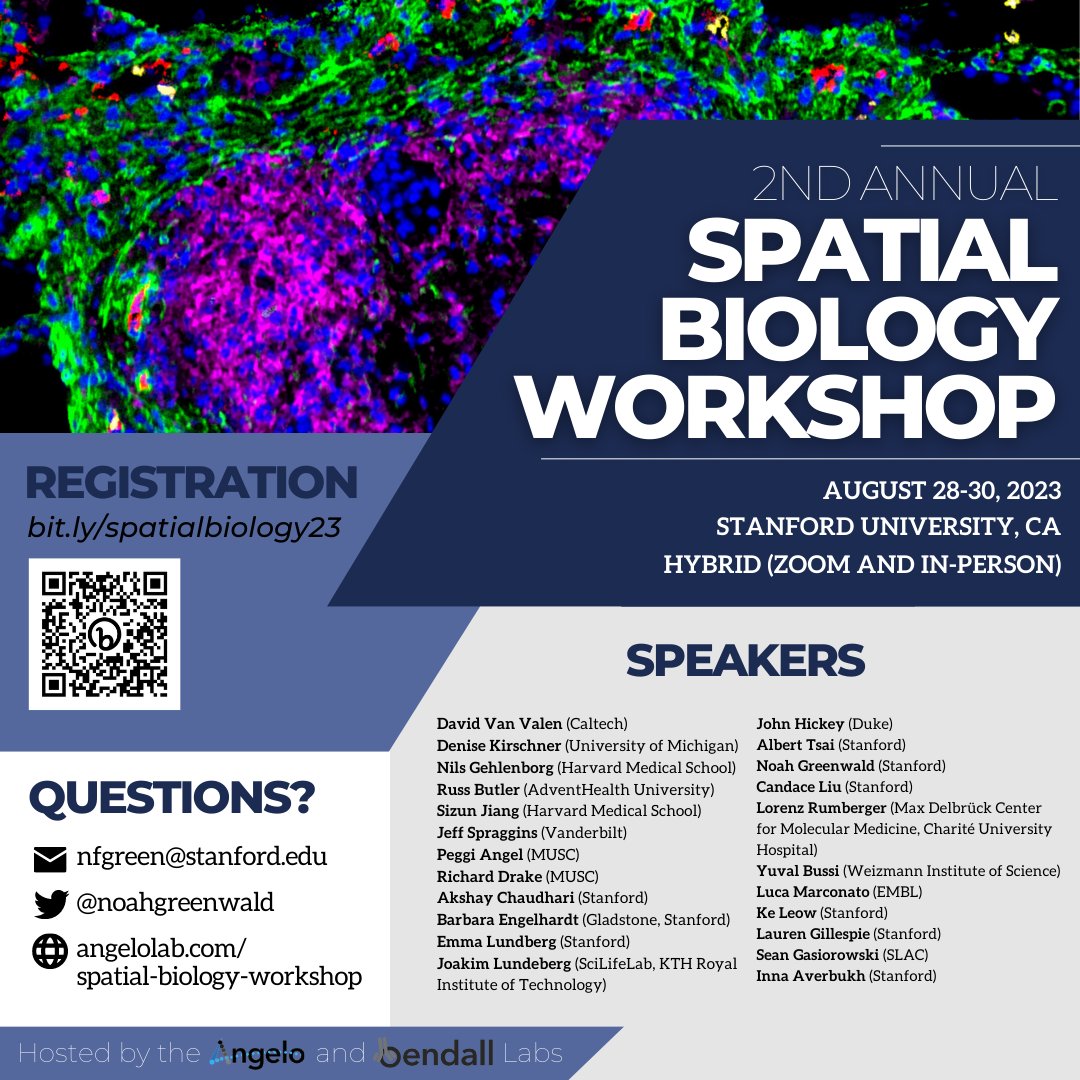
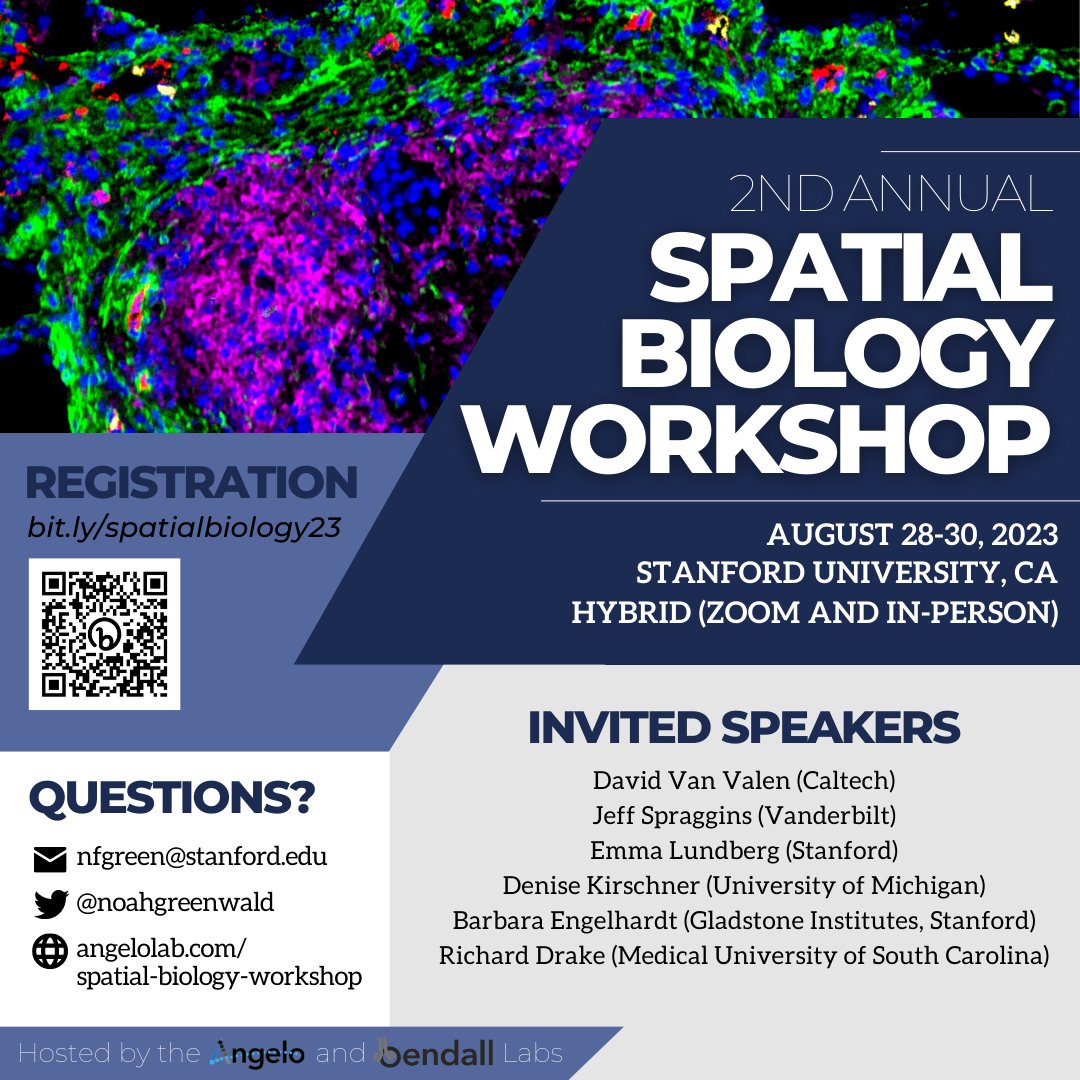
The second annual Spatial Biology Workshop is just two weeks away! This free event will showcase the power of spatial techniques to answer biological questions. We'll be showcasing new methods for data generation and analysis, as well as the novel findings they enable (1/x)
New #DeveloperStories episode! Today we chat with scientist @reemabaskar from the Genome Institute of Singapore. I love this episode because we have so much fun - talking about cellular plasticity/epigenetics via the story of Sally the Cell.🧪
👉 Spotify https://t.co/zIUOoFUanx
Excited to share our work from @MikeAngeloLab Synthesis, Characterization, and Applications of a Superior Dendrimer-Based Polymer for Multiplexed Ion Beam Imaging Time-of-Flight Analysis | Biomacromolecules https://t.co/s4o24AIIrY
Thrilled to share the preprint from my postdoc work in the @Bendall_Lab with @MikeAngeloLab and Thomas Montine at @StanfordMed looking at human microglia in situ in #aging and #Alzheimers disease by multiplexed proteomic imaging! https://t.co/L5OFsN9zAy
We're excited to announce that the 2nd annual Spatial Biology Workshop will be taking place August 28th-30th at Stanford. The workshop will cover new techniques and tools for generating and analyzing spatial data, as well as new biology discovered using spatial methods.
Excited to share my preprint with @Bendall_Lab and @WJGreenleaf on novel human lymphoid progenitors! Turns out they had been misidentified as myeloid progenitors thus far. Check out how we revealed their true identity in the tweetorial below 🧵https://t.co/x7nP81Cr1b
Feeling extremely grateful to be part of Stanford Pathology DE&I committee and its tremendous efforts and initiatives! As the first event of the season, we organised a fair where various booths highlighted various issues in Academia and Medicine. It was a huge success!!
Very excited to share SELMA, a computational method we developed for ATAC-seq & DNase-seq bias estimation, recently published in @NatureComms spearheaded by @ShengenShawnHu w input from @zozolaki@liul_stoch_stat @guertinlab Ke Deng & Tingting Zhang https://t.co/wzgDVimdQE
Very happy to announce that I will be opening my lab at the Genome Institute of Singapore @astar_gis in February 2023! Looking forward to joining the outstanding group of scientists at GIS https://t.co/kAmVFrzJqH
Ever wondered how the 'happy pill' Prozac impacts the brain? We did too!
Delighted to share our study on the effects of fluoxetine (Prozac) on 27 different rodent brain areas. Paper is out in Molecular Psychiatry & available for free reading. https://t.co/uhGcBT5NeT A thread 👇🏾
🔔Proud and excited to share our latest preprint!
We asked this simple question: do TADs really act as strong boundaries or can functional enhancer-promoter interactions be established across TAD boundaries?
https://t.co/aRXOA3hlgY
A 🧵on our main conclusions: (1/n)