Happy to share our latest work on the non-coding elements regulating Lhb which encodes the pituitary gonadotropic hormone that controls reproduction, involving an i-motif, eRNA and adjacent lncRNA through
distinct mechanisms in a sex-specific context.
https://t.co/04IxpsnLBg
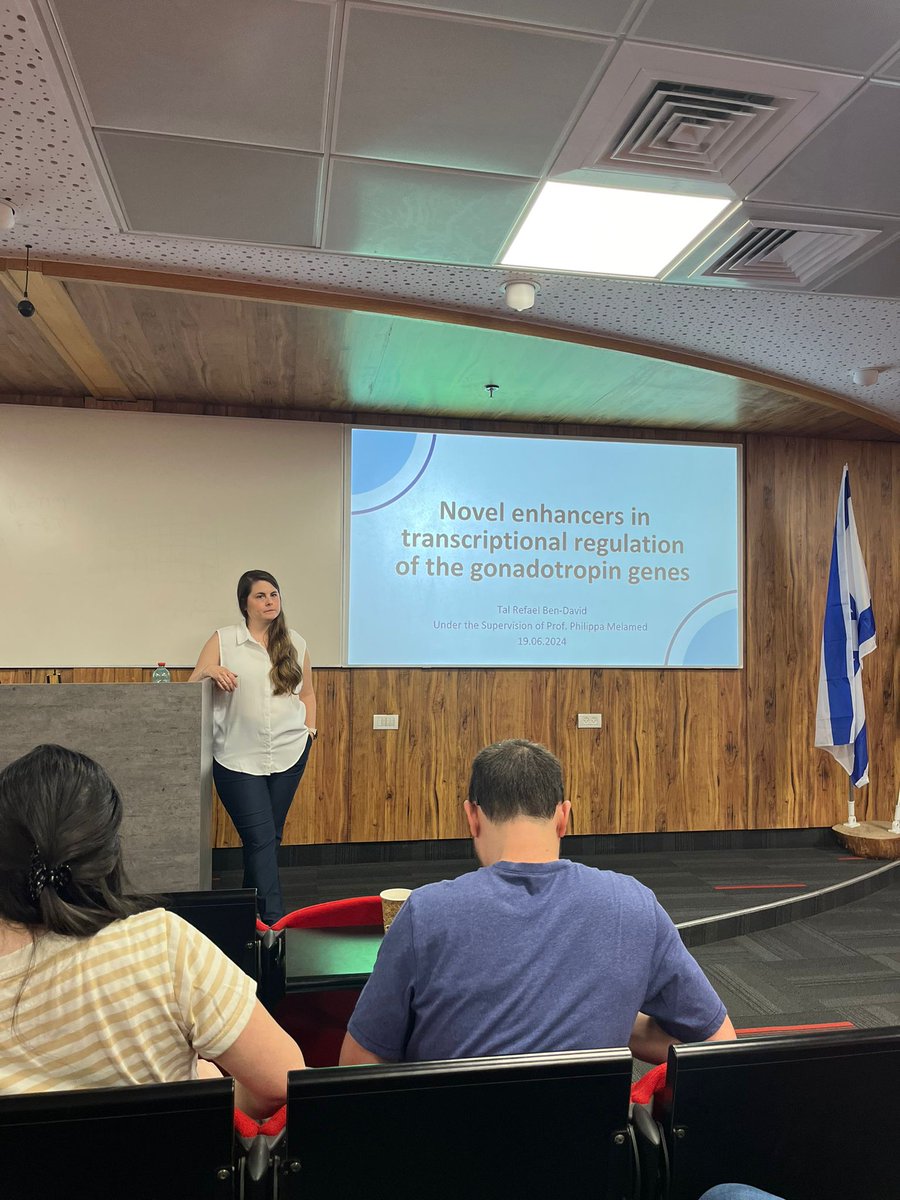
I can't believe my PhD has come to an end, thanks to my amazing lab that was my second home for 6 years and of course huge thanks to my amazing mentor Philippa @LabPMelamed 🙏🏻
Happy Hannuka to all our friends and colleagues. Wishing strength to all those facing and fighting racism in campuses overseas at this season of miracles. And a special thanks to all those protecting us.
Good to see our latest work by Lilach Pnueli from @LabPMelamed now out in @SpringerNature journal @GeneTherapy_SN
"Epigenetic repression of gonadotropin gene expression via a GnRH-mediated DNA delivery system"
DOI 10.1038/s41434-022-00325-6
Details coming soon....
Great to see latest from Ben Bar-Sadeh @BenBS8 in @BMCBiology today. "Epigenetic regulation of 5α reductase-1 underlies adaptive plasticity of reproductive function and pubertal timing"
https://t.co/0P9XWVUvNv
Interested in a postdoc in our lab, studying nucleosomes, transcription factors, and polymerases with cool single-molecule methods?
The Fulbright postdoctoral fellowship is open for applications.
https://t.co/zPQcRIXCm4
Please RT
Finally! our paper on the structure and dynamics of linker histones is officially published:
https://t.co/zZPN0k22Sg
Congrats @nucleosomezky and all the authors, and thanks to @LabPMelamed for a great collaboration!
Check out our latest research on how G-quadruplexes and transcription factors cooperate to shape the cell type-specific transcriptome.
https://t.co/wSZUeYkeEc
@GSchotta@FCernilogar@RichterLabUnipd
Check out our new paper online!
A new model to study chromatin and gene expression regulation using primary gonadotrope cells @LabPMelamed@dor_shalev1
https://t.co/9WiP8o1REI
We’re excited to share our first "wet lab" paper published in @CellReports!
Shlomi Dvir, @AArgoetti et al identified the RNA-bound proteome of human embryonic stem cells, and showed that RBPs are part of the pluripotency circuitry!
🧵!
@TechnionLive
https://t.co/qKNueVlhRg