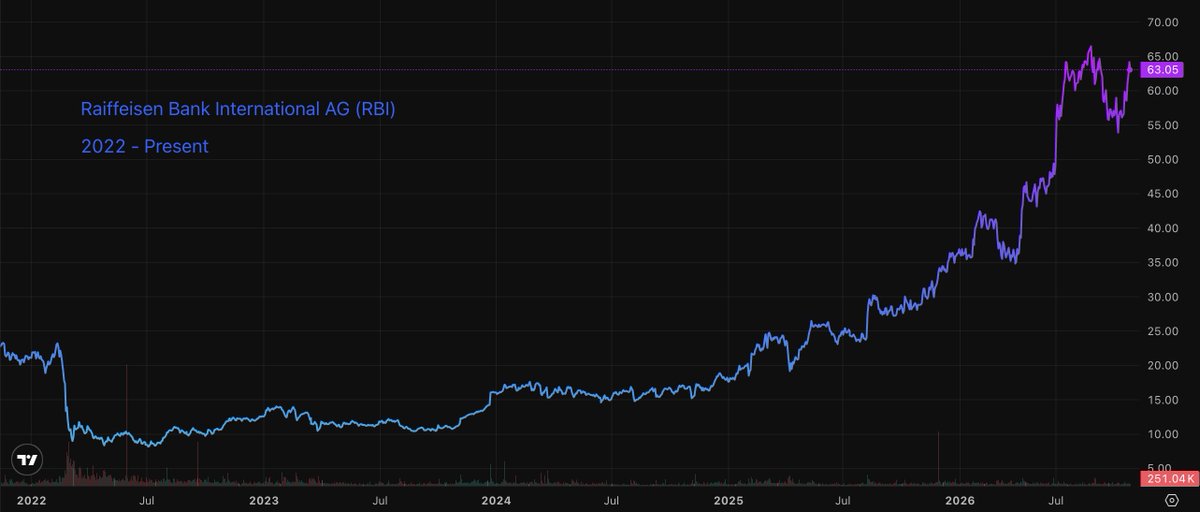
@jaredkushner might not steal as much as ukraine but owning Raiffeisen Bank International $RBI.VI is the play to profit from kushner and zelenskyy's corruption
The Company At The Centre Of Thiel Macro
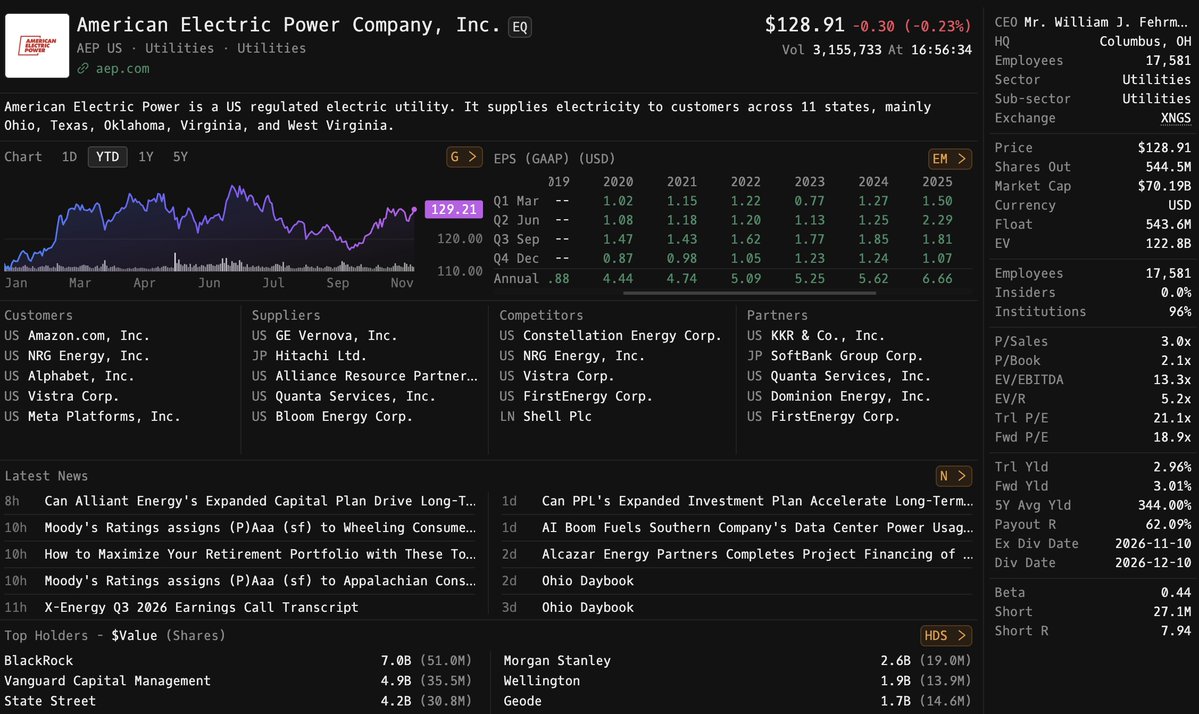
Peter Thiel's hedge fund Thiel Macro owns only 8 companies and 1 sits at the centre of them all: American Electric Power Co. $AEP
The 8 companies are all connected inside Thiel's book:
AEP & XE are developing a 960 MW nuclear project together in Indiana which is being funded by Amazon who will buy the plant’s power
AEP & FE are partnering to run 60 miles of 765 kV transmission line within the PJM area (Pennsylvania-New Jersey-Maryland)
AEP & FE are both shareholders in the Ohio Valley Electric Corporation (OVEC) which runs coal plants. A legacy generation rider offsets AEP Ohio’s financial losses from its ownership stake in OVEC and FE customers pay subsidies for the plants
AEP & VST co-own Ohio coal plants with government-subsidized power purchase agreements
AEP & VST own nuclear plants producing more than 6,400 MW and XE designs new reactors
All power strategies overlap in Ohio where AEP is headquartered
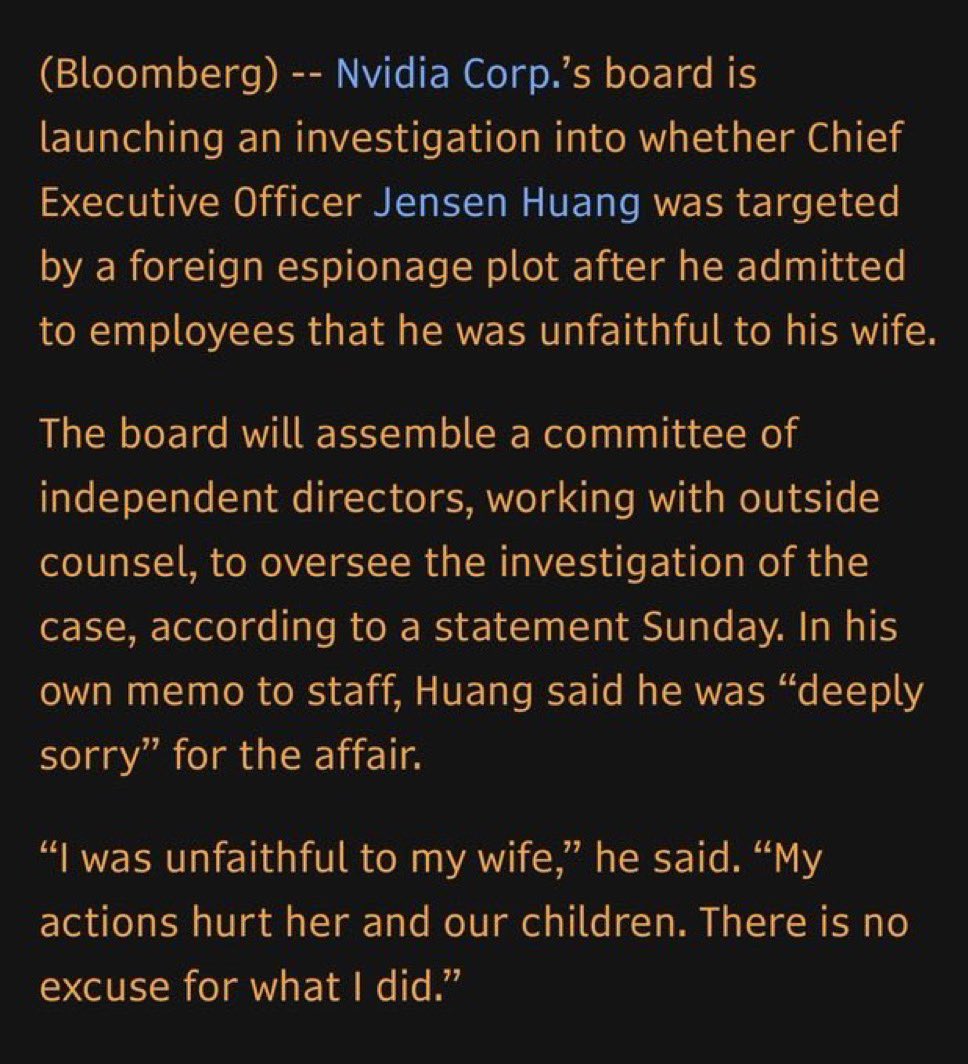
@compound248 The first scalp Trump offered the Dems is Jensen. Defensive move. But the move is also offensive as a warning shot to Xi Jinping who he’s meeting on Nov 18.
@michaeljburry The first scalp Trump offered the Dems is Jensen. Defensive move. But the move is also offensive as a warning shot to Xi Jinping who he’s meeting on Nov 18.
@gnoble79 Who leaked? The first scalp Trump offered the Dems is Jensen. Defensive move. But the move is also offensive as a warning shot to Xi Jinping who he’s meeting on Nov 18.
@TheBigBerbowski The first scalp Trump offered the Dems is Jensen. Defensive move. But the move is also offensive as a warning shot to Xi Jinping who he’s meeting on Nov 18.
@BeenThereCap@compound248 The first scalp Trump offered the Dems is Jensen. Defensive move. But the move is also offensive as a warning shot to Xi Jinping who he’s meeting on Nov 18.
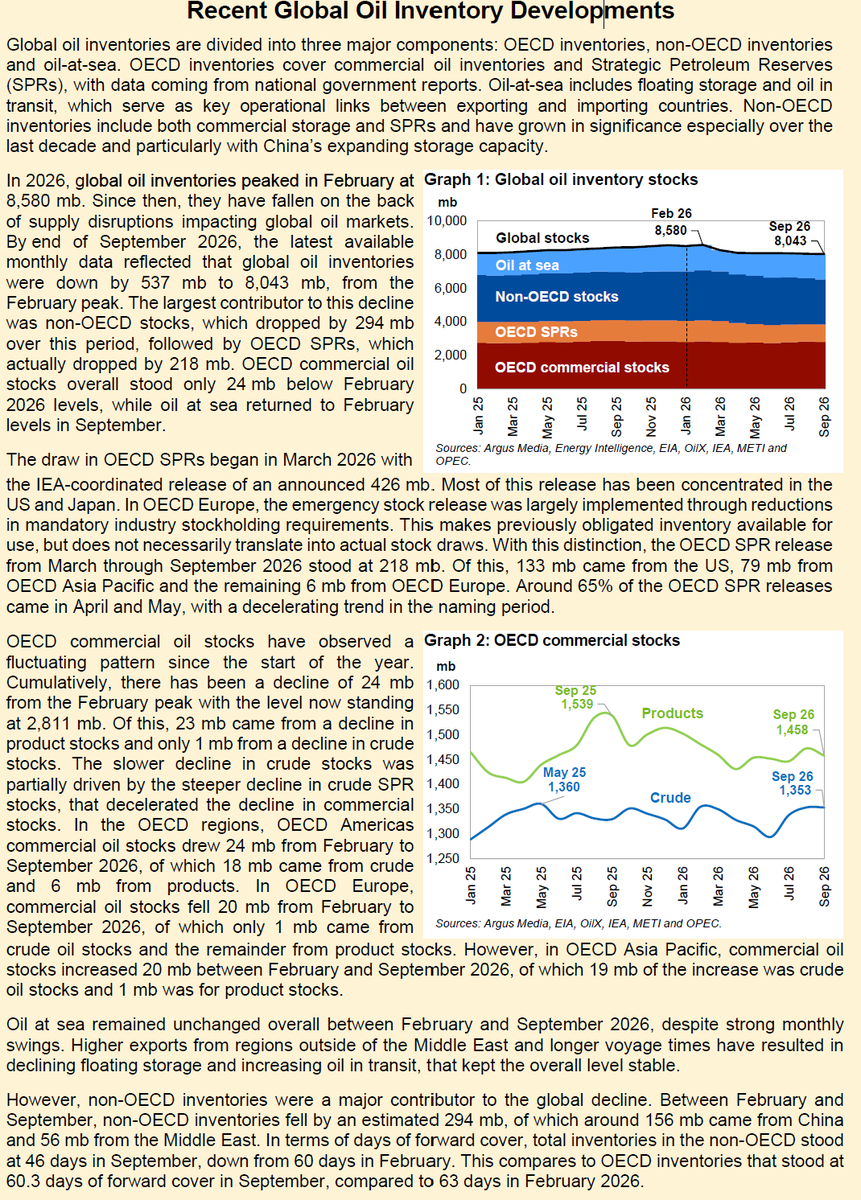
Feature article from OPEC on global oil invenotories
In 2026, global oil inventories peaked in February at
8,580 mb. Since then, they have fallen on the back
of supply disruptions impacting global oil markets.
By end of September 2026, the latest available
monthly data reflected that global oil inventories
were down by 537 mb to 8,043 mb, from the
February peak. The largest contributor to this decline
was non-OECD stocks, which dropped by 294 mb
over this period, followed by OECD SPRs, which
actually dropped by 218 mb. OECD commercial oil
stocks overall stood only 24 mb below February
2026 levels, while oil at sea returned to February
levels in September.
#oott
Two European Banks Meet Peter Lynch's Criteria
💰 Banque Cantonale de Genève $BCGE
💰 Raiffeisen Bank International AG $RBI.VI
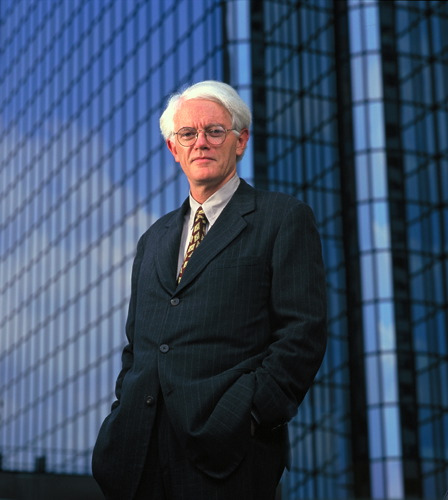
Peter Lynch believed bank stocks were undervalued and picked winners using the following criteria:
1. High equity-to-assets ratio
2. Low nonperforming loans (ideally under 0.5%)
3. Return on assets (ROA) of at least 1% or consistently improving
4. Cheap deposits or owned real estate
💰 Banque Cantonale de Genève $BCGE
1. Equity-to-Assets ratio of 7.2% is moderate
2. Nonperforming Loans are 1.06% which is higher than Lynch's benchmark of 0.5%
3. ROA is on target with 0.71% and improving
4. Cheap Deposits of CHF 21.39 billion backed by the Canton of Geneva from over 258,000 retail and corporate clients
💰 Raiffeisen Bank International AG $RBI.VI
1. Equity-to-Assets ratio of 10.5% is high
2. Nonperforming Loans are 1.7% which is higher than Lynch's benchmark of 0.5%
3. ROA is higher than Lynch's target at 1.07%
4. Cheap Deposits are anchored by €136.30 billion in customer deposits from all regional branches which serve millions of local members
LEM $LEHN is a Swiss manufacturer of electrical measurement solutions for data centre, robotics and solar
Dumped -7.22% today on earnings after management said on the call that the second half would be weaker and that a circuit board shortage would last through 2027
Products seem geared toward SMB clientele. Can't find any evidence of enterprise level customers
Bridgewater Co-CIO Karen Karniol-Tambour is leaving the firm to run Canada’s new sovereign wealth fund, the Canada Strong Fund. The fund is part of Prime Minister Mark Carney’s push to strengthen key Canadian industries and reduce economic reliance on the United States, and it will invest only in Canadian companies and projects.
Karniol-Tambour, 41, originally wanted to pursue academia but has worked at Bridgewater since graduating from Princeton in 2006. She rose to lead a 150-person investment research team that turned macroeconomic insights into systematic strategies, and her team wrote the firm’s signature market commentary, “Daily Observations.”
She was named co-CIO in 2023, alongside Greg Jensen and Bob Prince, and oversees Bridgewater’s Asia strategies.
The firm will not hire or promote a successor.
She holds Canadian, U.S. and Israeli citizenship.
Starting in early 2027, Canadian citizens will be able to invest directly in the fund through principal-protected securities called Canada Strong Notes.
Source: Bloomberg
We’re thrilled to welcome Jeremy to DC Studios! As part of the founding team behind the Marvel Cinematic Universe, he helped define the modern superhero movie and powered some of the biggest, most beloved comic book adaptations of our time. We can’t wait to see the stories he’ll bring to life, and how he’ll help build the future of DC for fans everywhere.
James and Peter began a new era for DC Studios, guiding it through a major transformation and bringing audiences fresh chapters of beloved stories, including Superman, Lanterns and Creature Commandos. We’re grateful for the passion and care they brought to this work, and for the lasting mark they’ve left on DC.
Taiwanese semiconductor analyst Andrew Lu’s take on the recent scandal involving Jensen Huang:
Why the US Seized on the Scandal to Draw Its Sword: Three Strategic Objectives
The purpose of this scandal is by no means to expose an affair. It is to force through three critical objectives that had made no headway in the tech war between the US and China because Jensen Huang opposed them.
The first cut: Completely destroy the legitimacy of Jensen Huang's lobbying against sanctions in Washington
Over the past two years, the loudest and most influential business leader in Silicon Valley opposing a total ban on chip exports to China has been Jensen Huang. He has told the White House the same thing all along: "Cede the Chinese market to Huawei, and the only one that ends up dead is the American tech industry."
But the moment US intelligence labels the woman named as Huang's affair partner "a spy working for China's Ministry of State Security who sought to steer the US toward easing its chip controls," every bit of lobbying he has done for looser controls takes on an entirely different political meaning. It becomes a national security matter, raising the possibility that a foreign spy used a secret relationship to exert influence.
Huang can no longer say a single word in defense of the Chinese market before Congress or the White House. If he does, he will be branded as someone who "fell for an intelligence operation and still hasn't come to his senses."
The second cut: Reverse the H200 export approvals for China and sever the link between Chinese shell companies and Southeast Asian smuggling networks
Look at the timing of the two reports.
On November 8, the very day the Jensen Huang scandal broke, The New York Times published an investigation for which its reporters went in person to dozens of Chinese companies that the US Commerce Department had approved to handle Nvidia's H200 chips. New Matrix in Beijing was one of them. According to the report, the registered addresses of companies approved to buy the chips turned out to be empty "ghost offices," and some of the companies had close ties to entities on US sanctions lists and to firms under contract with the Chinese military.
One exposé says Nvidia's CEO was having an affair with a female spy from Megaspeed, the Singapore company that handled the chip smuggling. The other says the Chinese companies Commerce approved to buy H200s are nothing but shell companies trading on behalf of the Chinese military. The aim of these two reports is clear. They are meant to pressure the Trump administration and the Commerce Department into fully revoking or freezing H200 export approvals for China and, going further, to force a sweeping overhaul of the loophole that let chips be diverted through data centers run by third parties in Singapore and elsewhere in Southeast Asia.
The third cut: Put Nvidia on a national security leash through congressional oversight and an independent investigation
As the world's largest company by market cap and the dominant force in AI, Nvidia has until now enjoyed broad autonomy in how it runs its business. But in the wake of this incident, the three congressional committees responsible for China, foreign affairs, and intelligence have begun examining Nvidia's internal security measures directly. They have even pressured Nvidia's board into forming an independent investigation committee to look into the company's own founder and CEO.
In effect, Washington's national security establishment has planted a watchdog right inside Nvidia's board. From now on, the goal is to make sure that everything, down to where each and every one of Nvidia's high performance chips ends up, conforms strictly to US national security strategy. It also means there is no more room for skirting the edge of the rules or releasing chips with specs specially tailored to regulatory thresholds.
Conclusion
"The scandal was a detonator set off right on cue. The real goal was to plug the holes chips were leaking through."
Jensen Huang made the fatal mistake of letting his guard down in his private life and personal relationships. In the end, he fell into a honey trap, the textbook tactic of intelligence warfare, and was compromised. America's national security and intelligence agencies ruthlessly exploited the weakness his private life had exposed. As a result, they solved three thorny problems in a single stroke: Nvidia's lobbying at the White House to ease restrictions on China, the flow of H200 chips into Chinese shell companies, and smuggling routed through Singapore.
The closed congressional hearing set for November 18 will be the decisive turning point at which the US moves in earnest to tighten its sanctions on China's AI compute even further.