The call to connect “Global Indian Talent” with Bharat’s scientific and innovation future has received an overwhelming response, with thousands of applications received under the Prime Minister Research Chair (PMRC) Scheme.
This is an opportunity for accomplished Indian-origin researchers and professionals across the world to contribute to Bharat’s next chapter of R&D-led growth and nation-building and be part of India’s journey towards an Aatmanirbhar and Viksit Bharat.
Visit website for more details: https://t.co/YERBem9H6C
#PMRC #ViksitBharat #Anusandhan #ResearchInIndia #Innovation #HigherEducation
@narendramodi@PMOIndia@JoshiPralhad@PrinSciAdvGoI@MEAIndia@IndiaDST@PIB_India@airnewsalerts@DDNewslive@mygovindia
Innovation remains at the heart of the Institute's research agenda, driving the development of science-based solutions to some of the country's most pressing conservation challenges.
This commitment was showcased last week at the Sustainability Research and Innovation Congress (SRI2026) in Cape Town, South Africa, where our researchers presented significant progress on the Geospatial Risk Index Tool (GSRIT) for Human–Nature Conflict in the Tsavo Landscape.
Principal Scientists Dr. Joseph Mukeka and Dr. Fredrick Lala, highlighted findings from the ongoing study that leverages geospatial technologies to map human–wildlife conflict hotspots, identify the underlying drivers of conflict, assess socio-economic impacts, and analyse illegal wildlife trade.
By integrating these datasets, the project generates evidence-based solutions aimed at strengthening coexistence between communities and wildlife across the Tsavo landscape.
Beyond Kenya, the research has been expanded to Botswana, South Africa and Japan, enabling comparative studies across biodiversity-rich countries to identify common challenges, emerging trends and transferable conservation solutions.
The findings are expected to inform conservation planning, strengthen human–wildlife conflict mitigation strategies, enhance community tolerance towards wildlife, and support sustainable landscape management. In addition, the research will contribute to policy formulation and provide scientific evidence to guide decision-making in addressing the growing threats facing Kenya's biodiversity.
The project is being implemented under the Africa–Japan Collaborative Research (AJ-CORE) programme and is funded through the National Research Fund (NRF) Kenya.
The congress held from June 22-26th brought together researchers, academics, policymakers and conservation practitioners from more than 50 countries across Africa and beyond, providing a global platform for sharing innovative research and fostering international collaboration on sustainable development.
Reflecting on the past year, it has been a real pleasure to be part of the TICAD Conference, the DPI Summit, and also in seeing a book on WEMS published. Here, I have shared my thoughts. Wishing each and every one of you a wonderful 2026!
https://t.co/OB7TTBiLwd
Reflecting on the past year, it has been a real pleasure to be part of the TICAD Conference, the DPI Summit, and also in seeing a book on WEMS published. Here, I have shared my thoughts. Wishing each and every one of you a wonderful 2026!
https://t.co/OB7TTBiLwd
Dr. Shadrack Ngene from the State Department for Wildlife met with Dr. Remi of RESTEC, Japan, and Ms. Liz from the DPI Foundation during a networking session at the ongoing Global DPI Summit 2025 in Cape Town, South Africa.
The team discussed potential collaboration to develop a Digital Public Infrastructure (DPI) framework for the wildlife sector in Kenya. The DPI Foundation works with countries globally to support the design and implementation of national DPI initiatives, and further discussions on this partnership will continue after the Summit.
The Global DPI Summit 2025 provides a dynamic platform for knowledge exchange and collaboration, advancing countries’ DPI journeys. Building on the momentum of its inaugural edition, this year’s Summit aims to translate dialogue into action — catalyzing safe, inclusive, and innovative DPI design, implementation, and governance.
The DPI agenda aligns with the Kenya Kwanza manifesto, which prioritizes the development of a national digital superhighway to enhance digital transformation across sectors, including wildlife management and conservation.
#plan2action
#4wildlifeandpeople
CS Tourism -Rebecca Miano: Yokohama, Japan
Honoured to represent Kenya at the TICAD 9 side event on Digital Public Infrastructure (DPI) and Regional Command & Control Centres. This initiative is vital in tackling human-wildlife conflict, transboundary conservation.
CS @rebecca_miano is representing Kenya at TICAD 9's Digital Public Infrastructure (DPI) side event in Yokohama, advocating tech-driven responses to human–wildlife conflict. #KenyaJapanTies
🌍 KENYA & TANZANIA UNITE TO TACKLE HUMAN–NATURE CONFLICT THROUGH TECHNOLOGY & REGIONAL COOPERATION 🌿
📍 Yokohama, Japan – 20 August 2025
The Governments of Kenya and Tanzania, on behalf of the Lusaka Agreement, have announced a groundbreaking initiative to transform how Africa addresses human–nature conflict, wildlife crime, and environmental threats.
With escalating cases of human–wildlife conflict, poaching, illegal logging, and land pressure across the continent, the need for a coordinated, tech-driven response has never been more urgent.
💡 Key Highlights from TICAD9: 🔹 Launch of a Regional Command & Control Centre to be hosted in Nairobi at the Lusaka Agreement Task Force (LATF)
🔹 Development of a Digital Public Infrastructure (DPI) to connect wildlife, customs, immigration, and enforcement agencies across Africa
🔹 Use of satellite data, AI, and predictive analytics to monitor ecosystems, track threats, and provide real-time early warning systems
🔹 Creation of a training & research hub for African youth, scientists, and tech innovators
🌐 Backed by global partners including RESTEC (Japan), JICA, UNOOSA, UNDP and more — this is a historic shift from fragmented, reactive approaches to a unified, data-driven solution for Africa’s natural heritage.
🎙️ Voices from Yokohama:
🗣️ H.E. President William Ruto 🇰🇪
“At TICAD9, we mark a watershed moment in environmental governance. These initiatives will transform environmental data into decisive action against poaching, illegal logging, wildlife crime and human-nature conflicts.”
🗣️ Hon. Rebecca Miano, CS for Tourism & Wildlife 🇰🇪
“Human–nature conflict is not just a conservation issue—it’s a development and governance challenge. A unified digital enforcement infrastructure is vital.”
🗣️ Hon. Dr. Pindi Chana, Minister of Natural Resources, 🇹🇿
“Digital tools and regional cooperation will help us protect biodiversity while safeguarding communities.”
🌱 This partnership marks a major leap forward in securing a climate-resilient, peaceful, and biodiverse future for Africa.
Kenya is proud to be at the forefront of this transformative journey.
#TICAD9
#plan2action #4wildlifeandpeople
🌍 KENYA & TANZANIA UNITE TO TACKLE HUMAN–NATURE CONFLICT THROUGH TECHNOLOGY & REGIONAL COOPERATION 🌿
📍 Yokohama, Japan – 20 August 2025
The Governments of Kenya and Tanzania, on behalf of the Lusaka Agreement, have announced a groundbreaking initiative to transform how Africa addresses human–nature conflict, wildlife crime, and environmental threats.
With escalating cases of human–wildlife conflict, poaching, illegal logging, and land pressure across the continent, the need for a coordinated, tech-driven response has never been more urgent.
💡 Key Highlights from TICAD9: 🔹 Launch of a Regional Command & Control Centre to be hosted in Nairobi at the Lusaka Agreement Task Force (LATF)
🔹 Development of a Digital Public Infrastructure (DPI) to connect wildlife, customs, immigration, and enforcement agencies across Africa
🔹 Use of satellite data, AI, and predictive analytics to monitor ecosystems, track threats, and provide real-time early warning systems
🔹 Creation of a training & research hub for African youth, scientists, and tech innovators
🌐 Backed by global partners including RESTEC (Japan), JICA, UNOOSA, UNDP and more — this is a historic shift from fragmented, reactive approaches to a unified, data-driven solution for Africa’s natural heritage.
🎙️ Voices from Yokohama:
🗣️ H.E. President William Ruto 🇰🇪
“At TICAD9, we mark a watershed moment in environmental governance. These initiatives will transform environmental data into decisive action against poaching, illegal logging, wildlife crime and human-nature conflicts.”
🗣️ Hon. Rebecca Miano, CS for Tourism & Wildlife 🇰🇪
“Human–nature conflict is not just a conservation issue—it’s a development and governance challenge. A unified digital enforcement infrastructure is vital.”
🗣️ Hon. Dr. Pindi Chana, Minister of Natural Resources, 🇹🇿
“Digital tools and regional cooperation will help us protect biodiversity while safeguarding communities.”
🌱 This partnership marks a major leap forward in securing a climate-resilient, peaceful, and biodiverse future for Africa.
Kenya is proud to be at the forefront of this transformative journey.
#TICAD9
#plan2action #4wildlifeandpeople
Join us at a pivotal high-level session attended by President of Kenya, H.E. Dr. William Ruto @williamrutoKE at #TICAD9 focused on #DigitalPublicInfrastructure for Addressing nature conflicts in Africa. Register for participation https://t.co/Ugt3ShIIjT @ticad_official
Join us at a pivotal high-level session attended by President of Kenya, H.E. Dr. William Ruto @williamrutoKE at #TICAD9 focused on #DigitalPublicInfrastructure for Addressing nature conflicts in Africa. Register for participation https://t.co/Ugt3ShIIjT @ticad_official
Join us at a pivotal high-level session attended by President of Kenya, H.E. Dr. William Ruto @williamrutoKE at #TICAD9 focused on #DigitalPublicInfrastructure for Addressing nature conflicts in Africa. Register for participation https://t.co/Ugt3ShIIjT @ticad_official
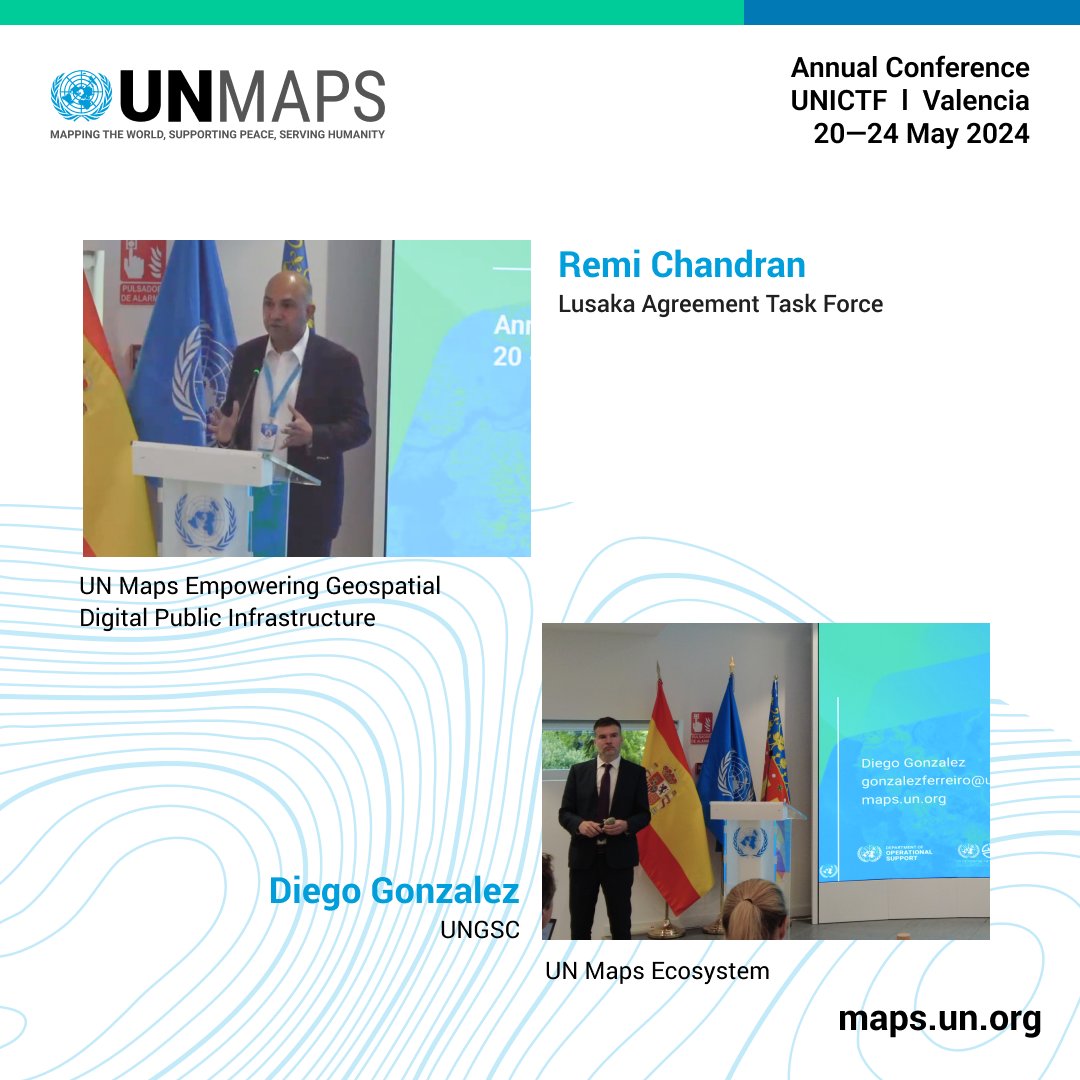
#UNMapsConference
Mr. Remi Chandran outlined the critical role of Digital Public Infrastructures for the #UN and SDGs, discussing the Lusaka Agreement's collaboration on wildlife monitoring.
Mr. Diego Gonzalez detailed UN Maps' hybrid tech approach, and ecosystem structure.
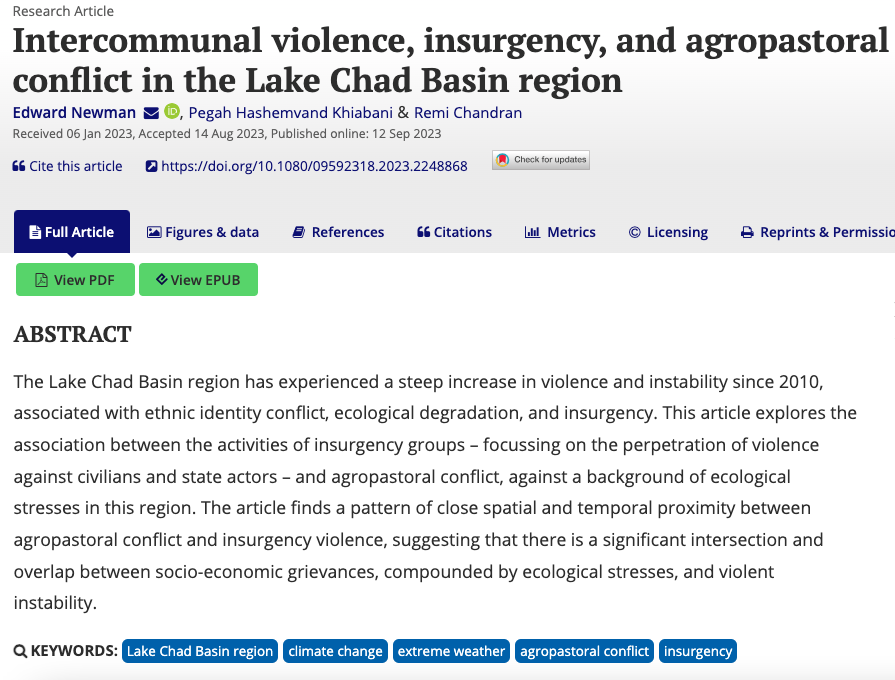
Out now open access with @PhKh66 and @remichandran we explore the association between insurgency and agropastoral conflict in the Lake Chad region against a background of ecological stresses, finding a significant intersection and overlap https://t.co/fwnJx9oHxf
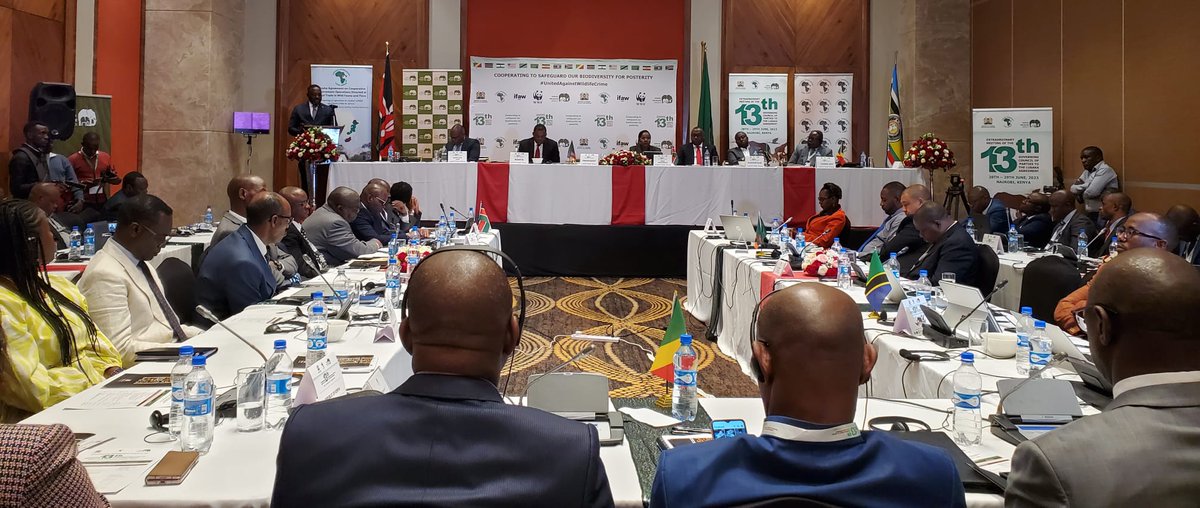
On 28/6/23, the 13th meeting of the Lusaka Agreement Governing Council was held in Nairobi. Ministers from Kenya, Zambia, Tanzania, and Congo Brazzaville attended. The LATF Member Countries share a common goal to combat all forms of wildlife crime. #UnitedAgainstWildlifeCrime