This is an interesting initial HTMA for a 7 year old boy with a diagnosis of Autism.
This is many ASD tests now I’ve seen that present initially with a high cadmium reading.
Aluminum is elevated as well, but this is far more common, especially in the ASD population.
It’s well-documented that lead and aluminum disrupt neurodevelopment, but less well-known that cadmium absolutely can as well.
Cadmium has a massive impact on zinc, especially, because of their physiochemical similarities.
For brain development, zinc is probably the most important mineral.
Other imbalances exist here and are important (low calcium, low magnesium, low zinc, 4 lows, low na/k ratio) but the high cadmium reading is likely the most relevant with respect to the ASD diagnosis.
I’m seeing more of this metal pop up in these developmentally delayed kids.
Fantastic conversation with Dave Gornoski
We discussed research outside the mainstream, how to fix our fallen world, biophysics, and practical application of things like magnesium, B1, grounding, sunlight, and more
I highly recommend it
Banana is one of the most common fruits added to smoothies.
Unfortunately, it lowers the polyphenol content of the smoothie.
Consider substituting mangoes or avocados.
Do You Add a Banana to Your Smoothie?
Research shows that bananas have an enzyme in them called polyphenol oxidase that significantly degrades polyphenols in berries.
So if you are adding berries and banana to a smoothie, be aware that the level of polyphenols from the berries will be extremely low - degraded from the oxidase.
Intakes of 400-600 mg polyphenols per day offer cardiometabolic, cognitive protection and more.
Tea, coffee, apples, berries, and chocolate or cocoa products – have been linked to a lower risk of developing chronic diseases such as cardiovascular disease, metabolic disorders, and cancer.
https://t.co/04XiCLn8A1
In Chris Exleys original research on aluminum and fish, nearly 40 years ago, he was exposing salmon to very small quantities of aluminum in an experimental fish tank situation and observing how the aluminum would affect the fish.
The amounts of aluminum he was exposing the fish to were within regulations for aluminum in say drinking water today.
Even this small amount of aluminum was causing extreme toxicity in the fish.
But this was not the most interesting aspect of his original research.
What was most interesting about these experimental situations was that the fish, in the early stages of toxicity, would exhibit characteristic (repeatable) BEHAVIORAL CHANGES as a consequence of the aluminum in their fish tank.
These early behavioral warning signs of aluminum toxicity were the fish becoming introverted or looking for hiding places in the fish tanks. Tho there were none.
Does this sound similar to what happens to children with autism and other developmental delays?
A sort of contraction in their social skills and social abilities where they look for hiding places, as it were, in their daily lives.
It sounds remarkably similar to changes we see in humans with aluminum toxicity.
Hyper-neurotic health content on this app is just performative optimization designed to make you feel inadequate.
“Oh, you’re not sunning your anal chakra at 37° while grounded + eating beef liver? Doomed, man.”
No one actually lives this way.
Never let dorks w/o friends rob you of your finite resources in this short life.
"Men who prioritize fatherhood may lose some sleep, gain some extra weight & enjoy less free time, but they can also discover a richer life with greater meaning, purpose & connection. And when it comes to brain health and mental fitness, becoming a father is one of the best things you can do." https://t.co/ddL9y5Ncci
New Jersey school has required every freshman to hike 55 miles on the Appalachian Trail for 53 years straight.
At St. Benedict’s Prep in Newark, this isn’t optional — it’s a mandatory 5-day rite of passage before becoming a sophomore.
Many students have never hiked or camped before. They train together in the spring, then get split into small teams where each kid gets a critical role: navigator, medic, cook, captain, etc. No one knows everything — they must rely on each other.
With minimal adult supervision, they hike rain or shine, facing blisters, sore muscles, and real challenges head-on. As one administrator put it: “The only way we can get through this is if we work together.”
The result? Teens who return more confident, resilient, and bonded — proving that real growth happens when you step away from screens and into the wilderness.
What an incredible tradition! Parents, educators, and anyone raising tough kids — this is gold.
Who else believes we need more experiences like this?
Voyager 1 is 24 billion kilometers from Earth.
It communicates with us using a 23-watt transmitter.
Less than a refrigerator light bulb.
The signal takes 22 hours to reach us, traveling at the speed of light.
By the time it arrives, it's 20 billion times weaker than the power of a digital watch battery.
NASA's Deep Space Network picks it up using 70-meter dish antennas cooled to near absolute zero to reduce electronic noise.
The engineering required to hear a 23-watt signal from 24 billion km away is arguably more impressive than the spacecraft itself.
Launched 1977.
Still transmitting.
Still being heard.
We built something that works perfectly, 47 years later, in conditions no one has ever tested in.
That's what engineering for the long term looks like.
Cooking with inositol as a sugar substitute is one of the simplest and easiest ways to incorporate it
It's about 50% as sweet as table sugar by weight, and has been studied in humans at doses ranging up to 1-3tbsp (6-18g) per day
Mixing it into yogurt, oatmeal, tea, or homemade ice cream are a few of my favorite ways to use it
Just recorded two incredible podcast episodes this week with @DTHshow and @Decentralizedd_
Keep an eye out for them dropping the next few weeks
Would love to keep the momentum going while I have some time off, if anyone else wants to record something just shoot me a message
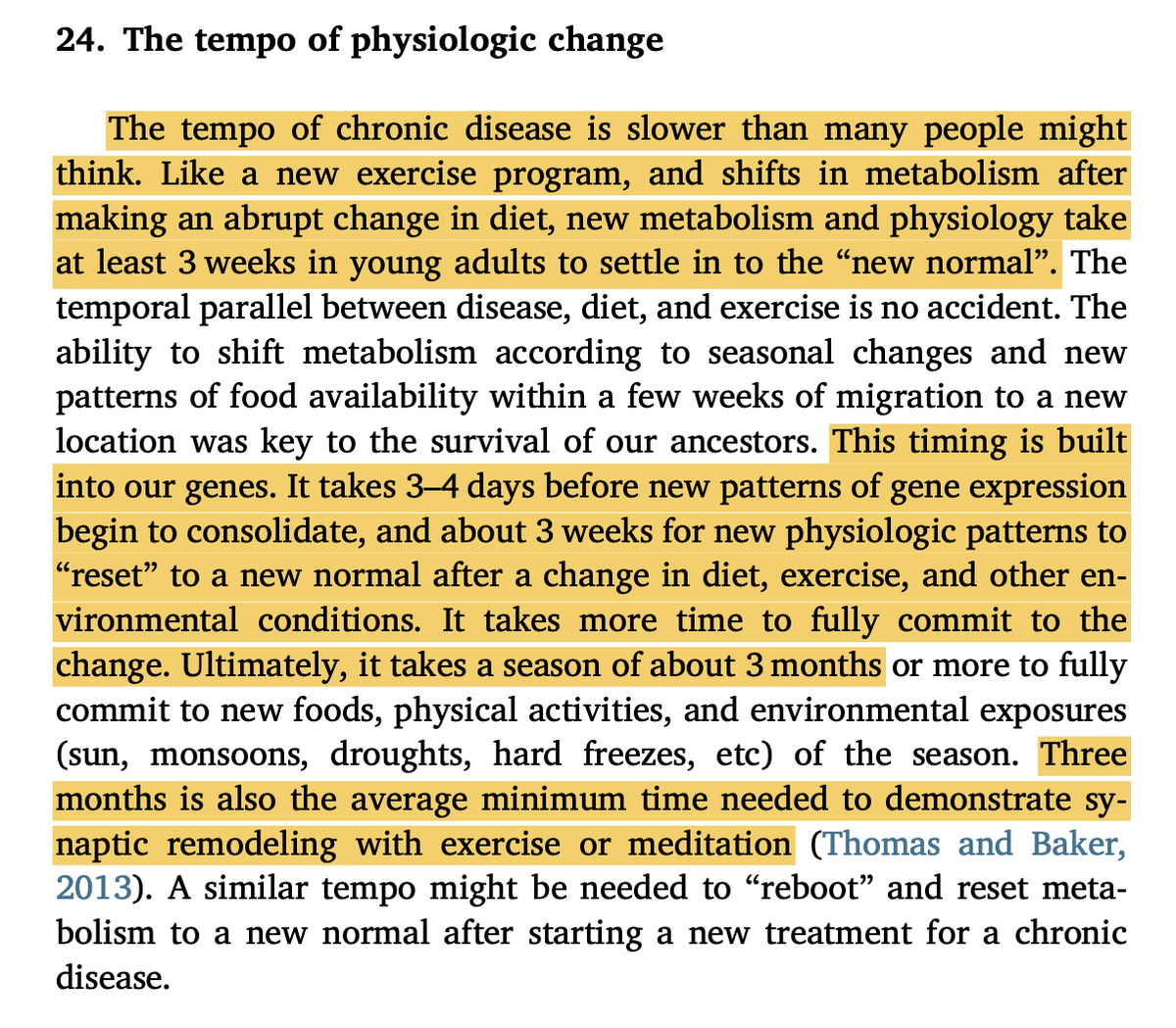
Biology doesn't work in days.
It works in weeks and months.
Most people try something for 3-5 days, notice nothing, and quit.
But they quit exactly when the biology was just getting started.
A few examples from my own research:
1) DHA and seafood
You start eating oysters and sardines.
One week in — nothing noticeable.
But your body is already incorporating DHA into cell membranes.
Your omega-3 to omega-6 ratio is shifting.
That shift takes weeks to months to show up as cognitive clarity, improved sleep and reduced inflammation.
2) Grounding
If you've spent years wearing rubber-soled shoes — your body's electron reservoir is depleted.
Gaétan Chevalier's research:
If a person has been completely ungrounded for years, it takes approximately 2-3 months of regular grounding to fully "recharge" the body's internal electron battery to its highest optimal level.
One or two days barefoot and you feel nothing.
Two months in and the battery is full.
3) Midday sunlight and testosterone
The UVB study showed chronic daily exposure — not acute single doses — produced significant hormonal effects.
One large single dose had weaker effects.
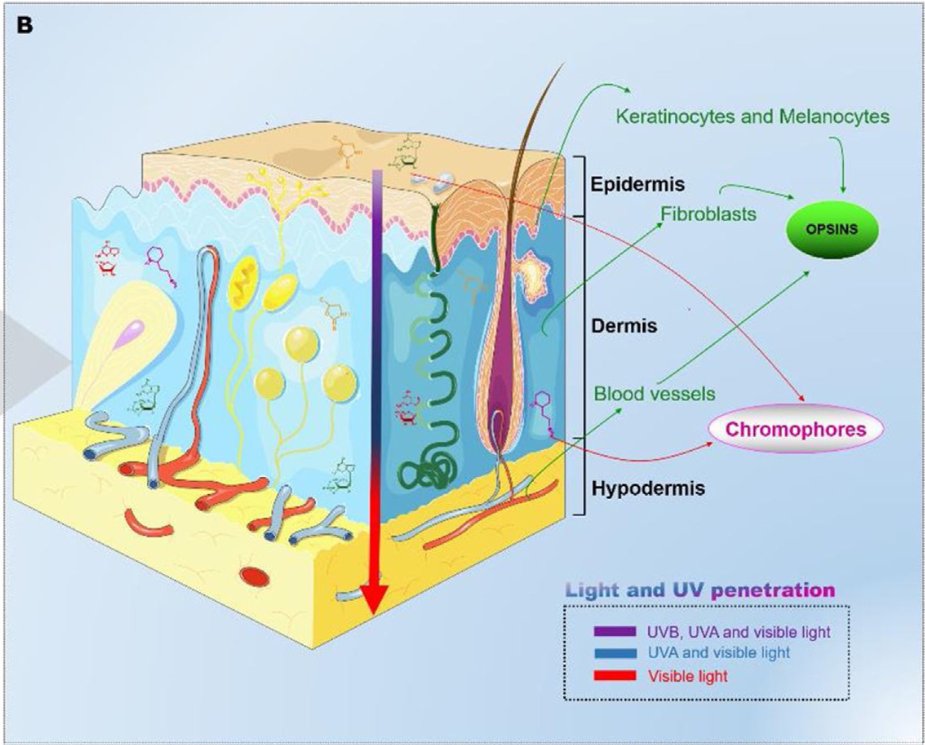
Daily 20-30 minutes over weeks is what moves the needle.
4) Dopamine receptor recovery
Remove the stimulus — whether it's porn, social media, or any high-dopamine input.
The first 2-4 days you feel awful.
Withdrawal is real.
Dopamine receptors begin recovering around day 7-14.
A meaningful reboot takes at least 30 days.
The same logic runs in reverse.
5) Cancer
It takes 4-5 years for a single cell to become a tumor 0.5-1 cm in size — the minimum detectable by current technology.
You can't reverse that in a week.
Chronic conditions don't appear overnight.
They won't resolve overnight either.
We live in an instant gratification world.
But biology operates on its own timescale — and it doesn't care about your impatience.
The intervention didn't fail.
You just quit before the biology had time to respond.
Saffron restores motivation + spark for life in clinical trial.
Anhedonia is that feeling of meh. I don't care. Whatever.
Yet adding on 30 mg of saffron reduced anhedonia substantially over antidepressants alone.
This coincides with increases in dopamine neurotransmission and BDNF signaling.
Reminder that mulberries contain even higher levels of brain-protective anthocyanins than blueberries and are fruiting as we speak
Find a tree, gather some, freeze them, juice them, bake a mulberry pie, or make homemade mulberry ice cream for your kids