You could watch the news 24/7 & not know that:
Our planet’s at its hottest in 120,000 years.
Methane levels are their highest in MILLIONS of years.
CO2 levels their highest in 3 MILLION years.
We're in a climate crisis. Denying it won't solve the problem.
#ActOnClimate #climate #energy #panelsnotpipelines
20 years ago, I asked NR CEO John Armitt about buddleia, not just on linesides but in brickwork. "We are saving up a huge problem for the future," he replied. I'd been prompted to ask after taking this picture of a bridge on the GCR in 2006. You can see his point. 20 years ago!
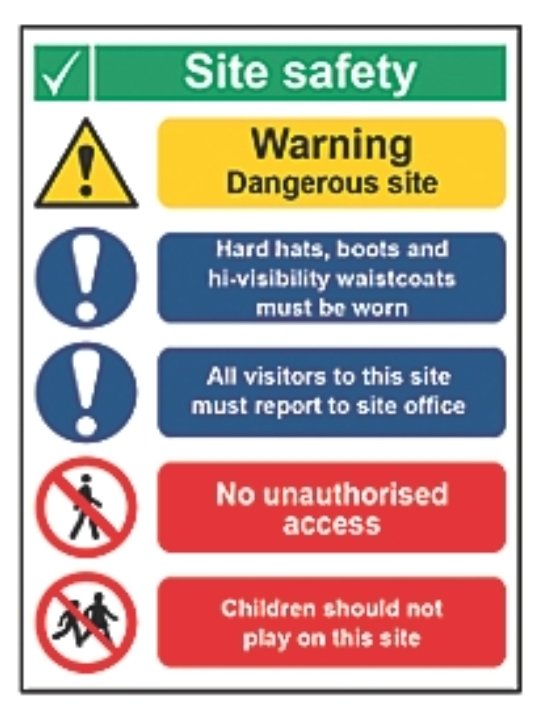
@Conor435_@philatrail All are valid for the situation, though I do agree a single, cohesive sign like the one below for building sites might improve that.
The underlying issue is that these crossings are incompatible with the modern railway and should, as far as possible be replaced.
All level crossings should be replaced if possible, but private user worked ones are probably amongst the worst kind out there now, and most pressing to upgrade/replace. As report states, a tragedy for delivery drivers making an error, but could have been much more severe.
RAIB chief “Private user worked crossings are a 19th century concept operating in a 21st century world of more dense, faster rail services, more rural housing and abundant home deliveries. Most road users are unfamiliar with this type of crossing and with how to use them safely."
RAIB chief “Private user worked crossings are a 19th century concept operating in a 21st century world of more dense, faster rail services, more rural housing and abundant home deliveries. Most road users are unfamiliar with this type of crossing and with how to use them safely."
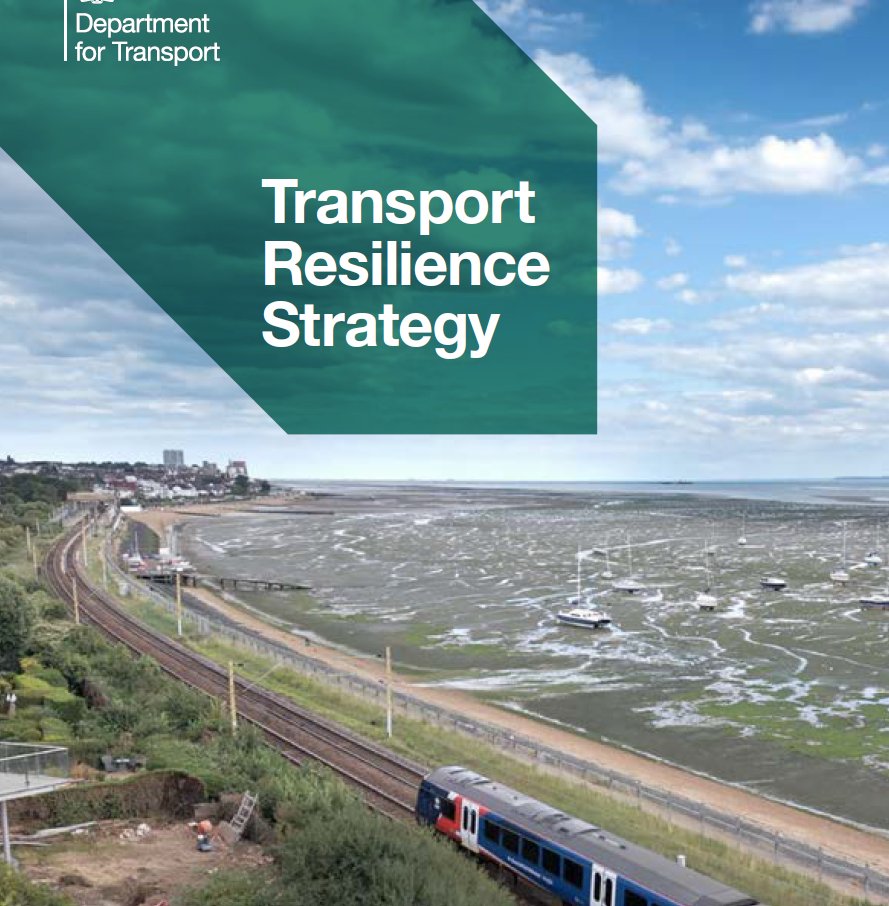
I like the irony that the front cover of the DfT's transport resilience strategy includes a line where most of the electrification resilience work was cancelled due to the budget being moved elsewhere https://t.co/HXbe1OIxkM
Britain is running 10% fewer trains today than pre-COVID, yet ridership is up by 110%. This means more overcrowding (already bad in 2019) and less choice for passengers. The good thing? We can actually fix this quite quickly.
My feature in @RAIL: https://t.co/jYavcLuO8e
To everyone getting their knickers in a twist…
All because @andyburnham suggested a sensible conversation about freedom of movement
…do you perhaps need reminding of this?
This is, I think, the third time that a new railway station’s patronage has been double the predicted volume. Transport analysts: does this mean the current predictive model is broken? And wouldn’t that shift up the business case for other dismissed reopenings / new stations…?
Kaleb Cooper, the farm manager on Clarkson's Farm, worked out his own hourly rate from the farming side of his business and it came to fifty pence. He said so on a podcast. His books pay rather better.
Kaleb is not a television character. He is a working contractor who was farming in the Cotswolds before the cameras came and will be when they go, and he has done the sums that most farmers do in their heads and keep to themselves.
- Hourly rate from farming, by his own count: 50p.
- Hourly rate for the woman who stacks the shelf his wheat ends up on as a loaf: at least £12.71.
- Price of the loaf: about £1.40.
- What the wheat in it earns the farmer: about 10p.
- The farmer's profit on it, measured in 2022: 0.09p.
The whole chain is paid before the man who grew the thing. The supermarket takes its margin, the miller his, the baker his, the haulier his, the fertiliser company its, and what is left when the harvest has been through all of those hands is the farmer's. His share has been shrinking for decades, because he is the only link who cannot pass the cost on. He cannot hold out for a better price for long either. The seed, the fertiliser and the diesel were paid for months before harvest, and grain costs money every week it sits in the shed.
Selling direct is the one place it is different. A farmer who sells off his own farm, through his own shop, to a customer who drove there, keeps far more of the price. That is why Diddly Squat had queues out onto the road, while Clarkson's first year of actually farming the place made him a profit of £144.
Kaleb is in his twenties and has three children and is one of the best farmers in Oxfordshire, and his trade pays him about a 25th of the legal minimum wage. The country wants its food cheap, and it has got exactly that.
The historical irony is extraordinary.
MI5 spent decades watching Harold Wilson and Aneurin Bevan for supposed Soviet influence and found no evidence that either was a Soviet agent.
Fast-forward to today and Russian influence in British politics is no longer theoretical.
Parliament’s own Intelligence and Security Committee described Russian influence in Britain as the new normal, including Putin-linked elites gaining political access through wealth and donations.
And a former Reform UK Wales leader has now actually been jailed for taking bribes to push pro-Russian messages.
We spent the Cold War suspecting people who weren’t Russian agents.
🆘 Perhaps we should pay rather more attention when the evidence is actually sitting in front of us.
The 2016 referendum asked whether Britain should leave the EU.
It didn't ask whether we should leave the Single Market, Customs Union or end Freedom of Movement.
Those were subsequent political choices.
Why do we keep pretending they were all on the ballot paper?
El Niño is everywhere in the headlines, but ultimately human-caused climate change is the key reason for the record global warmth. 📈
Curious about how these two climate stories relate? Learn more in our latest report: https://t.co/CW4fXdzqJX
Breaking News!
Code UFB!!!
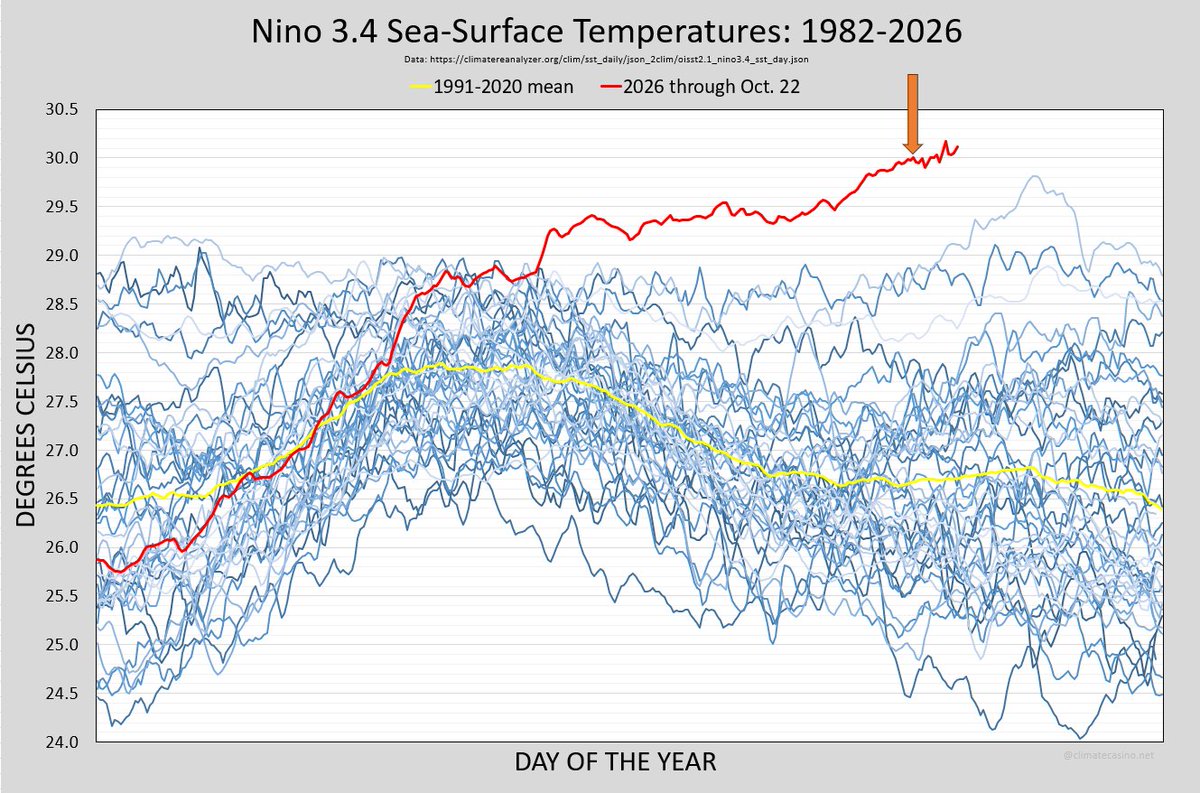
It takes 2 weeks to confirm ocean sea surface temperatures and the long wait is finally over. The first day in recorded history with Nino 3.4 SST at or above 30.0°C is now officially on the record.
October 7, 2026: 30.000°C.
https://t.co/RG4UniF2Gc
With the UK set to almost double its #solar capacity by 2030, new scheme encouraging developers to create habitats for wildlife alongside clean electricity generation. Hares darting between hedgerows. Grasses and wildflowers pushing up between rows of solar panels. Birds wheeling overhead.
https://t.co/eUki0TgAxM
England as a whole has received 52% of its long-term average rainfall for October
Growing concerns that farmers may not be able to refill water storage reservoirs over the winter, acc @EnvAgency