Buckle up guys..
Ready for #SASEM2024?
All set…
Let’s get this show on the road! 💥
A Journey of Evolution 🚨
At #SASEM2024,
Be the #powertoEMpower
Stay tuned for more!
🚑 Shock Index (SI): A Vital Tool in Critical Care 🚑
1️⃣ Introduction:
The Shock Index is the ratio of heart rate to systolic blood pressure. It's a simple yet powerful tool to identify patients at risk of shock, a life-threatening condition where the body's organs don't receive enough oxygenated blood.
2️⃣ History:
First introduced in 1967, by Allgöwer and Buri, as a quick, noninvasive method to determine the degree of hypovolemia in hemorrhagic shock. It's been validated in various settings, from the battlefield to the emergency room, and has proven to be a reliable predictor of patient outcomes.
3️⃣ Patients & Usage:
Trauma Patients: Quick assessment of blood loss and severity.
Cardiac Patients: Helps in identifying heart-related shock.
Sepsis: Early detection of septic shock.
Pregnancy: Useful in assessing the risk of complications.
Pediatrics: Adapted for use in children with modified values.
4️⃣ How to Calculate:
SI = Heart Rate / Systolic Blood Pressure
Normal SI: 0.5 - 0.7
Elevated SI (>0.9): Increased risk of shock and mortality.
5️⃣ Advantages:
Easy to calculate.
Rapid assessment tool.
Guides resuscitation efforts.
6️⃣ Limitations:
Not a standalone diagnostic tool.
May vary with age, medications, and underlying conditions.
7️⃣ Conclusion:
The Shock Index is an essential part of modern emergency medicine. By providing a quick snapshot of a patient's physiological state, it enables timely intervention and can save lives.
🩺 Share this post with your fellow healthcare professionals to spread awareness about this crucial tool in trauma care! 🩺
Everyone was bummed when the 2 Vol Practical Guide to Critical Ultrasound iBook was no longer available.
Thanks to the creative work of @CBaloescu and @RubbleEM for @ACEP_EUS the content, the authors, the narrated videos are back!
Free app download: https://t.co/qWLHA31tKs
·Anterior wall ischemia: 2+ precordials (V1-V6); LAD V1-V4
·Anteroseptal ischemia: V1-V4; Proximal LAD
·Apical or lateral ischemia: aVL & I, V4 to V6: Distal/Diagonal LAD or LCx
·Inferior wall ischemia: II, II, & aVF; 90% RCA, 10% LCx
https://t.co/DDzrgC1vfN
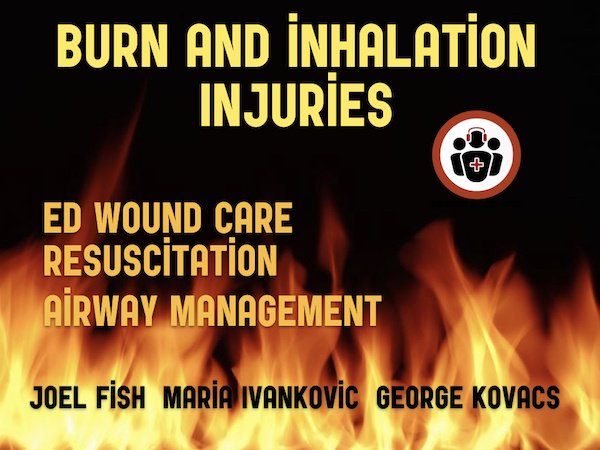
Burn & Inhalation Injuries: ED Wound Care, Resuscitation & Airway Management with Joel Fish & Maria Invankovic.
Special segment on awake intubation with @kovacsgj
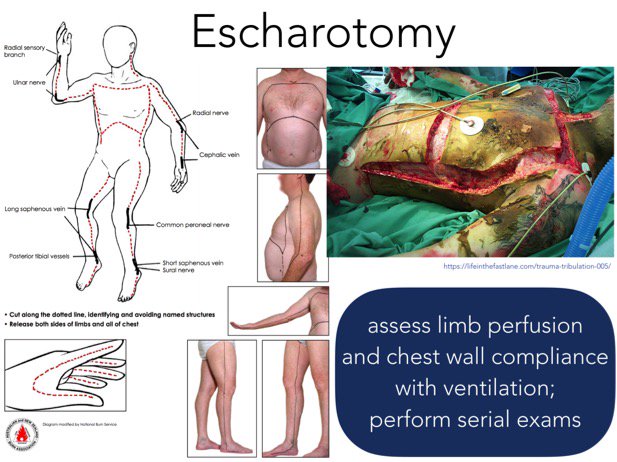
Rule of 9's is dead. Same with Parkland. Same with daily dressings...
https://t.co/sVrwJnmGev
#FOAMed
Stress Tests Conclusion: Putting it All Together via @First10EM https://t.co/KpKhlOl19X #FOAMed
"For every 1,000 pts we expose to a stress test, 2 are at risk for MI & stress test will likely pick up 1. However, for that 1 true positive test, there will be 150 false positives".
‘Vanc & Zosyn’ is NOT the Answer for Everything: Emergency Medicine Antimicrobial Essentials | Handout from my final AAEM talk https://t.co/xx580jTfkq #FOAMed#AAEM19
I am grateful to have had the privilege of speaking at the Scientific Assembly the past 5 years.