🎉 Super excited to share our labor of love! 75 pages of it 😍
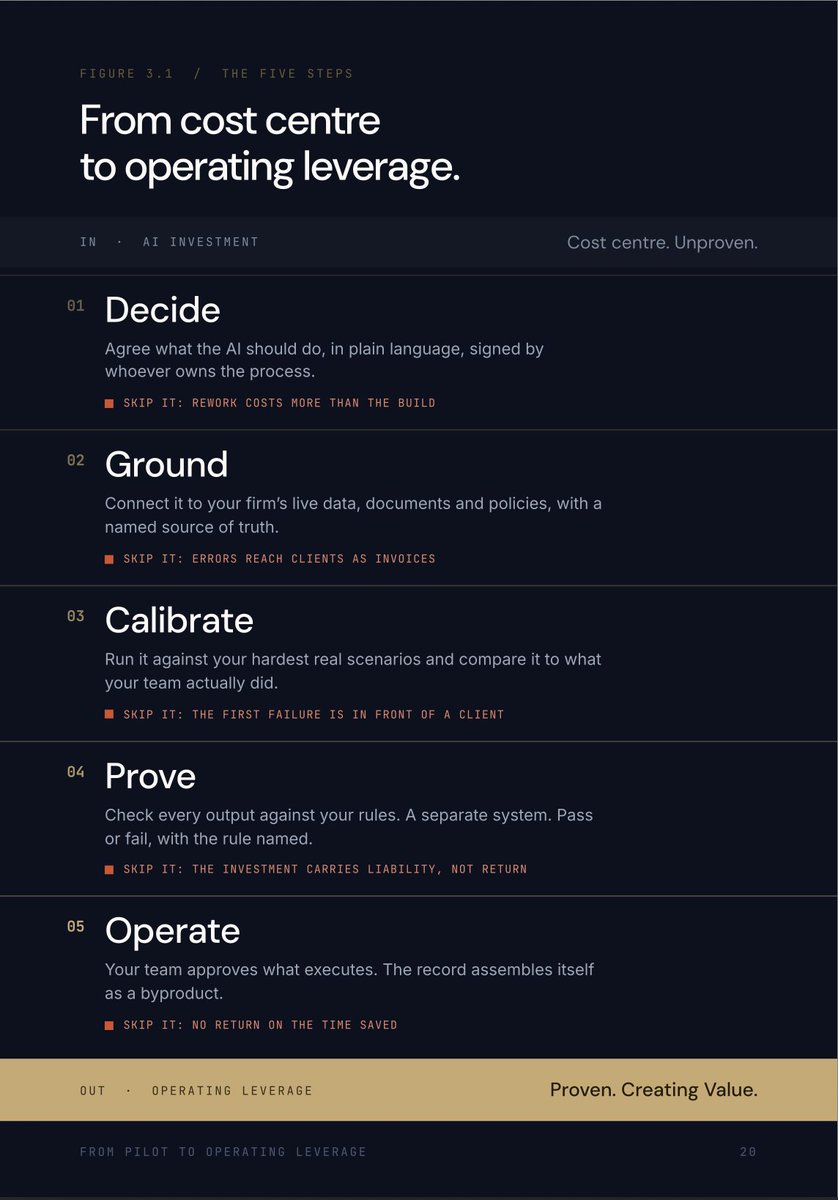
95% of GenAI pilots never reach production. AI models are not the problem. The gap between pilot and production is the process. The processes we had to build traditional software or buy SaaS are now obsolete.
🏁 Announcing our new e-book 🏎️
"The AI Discipline Playbook: Five Steps to Governed AI"
We need a new systems thinking on how we build and operate AI keeping in mind costs, outcomes & risks. We wrote this book to set out the discipline that lays the foundation for new systems and process for Agentic AI. It reimagines a new way of buying and building with AI technology.
It is not a product pitch. The discipline works regardless of who builds it.
Five steps each one removing a specific cost or risk from your business.
Five steps combined delivers a method to drive Agentic AI outcomes.
When writing this book, our team has ensured we contrast our decades of experience with our accelerated learning in the AI era.
But I will be direct. We built PitCrew because we believed this discipline
needed a machine behind it, not just a book about it. If you want to see
what it looks like running on real accounts, the last chapter tells you how.
Free access: https://t.co/RU2tVXp63w
@GoPitCrew@TweetSamG@rameshmay@arnavgoel_
Which city has the better food scene - San Francisco or New York?
San Francisco has more than four times as many Michelin stars per 100k residents. New York isn't even second - that's Washington, DC. Then... Miami, Atlanta, Orlando, New Orleans and Denver.
Our @getplumhq's Datalabs Maternity Edition is here!
Data Labs is a data journalism project that Guna and I started at Plum. We take major health conditions, study the science, the treatments and the costs, and make it accessible to everyone.
After cancer and heart disease: maternity 🧵
@MohapatraHemant@SarvamAI I was surprised too. Wonder some of these are bots.
Value for money access to AI which includes home grown models is truly the sovereign platform positioning.
On a serious note, this is a problem every legit Indian VC I know is battling - what is the right way to invest in an AI-led world, where to play, what is the right to win in a market you'll be a new visitor to, how is access playing out, the insanity of tranched rounds, and so much more.
And, on top of that, you do have to consider where you are in life? How old are your kids? Where is your home base? Can it really move continents? At what cost? At what probability of outcome? And more.
And the exact same thing applies to every AI founder too. Same set of questions with slight tweaks.
There is no one right answer. I think everything is very personal and that is likely the best way to look at it. There will be multiple winning strategies. Build your personal highest conviction view and chase it with laser focus.
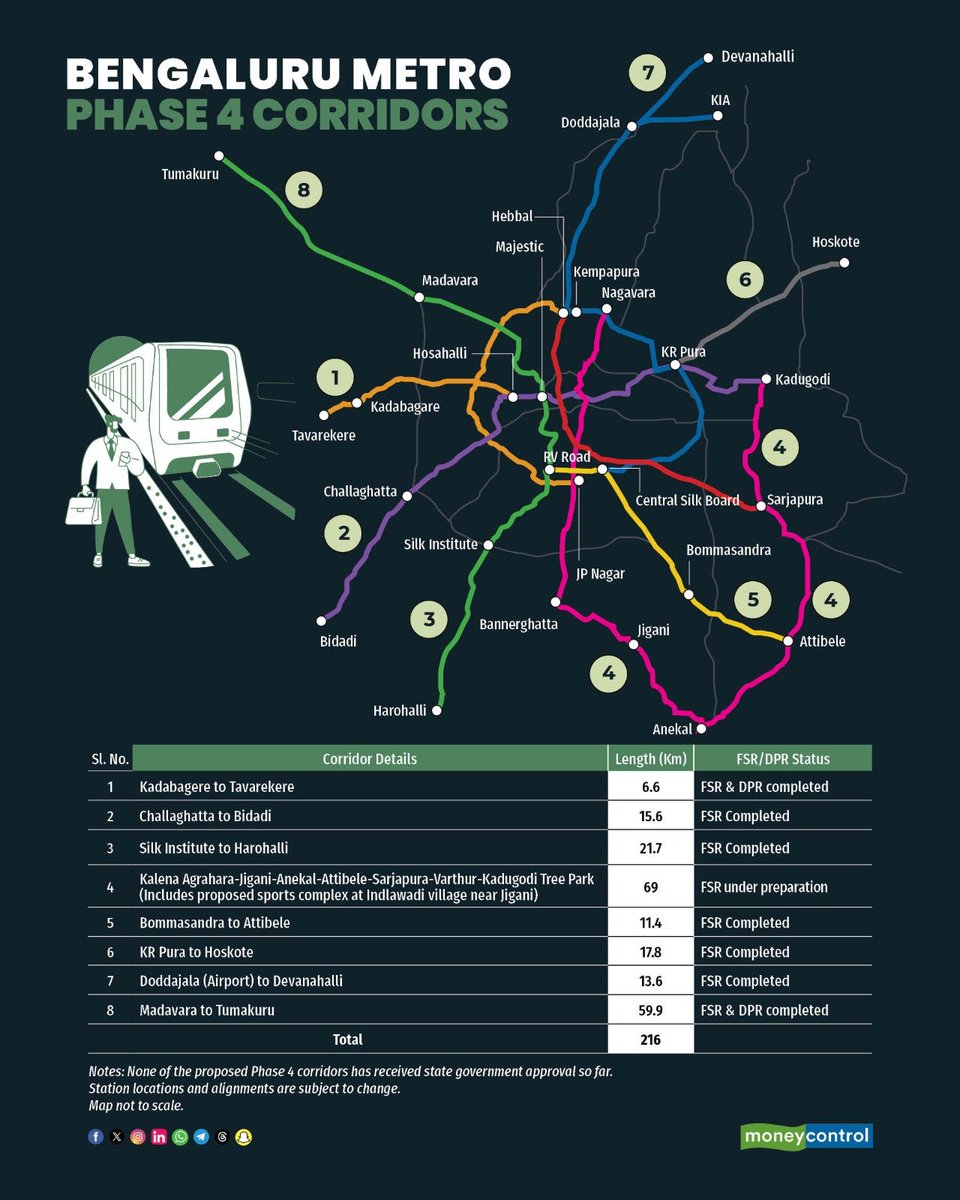
Today #Bengaluru Metro Crossed 100 KM of coverage with the commissioning of Pinkline 👏
Request PM @narendramodi to advise @MoHUA_India for clearance of long pending Phase-3 & 3A approvals.
Next Launch is expected in Apr 2027, ORR Stretch ( Silkboard- KR Pura) of BLUE Line!
What were Sonia Gandhi’s editors doing? How did some astonishingly elementary factual errors make it into the memoir of one of India’s most influential politicians? From a President who never existed to basic constitutional blunders, the editorial lapses are staggering.
https://t.co/QkzqXj5UHE
"We revisited 50 widely cited findings about LLMs across 20 models. Within 15 months of publication, most of the LLM claims we tested either no longer held or showed substantially diminished effects."
Whoa! In many cases it's just 3 months, i believe
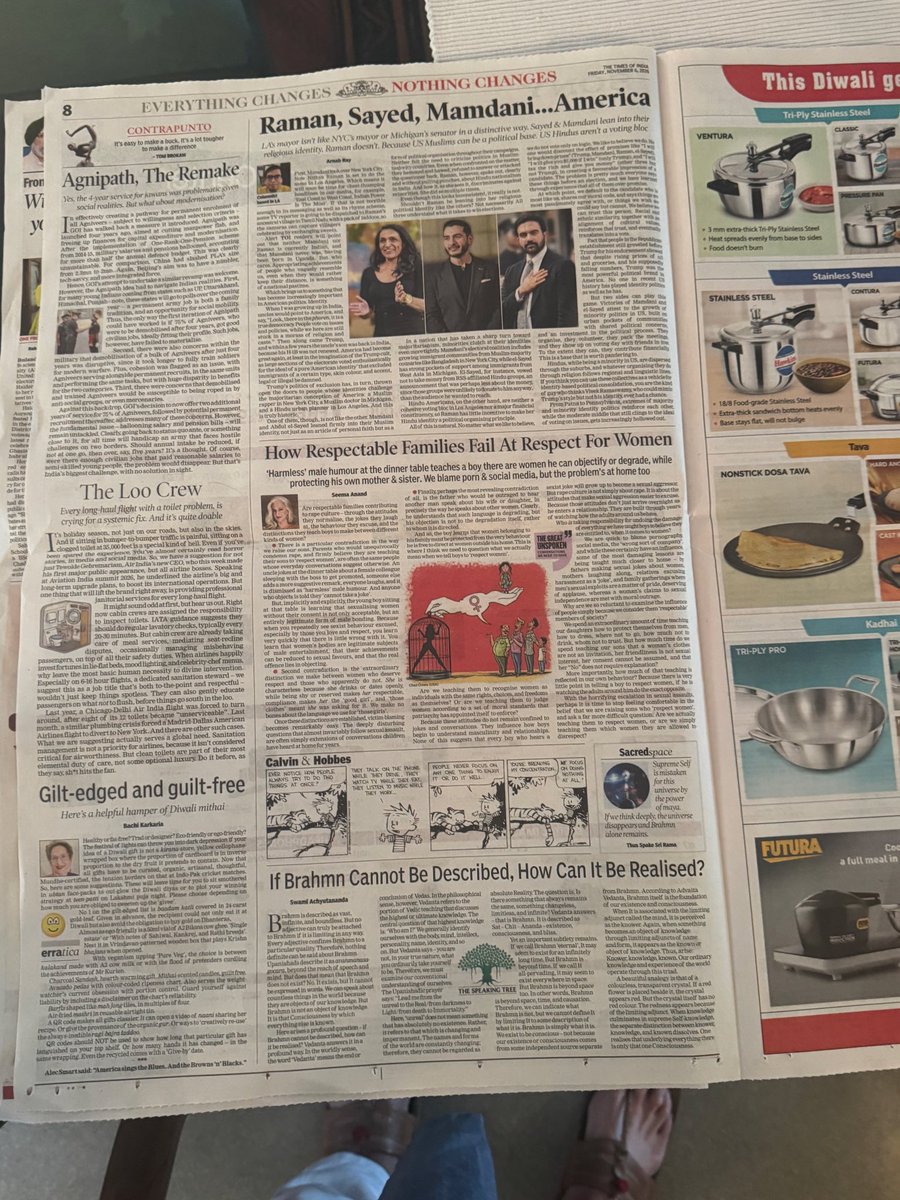
Today’s @timesofindia is a shameless collection of advertising- first3 pages & then news on left page & ads on right on all pages, incldng the one facing op-ed page. Is this a newspaper any longer or news used to market ads. PATHETIC !
We asked GPT-6 Astra to edit Qwen3.5-0.8B weights to improve math.
It directly changed only 0.016% of weights, fixing 0.8B's reasoning loops & improving math up to 6x and even instruction following 3x, without gradients or training.
We call this Weight-Space Programming: frontier LLMs can now natively read/write neural network weights! 🧵
Blog: https://t.co/bOWCcFhCVq
In the year 2000, Joel Spolsky (founder of Stack Overflow) wrote a famous article titled “Things You Should Never Do, Part I.” In it, he talks about how rewriting your code from scratch is the single worst strategic mistake any software company can make. However, times have changed.
The cost of writing software is dropping exponentially and that has changed the math entirely on if it is worth rewriting your codebase. For instance, this year Anthropic’s Jarred Sumner ( @jarredsumner ) rewrote Bun in Rust in 11 days leading to many performance and correctness benefits.
Likewise, Stephen Toub (Distinguished Engineer at Microsoft, @stephentoub ) rewrote the GitHub Copilot runtime (400,000-line codebase) in Rust by himself. I thought it’d be interesting to lay out everything he learned in the process. So I interviewed him about how and why he did it.
In this episode:
• Why he choose Rust of all languages
• Rollout strategies (incremental vs all at once)
• How he prevented regressions
• Steering agents and which models he used
• Career lessons and engineering advice
Where to watch:
• YouTube - https://t.co/9Yj6kBj0ix
• Spotify - https://t.co/wa3my5QeBb
• Apple Podcasts - https://t.co/jOYDGtGVnt
• Transcript - https://t.co/rI3rkhxsgG
Thank you to the sponsor of this episode for supporting my work:
• WorkOS: makes your app Enterprise Ready with easy to use APIs to add SSO, SCIM, RBAC, and more in just a few lines of code, check them out at https://t.co/y8noBzFEem
Chapters:
00:00 Intro
01:06 Why the Copilot runtime needed a Rust port
05:38 Why he chose Rust
11:28 Discussing rollout strategies
21:57 How he caught regressions
32:08 Guiding the agents
42:11 Catching regressions before prod
45:16 Which models he used
50:03 The end benefit and costs
01:03:24 When to do a full rewrite
01:06:40 Career learnings on the way to Distinguished
01:16:00 Top technical book recommendation
01:17:49 Advice for young engineers
01:21:00 Outro
Okay! I'm now toss-up temple to solid temple :)
This is impressive stuff.
(Preaching the OG quire but Can the CTO of temple explain like I'm 5 the results please? )
At @temple, one of our missions is to become the ultimate wearable for elite performance athletes.
And today, let's start with the basics: Heart Rate (HR).
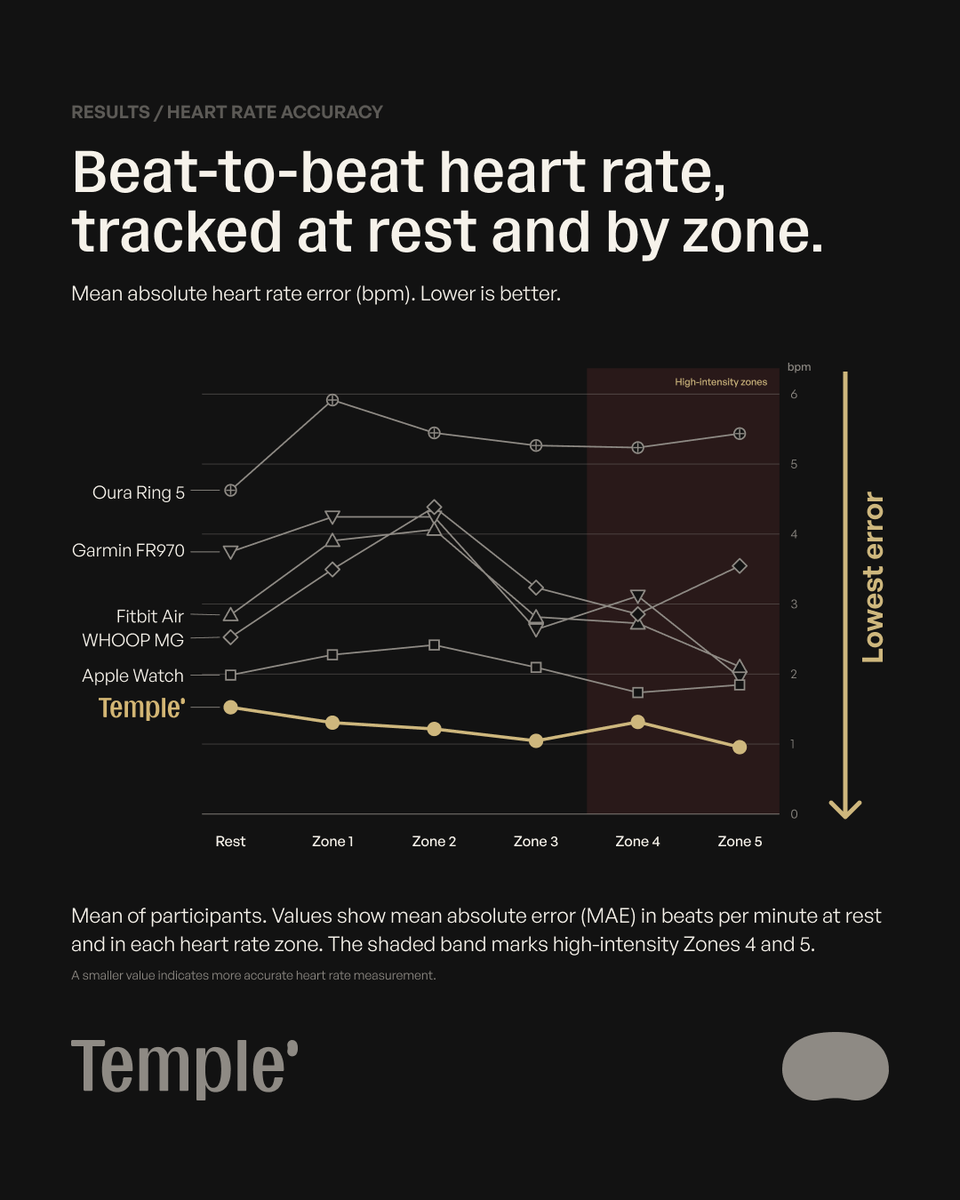
You would think accurate HR tracking is a solved problem. It is not. Especially in zones 4 & 5, which matter to professional athletes the most.
To see whether Temple is the most accurate wearable on something as basic as HR, we gave ourselves a high bar to aspire to. A Polar H10 chest strap, taped to the chest. Taped, because worn the usual way, straps lose contact mid-sprint and miss beats. We benchmarked five flagship wearables against that reference, from rest to max effort, second by second.
All the other leading wearables were well behind Temple in our study. Apple Watch Series 12 came closest. Temple also beat the untaped chest strap, the industry's benchmark, in zones 4 and 5.
Why does Temple win? Two reasons.
1. Temple uses adhesive, so its lab condition is its wear condition. You'll experience our study outcomes in real life.
2. The location. Your temple sits right over a major artery, and it's the one patch of skin that doesn't clamp down its blood flow when you go hard. We tested the same sensor at four body sites. The temple was the most accurate of the four.
Charts attached.
Accurate HR makes Temple better at so much more downstream. More soon.
The full paper and data are live right now at https://t.co/ovabS2dvnY, and an extended study by independent researchers is underway.
We invite further independent replication in more conditions, and will fund it. Write to us at [email protected]
After HCLTech led Sarvam’s $300m round in June at a $1.5b valuation, Cognizant is reportedly in talks to join the next one, which would value Sarvam at $3.5 to 4 billion, more than double, with large Indian enterprises lined up to anchor it.
For an industry trading near five-year lows on fears that AI agents will automate away coding, maintenance and back-office work, good to see them backing homegrown model builder is both a hedge and a bet on the future. via @EconomicTimes
3X builder here. And I've to admit
Ignorance is and can be a bliss.
First timers have as much success and repeaters. Humility and Hubris are best friends in a startup.
We've reached a point where people who've never built a company have absolute certainty about how companies should be built. Meanwhile, founders who've spent years building one will openly admit how much they still don't know. The internet has created a strange world where those with the least experience often have the strongest opinions, while those with the most experience are expected to defend every word they say. It's remarkable how much easier entrepreneurship looks when the only thing you've ever built is an opinion about it.
every product i use should just be a headless mcp, that feeds into an agent, where i never have to think about anything underneath.
except for our product, of course.
in our product, customers love the ui and love us very much.
we're special that way.
Or a more simpler option for founders:
just build!
Either customers fund it or VCs fund it or both.
All options open up when you build with focus on customers and usage
All other philosophies bend to your will if you just build.
This is why I recommend younger founders to build profitable, bootstrapped business, make money, and then think of building a moonshot, venture-scale business.
I did exactly this myself. Built my first venture, sold it, made good money and became financially free. Now I'm building a moonshot at @GreyLabsAI taking a big goal of disrupting the call center industry using AI.
Worst case if it doesn't work, I won't find myself on the road. Best case if it works, it's going to be a great outcome for all.