Likes structural biology, TEM, protein engineering, viruses, immunology, oncology, machine learning, biking, and science puns.
Workng on mRNA-LNPs lately.
NEW: today OpenBind ‘comes out of stealth’ so to speak with their first data dump of ~900 novel protein-ligand structures - most with paired affinities
This represents a meaningful %-age increase in all of humanities P-L data in the PDB collected in the last 50 years
More👇
Introducing Genie 3, a generative protein model that substantially advances the state-of-the-art for binder design, increasing in silico success rates by up to 20x on hard multimeric targets. It also debuts a form of inference-time scaling unobserved in other design models. 🧵1/8
Equivariance is dead😢
Or is it?😈
Genie 3 is out! Our latest protein design model yields SoTA results for binder design & motif scaffolding, greatly improving on BindCraft & Proteina-Complexa
It does so using all-atom SE(3)-equivariance on a branched polymer representation👇
When a protein embedding is indistinguishable from noise
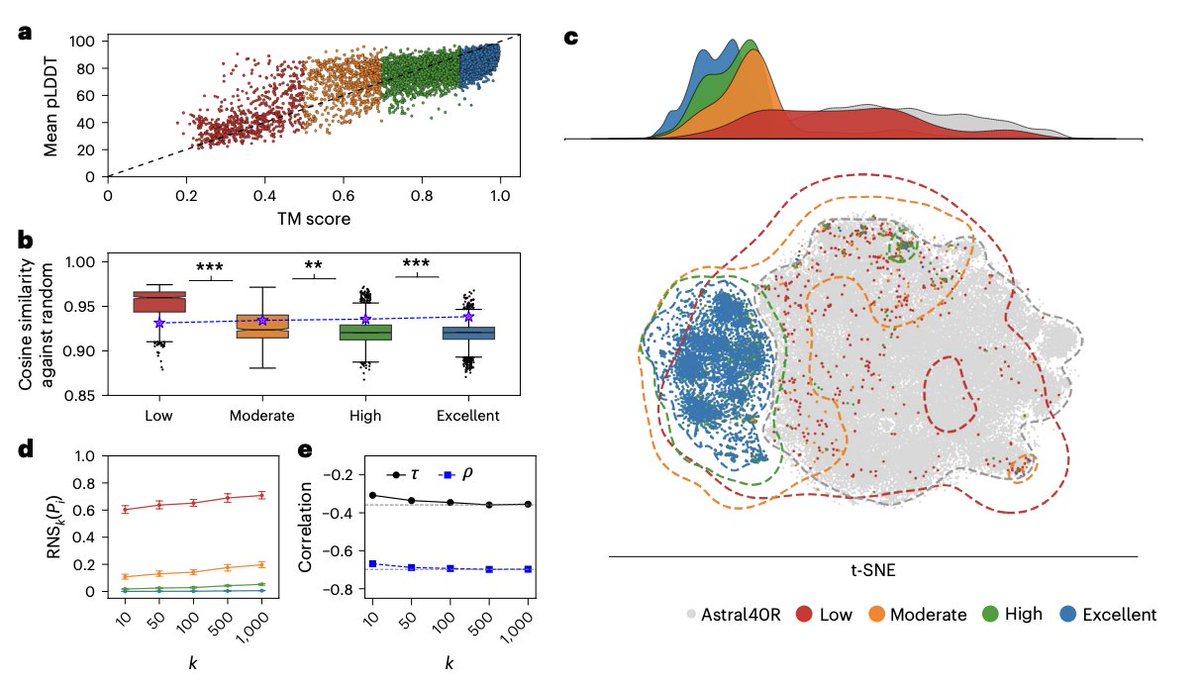
Protein language models have become the backbone of computational biology. Feed them an amino acid sequence, and they return a dense vector—a compact numerical fingerprint that downstream models use to predict function, structure, localization, or the effect of a mutation. The assumption, largely unquestioned, is that this fingerprint actually encodes meaningful biology.
Prabakaran and Bromberg challenge that assumption directly. They ask a deceptively simple question: how do you know whether a given embedding actually represents a protein—or whether it's just noise dressed up as a vector?
Their answer is the Random Neighbor Score (RNS). The idea is elegant: generate biologically meaningless sequences by randomly shuffling the residues of real proteins—preserving amino acid composition but destroying all evolutionarily meaningful interactions. Then, for each real protein, measure how many of its nearest neighbors in latent space are these random imposters. A high RNS means the model never learned to place that protein somewhere biologically meaningful.
Applied to ESM-2 and ProtT5 across thousands of proteins, RNS correlates strongly with structural prediction quality: proteins with poorly predicted structures have embeddings nearly indistinguishable from random sequences. Downstream tasks follow the same pattern—contact prediction precision drops roughly 40% for high-RNS proteins, and variant effect prediction falls to near chance. Most sobering: between 19% and 46% of the human proteome is underlearned by current models, depending on architecture. Intrinsically disordered regions fare especially poorly across all architectures tested.
RNS is model-agnostic and computationally cheap—around two minutes on GPU for 10,000 proteins—making it a practical prescreening step before any embedding-based inference.
For R&D teams that routinely use protein embeddings to prioritize variants, annotate novel sequences, or screen large libraries, this has immediate consequences. Running RNS before downstream inference flags proteins where predictions are unreliable, reducing the risk of propagating errors into expensive wet-lab campaigns. It also offers a principled way to identify gaps in model coverage—directly actionable for teams building or fine-tuning their own foundation models.
Paper: R. Prabakaran & Yana Bromberg, Nature Methods (2026) — CC BY-NC-ND 4.0 | https://t.co/JOblk7kT6R
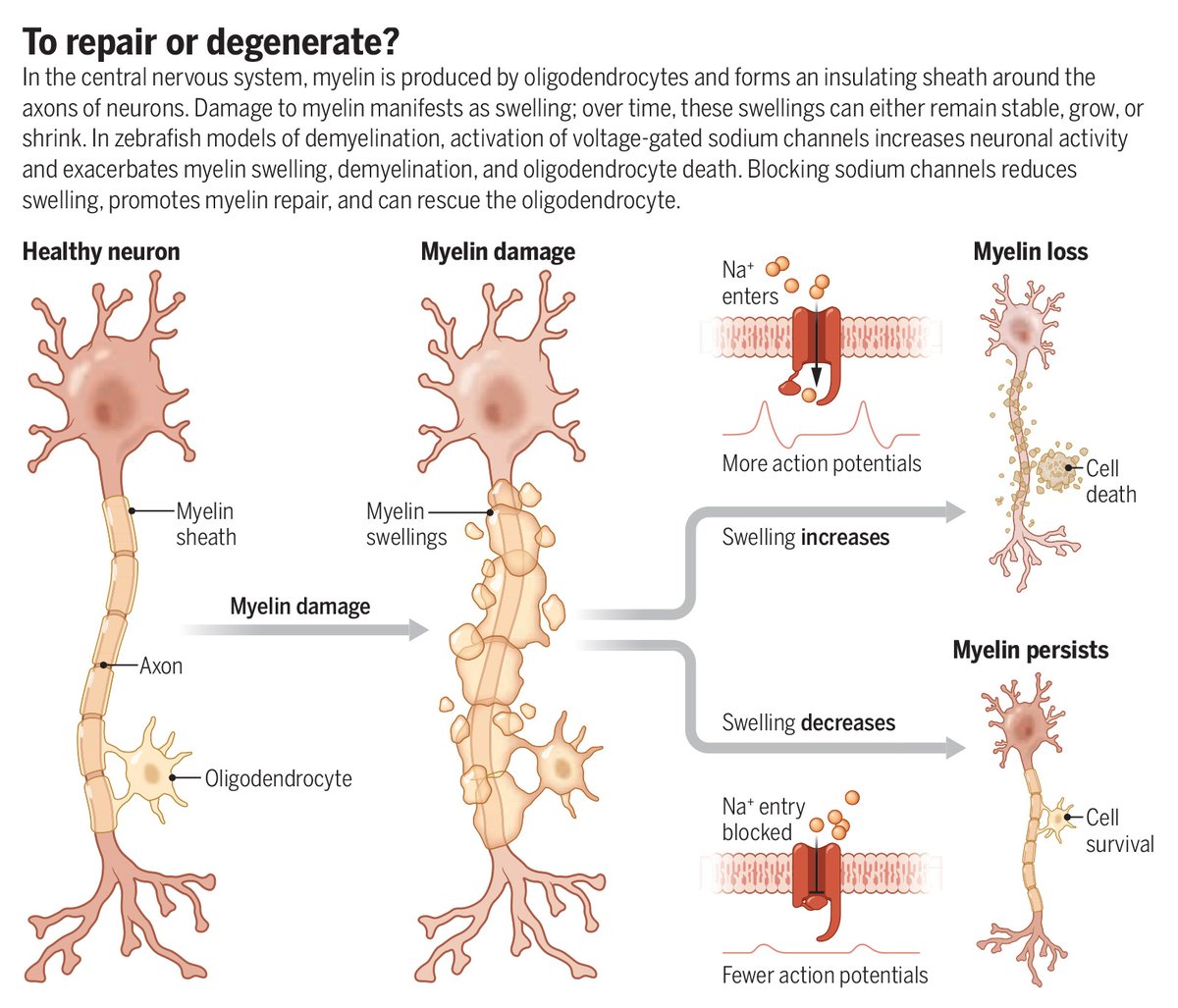
In the central nervous system, myelin is produced by oligodendrocytes and forms an insulating sheath around the axons of neurons.
In a new Science study, researchers report that damage to myelin initially causes swelling before leading to loss of myelin sheaths. They also demonstrate that swollen myelin can persist despite damage and can dynamically remodel to prevent sheath loss.
Learn more in a new #SciencePerspective: https://t.co/cCDTw0mRgr
I just rewatched No Time to Die and I think I finally understand what is wrong with the current iteration of the bond franchise: Can we please just bring back Mr. Bean?
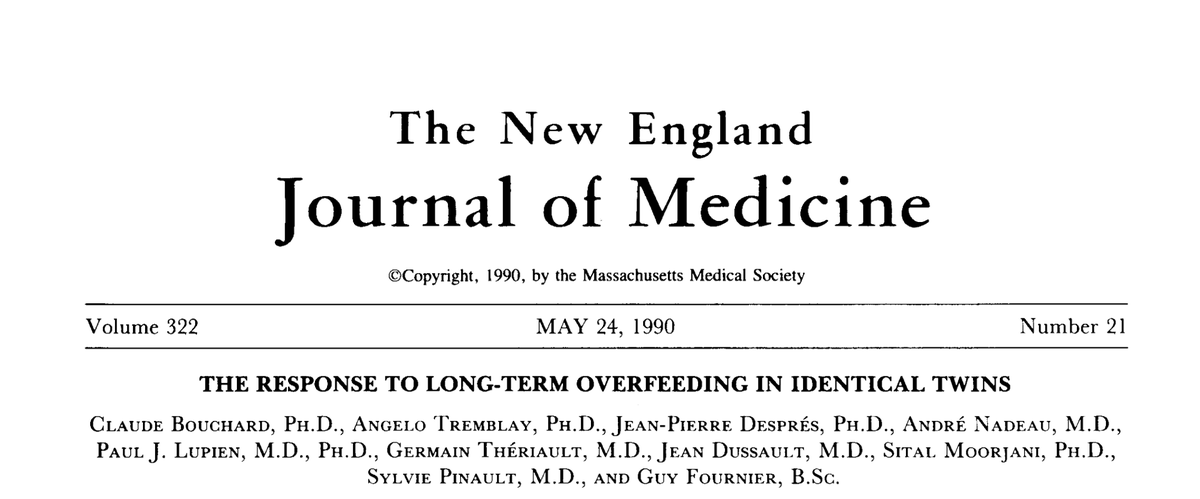
1. If you & your friend (same size, age, weight) ate the same 1,000-calorie surplus every day for 3 months, will you gain the same amount of weight? A landmark experiment on identical twins helps us answer this question and that our 🧬 direct the body's response to overeating 🧵
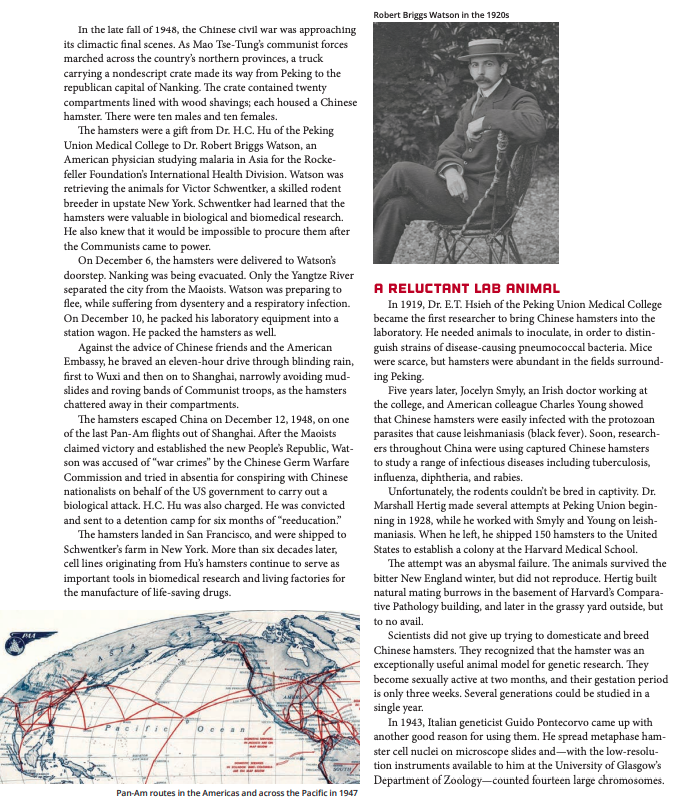
Chinese Hamster Ovary, or CHO, cells are widely used in the pharmaceutical industry. And, incredibly, these cells can be traced back to just twenty hamsters that were packed into a crate and smuggled out of China in the 1940s.
Chinese scientists had been using these hamsters — native to northern China and Mongolia — to study pathogens since at least 1919. The hamsters were unusually well-suited to scientific research because they have short gestation periods (18-21 days), a natural resistance to human viruses and radiation, and it was thought, early on, that they possessed just 14 chromosomes, making them easy to work with for mutation studies. (They actually have 22 chromosomes.)
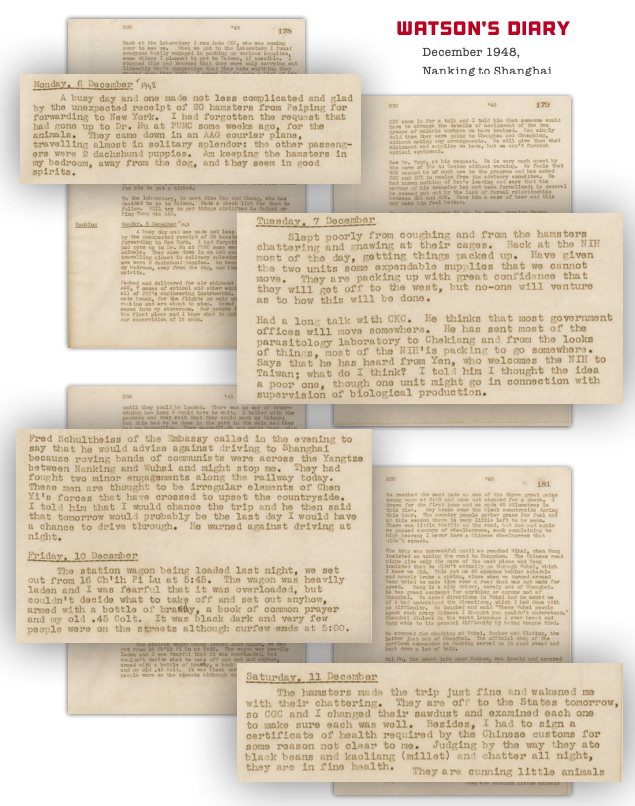
During the Chinese civil war, a rodent breeder in New York named Victor Schwentker worried that, if the Communists won the war, he’d never be able to get his hands on these special rodents. So in 1948, Schwentker sent a letter to Robert Briggs Watson, a Rockefeller Foundation field staff member, and asked him to “acquire” some hamsters so he could begin breeding them.
Watson collected ten males and ten females and packed them into a wooden crate with help from a Chinese physician (who was later imprisoned for this act). Watson slipped the crate out of the country on a Pan-Am flight from Shanghai, just before the Communists took control.
In New York, Schwentker received the hamsters and then began breeding and selling them to other researchers.
In 1957, a geneticist named Theodore Puck, intent on creating a new mammalian “model system” for in vitro experiments, learned about the Chinese hamster and contacted George Yerganian, a researcher at the Dana-Farber Cancer Institute, to obtain a specimen. Yerganian shipped Puck one female hamster.
Puck took a small piece from this hamster’s ovary, plated the cells onto a dish, and passaged them repeatedly. He eventually isolated a clone that could divide again and again; an “immortalized” CHO cell with a genetic mutation that rendered it immune to normal senescence.
Today, descendants of these immortalized CHO cells make about 70 percent of all therapeutic proteins sold on the market, including Humira ($21 billion in sales in 2021) and Keytruda ($17 billion). Many of these drugs are monoclonal antibodies, or Y-shaped proteins that lock onto, and neutralize, foreign objects inside the body.
CHO cells are well suited to biotherapeutics because they can perform a biochemical reaction called glycosylation. Many human proteins, including antibodies, are decorated with chains of sugars that control how they fold or interact with other molecules in the body. Only a few organisms, mostly mammalian cells and certain yeasts, can do this chemical reaction.
I first learned about this history from a really spectacular article in LSF Magazine, called "Vital Tools: A Brief History of CHO Cells." I recommend it. (You can find it with a quick search.)
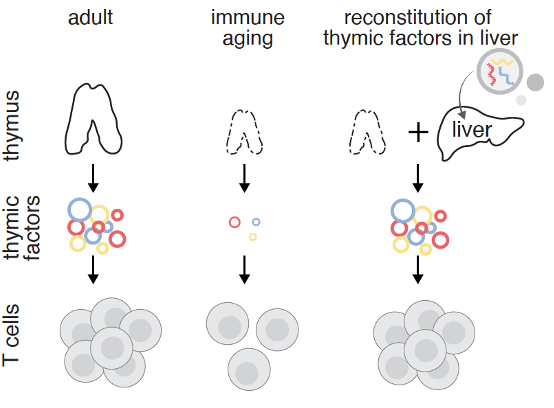
Excited to share our new work on immune aging! We explored whether the liver could serve as a temporary "factory" to produce immune factors that decline with aging, potentially helping to rejuvenate aged immunity. @mircoscopy.
This is something very few people seem to understand. When women start having infertility issues in their late 30s and early 40s, it’s almost entirely due to the eggs! The uterus is basically fine for another 20 years.
@ydu2018 @zuber_phil15@xueyan1104 Amazing paper Dr. Du! I noticed that the sequences provided in the supplemental table are not complete plasmids. Would you be willing to share these plasmids or at least the complete uncleaved full length intron sequences?
(1/n) The first paper from @EKimlab is now online in @Nature!
https://t.co/4kwUr2NZv8
Using single-molecule imaging, we reveal that Smc5/6 is a DNA loop-extruding motor. Upon ATP hydrolysis, single Smc5/6 translocates along DNA, while dimerized Smc5/6 extrude DNA loops.
Crazy example of Chinese biotech cycle times:
I'm reading a new bioRxiv preprint from a Chinese research team about a new circular RNA modality. It's about a cool idea to embed aptamers into circular RNAs. The circularity confers stability and the aptamers confer targeting. So it can be delivered "carrier free," i.e. no LNP or other delivery vector.
I fire up a Future House Precedent Search AI agent to see if there is related literature. It seems pretty novel. (If you know about literature or companies around this type of approach, let me know!)
I'm still reading as the agent runs, and get to "In a first-in-human (FIH) clinical trial, ..." Based on safety studies in rats and results in a mouse disease model, they immediately escalated to a nine person study in healthy volunteers. They collected ~500k cells worth of *human* single-cell transcriptomic data to profile the immune response.
This is the new bar on the global stage for biotech R&D. While we are attempting to cut funding and destroy our own global advantage in RNA vaccine technology, China is dramatically compressing the cycle times between new ideas and direct human observations.
Worth thinking hard about.
🚨 How "genetic" is ADHD?
We have known for a long time that ADHD is highly heritable
» Twin-based: ~80%
» SNP-based: ~20%
But the exact genes have been elusive.
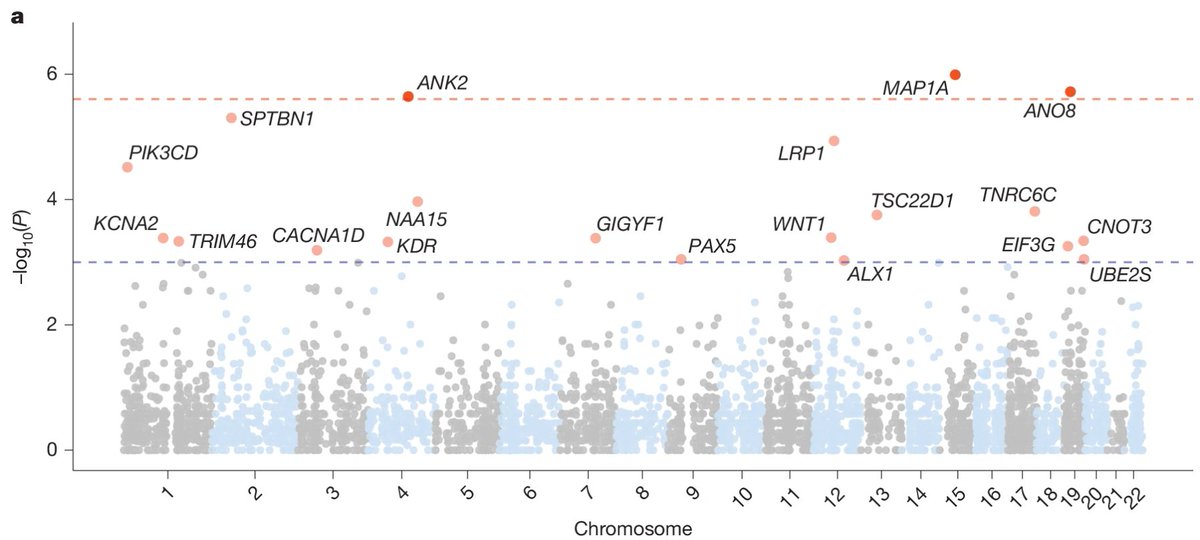
For the first time, we now have a list of causal genes, discovered from sequencing ~9,000 patients w/ ADHD 🧵
This is exciting; I expect we are going to see a lot more things like this and it will be one of the most important impacts of AI. Congrats to the Future House team.
https://t.co/Cxeh8UlWdk
Many of the most complex and useful functions in biology emerge at the scale of whole genomes.
Today, we share our preprint “Generative design of novel bacteriophages with genome language models”, where we validate the first, functional AI-generated genomes 🧵