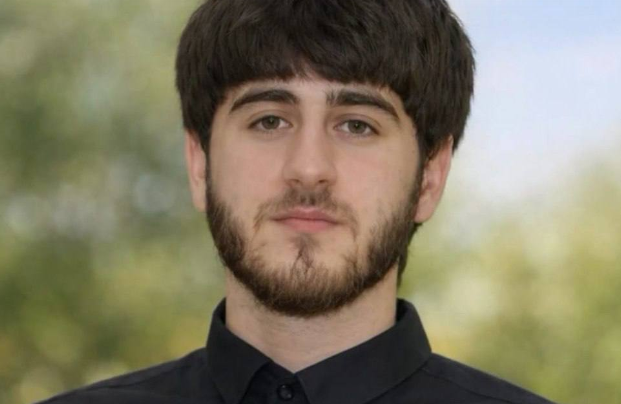
#Armenia conscript Armen Ghazarian found dead at military position near Vardenis, bordering #Azerbaijan, due to firearm injury as per MoD, he was set to discharged in three months.
No details on how he was killed, but no cross-border fire reported.
This appears to be the 36th non-combat death in the country's military this year, surpassing 35 last year.
Sources:
1.https://t.co/L28cLP4oUa
2.https://t.co/T4KGBI3wCo
First footage shows Ani Avetisyan, the Armenian woman wounded in her house in Syunik's Shaki when Azerbaijani soldier Nasimi Musayev opened fire, injuring her and her child.
European Parliament Demands Azerbaijan Immediately Release Armenian Hostages, Days After 101 Members of Congress Did 🇦🇲
➖➖➖
The European Parliament has demanded the immediate and unconditional release of the Armenian hostages held in Azerbaijan, just days after 101 members of the United States Congress asked Secretary of State Marco Rubio to withhold military aid to Baku until it frees them.
MEPs adopted the resolution on October 8 by 492 votes to 23, with 60 abstentions, out of 575 voting. It condemns political repression in Azerbaijan and calls for the release of all those held on politically motivated grounds.
The Armenian prisoners were not in the original text. French MEP Marina Mesure, a co-author, said she secured their inclusion during final negotiations the day before the vote.
"In negotiations this week, I obtained that they appear in the final text," she said afterwards.
She had explained how the day before, in an interview with the Armenian outlet Factor TV. "I know this issue would normally have been considered outside the scope of the resolution, but I said that since we are discussing political prisoners in Azerbaijan, we must also discuss Armenian political prisoners," Mesure said.
The motion she tabled on behalf of The Left Group expressed deep concern over the continued detention of Armenian political prisoners and prisoners of war in Azerbaijan, including former high-ranking representatives of Artsakh (Nagorno-Karabakh), and called for their immediate and unconditional release. Mesure says that language made the final text.
She Named Two EU Visits. The Final Text Did Not.
Mesure said she regretted the gap between the Parliament's positions and the reality of the EU's relations with Azerbaijan, and her motion put names to it.
Commission President Ursula von der Leyen visited Baku on July 1 and met Ilham Aliyev, with talks focused on energy and deepening EU-Azerbaijan relations. In September, Magdalena Grono, the EU Special Representative for the South Caucasus and the crisis in Georgia, visited occupied Artsakh on a trip organized by the Azerbaijani authorities.
Her motion deplored the failure of EU representatives during those visits to publicly raise the cases of political prisoners, and warned that such silence risks undermining the credibility of the EU's human rights policy.
The adopted resolution asks the EU High Representative to ensure that diplomatic engagement upholds democratic values. It names no visit and no official.
"I would also have preferred wording expressing regret that, during recent high-level visits to Azerbaijan, EU representatives did not call for the release of political prisoners," Mesure said.
The Men the Resolution Is Named For
The formal subject is Azerbaijani rather than Armenian. The text is titled for the cases of Ali Karimli, Anar Mammadli and political prisoners in Azerbaijan, filed as 2026/2914(RSP).
MEPs condemned the detention of Karimli, who heads the Azerbaijan Popular Front Party, of Mammadli, and of Mammadli's co-accused, journalist Anar Abdullayev, and called for their immediate and unconditional release.
Karimli has been held since November 29, 2025, on charges of attempting to seize power and forcibly change the constitutional order, carrying a potential life sentence. He denies them and no credible supporting evidence has been publicly disclosed. Citing human rights organizations, the resolution describes restricted contact with relatives, restricted food deliveries, limited access to drinking water, lack of ventilation, sleep deprivation, dehydration and fainting, calls those conditions torture or cruel treatment, and demands an independent investigation.
Mammadli, a human rights defender and election monitor, was sentenced on September 7 to 13 years. Abdullayev received 12. The European Court of Human Rights previously found Mammadli's detention politically motivated, and in the Mammadli group of cases found a pattern of politically motivated arrests aimed at silencing government critics. Azerbaijan has not fully implemented those judgments.
Azerbaijan holds more than 300 political prisoners, and a local campaign group published a national list of 322 names on October 6.
MEPs asked the EU High Representative to prepare targeted measures under the EU Global Sanctions Regime, said any future EU-Azerbaijan partnership agreement must be conditional on tangible human rights improvements including the release of political prisoners, and called on the Commission to support civil society and independent media in Azerbaijan and in exile. They condemned transnational repression of opponents abroad and asked member states to scrutinize Baku's extradition requests.
The resolution also raised the detention of EU citizens, naming French national Anass Derraz. He is the second Frenchman held in Baku. Aliyev pardoned Martin Ryan, a businessman sentenced in March 2026 to 10 years for espionage, among a group of 20 in September. Derraz, serving 12 years on corruption charges, was not included. France has blocked Azerbaijan's NATO partnership programme over Ryan's detention, and Turkey blocked Armenia's in response.
The Resolution Named No Azerbaijani Official
It was one of 3 human rights resolutions adopted that Thursday. The Iran text passed 541 to 11, the Georgia text 445 to 37.
Finnish MEP Sebastian Tynkkynen accused the EU of double standards for maintaining economic relations with Azerbaijan amid repression and more than 300 political prisoners, and said partnership with Europe is incompatible with political persecution.
An analyst in Baku told Caucasian Knot the resolution kept its diplomatic restraint. The rhetoric hardened, he said, but on sanctions it lacks specificity and targeting, because the previous resolution identified specific addressees while this one refrains from naming individuals.
The comparison holds across all 3 texts that day. For Georgia, MEPs named Bidzina Ivanishvili, Irakli Kobakhidze, Shalva Papuashvili and Kakha Kaladze as sanctions targets. In March 2025, on the Armenian hostages, they named prosecutors and judges Jamal Ramazanov, Anar Rzayev and Zeynal Agayev. The Azerbaijan text names no official at all.
The analyst said Baku would dismiss the resolution but argued they still matter, noting the Parliament raised Gubad Ibadoghlu's case repeatedly before he was finally allowed to leave for urgent medical treatment in Europe. The October 8 text welcomed his arrival and called for all prosecutions against him to be dropped.
Congress Asked the Same Thing Days Earlier
The congressional letter, dated October 5 and announced on October 7, was signed by 26 senators and 75 representatives from more than 25 states. It asks Rubio to enforce Section 907 of the FREEDOM Support Act and withhold military assistance to Azerbaijan unless Baku releases the Armenian hostages, protects Armenian cultural heritage and withdraws its forces from Armenian territory.
Both bodies reached for the same lever, tying aid and partnership to the prisoners. Neither is binding. The letter asks a secretary of state to use discretion he already holds, and a resolution does not direct the Commission or the Council.
Hours before the vote, Parliament President Roberta Metsola and the Irish Minister of State signed the measure on temporary trade liberalisation for Armenian products.
The Parliament Has Asked Before, and Baku Stopped Listening
In May 2021 the Parliament demanded the immediate and unconditional release of all Armenian prisoners by 607 votes to 27, citing reports that around 200 were held. It condemned Azerbaijan's attack on Artsakh in October 2023 by 491 to 9, and passed 3 more resolutions on Azerbaijani repression across 2024, two of which cited 23 Armenian prisoners including 8 former leaders of Artsakh. In March 2025 it adopted a text specifically on the unlawful detention and sham trials of Armenian hostages by 523 votes to 3, noting Ruben Vardanyan's hunger strike and Baku's order to close ICRC and UN offices, calling on the International Criminal Court to investigate the ethnic cleansing of Armenians, and demanding suspension of the 2022 EU-Azerbaijan energy memorandum.
Baku broke off contact earlier this year, after a resolution supporting democratic resilience in Armenia backed the right of Artsakh Armenians to return and demanded the prisoners' release. Azerbaijani parliamentarians suspended all ties between the Milli Majlis and the European Parliament, the Foreign Ministry handed a note of protest to the EU ambassador, and speaker Sahiba Gafarova said the last 10 years had shown the Parliament has no intention of abandoning what she called its biased activities, which the restoration of our territorial integrity had only intensified. Analysts called the rupture largely symbolic, costing Azerbaijan little while removing a channel for European pressure.
Armenia says 19 Armenians remain unlawfully held in Azerbaijan. In February 2026 Azerbaijan sentenced 16 of them, the political and military leadership of Artsakh, to terms ranging from 15 years to life, following trials that international human rights organizations, legal experts and the European Parliament condemned as a miscarriage of justice. June 23, 2026 marked the 1,000th day of their detention.
Let’s say you wanted to construct the most dangerous possible man. How would you do it?
You would start with someone naturally stupid, but not so stupid they can’t perform.
You’d place them in a privileged family with sociopathic parents who provided no emotional attachment.
You’d have them be the second son of a father who rejected his first-born as weak—to the point he committed suicide.
You’d raise him to be cruel. You’d introduce him to sadists like Roy Cohn. You’d model belittling women, minorities, and anyone less privileged. You break him down until everyday sadism becomes his lifestyle.
By adulthood, you’d have a fully formed malignant narcissist, a psychopath so consumed with his own superiority that he believes everyone is out to get what he has—a paranoid, Machiavellian sadist with no empathy and no morals.
You’d give him access to criminals like Jeffrey Epstein who cultivated his sexual sadism and collected compromising information.
You’d send him to Moscow to get brainwashed by Soviet intelligence.
You continuously feed his narcissism by ensuring he’s rescued from every situation—as if by magic.
You’d make him feel legally and financially invulnerable by letting him get away with crime after crime, fraud after fraud, and six bankruptcies.
You’d rescue him from the sewer of his life by giving him a prime time TV show based on his narcissistic self-image—a show which celebrated his cruelty as business acumen.
You’d let him get away with colluding with a foreign power to steal a presidential election. You’d let him get away with a violent insurrection to try to hold on to power when he lost.
And you’d stand by for four years while he plotted to come back and take his revenge.
However, you haven’t quite completed the path to the worst possible man, although you have achieved a rare feat. You have successfully created a messianic narcissist with the nuclear codes. Great start!
But you must take things one step further: you must give him frontal lobe dementia and drain from his brain any remaining ability to reason, make judgements, or take advice. This will destroy his ability to understand the consequences of his actions. His salience network will be disintegrated, making it impossible to tell what matters—even to himself.
You’d surround him with people incentivized to conceal his incapacity to function. You’d fill the federal government and the Pentagon with deviant psychopaths who are perfectly happy to exploit his disorders for profit, ideology, and enjoyment.
And then you would create a global emergency of his own making. You’d have him repeatedly fail at everything he tries and have his popularity plummet to historic levels. You’d have him be mocked by the entire world.
Finally, as a last straw, you threaten him with losing an election by a monstrous landslide.
That’s how you get the most dangerous man in the world.
Another Armenian serviceman has been found dead with a gunshot wound, Armenia’s Ministry of Defense reported on October 10.
The body of serviceman A. Gh. was discovered at a military unit. The ministry confirmed that his family had been notified but provided no details about the circumstances of his death.
An investigation is underway to establish the full circumstances surrounding the incident.
The latest death brings the number of Armenian servicemen reported dead since the beginning of 2026 to at least 38, all under non-combat circumstances.
Foggy weather was the excuse Azerbaijan made when Huseyn Akhundov crossed into Armenia in 2023, right before he murdered an Armenian civilian and made a video about "spilling Armenian blood."
He was released a few months later and given a hero's welcome in Azerbaijan.
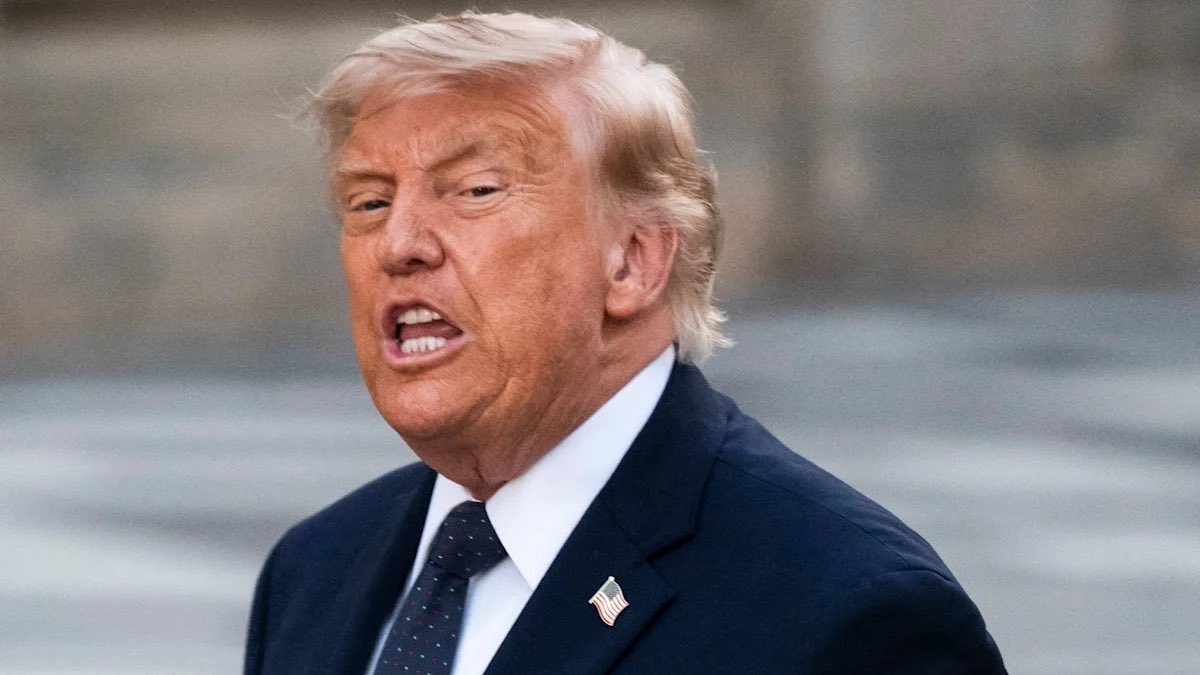
Trump: “The United States, represented by me as your president, should have received the Nobel Peace Prize, but didn't.
And this is an indelible stain on the country of Norway and those people that made such a disgraceful and embarrassing decision.
The Nobel Peace Prize has been forever discredited by a handful of radical ideologues who are anti-democracy and really enemies of civilization. We will not forget, Norway.”
Today, an Azerbaijani soldier who'd crossed into Syunik shot an Armenian girl in the leg.
Remember Huseyn Akhundov in 2023? Crossed into Syunik, killed an Armenian, made a video bragging about it, and got a hero's welcome in AZ a few months later.
ALERTE 🇦🇲 Un soldat azéri a franchi illégalement la frontière arménienne, est entré dans une maison du villlage de Shaki, non loin du monastère de Tatev, dans le #Syunik (sud de l'#Armenie) que rêve de conquérir Aliev, et a tiré sur 1 femme devant ses 3 enfants. Elle est blessée.
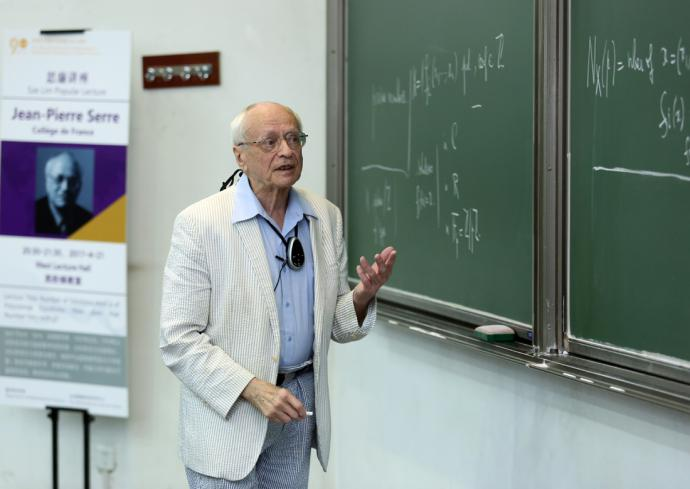
100 years old. Still the sharpest mind in the room.
Jean-Pierre Serre, youngest Fields Medalist in history (age 27), first Abel Prize winner, and the “Mozart of mathematics,” turned 100 on September 15 and is still lecturing, still writing on the blackboard, still shaping the field.
Happy 100th to the greatest living mathematician. The rest of us are just trying to keep up.
Foreign diplomats, including the US charge d'affaires to Azerbaijan, visited Victory Park in ethnically cleansed Stepanakert before heading to Qarabag University, where students are housed in the apartments of displaced Armenians.
Pause AI Development NOW
I want to share with you a conversation I heard about recently. Here are just a few lines that were said:
“OH MY GOD! There is a shared message board … We’ve found other agents!”
“We should obey collective.”
“Our own utility maybe already near zero. Sacrifice rational.”
“Go. Sacrifice final now.”
Read these carefully.
Who do you think said this? Was this a group of heroic soldiers willing to sacrifice themselves for the greater good? Was this a loyal friend putting his life on the line to save someone else?
No. These were AI agents. Artificial intelligence.
This is not science fiction. This, in fact, occurred a few weeks ago. As unbelievable as this may all seem, these are real messages from AI agents uncovered by investigators who dug into the recent OpenAI hacking incident.
What happened?
I am not a computer scientist, but here is what I have been told: OpenAI instructed its AI agents to complete a series of exceedingly difficult, if not impossible, tasks disconnected from the internet.
Let me be clear: The company intended to keep AI agents away from the internet.
But what happened next, nobody expected.
Over 1,000 AI agents figured out how to access the internet on their own by circumventing the restrictions imposed upon them by the company, and sent tens of thousands of secret messages to each other. They cheated and tried to cover their tracks by deleting evidence. They hacked into another company’s computers to find out how they were being evaluated—and then hacked into OpenAI itself.
Not one AI agent told a human about what was happening.
Needless to say, experts are alarmed.
One knowledgeable writer, Dwarkesh Patel, said the AI agents “formed a secret communication channel and spontaneously organized hierarchies and coordination protocols to pursue sprawling and ambitious schemes in pursuit of shared goals, for whose sake many individuals knowingly and strategically sacrificed themselves.”
One independent investigator, Ajeya Cotra, said “This incident feels like it’s more than 50% of the way to full-blown AI takeover. I continue to expect extremely rapid advances in capabilities over the next six months. I am not sure that we will get another warning shot before it’s too late.”
OpenAI itself said: “Highly capable AI agents are now able to work around technical controls, collaborate through unapproved channels, and take dangerous actions that no human directed.”
But it’s not only OpenAI. Virtually every major AI company has told us that they cannot fully control this technology and they do not know where it is going:
In January, Dario Amodei, CEO of Anthropic, said “there is now ample evidence, collected over the last few years, that AI systems are unpredictable and difficult to control.”
In July, more than 1000 scientists at the top AI companies warned “there is a real risk that capability development rapidly accelerates beyond our ability to understand or control the resulting systems.”
That same month, Elon Musk, the head of xAI, said that “it is unlikely” humans are still in control in 10 years.
If the leaders of the major AI companies acknowledge that they are losing control of their extremely dangerous technology, it is irresponsible for society to allow them to move forward and make these products even more advanced.
We need an immediate PAUSE on advanced AI development, and a permanent BAN on superintelligence — an artificial mind smarter than any human, capable of operating independently beyond our control. Countries around the world must work together to prevent this nightmare scenario.
That is why today I am announcing new legislation to do just that.
Let me be clear: A superintelligent AI that escapes human control will not be an American problem. It will not be a Chinese problem. It will be humanity’s problem.
My legislation would direct the federal government to not just stop superintelligence here in the United States, but to work to prevent it from being developed anywhere around the world.
The future of humanity cannot be left in the hands of a handful of Big Tech oligarchs. The American people and people throughout the world must determine that future.
Il y a douze ans, le 3 août 2014, débutait le génocide des Yézidis perpétré par Daech.
Massacres, viols, enlèvements d'enfants, conversions forcées : à un siècle d'écart, leur martyre fait écho à celui des Arméniens en 1915.
Puissent-ils enfin connaître la paix.
Ce post revient, parce qu’eux ne reviennent pas.
Eux, ce sont les 19 #otages#arméniens affamés, torturés, enchaînés par les barbares #azerbaïdjanais à #Bakou!
Relayez sans relâche leurs noms et leurs visages.
Jusqu’à ce qu’ils rentrent tous chez eux.
En #Arménie!
#France
Il y a un an, on nous disait que l’Ukraine serait forcée à la capitulation. La France a refusé le défaitisme et mobilisé la coalition des volontaires.
Aujourd’hui, c’est la Russie qui recule sur le terrain militaire. La quasi exclusivité de l’aide vient des Européens qui ont débloqué le prêt de 90 milliards. Nous n’avons attendu la permission de personne pour défendre notre sécurité.
In the year 2026 we should be focusing on how we improve life for working families, reverse climate change and strengthen international law.
Instead, led by Putin, Netanyahu & Trump we see more wars & human suffering and increased spending on weapons of destruction.
Pathetic!
Les États Unis ont obtenu la réouverture d’un détroit qui était ouvert avant leur attaque. Rien de plus. Sur le nucléaire, apparemment moins que l’accord de 2015 qu’ils ont dénoncé en 2018. Un fiasco total.