Can we predict response to #cancer treatment from #tumor transcriptomes instead of the standard-of-care DNA panels in #PrecisionOncology? Check out our large-scale evaluation across several commonly used cancer therapies! 👇
https://t.co/OJUYvADDLz @rlipika@nishanth_UN
🧵1/8
🚀 Proud to launch ⭐Path2Space⭐ — the first AI to discover spatial biomarkers for cancer treatment!
It predicts spatial gene expression from histopathology, enabling large-scale tumor microenvironment profiling.
https://t.co/kYFfWEYqyi 🧵1/11
Do you need an intro to analyzing (prote)omics data?
This series of lectures may be helpful.
We aimed to make them short & accessible.
Enjoy watching & learning!
https://t.co/OOFPs3dhXK
Hello! I am honored to be opening this chapter at @theNCI! We have incredible opportunities to make a real impact and change the landscape of #cancer. With @POTUS’s support, we are poised to advance progress for everyone affected by cancer. #CancerMoonshot 1/3
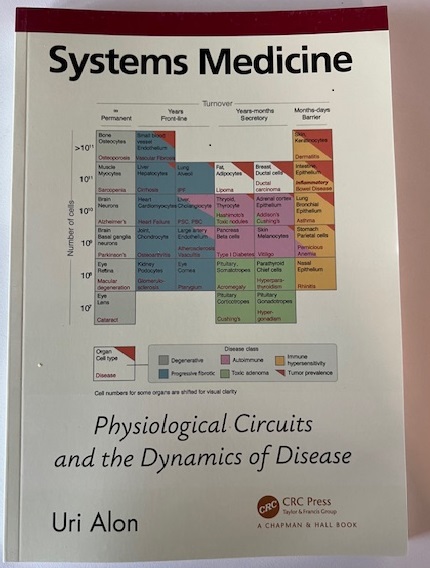
Why do we get certain diseases whereas others do not exist?
This new book builds a foundation for systems medicine. Starting from basic laws, it derives why hormone, immune and aging circuits are built the way the are, culminating in a periodic table of diseases.
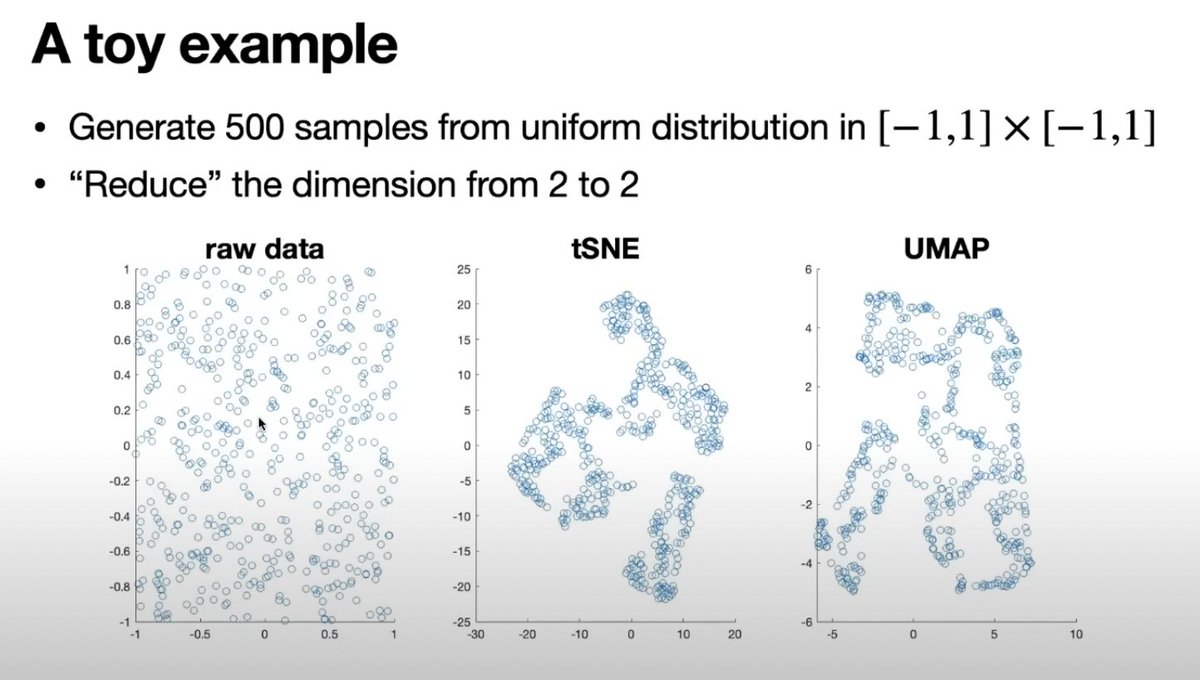
Really informative primer from @jmuiuc on large language models in compbio/genomics https://t.co/bPf0qQcEIa presented at the @UCLA_CGSI series. This whole series is very useful for anyone interested in computational biology/genomics.
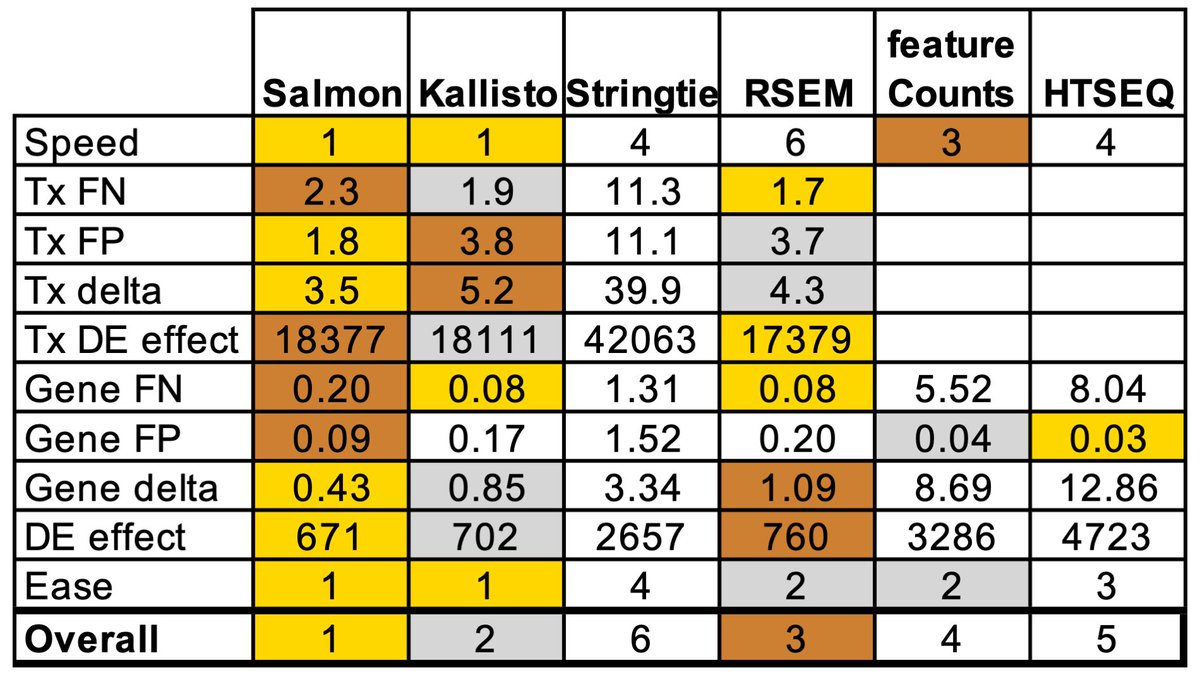
Here is my summary. Some of these are subjective, e.g., ease. In general, you can't go wrong with salmon, kallisto, or rsem. However, you can be selective if you want to mitigate FNs over FPs, or vice versa. (5/7).
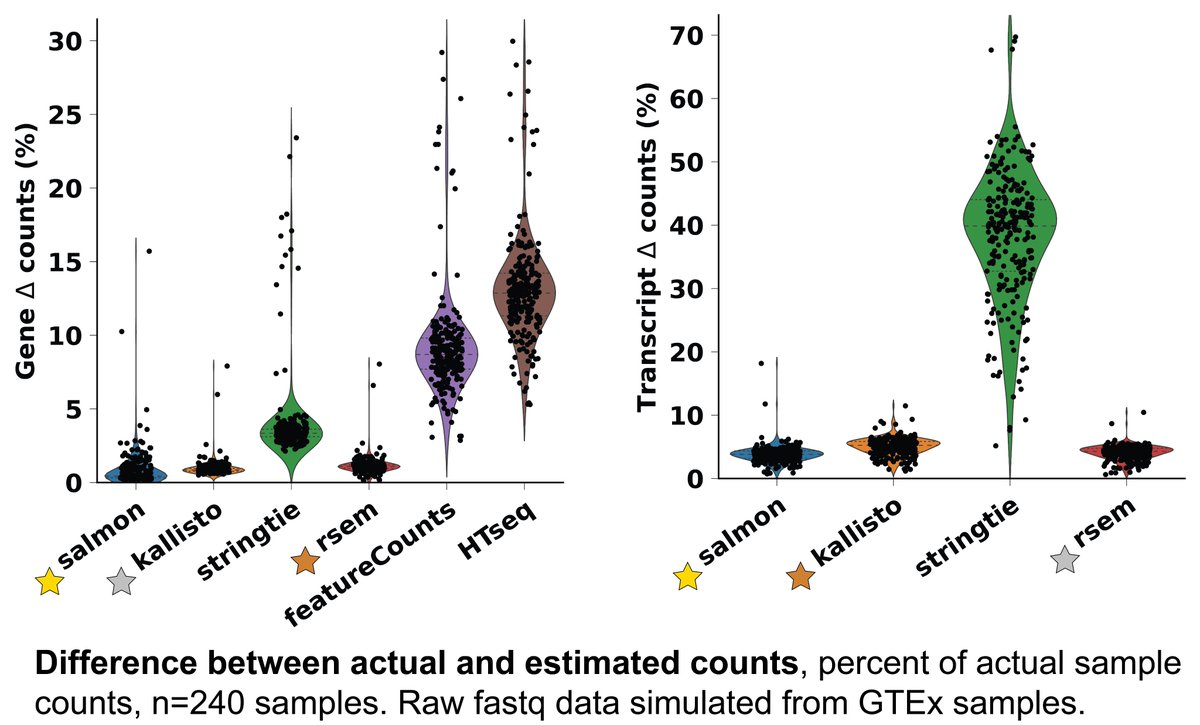
RNAseq counting tools are not perfect. I simulated 240 GTEx samples to test multiple tools. Below I show the difference between actual and estimated counts for each simulated sample.
But, what is causing this? And will it affect differential expression? (1/7) #Bioinformatics
Awesome opportunity for anyone looking for a computational biologists postdoc or higher position, working at the interface of machine learning, aging and cancer biology, at San Diego with bright, young PI, Dr. Sinha
I am hiring multiple Computational Biologists for my new lab @sbpdiscovery , San Diego.
An alternative to a postdoc, it will pay higher (70-90K$; Be the change you want to see in the world) & is tailored to develop skills to industry transition. https://t.co/tU4Z1HqSXN
My lab focuses on developing machine learning techniques at the intersection of aging and cancer to discover preventative therapies against cancer.
If you find this problem motivating and have pre-existing ML skills, I think you could make an enormous contribution. I want to especially encourage folks from underrepresented backgrounds to apply. Can also email directly to: [email protected]
Pls share this opportunity with relevant folks.
#AcademicTwitter #AcademicChatter #PostdoctoralFellow #ScienceJobs #Job #MachineLearning #Bioinformatics
Thrilled to bring @GoogleDeepMind's expertise on responsible AI to the new Frontier Model Forum and look forward to collaborating with policymakers, academics, civil society & companies to advance AI safety. https://t.co/pK9MCGmFmt
Congratulations Dr. Sanju Sinha!!
Bright new PI - full of ideas, cutting edge methodology, compassionate, fun loving person - great opportunity to work at PhD and Postdoc levels at Sinha lab @sbpdiscovery San Diego.
With a mixed bag of emotions - nervousness, excitement, fear & determination, I am announcing the start of my lab at @sbpdiscovery, San Diego.
Our focus will be to develop new preventative therapies for cancer using machine learning.
Late breaking at #ASCO23: Mutations in isocitrate dehydrogenase 1 or 2 are common in low-grade glioma. The IDH inhibitor vorasidenib improved progression-free survival as compared with placebo. Full results of the INDIGO trial: https://t.co/qypyIPmdD0
#Bioinformatics colleagues! Take a quick look at the top 75 Bioconductor packages.
I discovered some I should've known about but didn't.
The ones I clicked are tied to pathway analysis.