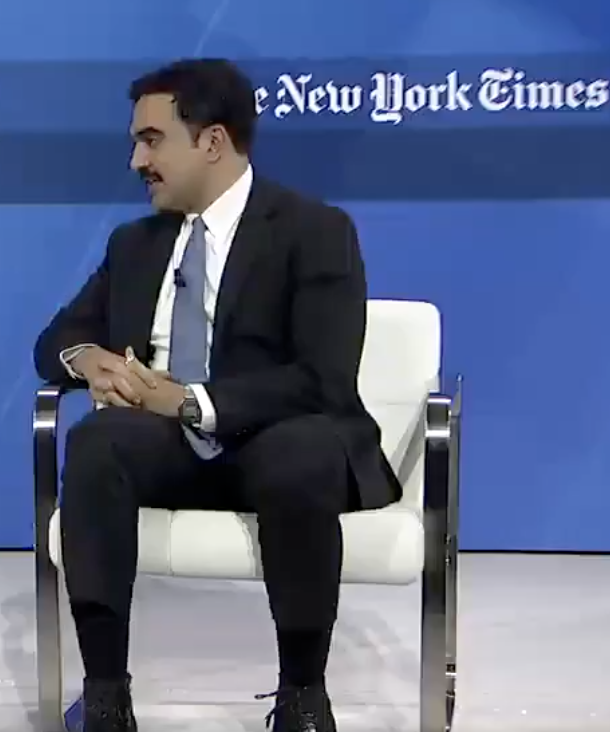
.@nikesharora on parenting:
“I think you’re blessed if you can find a way that your kids want to achieve, they want to build, they want to make things happen on their own.”
“The hardest part of parenting is to make sure that your kids have drive, your kids have ambition, your kids want to achieve.”
“I let them follow their own passion… If my kids can have passion, they can go chase their passion. They can show ambition and drive. I don't care [what they do] as long as they wake up every morning, and are happy and felt that they gave it their best.”
“Your kids will watch your behavior. They watch more behavior than you think. They know more about how we are, who we are, than we possibly can ever understand.”
I always loved this chart from @NDR_Research, which shows that owning the largest stock in the S&P 500 has historically been a terrible strategy, relative to just owning the index.
Good Paul Tudor Jones quote from May of 2009 (h/t to GS Tony P). Might as well be from today
“These days, there are many more deep intellectuals in the business, and that, coupled with the explosion of information on the Internet, creates an illusion that there is an explanation for everything and that the primary task is simply to find that explanation... I see the younger generation hampered by the need to understand and rationalize why something should go up or down. Usually, by the time that becomes self-evident, the move is already over”
I find it significant that the most AI-pilled people I know use AI for basically everything…except for writing
It’s remarkably consistent. Why? Because to write is to think. And outsourcing your critical thinking to AI is intellectual suicide
Repeated open burning on the vacant plot on S K Ahire Marg, Worli (near Sasmira). They clear brush & trees and torch it, day and night. Smoke pours into homes next door. Open burning is banned under BMC bye-laws. Please act.
@mybmcWardGS@mybmc@MumbaiPolice
By nature of being a vol trader, I’ve studied many different market crashes. Not just the common ones in the U.S., but episodes like Britain in 1720, Vienna in 1873, and the Dutch tulip mania of 1637.
There are some interesting behavioral takeaways that aren’t entirely intuitive unless you participate in markets every single day.
One of the biggest for me is that large market moves often need two-way action to develop. Behaviorally, you need participants willing to take the other side, because their eventual need to unwind can help accelerate the move. It’s almost like storing energy that gets released later. To create that dynamic, a “gray catalyst” can be particularly powerful one whose implications aren’t immediately black and white.
Here are two examples that helped produce massive moves in opposite directions that had gray area headlines that led to that two way flow.
COVID (March 2020): What often gets lost in the sauce is that many participants were aggressively betting against the idea that COVID would be severely disruptive. As stocks fell, they bought the dip and sold vol. When stocks kept falling and vol kept rising, some of those positions became fuel for the next leg of the move as participants were forced to unwind.
Looking back, the outcome seems obvious. In real time, the eventual scale of the disruption was far from clear. There was HOPE that it would pass quickly. Headlines about potential treatments, policy support, or a less severe impact repeatedly gave investors reasons to step back in. Stocks would rip 5% higher immediately on that news and hope, only to reverse again even lower when more negative news hit.
Those rallies matter. They give existing longs a reason to stay and new buyers a reason to enter. When the recovery fails, there is another round of positioning that may need to come out. Without that back-and-forth, it can be harder to produce the same degree of forced selling. The uncertainty helps keep replenishing the other side.
Meme mania (January 2021): Companies like GameStop and AMC surged hundreds of percent amid a speculative frenzy and short squeezes. Here, too, there was a gray area. Many investors saw businesses facing serious fundamental challenges, which made shorting them appear rational, especially as their share prices climbed further away from what those investors believed they were worth.
But a compelling fundamental argument does not tell you how far a stock can move before that argument pays off. As prices rose, some shorts covered, while others saw an even more attractive entry point and stepped in. That fresh short exposure created the potential for another round of forced buying if prices continued higher.
The gray area was the gap between the fundamental thesis and the path the market could take. Of course these weren’t great stocks, and the fact that people came in on that helped the waves move higher and higher.
That’s the behavioral dynamic I find so interesting. Uncertainty can keep attracting participants to the other side of a move. As the move extends, their conviction runs into their capital constraints, and an opinion can turn into a forced transaction.