RP is an innovative process automation company focusing on RPA,AI and Machine Learning. Designing the future of enterprise apps and robotic process automation
Apple isn’t just going after Meta with its upcoming iPhone-connected smart glasses, writes Mark Gurman. It’s going after the whole eyewear market.
Read the latest edition of the Power On newsletter here: https://t.co/fyw8Fw320M
📷️: David Paul Morris/Bloomberg
What is a solopreneur? The term has taken on new meaning as AI makes it easier for one person to run a business with the capabilities of a much larger operation. https://t.co/RPg5IINRkp
Fei-Fei Li warns that AI may be staring too hard at language models.
The world is not just text on a screen.
It is physical, visual, spatial, and always changing. Most of the economy runs on seeing, moving, interacting, and embodied intelligence.
Claude for Excel, PowerPoint, and Word are now generally available, and Claude for Outlook is in public beta.
As Claude moves between your Microsoft apps, it carries the full context of your conversation.
While you slept last night, completely motionless in your bed, our galaxy shifted millions of kilometers through the cosmos.
You woke up in the same room, on the same planet, but unimaginably far from where you were the night before.
The Milky Way does not glide silently through the universe. It is racing through space at about 600 kilometers per second, carrying with it billions of stars, planets, and everything they contain on the journey. It is a good reminder that, even when life seems motionless, you are always in motion.
A major new paper reframes aging as a systems failure of epigenetic information. Not wear and tear but a software problem. This is what the Information Theory of Aging predicts and, if correct, means aging is reversible.
Let's dive in... 🧵
Employees using generative AI fall into one of three categories: cyborgs, who collaborate closely with artificial intelligence; centaurs, who engage with AI in a more constrained way; and self-automators, who offload a task more fully to AI. https://t.co/OkU1nJhGLf
Open-source dexterous hands with fingertip sensors! 🪬
@orcahand just released three dexterous hand models.
Their mission: is to democratize robotic hand dexterity. They're sharing progress on exceptional, low-cost hardware and a software layer from low-level control to robotic hand learning.
This is the open-source approach to dexterous manipulation.
It has 83 taxels per finger with 0.1 N force detection which pretty is impressive for an open-source design. Tactile sensing is critical for dexterous manipulation, knowing contact forces enables gentle grasping, slip detection, and force-controlled assembly.
Also 700g weight for the lite version makes it practical for mounting on robot arms without exceeding payload limits. Lower weight means faster movements and lower torque requirements.
Open hardware accelerates robotics by letting researchers and builders modify designs for their specific needs without starting from scratch!
~~
♻️ Join the weekly robotics newsletter, and never miss any news → https://t.co/GoA3ZuwoPB
Gemini in @GoogleWorkspace just got a lot more helpful. To do this, we had to tailor the model to each specific product and their user needs.
Here's a little behind-the-scenes on how that came to life in @GoogleDocs, Sheets, Slides, and @GoogleDrive:
Google just gave your AI agent a way to access every Workspace API that doesn’t eat half your context window.
Here’s the problem everyone’s been hitting. The standard way to connect Claude Code or Cursor to Gmail, Drive, and Calendar is through MCP servers. Google ships official ones. They work. But MCP has a structural tax that gets worse the more tools you connect.
One developer measured his Google Workspace MCP setup: 142 tools. ~37,000 tokens loaded into context. That’s 19% of a 200k context window consumed before the agent even starts thinking about your task. Another developer reported MCP tools eating 98,700 tokens total, nearly 50% of their entire context, and asked Anthropic for help. Cursor hard-caps you at 40 MCP tools because the problem is so bad.
The CLI approach sidesteps this entirely. Your agent reads a lightweight skill file, calls gws drive files list via shell, parses JSON back. The tool definitions never enter the context window. Same capabilities, fraction of the overhead.
But the architecture goes deeper. This CLI reads Google’s Discovery Service at runtime and builds its entire command surface dynamically. Google adds a new Workspace API endpoint, the CLI picks it up automatically. Every static MCP server is permanently one version behind.
Google’s own blog post announcing managed MCP servers admitted the previous state was developers “identifying, installing, and managing individual local MCP servers, often leading to fragile implementations.” This CLI is Google’s answer to their own problem. One npm install. 100+ agent skills. Encrypted credentials. And if you still want MCP as the transport layer, gws mcp starts a server over stdio.
The real signal: as agents get smarter, the bottleneck is shifting from “can it access the tool” to “how much context does accessing the tool cost.” CLIs win that math every time.
A hacker exploited Anthropic's AI chatbot to carry out a series of attacks against Mexican government agencies, resulting in the theft of a huge trove of sensitive tax and voter information, according to cybersecurity researchers https://t.co/znRkgGDGyY
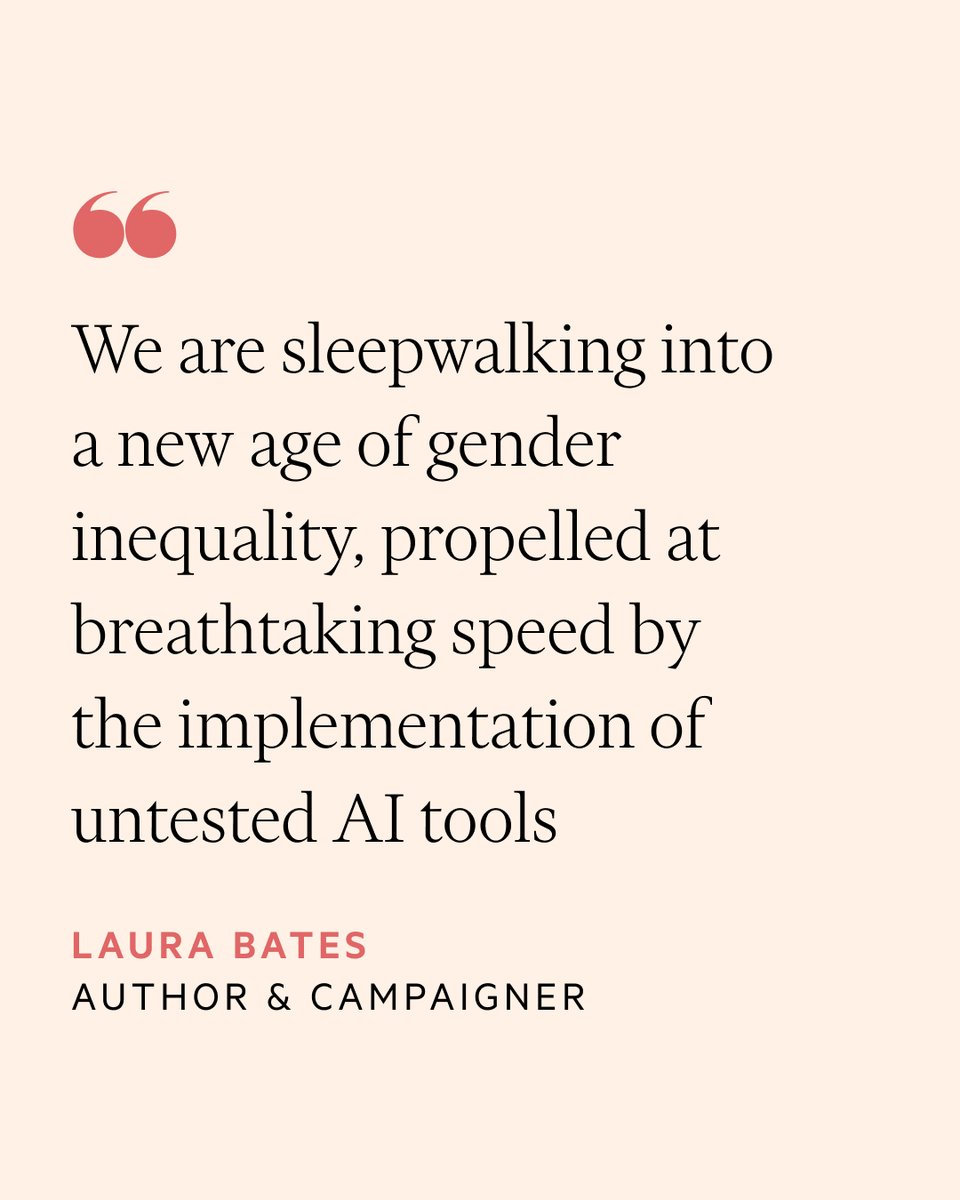
So-called 'nudify' apps. Smart glasses that secretly record video. An explosion in sexualised deepfakes.
Tech has turned against women, and it's time to regulate it properly, says author and gender equality campaigner Laura Bates.
Read more: https://t.co/MtDkKTZC3N
@tbpn@levie Sure we get reliability and auditable nature of these systems but at the end they will be all systems of records. Sort of business databases where agents can read and write , analyse and complete tasks. Why would you pay for all the UX and analytics bloat, not feasible anymore