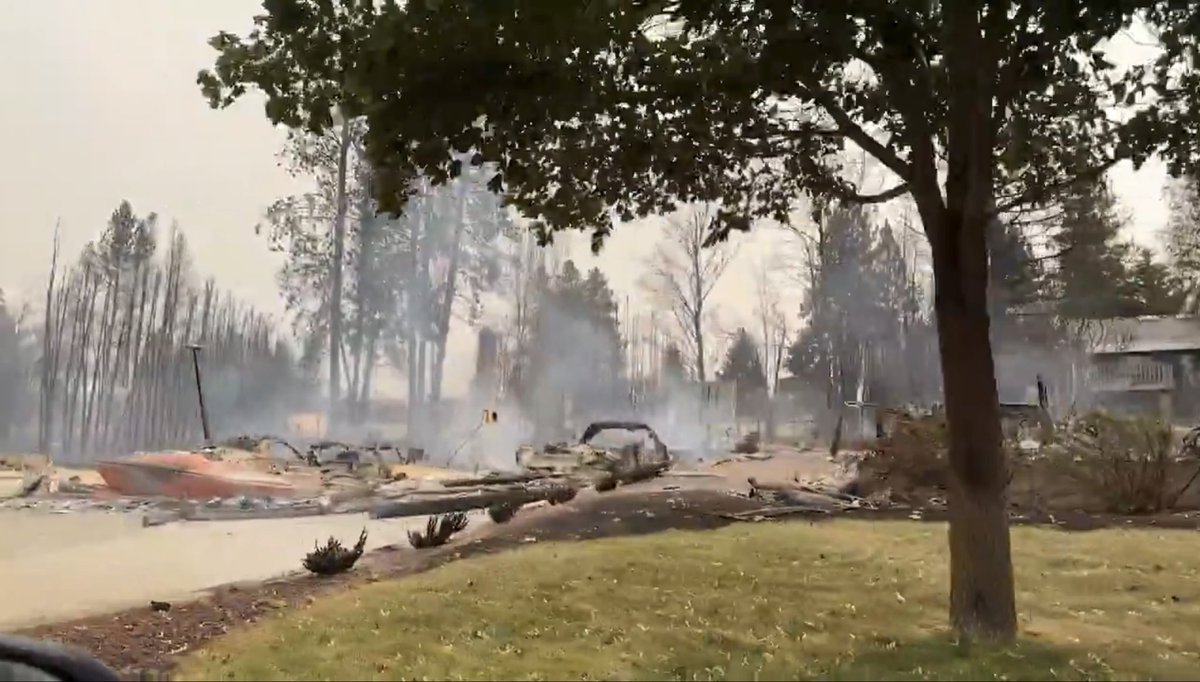
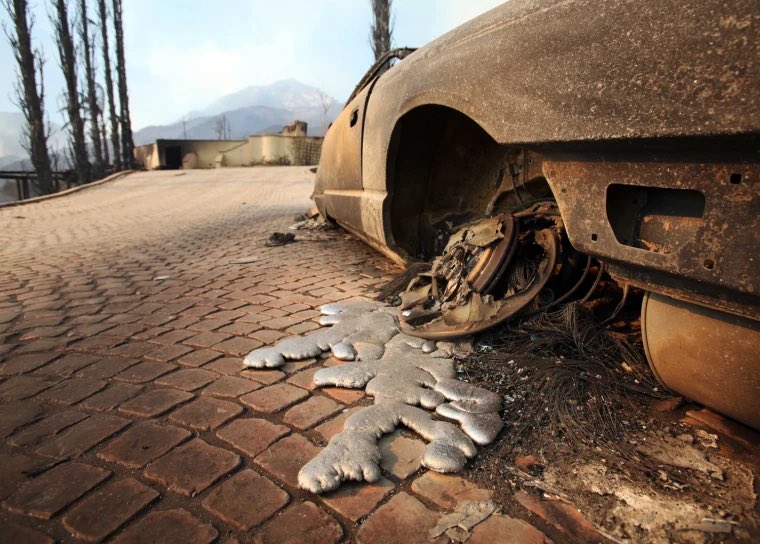
@FtWorthTxGal@naniigrant@kxly4news one important difference to understand is the trees in the NW are generally fire adapted, they tolerate low intensity fire well (to a point), as opposed to many say, cedar in Texas which is basically filled with gasoline.
@FtWorthTxGal@naniigrant@kxly4news The trees are far less flammable than the materials your average house and yard is full of, so the house fires basically outrun the vegetation fire.
@Katrina794794@naniigrant@kxly4news Think of it this way. Whether your neighbor's house is destroyed by a wildfire or a space laser, your best way to protect your house is to harden your home against embers 🙂
Why Are Trees Left Standing After Wildfires Destroy Homes? 🌲🔥
Many of you have wondered why trees often remain standing after a wildfire, even when nearby houses and structures are destroyed. The answer lies in the difference between wildfires and conflagrations.
Wildfire vs. Conflagration
In a wildfire, flames often move as a front, consuming vegetation but not always spreading to everything in their path. Conflagrations, on the other hand, occur when one structure catches fire and spreads through flammable connections, like wood fences, igniting house after house. This also occurs more easily due to the intense heat produced by a structure fire coupled with the close proximity of structures.
Why Trees Survive:
Some trees have natural adaptation to withstand fire.
* Thick Bark: Acts as a heat shield, protecting the inner layers.
* Natural Shape: Sheds embers and debris, reducing ignition risk.
* Moisture Content: Higher moisture content than older building materials slows the spread of fire.
While trees may still be singed, they are often less flammable than structures.
Why Homes Are More Vulnerable:
Houses are built with materials and features that make them prone to ignition:
* Combustible Materials: Wood siding and roofing can ignite quickly, especially from nearby fires.
* Openings & Vents: Embers can enter and spark fires inside, even from a distance.
* Heat Traps: Flat surfaces and air currents can intensify flames once they reach the interior.
Removing flammable items within the first five feet (Zone 0) of a home creates a defensible space, helping to break the pathway for wildfire spread and reducing the risk of flames reaching structures.
Take action to safeguard your home against wildfire risks! 🌟 Learn how to prepare at https://t.co/xAsi7kicHn.